The Genesis of Deception: Setting the Stage for Operation Fortitude
The looming shadow of war, specifically the anticipated Allied invasion of Europe during World War II, presented a monumental strategic challenge. Adolf Hitler’s Germany, a formidable military machine, possessed an experienced and well-equipped army. The Allies, under immense pressure to liberate occupied France and ultimately defeat Nazi Germany, understood that the success of any invasion hinged not only on military might but also on meticulously planned deception. The German high command, particularly the Abwehr (German military intelligence), was adept at gathering information, and a direct, unvarnished assault on the heavily fortified coast of France would have been met with overwhelming resistance. It was within this high-stakes environment that the seeds of Operation Fortitude were sown, a plan so audacious and intricate that it would redefine the art of psychological warfare and strategic misdirection. The primary objective of Fortitude was not merely to mislead the enemy about the timing and location of the Allied landings but to convince them that the real invasion would be in a completely different theatre, thereby drawing German reserves away from the actual landing zones and significantly reducing the ferocity of the initial assault.
The architects of Operation Fortitude understood that deception on this scale required a multi-layered approach, encompassing not just troop movements and feints but also the cultivation of a believable narrative. This narrative had to be so pervasive and convincing that it would permeate every level of the German intelligence apparatus and influence strategic decisions at the highest echelons of the Nazi regime. The core of the deception was built around the creation of phantom armies, complete with their own commanders, headquarters, and even propaganda machines, designed to appear as genuine threats poised to strike at specific points along the European coastline. These phantom forces were not just figments of imagination; they were meticulously crafted illusions, supported by a vast network of double agents, radio traffic, and physical diversions. The success of Fortitude would depend on a symphony of lies, orchestrated with precision and executed with unwavering commitment. The stakes were unimaginably high, with the lives of thousands of Allied soldiers and the very outcome of the war hanging in the balance. This was not just a military operation; it was a grand performance of deception, designed to trick a powerful adversary into making fatal strategic errors.
Operation Fortitude was a crucial part of the Allied deception strategy during World War II, aimed at misleading the Germans about the location of the D-Day invasion. For a deeper understanding of the historical context and implications of MI5’s involvement in this operation, you can explore a related article that delves into the intricacies of wartime intelligence and deception tactics. To read more about this fascinating topic, visit this article.
The Pillars of Illusion: Crafting the Phantom Armies
Operation Fortitude was not a single, monolithic plan, but rather a series of interconnected deceptions designed to achieve specific strategic aims. The two most significant components were “Fortitude North” and “Fortitude South.” Fortitude North was designed to convince the Germans that a major Allied invasion was being planned for Norway. This was a strategic choice, as Norway’s geographic position and its control over vital sea lanes made it a plausible target for an Allied assault. The Germans had significant forces stationed in Norway, and the threat of an invasion there could tie down valuable German resources and prevent their redeployment to France. To bolster this illusion, the Allies created the fictional “First U.S. Army Group” (FUSAG), commanded by the highly respected and decorated General George S. Patton Jr. Patton’s reputation was a powerful asset, and his association with FUSAG lent significant credibility to the deception.
FUSAG was not just a name on paper. It was a carefully constructed facade, complete with mock encampments, inflatable tanks and aircraft, and a constant stream of deceptive radio traffic. Allied agents fed intelligence about FUSAG’s supposed movements, training exercises, and logistical preparations to their German handlers. The objective was to make the Germans believe that FUSAG was a genuine, massive force preparing to invade Norway. This involved everything from staged troop movements that could be observed from reconnaissance flights to the deliberate leakage of false operational plans. The creation of FUSAG was a masterclass in detail, designed to exploit the German reliance on intelligence, however flawed. The constant hum of activity, even if manufactured, was meant to simulate the real preparations for a large-scale amphibious assault. This psychological warfare was as crucial as any physical diversion.
Fortitude South: The Masterstroke of Misdirection
While Fortitude North aimed to draw German attention northward, Fortitude South was the lynchpin of the entire operation, focusing on deceiving the Germans about the primary invasion site in France itself. The Allies knew that the Germans were expecting an invasion along the Pas-de-Calais, the narrowest point of the English Channel, due to its proximity to Britain and the presence of major ports. This was precisely where the Allies wanted the Germans to believe the main thrust would occur. Operation Fortitude South aimed to create the illusion of overwhelming Allied strength poised to strike at the Pas-de-Calais, while the actual invasion, D-Day, would land in Normandy, a less heavily defended sector of the French coast. The deception here was particularly intricate, involving the creation of a second phantom army, also supposedly under Patton’s command, this one designated as the “First U.S. Army Group” (FUSAG), but focused on the Pas-de-Calais. This was the same FUSAG from Fortitude North, but its operational focus was shifted and amplified to create a more potent threat in the Calais region.
The deception employed in Fortitude South was a sophisticated blend of physical and electronic warfare. Real units were deliberately kept in view of German reconnaissance, with their equipment camouflaged to appear as larger formations. Dummy landing craft were assembled and paraded along the coast, and inflatable tanks and aircraft were strategically placed to create the impression of vast military strength. Radio traffic was meticulously managed, with intercepted transmissions revealing supposed plans and troop movements directed towards the Pas-de-Calais. This constant stream of information, much of it fabricated, was designed to create a picture of an imminent, massive assault on the shortest route across the Channel. The Germans were fed information suggesting a massive build-up of Allied forces, including hundreds of thousands of troops and thousands of aircraft, all concentrated in southeastern England, facing the Pas-de-Calais. This was a calculated risk, relying on the German high command’s tendency to believe the most obvious and threatening scenario.
Double Agents and the Dissemination of Lies
A crucial element of Fortitude South, and indeed the entire Operation Fortitude, was the ingenious use of double agents. The most famous of these was undoubtedly Juan Pujol Garcia, known to the British as “Garbo.” Pujol was a Spanish citizen who, out of a desire for adventure and perhaps a genuine dislike for the Nazi regime, offered his services to the Abwehr. The British, recognizing his potential, recruited him as a double agent. Pujol was a master of his craft, creating an elaborate network of sub-agents, all of whom were actually fictitious or controlled by the British. He provided the Germans with a steady stream of highly detailed, yet entirely fabricated, intelligence about Allied invasion plans, troop strengths, and order of battle.
Pujol’s “reports” consistently emphasized the impending invasion of the Pas-de-Calais. He fabricated detailed logistical plans, troop dispositions, and even “leaked” strategic documents that pointed towards Calais as the primary objective. His reports were so convincing, so detailed, and so consistent with the “evidence” the Germans were gathering from other sources that they became highly influential in shaping German strategic thinking. Pujol’s skill lay not just in inventing information but in making it believable. He understood the German mindset and tailored his deceptions accordingly. He even concocted elaborate stories of disillusioned Allied soldiers or disgruntled civilians willing to pass him information, further cementing his credibility in the eyes of his German handlers. The meticulous detail and sheer volume of information provided by Pujol and his “network” created an overwhelming consensus within the German intelligence community that a major invasion was indeed imminent in the Pas-de-Calais.
The Art of Visual Deception: Tanks, Ships, and Airfields
Beyond the world of espionage and radio waves, Operation Fortitude employed a sophisticated visual deception strategy. The goal was to create the tangible impression of massive military forces where none truly existed or were far smaller than portrayed. This involved the extensive use of “inflatables” – life-sized replicas of tanks, artillery pieces, and aircraft made of rubber and canvas. These were strategically placed in fields and staging areas, visible to German reconnaissance planes and agents. The sheer volume of these dummy vehicles, when viewed from above, created the illusion of an enormous armored division or air force. Inflatable Sherman tanks, for instance, were positioned in large numbers, often alongside real vehicles, to inflate the perceived size of Allied armored formations.
Furthermore, the Allies constructed “dummy airfields” and “ghost encampments.” These were designed to mimic the appearance of operational military bases. Fields were cleared, and rows of dummy aircraft were positioned on the ground. Tents were erected in patterns that suggested large troop concentrations. Some dummy encampments even featured fake cooks and soldiers engaging in routine activities to enhance the illusion of a bustling military presence. The creation of these visual decoys was not a haphazard affair; it was meticulously planned and executed to align with the narrative being fed to the Germans through other channels. For example, dummy airfields would be populated with inflatable aircraft that corresponded to the types of planes the Germans believed were being massed for the invasion. The objective was to create a consistent and overwhelming visual confirmation of the intelligence being disseminated through more clandestine means.
The Aftermath and Legacy: A War-Winning Deception
The success of Operation Fortitude was profound and had a
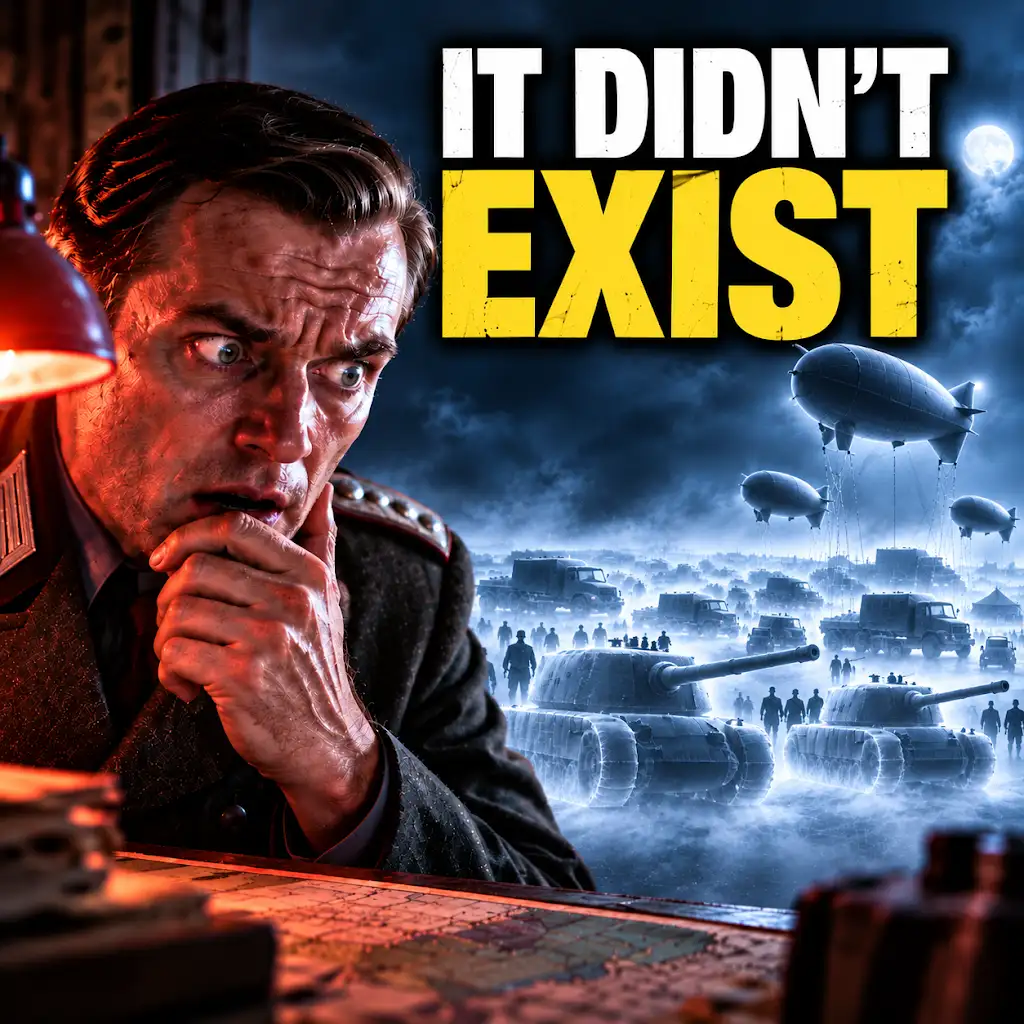
How the Allies Built an Army for Germany to Discover
FAQs
What was MI5 Operation Fortitude?
MI5 Operation Fortitude was a World War II deception operation conducted by the British Security Service (MI5) to mislead the German military about the location and timing of the Allied invasion of Normandy.
When did MI5 Operation Fortitude take place?
MI5 Operation Fortitude took place in the months leading up to the D-Day landings on June 6, 1944.
What was the purpose of MI5 Operation Fortitude?
The purpose of MI5 Operation Fortitude was to deceive the German military into believing that the Allied invasion of Europe would take place at a location other than Normandy, in order to divert German forces away from the actual invasion site.
How was MI5 Operation Fortitude carried out?
MI5 Operation Fortitude involved a combination of double agents, fake radio traffic, dummy equipment, and other deceptive tactics to create the illusion of a large-scale military buildup in a different location from the actual invasion site.
What was the impact of MI5 Operation Fortitude on the D-Day landings?
MI5 Operation Fortitude was successful in deceiving the German military, leading them to believe that the Allied invasion would take place at Pas-de-Calais rather than Normandy. This diversion of German forces helped to ensure the success of the D-Day landings and the eventual liberation of Western Europe from Nazi occupation.