The Unraveling Thread: Bec Matthews’ Journey into Ancestral Roots
For many, the concept of family history remains a tapestry woven from faded photographs, whispered anecdotes, and the occasional well-worn family bible. It’s a landscape often explored through the tangible remnants of the past, a journey undertaken through dusty attics and courthouse records. But for Bec Matthews, a vibrant and inquisitive individual, the allure of her heritage beckoned with a different, more modern promise: the power of DNA. Her quest, not unlike countless others, was an endeavor to bridge the gaps in her ancestral narrative, to transform vague familial whispers into concrete truths, and to uncover the stories of those who came before her. This is the story of Bec’s DNA search, a testament to the profound and often surprising insights that genetic genealogy can reveal.
Bec’s initial curiosity wasn’t sparked by a specific historical mystery or a sudden revelation of a long-lost relative. Instead, it was a gradual accumulation of unanswered questions. She possessed a scattering of family lore, fragmented tales of ancestors who had emigrated from various European countries, but the details were often hazy, lost to the passage of time and the inherent vagaries of oral tradition. “I knew my great-grandmother was from Ireland,” Bec would often say, “but I wasn’t sure where exactly. And the stories about my father’s side were even more jumbled. There were whispers of German and possibly Dutch heritage, but it all felt very… unconfirmed.” This desire for certainty, for a more definitive understanding of her origins, became the driving force behind her decision to explore the world of genetic genealogy. She yearned to move beyond the realm of conjecture and into the tangible, verifiable territory that DNA promised.
The advent of direct-to-consumer DNA testing kits had, in recent years, democratized the process of genealogical exploration. What was once the purview of dedicated researchers and professional genealogists was now accessible to anyone with a smartphone and a willingness to spit into a tube. Bec, after researching various companies and their offerings, settled on one that boasted a large database and a reputation for accuracy. The kit arrived, a simple, unassuming package containing a collection tube and instructions. The process itself was straightforward, a matter of providing a saliva sample and mailing it back to the lab. The wait that followed, however, was anything but simple. It was a period of anticipation, a fertile ground for speculation, and a quiet contemplation of what the minuscule strands of her genetic code might reveal.
The Genetic Blueprint: Unlocking Ancestral Connections
The arrival of Bec’s DNA results was an event marked by a mixture of excitement and trepidation. The online platform presented a complex array of data: ethnicity estimates, predicted ancestral regions, and a list of DNA matches – individuals who shared a statistically significant amount of their DNA with her. It was a veritable roadmap to her genetic past, a starting point for a journey that would delve deeper than she could have initially imagined. The ethnicity estimate was the first piece of the puzzle to fall into place, confirming some of her existing hunches and offering surprises. “I was expecting a good chunk of Irish, and that was there,” Bec explained, “but the percentage was higher than I anticipated, and the specific regions within Ireland were incredibly precise. It wasn’t just ‘Ireland’; it was a specific cluster of counties in the west.” This level of detail was a revelation, providing a tangible anchor for the anecdotal evidence she had always possessed.
The broader categories of her ancestry also began to take shape. The expected German and Dutch heritage was present, but the percentages and the specific regions within those countries were far more granular than the vague “whispers” she had heard. She discovered a significant Scandinavian component, a region she had never even considered as a possibility. This initial influx of information was both exhilarating and slightly overwhelming. It was like being presented with a vast, intricate puzzle, with only a few pieces immediately fitting into place. The real work, she knew, would be in connecting these genetic fragments to the historical narratives and the names of her ancestors.
The DNA matching feature proved to be the most transformative aspect of her genetic exploration. Suddenly, the abstract percentages and regions were linked to living, breathing individuals. The platform identified thousands of distant cousins, some sharing a small percentage of DNA, others a more substantial portion, indicating closer familial ties. “It was astonishing,” Bec recalled. “Suddenly, I had hundreds, then thousands of potential relatives appearing. Some were people I already knew, distant aunts and uncles I hadn’t connected with in years. But many, many more were complete strangers.” This was where the real genealogical detective work began.
Navigating the Match List: Building Bridges Across Generations
The sheer volume of DNA matches could be daunting. Bec learned quickly that not all matches were equally valuable. The key was to identify those who were likely to be closer relatives, those who shared enough DNA to indicate a common ancestor within a few generations. This often involved cross-referencing her matches with her existing genealogical research. If she saw a match with a surname that was familiar from her family tree, it was a strong indicator of a potential connection. “I started with the matches that shared a higher percentage of DNA,” she explained. “The theory is that the more DNA you share, the more recent the common ancestor. It’s not always a perfect science, but it’s a very good starting point.”
She also began to actively reach out to her matches. This was a crucial step, requiring a delicate balance of curiosity and respect. Her initial messages were polite introductions, explaining her interest in genealogy and asking if they might be related. The responses varied. Some were enthusiastic and eager to share their own research. Others were less engaged, perhaps not as invested in their family history or simply overwhelmed by the prospect of delving into it. However, the individuals who were receptive proved to be invaluable. They shared their family trees, their own DNA results, and, in some cases, anecdotal information that shed light on shared ancestors.
One particularly significant connection emerged with a match who had a remarkably detailed family tree stretching back to the 18th century. This individual had already done extensive research on a branch of Bec’s family that had remained largely undocumented in her own knowledge. “This match had traced a family line from Ireland all the way back to a specific village,” Bec said, her voice tinged with excitement. “And not only that, they had found birth and marriage records for ancestors I had never even heard of. It was like finding a missing piece of the puzzle that I didn’t even know was missing.” This shared ancestor, identified through both DNA and diligent research, provided a concrete link to a forgotten chapter of her family’s story.
Bec Matthews’ DNA search has garnered significant attention, highlighting the importance of genetic testing in uncovering family histories and solving mysteries. For those interested in exploring similar themes, a related article can be found at In The War Room, which delves into the evolving role of DNA technology in various fields, including genealogy and forensic science. This piece provides valuable insights into how DNA analysis is reshaping our understanding of identity and heritage.
The Paper Trail Meets the Genetic Code: Verifying and Expanding
While DNA provided the tantalizing hints and the broad strokes of her ancestry, it was the traditional genealogical research that provided the factual foundation. Bec found that her DNA results often pointed her in new directions, prompting her to seek out specific records and delve into historical documents with a newfound focus. The ethnicity estimates, while broad, gave her clues about potential migration patterns and regions to investigate. For instance, the strong Scandinavian component, initially a surprise, led her to explore records related to Viking settlements in Britain and Ireland, areas known to have been influenced by Norse populations.
The DNA matches were even more direct in their influence. If a match’s tree indicated a shared ancestor in a particular time period and location, Bec would then set out to find official records to corroborate this information. This involved searching for birth certificates, marriage licenses, census records, land deeds, and probate documents. She learned to navigate the archives of genealogical websites, library databases, and even local historical societies. The process could be painstaking, involving deciphering old handwriting, understanding historical context, and sifting through vast amounts of information.
There were instances where the DNA and the paper trail didn’t immediately align. Sometimes, a shared match might indicate a connection that, upon closer examination of documents, appeared to be more distant than initially thought. Other times, inconsistencies in family lore or historical records might present a challenge. Bec learned to approach these discrepancies with a critical eye, understanding that family stories, while often rooted in truth, could be embellished or misremembered over generations. Her DNA served as a powerful verification tool, helping her to discern fact from fiction.
A Deeper Dive into Specific Ancestral Lines: Unearthing Forgotten Narratives
As Bec delved deeper, certain ancestral lines began to emerge as particularly rich with stories. The Irish branch of her family, already hinted at by her ethnicity estimate, became a focal point. Through her DNA matches and subsequent research, she discovered that her ancestors had been farmers in a relatively remote part of County Clare. She found records of their landholdings, their involvement in local parish life, and even, in some cases, details about their occupations and family structures. It was a picture of a life that was both different from her own and yet undeniably connected.
Similarly, the German heritage, which she had previously understood in very general terms, began to solidify. She identified specific villages and towns where her ancestors had lived, uncovering records of their trades and their participation in local communities. She learned that some had been artisans, while others had been involved in agriculture. The journey into this aspect of her ancestry also revealed a fascinating pattern of migration within Germany itself, as families moved from one region to another over centuries, seeking economic opportunities or fleeing from difficult circumstances.
The Scandinavian influence, the most surprising element of her genetic makeup, proved to be a more challenging, yet ultimately rewarding, area of research. Tracing these lines often required delving into earlier historical periods, when the movements of people were less documented. However, with the help of genetic clues and the collaborative efforts of other genealogists in her DNA matches, she began to piece together a narrative of ancestors who had been involved in trade and settlement along the North Sea coast, with connections extending to what is now Denmark and Norway. This discovery opened up an entirely new dimension to her understanding of her heritage, revealing a more complex and far-reaching ancestral tapestry than she had ever imagined.
Beyond the Numbers: The Human Element of Genetic Genealogy
The journey of uncovering family history through DNA is far more than an academic exercise or a purely data-driven pursuit. For Bec, it became a deeply personal and emotionally resonant experience. The numbers on a screen transformed into faces, stories, and the palpable reality of lives lived. She began to see her own traits and predispositions reflected in the lives of her ancestors, a sense of continuity that was both humbling and empowering.
She found herself empathizing with the challenges her ancestors had faced. The stories of emigration were no longer abstract historical events but personal narratives of courage, hope, and often, hardship. She read about the arduous journeys across oceans, the struggles to establish new lives in unfamiliar lands, and the resilience required to overcome adversity. These narratives gave her a profound appreciation for the sacrifices made by those who paved the way for her own existence.
Moreover, the connections she forged with living relatives through her DNA search added a vital human dimension to the entire process. These weren’t just statistical matches; they were individuals with their own stories, their own perspectives on family history, and their own contributions to the ongoing narrative. She found a sense of community among her fellow genetic genealogists, a shared passion for uncovering the past and a willingness to support each other in their research.
The insights gained from her DNA search also began to inform her own sense of identity. Understanding the diverse cultural influences that had shaped her ancestry gave her a broader perspective on her place in the world. It challenged any preconceived notions she might have had about her heritage and encouraged a more nuanced and inclusive understanding of who she was. The genetic tapestry, once a collection of disparate threads, was beginning to reveal a coherent and beautiful pattern, woven with the lives and experiences of generations of her ancestors. Bec Matthews’ DNA search was not merely a discovery of the past; it was an ongoing process of self-discovery, a testament to the enduring power of human connection, and a reminder that our histories are written not just in documents, but in our very DNA.
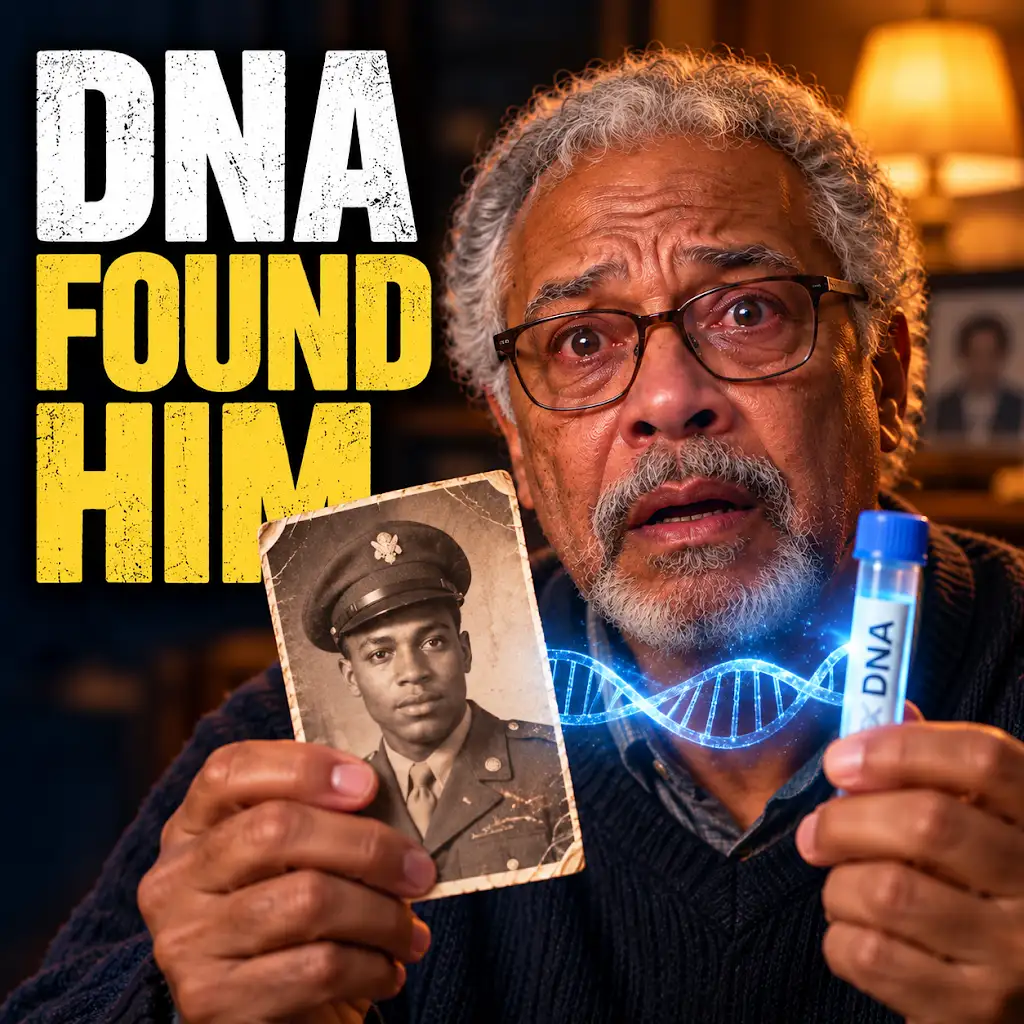
His WWII GI Father Was a Mystery for Nearly 80 Years

FAQs

What is Bec Matthews DNA search about?
The article discusses Bec Matthews’ journey to find her biological father through DNA testing and genealogy research.
How did Bec Matthews start her DNA search?
Bec Matthews began her DNA search by taking a DNA test through a commercial genetic testing company and uploading her results to various genealogy websites to find potential matches.
What challenges did Bec Matthews face during her DNA search?
Bec Matthews faced challenges such as navigating complex family trees, dealing with unexpected genetic matches, and uncovering sensitive information about her biological family.
Did Bec Matthews successfully find her biological father through DNA testing?
Yes, after months of research and collaboration with genetic genealogists, Bec Matthews was able to identify and connect with her biological father through DNA testing.
What impact did Bec Matthews’ DNA search have on her life?
Bec Matthews’ DNA search not only helped her find her biological father but also provided her with a sense of closure, identity, and connection to her genetic heritage.