The shadows of deception often proved as formidable an adversary as any opposing army on the battlefield. For German commanders, the pervasive presence of false intelligence throughout various conflicts, most notably the Second World War, had a profound and often catastrophic impact on their strategic decision-making, operational execution, and ultimately, the fate of their forces. This article will delve into the multifaceted ways in which manipulated or inaccurate information warped the perceptions and actions of German military leadership, leading to critical miscalculations and missed opportunities.
The Mirage of Deception: Understanding the Nature of False Intelligence
False intelligence is not a monolithic entity. It encompasses a broad spectrum of misinformation, ranging from deliberate fabrications designed to mislead to honest errors in assessment and analysis. For German commanders, the sources of this deception were varied and insidious. During periods of heightened conflict, enemy intelligence agencies, particularly those of the Allied powers, actively engaged in elaborate deception campaigns. These efforts aimed to sow confusion, exploit perceived weaknesses, and steer German forces toward unfavorable engagements. The effectiveness of these campaigns stemmed from their sophistication, often involving a combination of radio traffic manipulation, agent provocateurs, double agents, and the careful orchestration of seemingly authentic but ultimately misleading battlefield observations.
Beyond deliberate enemy action, internal factors also contributed to the proliferation of false intelligence. The rigidity of German military doctrine and the hierarchical nature of command, while effective in certain contexts, could also stifle dissent and critical evaluation of incoming reports. A commander’s predisposition to believe information that confirmed pre-existing biases or strategic objectives could lead to the overlooking of contradictory evidence, even when presented. Furthermore, the sheer volume of intelligence gathered during large-scale operations could overwhelm analysis units, leading to errors in prioritization and interpretation. The “fog of war,” a term coined to describe the uncertainty and confusion inherent in combat, was frequently exacerbated by the deliberate introduction of fog-like inaccuracies.
Enemy Operations: Orchestrated Deception Campaigns
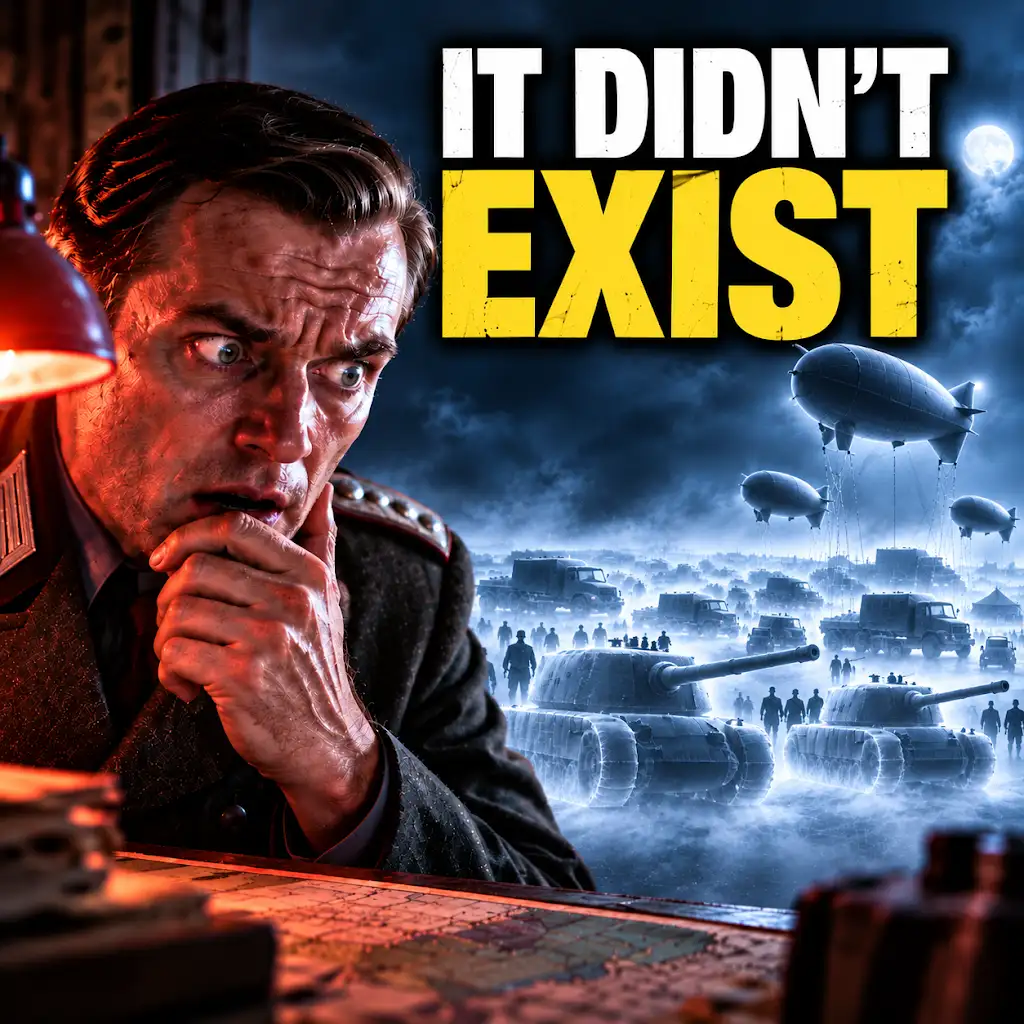
The Allied powers, recognizing the critical role of intelligence in modern warfare, invested heavily in sophisticated deception operations. These were not merely isolated incidents but meticulously planned and executed campaigns designed to achieve specific strategic objectives. The D-Day landings, for instance, were preceded by an immense Allied deception effort codenamed Operation Fortitude. This operation successfully convinced the German High Command that the main invasion would occur at the Pas-de-Calais, diverting significant German forces away from Normandy. The meticulous construction of dummy camps, the use of inflatable tanks, and the deployment of double agents feeding fabricated troop movements created a powerful illusion that the German military was unable to penetrate.
Similar deception tactics were employed on the Eastern Front. The Soviets, learning from their early setbacks, developed their own formidable intelligence and counter-intelligence capabilities. They understood the German penchant for anticipating large-scale offensives and often employed sophisticated ruses to mask their true intentions, including feigned troop withdrawals and the deliberate dissemination of incorrect order-of-battle information. The success of these operations often hinged on exploiting the established patterns of German reconnaissance and analysis, making the deceptive information appear credible and consistent with what German intelligence might expect. The ultimate goal was to create a chokepoint of distorted perception for German commanders, leading them to make decisions based on a false reality.
Internal Biases and Bureaucratic Failures
The German military, despite its reputation for efficiency, was not immune to internal biases that could distort intelligence assessments. The emphasis on achieving decisive victories and the often-unwavering belief in the superiority of German military strategy could create an environment where commanders were reluctant to acknowledge unfavorable intelligence or consider alternative explanations. If a commander had invested significant resources and political capital in a particular offensive or defensive plan, intelligence that contradicted the wisdom of that plan might be dismissed as erroneous or even disloyal. This created a feedback loop where wishful thinking could be reinforced by selective interpretation of available data.
Bureaucratic inertia and inter-service rivalries also played a role. Different branches of the German military – the Army, Navy, and Air Force – often had their own intelligence gathering and analysis capabilities. Competition for resources and prestige could sometimes lead to a reluctance to share information or a tendency to prioritize reports that bolstered their own service’s perceived importance. This fragmentation of intelligence efforts could result in crucial pieces of information being overlooked or misinterpreted in the wider context of a campaign. The sheer volume of reports generated by vast armies operating across multiple fronts further compounded these issues, making comprehensive and accurate analysis a monumental challenge.
The impact of false intelligence on German commanders during World War II is a crucial topic that sheds light on the strategic miscalculations made by the Axis powers. A related article that delves deeper into this subject can be found at In the War Room, where it discusses how misleading information shaped military decisions and ultimately influenced the course of the war. Understanding these dynamics not only provides insight into historical events but also highlights the importance of accurate intelligence in military strategy.
The Strategic Consequences: Misjudging Enemy Intentions and Capabilities

The impact of false intelligence on German strategic decision-making was often devastating, leading to miscalculations that shaped the course of entire campaigns. The most egregious examples often involved the underestimation of enemy strength and resolve, or the misinterpretation of enemy objectives. This, in turn, led to the deployment of forces in the wrong places, the allocation of resources to non-existent threats, and the failure to anticipate decisive enemy maneuvers.
The Illusion of Invincibility: Overestimating German Strength, Underestimating the Enemy
One recurring theme in the history of German military operations, particularly in the later stages of the war, was a tendency for commanders to overestimate their own forces’ capabilities while underestimating the enemy’s resilience and industrial might. False intelligence played a significant role in fostering this illusion. For instance, reports of dwindling enemy supplies or declining morale, even if partially true, were sometimes amplified and presented as definitive proof of impending collapse, encouraging risky and overextended operations. Conversely, reports of enemy successes or technological advancements might be downplayed or dismissed, contributing to a dangerous sense of complacency.
The belief in the invincibility of the Blitzkrieg tactics, for example, could lead to a blind spot regarding the enemy’s capacity to adapt and counter. When intelligence suggested that enemy defenses were weakening, commanders might be emboldened to press deeper offensives without adequate logistical support or reserves, only to find themselves encircled and cut off. This overconfidence, fueled by selective intelligence, meant that the Germans often failed to recognize the true scale of the Allied buildup or the resolve of the Soviet Union to resist. The underestimation of American industrial output and its ability to sustain prolonged warfare was a critical strategic error that false intelligence did little to correct.
The Ghost of Enemy Formations: Misdirected Efforts and Missed Opportunities
The phenomenon of “ghost armies” – formations that existed only on paper or were significantly exaggerated in intelligence reports – proved to be a persistent problem for German commanders. Deception operations, as mentioned earlier, were highly effective in creating these spectral threats. German reconnaissance, tasked with identifying and locating enemy units, would sometimes identify these fabricated formations and dedicate significant resources to countering them. This diverted vital troops, aircraft, and artillery away from where they were truly needed, weakening genuine defensive lines or hindering offensive operations.
The battle for France in 1940, while a resounding German victory, was not entirely free from such misdirections. While the Wehrmacht’s operational brilliance was undeniable, there were instances where intelligence reports about the disposition of Allied reserves or the exact locations of their strongholds were less than accurate, necessitating rapid adjustments and sometimes leading to fragmented engagements rather than the swift, decisive encircles that characterized the initial phase of the campaign. On the Eastern Front, the sheer vastness of the territory and the fluid nature of combat made it easier for Soviet deception units to create the illusion of massed forces where there were few, or to mask the true location of their reserves. This led to German offensives being blunted against unexpected concentrations of resistance or, conversely, probing attacks failing to encounter anticipated enemy formations.
Operational Disruptions: The Cascading Effects on the Battlefield

Beyond the strategic realm, false intelligence had a direct and often devastating impact on tactical operations, influencing battlefield maneuvers, troop deployments, and the effectiveness of individual units. The “fog of war” was thick enough; the deliberate injection of misinformation made navigating it a perilous endeavor for junior officers and front-line commanders.
The Paradox of Concentration: Over-Commitment and Under-Commitment of Forces
The most immediate operational consequence of inaccurate intelligence was often the misallocation of forces. Commanders, acting on flawed information about enemy strengths and intentions, might either concentrate their forces too heavily in areas where the enemy was weak, thereby wasting valuable combat power, or conversely, fail to reinforce critical sectors that were about to face a major assault. The desire for decisive action, coupled with the pressure to respond to perceived threats, could lead to rash decisions based on incomplete or misleading data.
For example, intelligence suggesting a sector was lightly defended might encourage a commander to commit their only strategic reserve to an offensive there, only to discover that the sector was in fact heavily fortified and the reserve was now bogged down in a futile struggle. Conversely, a report of a major enemy buildup in one area might cause a commander to strip other, equally vital sectors of their defenses, leaving them vulnerable to exploitation. This constant shifting of resources based on unreliable information created a state of perpetual disarray and prevented the development of coherent and sustained battlefield operations.
The Illusion of Surprise: Foiled Ambushes and Revealed Plans
The element of surprise is a cornerstone of military strategy. False intelligence, whether it involved revealing friendly plans or creating phantom enemy forces, could effectively negate this advantage. If a commander believed their troop movements or objectives were secret, but had in fact been misled into believing the enemy was unaware of their intentions, they might proceed with less caution than necessary, thereby revealing their hand prematurely.
Conversely, deception operations designed to make the enemy believe they were about to be surprised could be undermined if German commanders, influenced by false intelligence, anticipated an attack in the wrong location or at the wrong time. This meant that meticulously planned ambushes could be avoided by the enemy, or that genuine enemy offensives could catch German units unprepared. The constant threat of deception also fostered a climate of suspicion, where even genuine intelligence might be doubted, leading to hesitation and indecision at critical moments.
The Psychological Toll: Erosion of Trust and Decision Fatigue
The cumulative effect of persistent deception and the subsequent failures it engendered had a significant psychological impact on German commanders. The constant need to sift through conflicting reports, the gnawing uncertainty about the true situation, and the repeated experience of making decisions that proved disastrous led to a corrosive erosion of confidence and decision fatigue.
The Burden of Doubt: Questioning Every Report
As the war progressed and the effectiveness of enemy deception became increasingly apparent, a deep-seated skepticism began to permeate German command structures. Commanders found themselves in a perpetual state of doubt, questioning the veracity of every incoming report, regardless of its source. This was not merely a matter of intellectual debate; it was a survival mechanism. The cost of misinterpreting intelligence had become too high to ignore.
This pervasive doubt had a paralyzing effect. It slowed down the decision-making process, as commanders felt compelled to seek corroboration from multiple, often unreliable, sources. It fostered a reluctance to commit to bold actions, as the fear of being deceived loomed large. In situations where swift and decisive action was paramount, the burden of doubt could lead to hesitation, missed opportunities, and ultimately, greater losses.
Decision Fatigue and the Spiral of Error
The constant pressure of making critical decisions under conditions of extreme uncertainty and with a high probability of being misled led to decision fatigue. When confronted with a deluge of often contradictory intelligence, commanders would eventually experience a decline in their cognitive abilities, making them more susceptible to errors in judgment. This created a vicious cycle: faulty intelligence led to poor decisions, which led to negative outcomes, which in turn made it harder to process new intelligence accurately, leading to further poor decisions.
The psychological strain of this constant battle against deception, coupled with the immense responsibility of commanding vast armies, took its toll on the mental well-being of German leaders. Many found themselves overwhelmed, trapped in a web of misinformation from which there seemed to be no escape. This erosion of mental acuity, fueled by the insidious nature of false intelligence, contributed significantly to the eventual collapse of German military effectiveness.
The impact of false intelligence on German commanders during World War II is a fascinating topic that reveals how misinformation can shape military strategy. For a deeper understanding of this subject, you can explore an insightful article that discusses the consequences of misleading intelligence in warfare. This piece highlights how such deceptions affected decision-making processes and ultimately the outcomes of key battles. To read more about this intriguing aspect of military history, visit this article.
The Legacy of Misinformation: Lessons for Future Warfare
| Metric | Description | Impact on German Commanders | Example |
|---|---|---|---|
| False Intelligence Reports | Deliberate misinformation about Allied troop movements and strength | Led to misallocation of forces and delayed responses | Operation Fortitude misleading Germans about D-Day landing site |
| Deceptive Radio Traffic | Fake radio communications to simulate phantom units | Confused German signal intelligence, causing misjudgment of enemy positions | Creation of fictitious First U.S. Army Group (FUSAG) |
| Double Agents | Spies feeding false information to German intelligence | Influenced strategic decisions based on inaccurate data | Agent Garbo providing misleading reports on Allied plans |
| Misleading Reconnaissance | Use of dummy tanks, aircraft, and camps to simulate forces | Diverted German attention and resources to wrong locations | Dummy equipment placed in southeast England before Normandy invasion |
| Impact on Battle Outcomes | Overall effect of false intelligence on German operational effectiveness | Reduced ability to counter Allied offensives effectively | Delayed German reinforcements during Normandy landings |
The experiences of German commanders grappling with false intelligence offer enduring lessons for military strategy and intelligence analysis in the modern era. The emphasis on the importance of robust intelligence gathering, rigorous analysis, and critical evaluation of information cannot be overstated. The history of German military failures due to deception serves as a stark reminder that the battlefield is not merely a contest of arms, but also a battle of wits and perceptions.
Cultivating a Culture of Critical Assessment
The most crucial takeaway from the impact of false intelligence on German commanders is the imperative to cultivate a culture of critical assessment within military organizations. This involves fostering an environment where junior officers and analysts are encouraged to question assumptions, challenge established doctrines, and present dissenting opinions without fear of reprétail. The hierarchical structure that can be a strength in execution can become a liability if it stifles intellectual honesty.
Furthermore, intelligence analysis must be a multi-disciplinary endeavor, drawing on diverse perspectives and methodologies. The tendency to rely on single sources or to prioritize information that confirms pre-existing beliefs must be actively combated. The development of sophisticated analytical tools, while important, is no substitute for human judgment and the willingness to consider all possibilities, even those that are uncomfortable or inconvenient.
The Enduring Importance of Counter-Intelligence
The effectiveness of enemy deception campaigns highlights the indispensable role of counter-intelligence. This involves not only identifying and neutralizing enemy agents and disinformation operations but also understanding the enemy’s own intelligence processes and anticipating their deceptive tactics. Investing in skilled counter-intelligence professionals and integrating their insights into strategic planning is paramount.
The German experience demonstrates that even the most technologically advanced military can be undone by a sophisticated and well-executed deception campaign. Therefore, the ability to distinguish between genuine and fabricated intelligence, to identify the subtle signs of manipulation, and to anticipate the enemy’s attempts to shape perceptions is as vital as the ability to wage conventional warfare. The echoes of the deceived German commanders serve as a perpetual reminder of the pervasive and destructive power of false intelligence.
How the Allies Built an Army for Germany to Discover
FAQs
What is false intelligence?
False intelligence refers to misleading or incorrect information that is intentionally spread to deceive or mislead individuals or groups.
How did false intelligence influence German commanders?
False intelligence played a significant role in influencing German commanders during World War II by providing them with inaccurate information about enemy movements, strategies, and capabilities, leading to poor decision-making and strategic errors.
What were some examples of false intelligence used against German commanders?
Examples of false intelligence used against German commanders include the Allies’ successful deception tactics, such as Operation Fortitude, which misled the Germans about the location and timing of the D-Day invasion.
How did false intelligence impact the outcome of battles for German forces?
False intelligence often led German commanders to make misinformed decisions, resulting in strategic blunders and military defeats. This ultimately contributed to the overall decline of German military power during World War II.
What lessons can be learned from how false intelligence influenced German commanders?
The impact of false intelligence on German commanders serves as a cautionary tale about the importance of verifying information and the dangers of making decisions based on unverified or misleading data. It highlights the critical role of accurate intelligence in military decision-making and the need for vigilance against deception tactics in warfare.