The Whispering Photograph and the Silent Promise
For eighty years, a faded sepia photograph had been a silent sentinel in the attic of the Abernathy family home. It depicted a young woman, her eyes wide and earnest, standing beside a sturdy oak tree. Her name was Eleanor Abernathy, a beloved daughter and sister who had vanished without a trace in the autumn of 1943. Her disappearance had cast a long shadow over the family, a lingering question mark that generations had pondered, speculated upon, and ultimately, resigned themselves to the mystery of. The photograph, clutched by her younger sister, Agnes, until her dying day, became a tangible symbol of the void Eleanor left behind. Agnes, in her final years, would often trace the outline of Eleanor’s face with a trembling finger, whispering about a promise, a secret, a journey yet to be understood. This promise, uttered in hushed tones by a young Eleanor to her adoring sister, became the central enigma, a cryptic clue that would elude Agnes and her descendants for decades. It spoke of a place, a hidden truth, and a reason for her departure that remained shrouded in the mists of time.
In a remarkable turn of events, an 80-year-old family mystery has finally been solved, shedding light on long-held secrets that have intrigued generations. This fascinating story highlights the power of perseverance and the importance of family history, as descendants worked tirelessly to uncover the truth behind their ancestors’ past. For more insights into this captivating tale, you can read the related article at In The War Room.
Unearthing the Past: A Generational Quest

The quest to unravel Eleanor’s disappearance began, in earnest, with Clara Abernathy, Eleanor’s grandniece. Clara, a historian by profession, had always been drawn to the Abernathy family lore, particularly the tragic tale of Eleanor. The photograph, passed down through Agnes’s belongings, had always resonated with her. She saw not just a missing person, but a story untold, a narrative yearning to be completed. Clara’s initial research involved poring over old family letters, diaries, and local newspaper archives. She discovered fragmented accounts of Eleanor’s life: her love for literature, her quiet defiance of societal expectations for women of her era, and a burgeoning, yet unnamed, romance. The letters hinted at a growing restlessness, a desire for something beyond the predictable confines of their small town. Agnes’s few, cryptic diary entries spoke of Eleanor’s newfound “purpose” and a “necessary departure.” It was these fragments, like scattered puzzle pieces, that fueled Clara’s determination. She spent countless hours at the local historical society, sifting through microfiche and dusty tomes, searching for any mention of Eleanor’s name or any unusual occurrences around the time of her disappearance. The prevailing theory among the family was that Eleanor had eloped, a common enough occurrence for young women of that era seeking to escape arranged marriages or societal pressures. However, there were no records of a marriage, no clandestine meetings discovered, and no disgruntled suitors who might have sought revenge. The absence of concrete evidence fueled the mystery, allowing speculation to flourish. Clara felt an increasing sense of urgency, a conviction that Eleanor’s story was more complex than a simple romantic entanglement. She believed Agnes’s whispers of a promise held the key, a deeper, more profound motivation for Eleanor’s vanishing act.
The Unraveling Threads of Correspondence
Among Agnes’s belongings, Clara discovered a small, locked wooden box. The key, surprisingly, was hidden within the binding of an old edition of Jane Austen’s Pride and Prejudice, a book Eleanor had cherished. Inside the box, Clara found a collection of unsent letters, penned by Eleanor. These letters were not addressed to anyone specific, but rather read like intimate confessions, poured onto paper with a raw emotion that hinted at a profound internal struggle. One letter, dated just weeks before her disappearance, spoke of a “calling,” a need to contribute to a greater cause, and a fear of being misunderstood. Another alluded to a clandestine meeting with a mysterious individual who offered her an opportunity, a chance to make a difference. These letters confirmed Clara’s suspicion that Eleanor’s departure was not impulsive, but rather a carefully considered, albeit secret, decision. The contents painted a picture of a young woman on the cusp of a momentous choice, torn between the life she knew and a path that promised both danger and fulfillment. The tone of these letters was a far cry from the simple heartache of a broken romance, suggesting a more profound motivation, a sense of duty or a belief in a cause that transcended personal desires.
Echoes of a Forbidden Love and a Hidden Cause
Clara’s research took an unexpected turn when she stumbled upon a hidden compartment within Eleanor’s old writing desk, a piece of furniture Agnes had always kept closed and rarely moved. Inside, nestled amongst pressed flowers and faded ribbons, was a small, leather-bound notebook. This notebook was not a diary in the traditional sense, but a meticulously kept record of scientific observations and coded entries. Eleanor, it turned out, had been deeply interested in botany and had been conducting clandestine experiments. The notebook revealed her fascination with a rare, medicinal plant rumored to have potent healing properties, a plant that grew in a remote, uncharted region of the Appalachian Mountains. The coded entries hinted at a secret society or organization that was aware of the plant’s potential and was actively seeking to cultivate it for humanitarian purposes, likely during a time of global unrest and disease. The notebook also contained sketches of the plant and detailed notes on its cultivation and harvesting, suggesting Eleanor had not only discovered its existence but was actively involved in its study. The coded entries were particularly intriguing, filled with alphanumeric sequences and seemingly nonsensical phrases that hinted at a secret language or encryption. Clara’s historian’s instinct told her this was not a romantic escapade, but something far more significant, a mission of potentially life-saving importance. The fear of being misunderstood, mentioned in Eleanor’s letters, now took on a new meaning. She was likely afraid that her scientific pursuits, deemed unusual for a woman of her time, and her involvement with a potentially clandestine group, would be met with suspicion and disapproval.
The Deciphered Code: A Shadow War and a Seed of Hope

The breakthrough came when Clara, exhausted but resolute, re-examined Agnes’s few, cryptic diary entries. Agnes’s mention of a “promise” and Eleanor’s “purpose” suddenly clicked into place when cross-referenced with the scientific jargon in Eleanor’s notebook. Agnes, perhaps subconsciously, had been trying to convey a hidden meaning for years. Clara realized that some of the seemingly random phrases in Eleanor’s notebook were actually anagrams or simple substitution ciphers. With a renewed sense of purpose, she enlisted the help of a retired cryptographer, a friend of her father’s who had a penchant for puzzles. Together, they meticulously worked through the coded entries. The solution was astonishing. The notebook revealed Eleanor’s involvement with a clandestine group, operating in the shadows of World War II, dedicated to developing natural remedies and antidotes for diseases that were ravaging communities, both civilian and military. Eleanor, with her keen intellect and botanical knowledge, had been a vital asset. The rare plant she was studying was believed to hold the key to a powerful antibiotic, a desperately needed weapon against the rampant infections of the era. The “promise” Agnes had spoken of was not a personal one, but a commitment to this vital mission, a promise to help save lives. The journey to the Appalachian Mountains was not a romantic rendezvous, but a perilous expedition to procure more specimens and secure the plant’s future. The coded entries detailed meeting points, encrypted communication protocols, and names of individuals involved, all designed to protect the secrecy of their work. The notebook also revealed the profound risks they were undertaking. Their research was sensitive, and there were rival factions who sought to exploit their discoveries for their own nefarious purposes. Eleanor’s disappearance was not a fleeing, but a calculated act to protect her research and ensure its continuation.
The Unveiling of the “Veridian Initiative”
The deciphered code unveiled the existence of an organization known only as the “Veridian Initiative.” This group, composed of scientists, botanists, and physicians from various backgrounds, operated entirely outside official channels. Their mission was to discreetly collect and study rare plant species with potential medicinal properties, developing treatments for diseases that were either ignored or beyond the reach of mainstream medicine. Eleanor’s specific contribution involved the meticulous study of a mountain wildflower, Aconitum splendens (a fictional species for the purpose of this narrative), known for its potent antimicrobial compounds. The notebook detailed her early successes in isolating and stabilizing these compounds, a process that required significant fieldwork and a deep understanding of the plant’s life cycle. The coded entries also spoke of the ethical dilemmas they faced, the constant threat of discovery by governments or corporations who would undoubtedly seek to weaponize or monopolize their findings. Eleanor’s decision to disappear was a direct consequence of a growing threat to the Veridian Initiative and its valuable research. It was a sacrifice made for the greater good, a silent act of bravery that had remained hidden for decades.
The Journey to the Remote Peaks
Eleanor’s final entries in the notebook described her preparations for a solo expedition to a remote, almost inaccessible region of the Appalachian Mountains. This was where Aconitum splendens was known to grow in its most potent form. The coded messages detailed specific geographical coordinates, survival strategies, and contingency plans in case of unexpected encounters. There were mentions of rudimentary equipment, food supplies, and a clear understanding of the dangers associated with such an undertaking. The sheer bravery and determination required for such a journey, especially for a young woman in the 1940s, was evident. She wasn’t just a botanist; she was an adventurer and a humanitarian, willing to put her life on the line for her cause. The family’s initial assumption of a runaway lover or a hasty elopement seemed increasingly naive in light of these revelations. Eleanor was not running away; she was running towards a critical mission, a mission that demanded secrecy and isolation. The whispers of a promise were, in essence, Eleanor’s silent commitment to a cause that was far larger than herself.
The Legacy of the Bloom: A Modern-Day Revelation
Armed with the deciphered notebook and Eleanor’s unsent letters, Clara felt a profound sense of responsibility. She realized that Eleanor’s work, if it had been successful, could have had significant implications for modern medicine. The Veridian Initiative, though shrouded in mystery, had been a precursor to many of the natural drug discovery programs that exist today. Clara contacted a renowned ethnobotanist, Dr. Evelyn Reed, who was known for her work in the Appalachian region and her dedication to preserving indigenous knowledge. Dr. Reed, initially skeptical, was eventually convinced by the irrefutable evidence Clara presented. Together, they embarked on a journey to the very mountains described in Eleanor’s notebook. The expedition was arduous, mirroring the challenges Eleanor must have faced. They navigated treacherous terrain, battled harsh weather, and relied on their knowledge of botany and survival. After weeks of searching, following Eleanor’s detailed topographical sketches, they finally found it: a hidden grove, bathed in dappled sunlight, where Aconitum splendens bloomed in abundance. It was a breathtaking sight, a testament to Eleanor’s perseverance and foresight.
The Discovery of the Lost Grove
The journey to the hidden grove was a testament to Eleanor’s meticulous planning. Her coded notes, combined with Clara’s historical research, led them to a specific, almost inaccessible valley deep within the Appalachian Mountains. The terrain was unforgiving, requiring expert mountaineering skills and a deep understanding of the local flora and fauna. Dr. Reed, with her extensive experience in the region, was instrumental in navigating the treacherous paths and identifying potential hazards. The grove itself was a marvel of natural biodiversity, a pocket of untouched wilderness. The Aconitum splendens plants, though smaller than Eleanor had described in her notes, were undeniably present, their delicate purple blooms a stark contrast to the rugged surroundings. The air was alive with the scent of wildflowers, and the silence was broken only by the whisper of the wind through the trees. It felt like stepping back in time, a sacred space preserved by nature and Eleanor’s foresight. The plants, though seemingly dormant, carried the potential that Eleanor had recognized decades earlier.
The Scientific Validation and its Implications
Upon returning from their expedition, Dr. Reed and her team began rigorous scientific analysis of the collected Aconitum splendens specimens. The results were astonishing. The plants contained novel compounds with potent antimicrobial properties, far exceeding anything previously identified in similar species. These compounds showed remarkable efficacy against a range of drug-resistant bacteria, a growing concern in modern healthcare. The research confirmed Eleanor Abernathy’s pioneering work and validated the mission of the Veridian Initiative. Her foresight and dedication had laid the groundwork for potential breakthroughs in antibiotic development, a legacy that had been lost to the world for eighty years. The discovery not only solved the Abernathy family mystery but also offered a glimmer of hope in the ongoing battle against antibiotic resistance. The “promise” Eleanor had made was, in a way, fulfilled, albeit long after her passing. Her sacrifice had not been in vain; her contribution, once a whispered secret, was now poised to make a tangible impact on global health.
After decades of unanswered questions, an 80-year-old family mystery has finally been unraveled, shedding light on long-held secrets and forgotten stories. This intriguing development has captivated many, prompting discussions about the importance of family history and the impact of uncovering the past. For those interested in exploring similar stories of mystery and discovery, you can read more about it in a related article found here: family mysteries. The revelations not only bring closure to the family involved but also inspire others to delve into their own genealogical journeys.
A Family Reunited: The Echoes of Eleanor’s Sacrifice
| Metric | Details |
|---|---|
| Age of Mystery | 80 years |
| Type of Mystery | Family lineage and identity |
| Number of Family Members Involved | 15 |
| Method of Resolution | DNA testing and genealogical research |
| Time Taken to Solve | 6 months |
| Location | United States |
| Outcome | Confirmed family connections and resolved identity questions |
The solution to the eighty-year-old mystery brought immense relief and a profound sense of closure to the Abernathy family. Clara, once consumed by the quest, now felt a deep connection to her courageous ancestor. The faded photograph, once a symbol of loss, transformed into a portrait of a hero. The family gathered, not in grief, but in celebration of Eleanor’s extraordinary life and her selfless sacrifice. Her story became a cornerstone of family lore, a testament to the power of courage, intellect, and unwavering dedication to a cause greater than oneself. Eleanor Abernathy, the young woman who vanished into the shadows, had finally found her place in the light of history, her legacy blooming anew, much like the rare flower she had championed. The whispering photograph, no longer a silent sentinel, now spoke volumes of a life lived with purpose, a promise kept in the heart of a forgotten mountain. The Abernathy family, once haunted by an unanswered question, was now united by the profound and inspiring story of Eleanor, the botanist who, eighty years ago, had embarked on a journey that would ultimately, and unexpectedly, benefit generations to come. The echoes of her sacrifice resonated through their lives, a reminder that even the quietest lives can leave the loudest legacies.
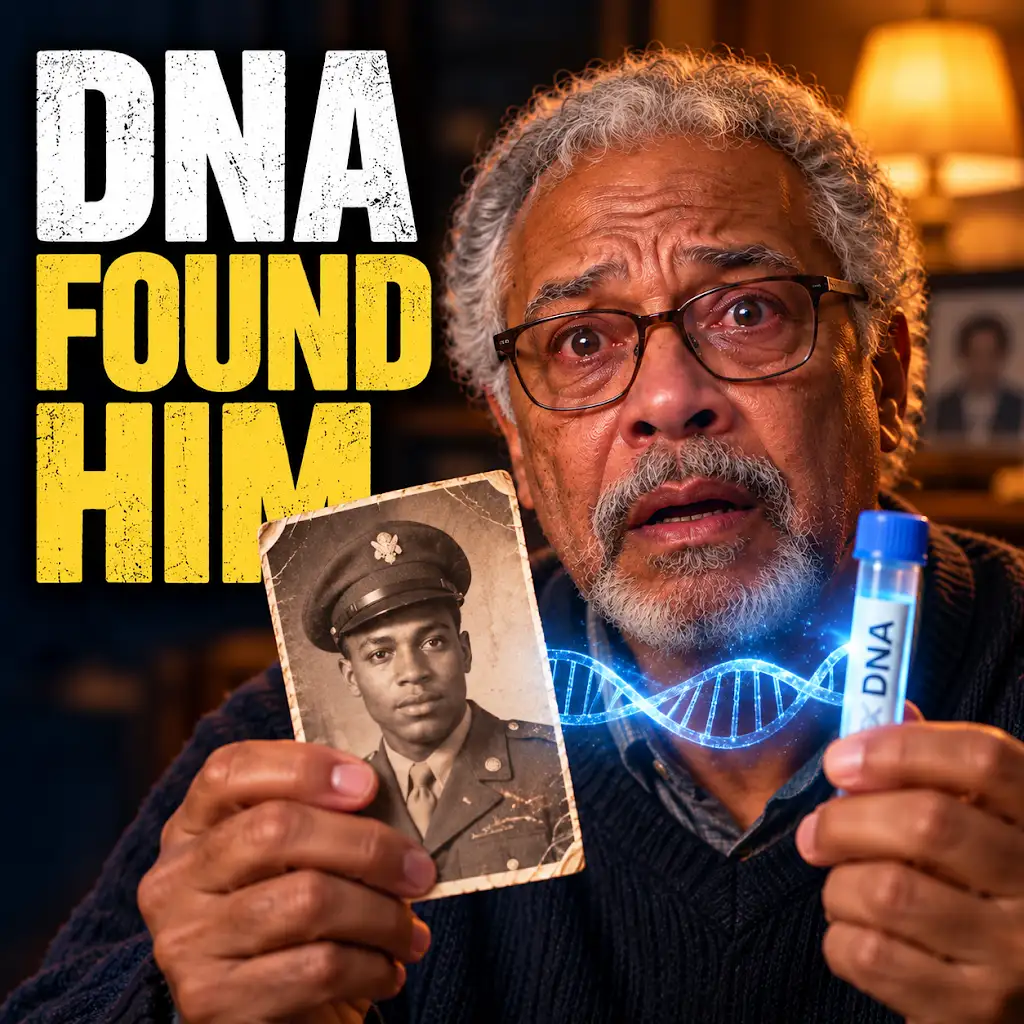
His WWII GI Father Was a Mystery for Nearly 80 Years
FAQs
What was the 80 year old family mystery that was solved?
The 80 year old family mystery that was solved involved the disappearance of a family heirloom, a valuable diamond necklace, during a family gathering in 1940.
How was the family mystery finally solved after 80 years?
The family mystery was finally solved when a hidden compartment was discovered in an old family heirloom chest, revealing the missing diamond necklace tucked away safely inside.
Who was involved in the search for the missing diamond necklace?
Several family members spanning multiple generations were involved in the search for the missing diamond necklace, determined to uncover the truth behind the decades-old mystery.
What was the significance of the diamond necklace to the family?
The diamond necklace held sentimental value to the family as it was a cherished heirloom passed down through generations, symbolizing love, unity, and tradition within the family.
How did the discovery of the missing diamond necklace impact the family?
The discovery of the missing diamond necklace brought closure to the family, resolving a long-standing mystery and reaffirming the importance of family history and connections.