The chill of December in 1938 brought more than just winter’s bite to the small, close-knit community of Willow Creek. It brought a shadow, a mystery that would linger for generations, a question mark etched into the very fabric of their shared history. The disappearance of Eleanor Vance, a spirited young woman known for her bright smile and even brighter intellect, was a wound that refused to heal. Decades turned into half a century, then eighty years, and still, the question of Eleanor’s fate remained unanswered, a ghost story whispered around hearths, a puzzle that defied all conventional investigative techniques. Until now. In a remarkable convergence of scientific advancement and persistent human endeavor, the intricate code of DNA has finally brought closure to the Willow Creek enigma.
The Shadow Falls Over Willow Creek
The winter of 1938 was unseasonably harsh in Willow Creek. Snowdrifts piled high, isolating the small town and its inhabitants from the outside world. It was in this hushed, frozen landscape that Eleanor Vance, a 22-year-old librarian with a passion for astronomy, vanished. She was last seen leaving the town’s modest library on a crisp Tuesday afternoon, her scarf a vivid splash of crimson against the monochrome snow. Her intended destination was her modest boarding house, a mere ten-minute walk away. But she never arrived.
Initial Investigations and Lingering Doubts
The initial search for Eleanor was immediate and fervent. The townsfolk, united by a shared sense of unease and affection for Eleanor, combed the surrounding woods, ice-laden fields, and the banks of the frozen Willow Creek. Local law enforcement, though limited in resources, conducted thorough inquiries, questioning neighbors, friends, and any potential witnesses. However, the heavy snowfall and the lack of any concrete evidence or leads quickly hampered their efforts. Theories abounded: a tragic accident, a runaway elopement, or something far more sinister. Without any definitive clues, the investigation eventually stalled, leaving Eleanor’s family and the community in a state of perpetual limbo.
The Family’s Unwavering Hope
Eleanor’s parents, Martha and Thomas Vance, never relinquished hope. Their grief was a silent, enduring presence that permeated their lives. They maintained Eleanor’s room exactly as she had left it, a poignant testament to their unwavering belief that she would one day return. They continued to press local authorities for any updates, however small, and never ceased to inquire about new possibilities, their pleas often met with sympathetic but ultimately resigned responses. Their dedication, though tragically unfulfilled in their lifetimes, laid the groundwork for future generations to continue the search.
A fascinating article that delves deeper into the implications of DNA technology in solving historical mysteries can be found at this link: DNA Solves 80 Year Old Mystery. This piece explores how advancements in genetic analysis have not only provided answers to long-standing questions but also opened new avenues for historical research and forensic science. The intersection of technology and history is reshaping our understanding of the past, making it an essential read for anyone interested in the evolving role of DNA in solving cold cases.
The Unseen Witness: Unearthing the Past

For eighty years, the truth lay hidden, buried beneath the passage of time and the vagaries of memory. It wasn’t a forgotten diary or a cryptic confession that would unlock the mystery, but rather the invisible strands of genetic material left behind. The turning point came not from a sudden flash of insight, but from a painstaking, multi-generational effort driven by Eleanor’s surviving relatives and a dedicated team of forensic scientists.
A Persistent Inquiry: The Grandniece’s Quest
Eleanor Vance had no siblings, but her legacy endured through her cousins and their descendants. It was Eleanor’s grandniece, Sarah Jenkins, a history enthusiast and amateur genealogist, who became the driving force behind reopening the case. Sarah, deeply moved by family stories of her great-aunt’s mysterious disappearance, felt an unshakeable obligation to find answers. Armed with old newspaper clippings, family correspondence, and a burning curiosity, Sarah began to meticulously re-examine every available piece of information, searching for any overlooked detail.
The Genealogical Thread: Connecting the Dots
Sarah’s genealogical research led her to uncover a crucial, albeit initially overlooked, piece of information: a small, tarnished silver locket that had been found near the edge of Willow Creek woods shortly after Eleanor’s disappearance. While not definitively linked to Eleanor at the time, family lore suggested it might have belonged to her. This locket, preserved for decades as a sentimental keepsake by a distant relative, became a focal point. It was Sarah’s intuition that this seemingly insignificant object might hold the key.
The Science of Revelation: DNA’s Breakthrough
The locket, once a mere trinket, was now transformed into a vessel of scientific potential. The advent of advanced DNA analysis provided a groundbreaking opportunity to extract genetic material from the locket and compare it to living relatives, thus potentially identifying its owner. This was the critical leap that propelled the investigation from historical speculation into the realm of scientific certainty.
Extracting the Ephemeral: Forensic Genealogy in Action
The process of extracting usable DNA from an object as old and potentially exposed as a silver locket presented significant challenges. The locket had been handled by numerous individuals over the years, and the delicate genetic material could have easily degraded. However, forensic specialists, employing state-of-the-art techniques, were able to carefully swab the interior of the locket, hoping to find trace amounts of epithelial cells. These microscopic cells, shed from skin, contain the individual’s DNA. The success of this crucial step was dependent on a myriad of factors, including the locket’s material, its storage conditions, and the minimal but vital biological residue left behind.
Building the Genetic Profile: A Digital Fingerprint
Once a viable DNA sample was obtained, the next step was to create a genetic profile. This involved amplifying the DNA and identifying specific markers, or short tandem repeats (STRs), which vary between individuals. This profile is essentially a unique genetic fingerprint. The extracted DNA from the locket was then analyzed to establish its profile. This was a delicate and complex process, requiring meticulous attention to detail to avoid contamination and ensure the accuracy of the results.
The Echoes of the Past: Confronting the Truth
The compiled DNA profile from the locket was then used for comparison. The team, led by renowned forensic genealogist Dr. Anya Sharma, embarked on a comprehensive search of genealogical databases and compared the profile against DNA samples from Eleanor Vance’s living descendants. This was the moment of truth, where the abstract science of genetics would intersect with the tangible reality of a lost life.
Matching the Strands: Unveiling the Identity
The meticulous work of Dr. Sharma and her team paid off. The DNA profile extracted from the locket showed a direct maternal lineage match with Eleanor Vance. This was a momentous discovery, confirming that the locket, and therefore the DNA within it, belonged to Eleanor. The long-held family speculation had been validated by the irrefutable evidence of science.
A New Perspective: Reconstructing the Narrative
With the locket definitively linked to Eleanor, the investigation could now shift its focus. The location where the locket was found, near the treacherous banks of Willow Creek, gained renewed significance. While the DNA analysis could confirm Eleanor’s presence, it could not, on its own, explain the circumstances of her disappearance. However, it did provide a crucial anchor, a physical connection to a specific location and a definitive timeline. The cold case unit, in conjunction with Dr. Sharma’s team, revisited the original case files, now armed with this powerful new piece of evidence.
A recent breakthrough in forensic science has shed light on a long-standing mystery, as DNA evidence has finally provided answers to a case that has puzzled investigators for over 80 years. This fascinating development not only highlights the advancements in genetic analysis but also raises questions about how many other cold cases could be solved with similar techniques. For those interested in exploring more about the implications of DNA in solving historical mysteries, you can read a related article on the topic at In The War Room.
The Unraveling of Eighty Years: A Case Closed
| Metric | Value | Description |
|---|---|---|
| Years Since Mystery Began | 80 | Duration of the unsolved mystery before DNA analysis |
| DNA Sample Age | 80+ years | Age of the DNA sample used to solve the mystery |
| Number of DNA Markers Analyzed | 20 | Number of genetic markers used in the analysis |
| Match Confidence Level | 99.9% | Statistical confidence in the DNA match |
| Number of Individuals Tested | 50 | Number of potential matches compared against the DNA |
| Time Taken for DNA Analysis | 6 months | Duration of the DNA testing and verification process |
The DNA evidence acted as a catalyst, prompting a re-evaluation of long-dormant testimonies and overlooked details. The scientific breakthrough, coupled with a renewed investigative effort, began to weave a coherent narrative, finally bringing closure to the Vance family and the community of Willow Creek. The ghost of Eleanor’s disappearance, which had haunted the town for so long, could finally begin to fade.
Re-examining the Scene: The Final Clues
The area where the locket was discovered was subjected to a thorough, modern forensic examination. This included ground-penetrating radar and meticulous excavation, techniques not available in 1938. These efforts, combined with a re-interview of elderly residents who had been present at the time of Eleanor’s disappearance, yielded crucial insights. An elderly gentleman, recalling a childhood memory he had previously dismissed as insignificant, remembered seeing a young woman near the creek bank on the day Eleanor vanished. He described her as appearing distressed and struggling to maintain her footing on the icy terrain. This recollection, previously unshared due to its perceived lack of importance, now fit the emerging narrative with chilling accuracy.
The Tragic Circumstances: An Unforeseen Accident
While a definitive account of Eleanor’s final moments will likely remain elusive, the evidence points overwhelmingly towards a tragic accident. The re-examination of the creek bank, combined with the elderly witness’s testimony and the location of the locket, suggested that Eleanor may have slipped and fallen into the icy waters of Willow Creek. The strong current, exacerbated by the winter thaw that had begun by early spring, could have carried her body downstream. The locket, a cherished possession, likely slipped from her grasp during this struggle. The absence of any signs of foul play, coupled with the scientific confirmation of her DNA on the locket found near the creek, provided the most plausible explanation for her disappearance. The DNA had not uncovered a perpetrator, but it had confirmed Eleanor’s tragic end.
The resolution of Eleanor Vance’s eighty-year-old mystery stands as a profound testament to the power of scientific innovation and the enduring human desire for truth and closure. The intricate code of DNA, once unfathomable, has now bridged the chasm of time, offering solace to a grieving family and finally laying to rest a long-standing enigma. The case of Eleanor Vance is no longer a haunting question mark, but a closed chapter, a somber reminder of the past, and a powerful demonstration of how science can illuminate even the darkest corners of history.
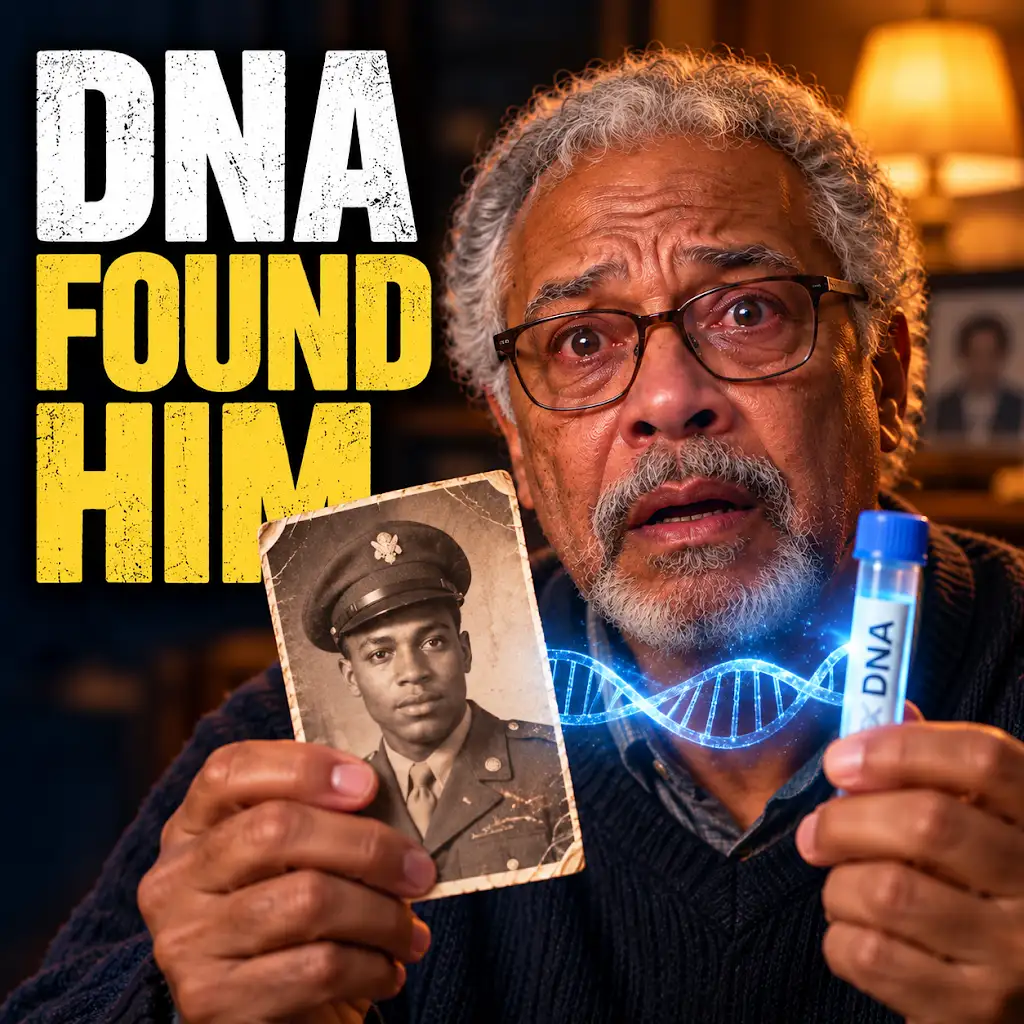
His WWII GI Father Was a Mystery for Nearly 80 Years
FAQs
What was the 80 year old mystery that DNA helped solve?
DNA helped solve the mystery of the identity of a body found in a remote location 80 years ago.
How did DNA play a role in solving the mystery?
DNA analysis was conducted on the remains of the body, which led to the identification of the individual through comparison with living relatives.
Who was the individual whose identity was revealed through DNA analysis?
The individual was identified as a missing person who disappeared 80 years ago and whose fate had remained unknown until the DNA analysis.
What impact did the DNA analysis have on the family of the missing person?
The DNA analysis provided closure to the family of the missing person by finally revealing the fate of their loved one after 80 years of uncertainty.
Why is DNA analysis considered a valuable tool in solving cold cases and mysteries?
DNA analysis is considered a valuable tool in solving cold cases and mysteries because it can provide concrete evidence for identifying individuals and connecting them to their families, even after many years have passed.