
The night of May 1-2, 2011, remains etched in the annals of modern military history. It was the culmination of a decade-long manhunt, a meticulously planned and daring operation to eliminate Osama bin Laden, the architect of the 9/11 attacks. The world watched, breathless, as the news broke: the leader of al-Qaeda was dead. What remained largely unseen, shrouded in the secrecy inherent to elite special operations, was the complex interplay of forces that made this audacious raid possible. While often simplistically framed as a contest between “Delta Force vs. SEAL Team Six,” the reality was far more nuanced, a testament to the collaborative spirit and distinct capabilities of America’s premier counter-terrorism units.
The intelligence gathering leading to the Abbottabad raid was a monumental effort spanning years, involving a vast array of intelligence agencies, human sources, and technological surveillance. The hunt for bin Laden was not a sudden flash of inspiration but a slow, arduous process of piecing together fragments of information.
The Decades-Long Pursuit
The quest for Osama bin Laden began in earnest after the 1998 East Africa embassy bombings, which solidified his status as a principal target for the United States. However, his elusiveness, coupled with the vast reach of al-Qaeda, made him a ghost, moving through the rugged terrain of Afghanistan and Pakistan. The 9/11 attacks amplified the urgency, transforming the pursuit into a national imperative.
The Power of Intelligence
The breakthrough in locating bin Laden’s compound in Abbottabad, Pakistan, was a direct result of sustained intelligence operations. CIA analysts, working tirelessly, correlated various intelligence streams – satellite imagery, signals intelligence, and human intelligence – to identify a heavily fortified compound that exhibited unusual security protocols and was inhabited by high-value al-Qaeda figures. The painstaking work of identifying and tracking couriers, and eventually linking them to the compound, was critical.
The Strategic Imperative
The strategic decision to eliminate bin Laden was multifaceted. Beyond seeking retribution for the 9/11 attacks, his continued presence posed an ongoing threat to global security. His capacity to inspire and direct terrorist operations remained a significant concern. The successful apprehension or elimination of such a high-profile enemy leader would also serve as a powerful symbolic victory for the United States and its allies.
The debate over the effectiveness and tactics of Delta Force versus SEAL Team Six during the bin Laden raid has sparked considerable interest among military enthusiasts and historians alike. For a deeper understanding of the operational differences and strategic implications of this high-stakes mission, you can read a related article that delves into the intricacies of special operations forces and their roles in counter-terrorism efforts. Check it out here: In The War Room.
Elite Forces: The Dichotomy of American Special Operations
The United States military boasts an array of highly specialized units, each honed for specific mission sets. Within the realm of counter-terrorism and direct action, two names frequently arise: Delta Force and SEAL Team Six. Understanding their distinct origins, training, and operational doctrines is crucial to appreciating their roles in high-stakes operations like the bin Laden raid.
Delta Force: The Direct Action Spearhead
Officially known as the 1st Special Forces Operational Detachment-Delta (SFOD-D) or “Combat Applications Group” (CAG), Delta Force is the U.S. Army’s premier counter-terrorism unit. Their primary mission revolves around direct action, hostage rescue, and counter-terrorism operations.
Origins and Recruitment
Delta Force was established in the late 1970s by Colonel Charlie Beckwith, drawing inspiration from the British Special Air Service (SAS). Its recruitment process is famously rigorous, drawing from experienced personnel within the U.S. Army Special Forces, Rangers, and other elite units. Candidates undergo an intensely challenging selection and training pipeline that tests not only physical prowess but also mental fortitude, problem-solving skills, and adaptability under extreme pressure.
Operational Philosophy
Delta Force is known for its emphasis on meticulous planning, precision execution, and the ability to operate autonomously in hostile environments. Their training often involves extensive simulations of complex scenarios, from urban warfare to low-visibility hostage rescues. They are equipped with cutting-edge technology and are masters of infiltration and exfiltration, often employing unconventional methods. Their operations are typically conducted in a highly classified manner, with minimal public disclosure.
SEAL Team Six: The Naval Special Warfare Elite
Naval Special Warfare Development Group (NSWDG), more commonly known as SEAL Team Six, is the premier counter-terrorism unit of the United States Navy. Formed in response to the failed Iran hostage rescue mission (Operation Eagle Claw) in 1980, SEAL Team Six was designed to be a specialized, highly mobile force capable of conducting a wide range of sensitive and dangerous missions.
Origins and Development
SEAL Team Six comprises elite operators drawn from the U.S. Navy SEALs. The selection and training process is equally demanding, building upon the already formidable skills of a seasoned SEAL. Operators are trained in a broad spectrum of special operations, including maritime interdiction, direct action, special reconnaissance, and counter-terrorism. Their unique maritime background often informs their operational approaches.
Mission Specialization
While Delta Force is primarily an Army unit, SEAL Team Six possesses a distinct naval orientation, excelling in amphibious operations, ship boardings, and submarine interdiction. However, their capabilities extend far beyond maritime environments, and they are frequently deployed in landlocked regions for high-risk missions. Their training often emphasizes speed, surprise, and overwhelming force to achieve mission success.
The Abbottabad Assault: Crafting Operation Neptune Spear

The planning and execution of Operation Neptune Spear were a testament to the collaborative efforts of multiple branches and units within the U.S. military and intelligence community. The decision regarding which unit would spearhead the assault was based on a multitude of factors, including mission requirements, available capabilities, and logistical considerations.
Mission Parameters and Capabilities
The mission to penetrate a fortified compound in a foreign, potentially hostile, territory, neutralize a high-value target, and exfiltrate safely presented unique challenges. It required a unit with proven expertise in direct action, close-quarters combat, intelligence gathering in real-time, and the ability to operate with precision under immense pressure.
The Role of Selection
While both Delta Force and SEAL Team Six possess the requisite skills for such a mission, the ultimate decision for this specific operation fell to SEAL Team Six. This was not a reflection of Delta Force’s inferiority, but rather a pragmatic assessment of which unit’s current readiness, specialized equipment, and specific training best aligned with the operational parameters of the Abbottabad raid. Factors such as the compound’s location, the need for a swift and decisive entry, and the maritime exfiltration options likely played a role.
The “Black Hawk Down” Precedent
The lessons learned from the Battle of Mogadishu in 1993, famously depicted in “Black Hawk Down,” undoubtedly influenced the planning. This event highlighted the importance of overwhelming force, rapid response, and avoiding prolonged engagements in hostile territory. The objective was to achieve swift success and minimize the risk of prolonged conflict or the capture of U.S. personnel.
The Importance of Specialization
SEAL Team Six, with its deep integration with naval aviation assets and their experience in maritime interdiction and swift raids, may have been seen as possessing a slight edge in coordinating the helicopter insertion and the rapid extraction required for this specific scenario.
The Raid Unfolds: Execution and Challenges
The night of the raid was a symphony of precision and controlled chaos. The SEALs, clad in their distinctive NVGs and tactical gear, descended from the skies, their helicopters a silent specter against the pre-dawn darkness. The operation was fraught with inherent risks, from mechanical failures to unexpected resistance.
The Insertion and Initial Breach
The raid commenced with the insertion of SEAL Team Six operators via MH-60 Black Hawk helicopters. Two helicopters were tasked with the primary insertion, while others provided support and overwatch. The initial breach of the compound was a critical phase, requiring precise timing and the use of specialized breaching tools to overcome the compound’s defenses.
The Unexpected Challenge of the “Black Hawk”
One of the most significant challenges encountered during the insertion was the unexpected mechanical failure of one of the helicopters, which crashed within the compound. This created a dangerous and volatile situation, but the SEALs’ training kicked in immediately, adapting to the unforeseen circumstances.
The Objective: Eliminating Bin Laden
Once inside the compound, the SEALs navigated through the various buildings, encountering armed resistance from bin Laden’s guards and associates. The primary objective was to locate and neutralize Osama bin Laden. The SEALs encountered fierce opposition, engaging in close-quarters combat with al-Qaeda operatives.
The Final Confrontation
In the upper floors of the main building, the SEALs encountered bin Laden. After confirming his identity, the mission objective was achieved. The swiftness and decisiveness of the engagement were paramount to minimizing any potential for prolonged fighting or further casualties.
The Exfiltration and Securing the Site
Following the neutralization of bin Laden and other key targets, the SEALs meticulously searched the compound for intelligence and evidence. They then exfiltrated the site, utilizing the remaining operational helicopters, leaving behind a compound secured by U.S. forces. The process of collecting intelligence, including computers, hard drives, and documents, was crucial for understanding al-Qaeda’s operational network.
The daring raid that led to the death of Osama bin Laden has sparked extensive debate about the roles of various elite military units, particularly Delta Force and SEAL Team Six. While both teams are renowned for their specialized skills and training, their approaches and missions often differ significantly. For a deeper understanding of the intricacies involved in this high-stakes operation, you can explore a related article that discusses the unique capabilities and histories of these two formidable units. This insightful piece can be found here.
The Aftermath: Legacy and Collaboration
| Metric | Delta Force | SEAL Team Six (DEVGRU) |
|---|---|---|
| Primary Mission Type | Counter-terrorism, hostage rescue, direct action | Counter-terrorism, special reconnaissance, direct action |
| Branch | U.S. Army | U.S. Navy |
| Role in Bin Laden Raid (2011) | Support and backup roles, intelligence gathering | Lead assault team, primary raid execution |
| Number of Operators Involved | Estimated 10-15 | Approximately 20 |
| Training Focus | Close quarters combat, hostage rescue, counter-terrorism | Maritime operations, close quarters combat, counter-terrorism |
| Notable Equipment Used | Specialized assault rifles, breaching tools, night vision | Modified rifles, suppressed weapons, advanced communications |
| Operational Secrecy | Highly classified, limited public information | Highly classified, limited public information |
| Historical Formation | 1977 | 1980s (as DEVGRU) |
The success of Operation Neptune Spear was a monumental achievement, but it also served as a powerful reminder of the critical importance of inter-service cooperation and the distinct, yet complementary, capabilities of America’s elite special operations forces. The narrative of “Delta Force vs. SEAL Team Six” often overshadows the profound collaboration that made the mission possible.
The Unseen Collaboration
While SEAL Team Six executed the direct action assault, Delta Force, along with other intelligence agencies and specialized units, played crucial roles in the intelligence gathering, planning, and potential support roles. The seamless integration of intelligence, planning, and operational execution is the hallmark of successful modern special operations.
The Intelligence Nexus
The CIA, NSA, and other intelligence agencies provided the critical intelligence that located bin Laden. Their efforts were integral to the success of the mission, highlighting that direct action units are only as effective as the intelligence they receive.
Support and Logistics
Numerous other units, including Special Operations aviation units, Special Mission Units, and intelligence support elements, were vital in providing the necessary infrastructure, equipment, and expertise for the operation. The coordinated effort was a testament to the entire special operations community.
The Enduring Legacy
The successful elimination of Osama bin Laden had a profound impact on global counter-terrorism efforts. It delivered a significant blow to al-Qaeda’s leadership and morale, while also providing a measure of closure for the victims of 9/11 and their families. The raid stands as a testament to the dedication, bravery, and unparalleled skill of America’s special operations forces.
The Continued Evolution of Special Operations
The lessons learned from Operation Neptune Spear, and indeed from many other high-stakes missions, continuously inform the evolution of special operations doctrine, training, and equipment. The ability of units like Delta Force and SEAL Team Six to adapt, innovate, and collaborate remains paramount in the ever-changing landscape of global security. The myth of inter-unit rivalry is often dispelled in the face of shared sacrifice and the unwavering commitment to protecting national interests.
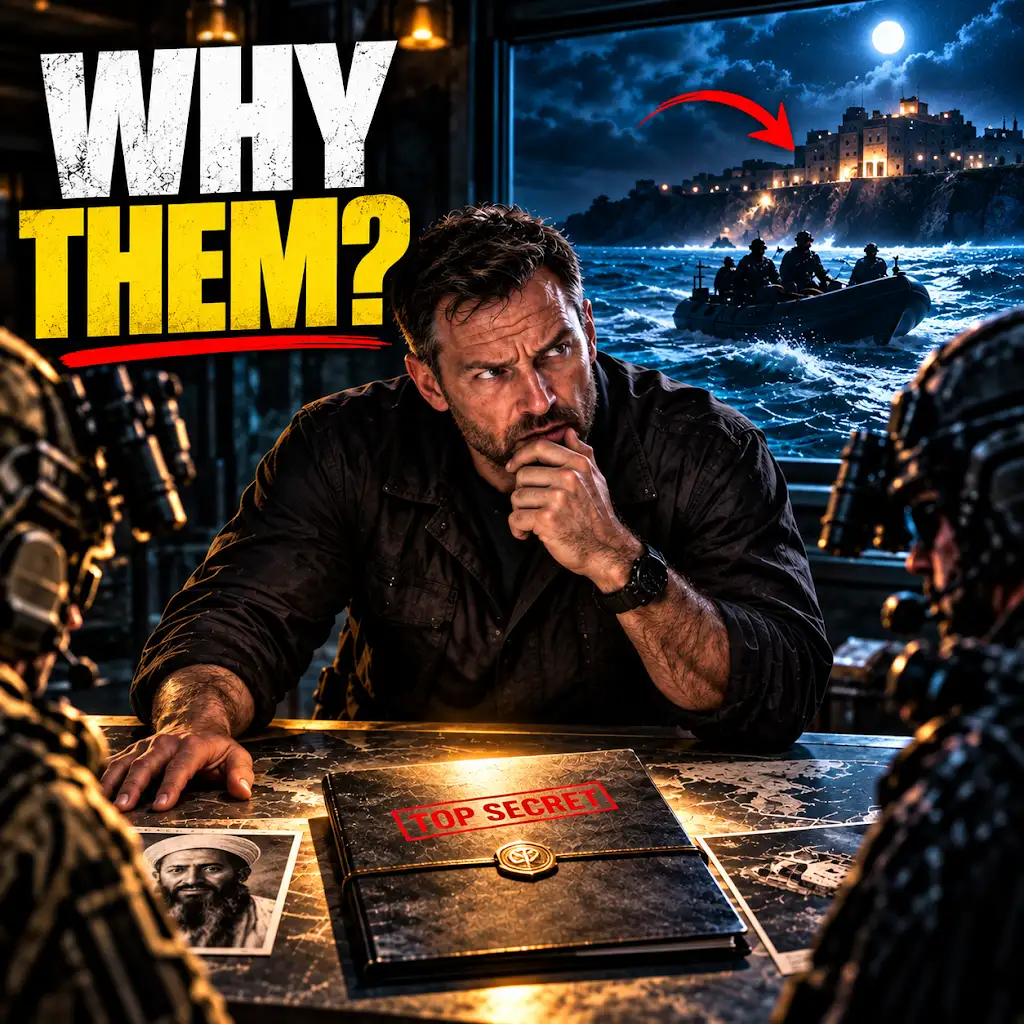
Why SEAL Team Six Got the Bin Laden Raid — Not Delta Force
FAQs
What is the difference between Delta Force and SEAL Team Six?
Delta Force is a special operations unit within the U.S. Army, while SEAL Team Six is a special operations unit within the U.S. Navy.
Which unit was responsible for the raid that killed Osama bin Laden?
SEAL Team Six, officially known as the Naval Special Warfare Development Group (DEVGRU), conducted the raid that resulted in the death of Osama bin Laden in 2011.
What are the primary roles of Delta Force and SEAL Team Six?
Delta Force specializes in counterterrorism and hostage rescue operations, while SEAL Team Six focuses on counterterrorism, special reconnaissance, and direct action missions.
How are members selected for Delta Force and SEAL Team Six?
Members of Delta Force are recruited from the U.S. Army Special Forces, Rangers, and other military branches, while members of SEAL Team Six are selected from the U.S. Navy SEALs.
Are Delta Force and SEAL Team Six the only special operations units in the U.S. military?
No, there are several other special operations units in the U.S. military, including the Army Rangers, Green Berets, Marine Corps Special Operations Command (MARSOC), and Air Force Special Tactics Squadron.