
The biting winds of December 1944 whipped across the Ardennes forest, carrying with them the chilling premonition of a battle unlike any other. As the Allied forces, accustomed to the steady grind of attrition and methodical advance, faced the sudden, brutal onslaught of a German counteroffensive, a critical vulnerability was exposed: a leadership crisis that threatened to unravel the very fabric of their victory. The Battle of the Bulge, while ultimately an Allied triumph, stands as a stark testament to the cascading failures of command, communication, and strategic foresight that nearly plunged the Western Front into disaster.
The autumn of 1944 had fostered a dangerous sense of complacency within the Allied command structure. The relentless successes of D-Day and the subsequent liberation of France had led many to believe that the war in Europe was all but over. Optimism, a valuable commodity in wartime, had, in this instance, morphed into an overconfidence that blinded them to the desperate ingenuity of a cornered enemy. Hitler, sensing his empire crumbling, had gambled everything on a last-ditch offensive, a bold thrust through the Ardennes aimed at splitting the Allied forces and recapturing Antwerp, a vital port. This audacious plan, codenamed Wacht am Rhein (Watch on the Rhine), was conceived and executed with a degree of secrecy and surprise that would have been unthinkable had the Allied leadership maintained a more vigilant posture.
The Intelligence Gap: Blind Spots and Dismissed Warnings
The most glaring symptom of the leadership crisis lay in the profound intelligence failure. Despite numerous fragmented reports from Resistance networks, aerial reconnaissance, and even Allied prisoners of war, the true scale and intent of the German buildup remained largely unrecognized.
Underestimation of German Capabilities: “They’re Finished!”
A prevalent sentiment within Allied command was that the German army was depleted, its resources exhausted. This belief, while perhaps comforting, led to a dangerous underestimation of their ability to mount a large-scale offensive. The fragmented intelligence that did surface was often dismissed as minor troop movements or localized actions, rather than a concerted strategic effort. General Omar Bradley, commanding the US First Army, famously remarked, “The Germans are finished.” While understandable given the preceding months of success, this sentiment fostered a complacency that directly contributed to the surprise.
Over-reliance on Static Defenses: The Maginot Line Mentality
The Ardennes sector, long considered a quiet front, had been lightly defended. The assumption was that the dense forests and difficult terrain would deter any significant enemy advance. This, in effect, created a defensive posture reminiscent of the pre-war Maginot Line mentality – relying on static fortifications and a belief in the impassability of natural barriers, rather than anticipating a dynamic and aggressive enemy.
The Human Element of Dismissal: Personal Biases and Bureaucratic Inertia
Beyond the systemic issues, individual leadership failings played a role. Some commanders were simply not receptive to intelligence that contradicted their preconceived notions. The sheer volume of intelligence, while potentially overwhelming, also allowed for selective interpretation. Bureaucratic inertia further hampered the effective dissemination and analysis of crucial information. Reports that did not fit neatly into established assessment frameworks were often relegated to the lower echelons or simply lost in the shuffle.
The leadership crisis during the Battle of the Bulge is a pivotal moment in World War II history, highlighting the challenges faced by military commanders under extreme pressure. For a deeper understanding of the complexities surrounding this crisis, you can explore the article titled “Leadership Challenges in the Battle of the Bulge” available at this link. This article delves into the decisions made by key figures and the impact of their leadership styles on the outcome of the battle.
Strategic Miscalculations: A Divide in the High Command
The surprise of the German offensive exposed a more insidious crisis: a deep-seated strategic divide within the Allied high command, particularly between the American generals. This discord manifested in differing interpretations of troop deployment, operational priorities, and ultimately, the allocation of vital resources.
The Disconnect Between Eisenhower and His Field Commanders
General Dwight D. Eisenhower, the Supreme Allied Commander, was a master of diplomacy and grand strategy, but the fluid and chaotic nature of the Ardennes offensive stretched his command and control capabilities to their limit. While he ultimately made the decisions, the effectiveness of those decisions was hampered by the fragmented reporting and the conflicting advice he received.
Eisenhower’s Trust in Bradley: A Fault Line Emerges
Eisenhower’s confidence in Lieutenant General Omar Bradley and his Twelfth Army Group was substantial. However, this confidence, coupled with Bradley’s own reassessment of the situation, led to a delay in reinforcing the critical Sixth Army Group under Lieutenant General Courtney H. Hodges. The initial defensive line held by Hodges’ First Army was the primary target of the German thrust, and its resilience was paramount.
Montgomery’s “Lone Wolf” Approach: Friction and Frustration
Field Marshal Bernard Montgomery, commanding the British 21st Army Group and the US Ninth and First Armies north of the German breakthrough, found himself in a precarious position. His attempts to assert control over American forces and his sometimes imperious demeanor created friction with American commanders. His famously detailed tactical plans, while potentially effective, were often seen as disruptive by those accustomed to a more independent style of command.
The Blame Game: Shifting Responsibilities in the Fog of War
As the initial shock wore off and the Allies began to stem the German tide, a palpable sense of blame began to permeate the command structure. The focus shifted from immediate survival to assigning responsibility for the catastrophic surprise. This internal recrimination, while perhaps a natural human reaction, further exacerbated the leadership crisis by diverting attention from the ongoing fight and fostering an atmosphere of distrust.
Bradley vs. Hodges: The Court of Inquiry Debate
The performance of Lieutenant General Courtney H. Hodges, commander of the US First Army, came under intense scrutiny. His troops bore the brunt of the initial assault, and while they fought bravely, the rapid penetration of the German forces raised questions about his preparedness. A subsequent court of inquiry, though ultimately exonerated Hodges, highlighted the deep divisions and the intense pressure to find a scapegoat.
The “American Problem” Narrative: Montgomery’s Criticism
Montgomery, in his characteristic blunt fashion, voiced concerns about what he perceived as a lack of coordination and a “flabby” defensive posture among some American units. While his criticisms may have contained elements of truth, they were often delivered in a manner that alienated his American counterparts and further fueled the internal divisions.
Communication Breakdown: The Silenced Voices of the Front

A critical element of any successful military operation is effective communication. During the Battle of the Bulge, this vital artery was severely compromised, leading to a cacophony of confusion and a dangerous lack of situational awareness at higher echelons.
The Disruption of Lines and Radio Silence: The Enemy’s Advantage
The speed and ferocity of the German offensive, coupled with the challenging terrain and weather conditions, led to the widespread destruction of Allied communication lines. Wires were cut, and radio silence was imposed on many units to prevent enemy interception. This left many units isolated and unable to report their situations or receive orders, creating vast “black holes” of information for the command.
Isolated Units: Fighting in the Dark
Innumerable American units found themselves cut off and fighting desperately without any knowledge of the broader strategic picture. Their bravery and resilience in these isolated pockets were legendary, but their ability to contribute to the overall Allied effort was significantly hampered by their inability to communicate with their higher command.
The Battle of Bastogne: A Symbol of Isolation and Resilience
The siege of Bastogne by the 101st Airborne Division, though a testament to American fortitude, also exemplified the communication breakdown. Surrounded and vastly outnumbered, the defenders fought heroically, famously responding “Nuts!” to a German surrender demand. However, their isolation meant that their desperate plight was not immediately understood by higher command, contributing to the delay in reinforcing them.
Inaccurate Reporting and the Erosion of Trust: The Fog of War Amplified
Even when communication channels were available, the accuracy of the information being transmitted was often suspect. The chaos of battle, coupled with stress and confusion, could lead to exaggerated or incomplete reports. This, in turn, eroded trust between front-line units and their commanders, making it increasingly difficult to make informed decisions.
The “Fog of War”: A New Dimension of Uncertainty
The Battle of the Bulge brought the concept of the “fog of war” to a new and terrifying dimension. The lack of clear, reliable information meant that even the best-intentioned commanders were often operating with incomplete or inaccurate pictures of the battlefield. This uncertainty made strategic planning and effective tactical adjustments incredibly challenging.
Reinforcements and Reorganization: The Slow Climb Back

As the initial shock subsided and the scale of the German breakthrough became undeniable, the Allied leadership was forced to confront the reality of their situation and initiate a massive, albeit belated, effort to plug the gap and push back the enemy. This phase of the battle was characterized by desperate improvisation and a heroic, if chaotic, reorganization of forces.
Eisenhower’s Decisive Action: Reallocating Resources
Eisenhower, once the surprise was fully grasped, demonstrated decisive leadership in reallocating resources. He ordered critical reserves, including elements of General George S. Patton’s Third Army, to pivot north to relieve the besieged forces in Bastogne. This was a bold move that, while leaving other sectors vulnerable, was essential to stemming the German advance and preventing a catastrophic collapse.
Patton’s Masterful Relief: A Turning Point
General George S. Patton Jr., known for his aggressive tactics and unwavering confidence, played a pivotal role in turning the tide. His Third Army, after a swift and audacious ninety-degree pivot, broke through the German lines to relieve Bastogne. This feat of logistical brilliance and battlefield audacity showcased the kind of decisive leadership that had been desperately needed in the early days of the offensive.
The Southern Shoulder: Holding the Line
While the north saw major counterattacks, the southern shoulder of the bulge, though heavily contested, managed to hold. This resilience, often overlooked, was crucial in preventing the Germans from achieving a complete operational victory. The tenacious defense by units of Bradley’s command, despite the initial surprise, prevented the complete severing of Allied forces.
The Cost of Hesitation: Lessons Learned in Blood
The effectiveness of these reinforcements and reorganizations came at a tremendous cost. The delays in responding to the initial German offensive meant that Allied soldiers were forced to fight and die in desperate, piecemeal engagements. The leadership crisis had transformed a potentially containable incursion into a bloody and protracted battle.
The Sacrifice of Elite Units: The Price of Surprise
The repeated commitment of elite airborne and infantry divisions, often without adequate preparation or overwhelming support, underscored the desperation of the situation. These units suffered grievous casualties, a stark reminder of the price of the initial intelligence and strategic failures.
The leadership crisis during the Battle of the Bulge had significant implications for the outcome of the campaign, as various commanders struggled to coordinate their efforts amidst the chaos of battle. Understanding the complexities of this situation can be further explored in a related article that delves into the strategic decisions made during this critical period. For more insights, you can read about it in this detailed analysis that examines the challenges faced by military leaders during one of World War II’s most pivotal moments.
The Legacy of the Crisis: A Cautionary Tale for Future Commanders
| Aspect | Details |
|---|---|
| Event | Battle of the Bulge Leadership Crisis |
| Date | December 16, 1944 – January 25, 1945 |
| Location | Ardennes Forest, Belgium |
| Key Allied Leaders | General Dwight D. Eisenhower, General Omar Bradley, General George S. Patton |
| Leadership Crisis Cause | Surprise German offensive causing confusion and delayed response among Allied commanders |
| Impact on Command | Initial breakdown in communication and coordination among Allied units |
| Response Time | Several days delay in mobilizing counteroffensive forces |
| Outcome | Allied forces eventually regained control, but leadership challenges highlighted need for improved coordination |
| Lessons Learned | Importance of rapid communication, flexible command structure, and preparedness for surprise attacks |
The Battle of the Bulge, in its stark depiction of a leadership crisis, offers enduring lessons for military commanders and strategists. It highlights the perils of overconfidence, the critical importance of robust intelligence gathering and analysis, and the necessity of cohesive and adaptable command structures.
The Importance of Vigilance: Never Underestimate the Enemy
The most profound lesson is the imperative of constant vigilance. The assumption of victory can be a dangerous illusion, and a truly effective leader must always prepare for the unexpected. The German counteroffensive, born of desperation, demonstrated that even a seemingly defeated enemy can muster the will and resources for a devastating final act.
Proactive Intelligence: Beyond Fragmented Whispers
The battle underscored the need for proactive intelligence gathering, not merely reactive analysis of fragmented whispers. This involves investing in sophisticated reconnaissance, cultivating reliable sources, and fostering a culture where all intelligence, no matter how unlikely, is seriously considered and thoroughly investigated.
Cohesive Command and Unified Strategy: Bridging the Gaps
The internal divisions within the Allied command during the Battle of the Bulge serve as a stark warning against ego-driven leadership and a lack of unified strategic vision. Effective leadership requires the ability to set aside personal rivalries, foster trust among subordinates, and ensure that all efforts are aligned towards a common objective.
Open Communication and Trust: The Foundation of Effective Command
The breakdown in communication was a direct symptom of deeper issues. Building a command structure based on open, honest communication and mutual trust is essential, especially in the crucible of combat. Commanders must feel empowered to report challenges and receive support without fear of reprisal.
The Human Cost of Failure: A Debt Paid in Lives
Ultimately, the leadership crisis of the Battle of the Bulge was paid for in the lives of countless soldiers. The tactical brilliance of individual units and the eventual Allied victory cannot erase the fact that the initial failures of leadership led to unnecessary suffering and loss. The battle stands as a somber reminder that the decisions made in the war rooms have a direct and profound impact on the men fighting and dying on the front lines. The lessons learned in the frozen forests of the Ardennes remain as relevant today as they were in the desperate winter of 1944.
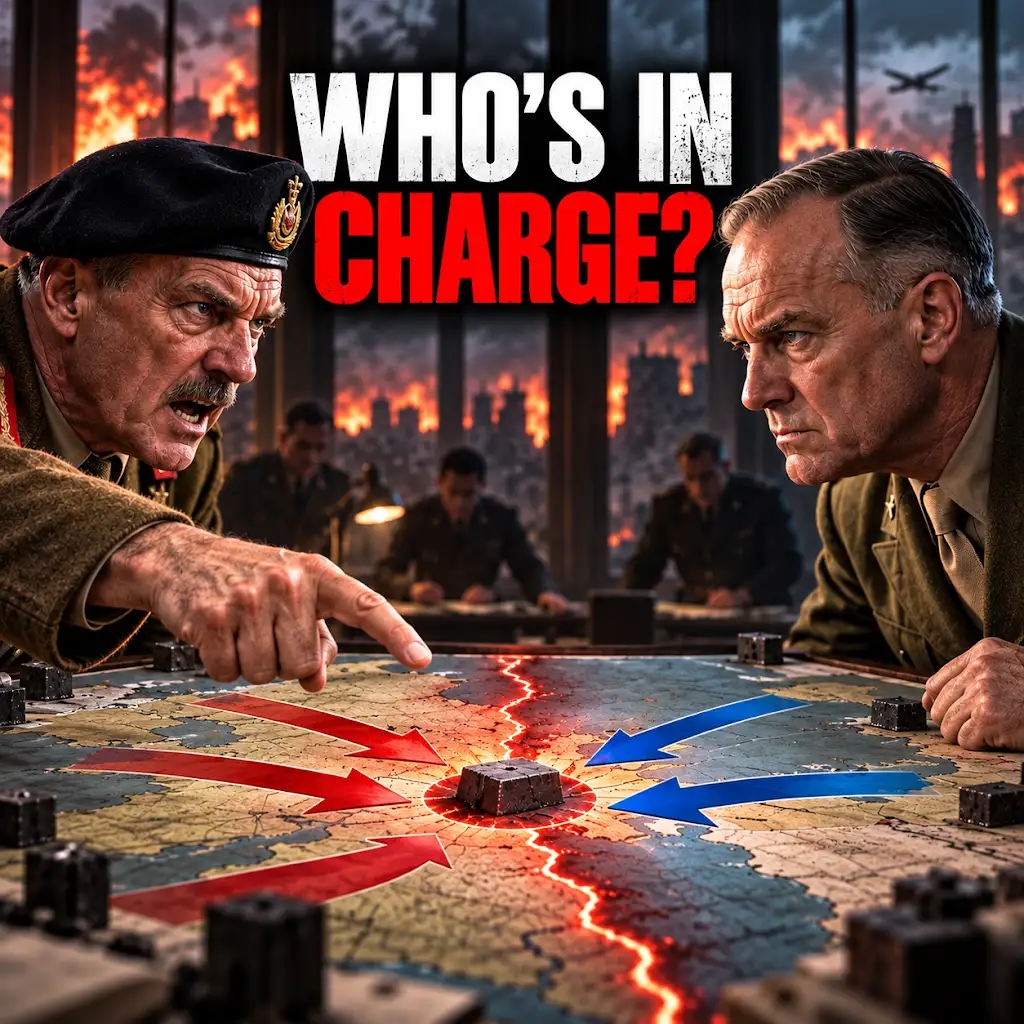
Eisenhower Gave Montgomery 2 U.S. Armies—Then He Wanted More
FAQs
What was the Battle of the Bulge leadership crisis?
The Battle of the Bulge leadership crisis refers to the challenges faced by the Allied forces during the surprise German offensive in the Ardennes region of Belgium during World War II.
Who were the key leaders involved in the Battle of the Bulge?
Key leaders involved in the Battle of the Bulge included American General Dwight D. Eisenhower, British Prime Minister Winston Churchill, American General Omar Bradley, and German Field Marshal Gerd von Rundstedt.
What were some of the factors that contributed to the leadership crisis during the Battle of the Bulge?
Factors that contributed to the leadership crisis during the Battle of the Bulge included poor weather conditions affecting air support, communication breakdowns among Allied forces, and the element of surprise achieved by the German forces.
How did the Allied forces ultimately overcome the leadership crisis during the Battle of the Bulge?
The Allied forces were able to overcome the leadership crisis during the Battle of the Bulge through effective coordination, reinforcement of troops, strategic decision-making, and the resilience of the soldiers on the ground.
What were the long-term implications of the Battle of the Bulge leadership crisis?
The Battle of the Bulge leadership crisis highlighted the importance of strong leadership, communication, and adaptability in military operations. It also led to changes in Allied strategies and tactics to prevent similar crises in the future.