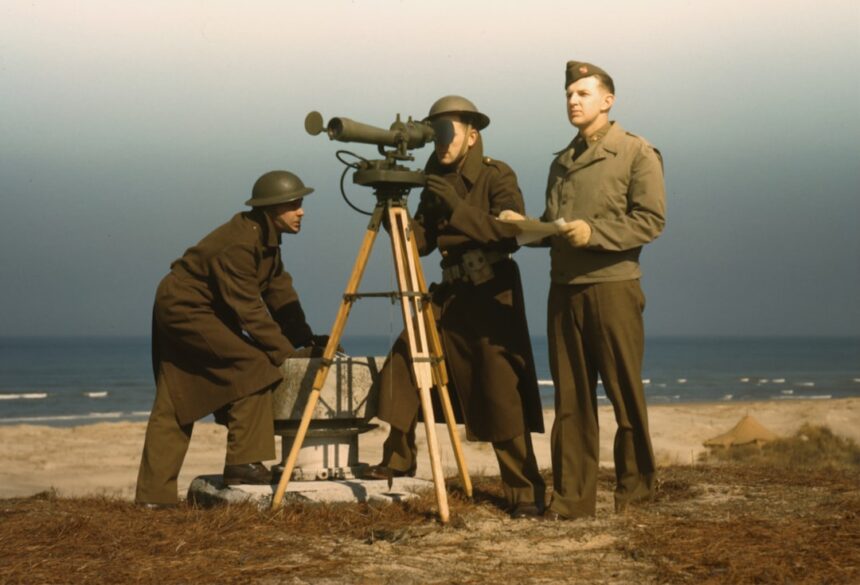
Dwight D. Eisenhower, as the Supreme Allied Commander in Europe during World War II, faced an unprecedented array of strategic and operational challenges. His tenure was defined by a series of critical decisions that shaped the course of the war, from the initial planning of the invasion of Normandy to the final push into Germany. These decisions were not made in a vacuum; they were the result of intense deliberation, consultation with a diverse group of Allied leaders, and a profound understanding of the military, political, and logistical realities of global warfare. Examining these key Allied command decisions reveals Eisenhower’s strategic acumen, his diplomatic skill, and his unwavering commitment to achieving victory while minimizing unnecessary casualties.
The genesis of Eisenhower’s most significant decisions lay in the overarching strategic objective: the liberation of Western Europe from Nazi Germany. The commitment to a cross-channel invasion, codenamed Operation Overlord, was a cornerstone of Allied strategy long before Eisenhower assumed command. However, translating this grand strategy into a viable operational plan was a monumental undertaking, requiring a delicate balance of offensive spirit and pragmatic consideration of enemy strength and Allied limitations.
Defining the Scope and Timing of the Invasion
One of Eisenhower’s earliest and most crucial decisions involved defining the sheer scale and the precise timing of Operation Overlord. The initial conception of an invasion was fluid, with various proposals ranging from smaller raids to full-scale assaults. Eisenhower, inheriting a broad directive, had to coalesce these ideas into a concrete plan. This involved extensive consultations with military planners from both the American and British armies, as well as representatives from other Allied nations. He grappled with the immense logistical requirements: the hundreds of thousands of troops, the vast array of landing craft, the overwhelming naval and air support needed.
The decision on when to launch Overlord was equally fraught with difficulty. The weather played a critical role, demanding a window of opportunity with favorable tides and minimal cloud cover for air support. Furthermore, the availability of troops, landing craft, and airborne divisions was a constantly shifting variable. Eisenhower, against considerable pressure from some quarters to delay further, ultimately settled on June 6, 1944. This decision, known as D-Day, was a calculated risk, a recognition that delaying indefinitely would allow the Germans to further strengthen their defenses and that the political will to maintain such a massive undertaking could wane. The choice of June was a compromise, seeking the optimal balance between weather conditions and the availability of resources.
The Deception Strategy: Operation Fortitude
Integral to the success of Overlord was a sophisticated deception strategy designed to mislead the Germans about the true landing sites and the timing of the invasion. Eisenhower’s endorsement and meticulous oversight of Operation Fortitude were paramount. This elaborate ruse involved creating a phantom army, the First U.S. Army Group (FUSAG), under the command of the highly visible General George S. Patton.
Creating the Illusion of a Northward Threat
Operation Fortitude North and Fortitude South were designed to draw German reserves away from the actual invasion beaches in Normandy. Fortitude North focused on creating the impression of an imminent invasion of Norway, while Fortitude South was the more ambitious and ultimately successful element, convincing the German high command that the main Allied thrust would occur at the Pas-de-Calais, the narrowest point of the English Channel, and a location with more direct routes to Germany. This involved a complex network of fake radio transmissions, dummy landing craft, inflatable tanks, and even carefully managed misinformation leaked through double agents. Eisenhower understood that military superiority in a direct assault was not guaranteed, and therefore, strategic deception was as vital as overwhelming firepower. His unwavering commitment to maintaining the integrity of the deception plan, even when faced with operational realities that might have tempted some to abandon it, proved to be a masterstroke.
The strategic decisions made by General Dwight D. Eisenhower during the Allied command in World War II were pivotal in shaping the outcome of the conflict. For a deeper understanding of these critical moments, you can explore the article that discusses Eisenhower’s leadership and the complexities of Allied operations at this link: Eisenhower’s Allied Command Decisions. This article provides valuable insights into the challenges faced by Eisenhower and his team as they coordinated efforts among diverse military forces.
The Mediterranean Crucible: North Africa and Italy
Before the monumental undertaking of Overlord, Eisenhower’s leadership was forged in the crucible of the Mediterranean theater. His decisions in North Africa and later in Italy, while sometimes controversial, provided invaluable experience and shaped the strategic thinking that would eventually lead to the invasion of France.
The Strategic Debate: Torch vs. Sledgehammer
Following the Allied entry into the war, a fundamental debate emerged regarding the primary focus of Allied offensive operations. The British favored a strategy of engaging Germany in the Mediterranean, gradually strangling its resources and preparing for a later invasion of Europe from the south. The Americans, particularly the Army Chief of Staff General George C. Marshall, advocated for a direct assault on German-occupied France as soon as possible. Eisenhower, in his role as Commander of Allied Forces in North Africa, had to navigate this strategic tension.
Operation Torch: A Compromise with Far-Reaching Consequences
The decision to launch Operation Torch, the Allied landings in North Africa in November 1942, was a compromise that satisfied both American and British interests, albeit with significant debate. While not the direct cross-channel assault many Americans desired, Torch offered several advantages. It opened a second front, relieving pressure on the Soviet Union, prevented the Vichy French from fully aligning with Germany, and allowed American forces to gain combat experience against the Axis. Eisenhower was tasked with coordinating landings in Morocco and Algeria, facing the dual challenge of fighting German and Italian forces and navigating the complex political landscape of Vichy France. His success in achieving the surrender of Axis forces in Tunisia, though protracted, demonstrated his ability to manage complex amphibious operations and negotiate with various factions.
The Italian Campaign: A “Soft Underbelly” or a Stalemate?
Following the North African victory, the debate over the next strategic move intensified. The British, led by Prime Minister Winston Churchill, championed the idea of invading Italy, referring to it as the “soft underbelly of Europe.” The Americans remained skeptical, concerned that it would divert resources from the main effort against Germany in France and lead to a costly and time-consuming campaign.
The Decision to Invade Sicily and then the Italian Mainland
Eisenhower, with his characteristic pragmatism, supported the invasion of Sicily (Operation Husky) in July 1943, followed by the invasion of mainland Italy. This decision was influenced by several factors: the desire to capitalize on momentum, the belief that Italy could be swiftly defeated, and the political imperative to keep pressure on the Axis in the Mediterranean. While Sicily was conquered relatively quickly, the Italian campaign proved to be a brutal and protracted struggle. German forces, under Field Marshal Albert Kesselring, skillfully defended the mountainous terrain, turning the Italian peninsula into a bloody stalemate. Eisenhower’s leadership during this period was tested by the grinding nature of the fighting, the heavy casualties, and the ongoing strategic debates within the Allied command. He had to balance the immediate tactical objectives with the long-term strategic goal of defeating Germany.
The Supreme Commander: Orchestrating D-Day and Beyond
Upon his appointment as Supreme Allied Commander, Europe (SHAEF), Eisenhower’s responsibility expanded exponentially. He was no longer just commanding forces in a specific theater but was the architect of the entire Allied war effort in Europe, responsible for coordinating the vast resources and diverse armies of multiple nations.
The D-Day Command Decision: The Go/No-Go Call
The most iconic and perhaps most agonizing decision Eisenhower faced was the final “go” or “no-go” call for Operation Overlord on June 5-6, 1944. The weather forecast was volatile, with a brief window of opportunity presenting itself. Airborne operations required minimal cloud cover, and the sea conditions needed to be manageable for the landing craft.
The Weighing of Factors: Weather, Intelligence, and Morale
On the evening of June 5th, Eisenhower, in consultation with his chief meteorologist, Group Captain James Stagg, and his top commanders, faced an unenviable choice. A “no-go” decision would mean delaying the invasion by at least two weeks, a significant setback that would affect troop morale, logistical readiness, and potentially alert the Germans to the impending threat. A “go” decision carried the immense risk of sending tens of thousands of men into a storm-tossed sea and against heavily defended beaches. Eisenhower famously stated, “I am absolutely convinced that you men will do your duty. Good luck, and may God be with you.” His decision to launch on June 6th, based on a marginal but acceptable weather forecast, is a testament to his decisive leadership and his faith in his troops and his planning. This single decision fundamentally altered the trajectory of the war.
The Airborne Assault: The Riskiest Component
Integral to the success of D-Day was the massive airborne assault designed to secure key bridges and inland objectives before the seaborne landings. Eisenhower’s approval of this highly risky operation was a testament to his understanding of its strategic importance and his willingness to accept substantial casualties for potential battlefield advantage.
Securing the Flanks and Dislocating the Enemy
The airborne divisions, particularly the American 82nd and 101st Airborne Divisions and the British 6th Airborne Division, were tasked with dropping behind enemy lines to seize vital crossing points over rivers and canals, disrupt German communications, and generally sow chaos in the enemy’s rear. The dangers were immense: paratroopers dropped in darkness, often scattered over wide areas, facing enemy fire from the moment they left their aircraft. Eisenhower’s trust in the training and bravery of these elite units, and his belief that their actions would be critical to the success of the seaborne landings, underpinned his decision to commit them. The accounts of their bravery and resilience on that first night are legendary, demonstrating the wisdom of his calculated risk.
Maintaining Allied Cohesion: Diplomacy and Command Authority
Eisenhower’s role extended far beyond battlefield tactics; he was a master diplomat, tasked with holding together a coalition of nations with often competing interests and differing military doctrines. His ability to manage personalities and foster a sense of shared purpose was as crucial as any operational decision.
Bridging the Anglo-American Divide
The Anglo-American alliance, while strong, was not without its tensions. The British military establishment, with its long history and different approach to warfare, sometimes clashed with the more direct and expansive American approach. Eisenhower, an American but thoroughly immersed in British military thinking and deeply respected by his British counterparts, was uniquely positioned to mediate these differences.
Navigating Inter-Service and International Rivalries
Eisenhower frequently found himself mediating disputes between different branches of service (Army, Navy, Air Force) and between national contingents. He understood the importance of respecting the traditions and expertise of each nation while ensuring that the overall Allied effort remained unified and focused on the ultimate objective. His famous dictum, “There is no substitute for victory,” served as a constant reminder of the overarching goal, helping to temper personal or national rivalries. His willingness to listen, to compromise when appropriate, and to stand firm when necessary, earned him the respect of leaders like Bernard Montgomery, George S. Patton, and Harold Alexander.
The Supreme Allied Commander’s Authority: Setting the Tone
Eisenhower’s authority as Supreme Allied Commander was not absolute in a dictatorial sense. He had to work within the framework of the Combined Chiefs of Staff and consult with political leaders. However, he possessed a significant degree of autonomy in operational matters.
Establishing a Unified Command Structure
One of Eisenhower’s early and crucial decisions was to establish a clear and unified command structure. He resisted attempts by individual national commanders to operate independently and insisted on a single chain of command for all Allied forces under his purview. This was essential for effective coordination of complex operations involving multiple armies and navies. His leadership style, characterized by delegation, trust, and a focus on empowering his subordinates while maintaining ultimate accountability, fostered a cohesive fighting force.
Eisenhower’s decisions during the Allied command in World War II were pivotal in shaping the course of the conflict. His strategic choices not only influenced military operations but also set the stage for post-war Europe. For a deeper understanding of the complexities surrounding his leadership and the challenges he faced, you can explore a related article that delves into the intricacies of Allied strategies and their impact on the war. This insightful piece can be found here.
The Final Offensive: Advancing into Germany
| Decision | Date | Context | Impact | Allied Command Involved |
|---|---|---|---|---|
| Operation Overlord (D-Day) | June 6, 1944 | Planning and execution of the Normandy landings to open a Western front against Nazi Germany. | Successful establishment of a Western front, leading to the liberation of Western Europe. | Supreme Headquarters Allied Expeditionary Force (SHAEF) |
| Operation Torch | November 8, 1942 | Allied invasion of French North Africa to reduce Axis presence and prepare for Southern Europe invasion. | Secured North Africa, enabling subsequent campaigns in Italy and Southern Europe. | Allied Forces Headquarters (AFHQ) |
| Decision to Prioritize Europe Over Pacific | 1942-1943 | Strategic decision to focus resources on defeating Nazi Germany before Japan. | Accelerated the defeat of Germany, shaping the overall Allied war strategy. | Combined Chiefs of Staff under Eisenhower’s influence |
| Battle of the Bulge Response | December 1944 – January 1945 | Counteroffensive planning and coordination to repel the last major German offensive in the West. | Contained and defeated German forces, hastening the end of the war in Europe. | SHAEF |
| Coordination of Allied Air Forces | 1943-1945 | Strategic bombing campaigns against German industrial and military targets. | Weakened German war capacity and supported ground operations. | Allied Air Forces Command under Eisenhower’s overall command |
As the Allied forces pushed deeper into German territory, Eisenhower faced new strategic dilemmas, including decisions about the pace of the advance, the targeting of German industrial and military assets, and the eventual occupation of Germany.
The Battle of the Bulge: A Test of Resilience
The German surprise offensive in the Ardennes in December 1944, known as the Battle of the Bulge, was a severe test of Eisenhower’s command and the resilience of his forces. The initial shock and the rapid German advance threatened to shatter the Allied front.
The Decision to Counterattack and Reassert Initiative
Eisenhower’s response to the Battle of the Bulge was swift and decisive. He immediately committed reserves, shifted forces from other sectors, and, most importantly, entrusted his field commanders, particularly General George S. Patton Jr., with the freedom to maneuver and counterattack. Patton’s rapid relief of the besieged 101st Airborne Division at Bastogne became a symbol of Allied determination. Eisenhower’s decision to authorize Patton’s audacious flanking maneuver, despite the risks involved, was instrumental in containing and ultimately repelling the German offensive. This demonstrated his understanding of when to take calculated risks and his faith in the tactical brilliance of his commanders.
The Drive to the Rhine and Beyond: Strategic Bombing and Ground Operations
The final months of the war saw a concerted Allied effort to break through German defenses and advance towards Berlin. Eisenhower’s decisions in this phase involved coordinating massive ground offensives with sustained strategic bombing campaigns.
The Dilemma of Strategic Bombing and Civilian Casualties
Eisenhower was a proponent of strategic bombing as a means of degrading German war-making capability and undermining civilian morale. However, he was also sensitive to the issue of civilian casualties and the ethical implications of bombing cities. While the U.S. Army Air Forces pursued a relentless bombing campaign, Eisenhower, as Supreme Commander, had to balance this with the overall strategic objectives and the potential for negative political repercussions. His decisions often involved weighing the military necessity of certain targets against the humanitarian concerns, a complex and often agonizing calculation. The eventual advance across the Rhine, a critical strategic objective, was a testament to the coordinated efforts of Allied ground and air forces, a culmination of years of planning and decision-making.
In conclusion, Dwight D. Eisenhower’s tenure as Supreme Allied Commander was a period of intense decision-making, characterized by strategic foresight, operational brilliance, and remarkable diplomatic skill. His key Allied command decisions, from the initial planning of Operation Overlord and the deception strategies to his leadership during the Mediterranean campaigns and the crucial go/no-go call for D-Day, were instrumental in achieving Allied victory in Europe. He navigated complex inter-Allied relationships, managed immense logistical challenges, and made agonizing choices under immense pressure. Eisenhower’s legacy is not merely one of military leadership but also of his ability to forge a unified force from diverse elements, ultimately leading them to triumph against a formidable enemy. His decisions, etched in the annals of military history, continue to serve as case studies in strategic thinking, leadership, and the enduring complexities of global conflict.

Eisenhower Gave Montgomery 2 U.S. Armies—Then He Wanted More
FAQs
What was Eisenhower’s role in Allied command decisions during World War II?
Eisenhower served as the Supreme Commander of the Allied Expeditionary Force in Europe during World War II, making critical decisions regarding military strategy and operations.
How did Eisenhower work with other Allied commanders?
Eisenhower collaborated closely with other Allied commanders, such as British Field Marshal Bernard Montgomery and Soviet Marshal Georgy Zhukov, to coordinate military efforts and ensure successful outcomes in various campaigns.
What were some key decisions made by Eisenhower during the war?
Eisenhower made several key decisions during the war, including the planning and execution of the D-Day invasion of Normandy, the liberation of Western Europe from Nazi occupation, and the coordination of Allied forces in the Battle of the Bulge.
How did Eisenhower’s leadership style influence Allied command decisions?
Eisenhower’s leadership style was characterized by his ability to build consensus among Allied commanders, prioritize strategic objectives, and maintain a sense of unity and cooperation among the diverse Allied forces.
What was the significance of Eisenhower’s Allied command decisions in World War II?
Eisenhower’s Allied command decisions played a crucial role in the eventual defeat of Nazi Germany and the liberation of Europe, marking a turning point in the war and contributing to the Allied victory.