The annals of military history are replete with tales of brilliant strategists and valiant warriors, but few rivalries ignite the imagination quite like the complex and often fraught relationship between Dwight D. Eisenhower and Bernard Montgomery. As the Second World War raged across Europe, these two titans of Allied command found themselves locked in a struggle not only against the formidable Axis powers but also against each other. Their clashing personalities, differing philosophies, and competing ambitions created a dynamic that significantly shaped the course of the Western Front, leaving a legacy of both monumental achievement and lingering controversy. This is the story of their “Battle of Titans,” a struggle for strategic dominance, personal prestige, and ultimately, the swiftest path to victory.
The Eisenhower Montgomery rivalry has been a significant aspect of American history, particularly in the context of military leadership and political strategy during the mid-20th century. For a deeper understanding of this rivalry and its implications, you can explore a related article that delves into the dynamics between these two influential figures. To read more about their contrasting approaches and the impact on military operations, visit this article.
Divergent Paths to the Summit
The American Pragmatist: Dwight D. Eisenhower
Dwight D. Eisenhower, the Supreme Allied Commander of the Allied Expeditionary Force (SHAEF), was a man forged in the crucible of American military experience. His career, while long, had not been marked by the same sort of battlefield glory as some of his contemporaries. Instead, Eisenhower excelled in the often-unseen but crucial arenas of logistics, planning, and political maneuvering. His time serving under General Douglas MacArthur in the Philippines had honed his understanding of large-scale operations and the intricate interplay between military strategy and political realities. He was a natural diplomat, a consensus-builder who understood the necessity of fostering cooperation among diverse personalities and national interests.
His appointment as Supreme Allied Commander was a testament to his administrative genius and his ability to inspire confidence. He was not the most brilliant tactician, nor the most aggressive battlefield commander, but he possessed an unparalleled ability to unite disparate Allied forces under a common banner. His strength lay in his strategic vision, his understanding of the global picture, and his capacity to delegate effectively. He was a master of the grand design, the orchestrator of complex offensives, and the arbiter of often-heated inter-allied debates. His approach was characterized by a cautious optimism, a belief in meticulous preparation, and a profound understanding of the human cost of war.
The British Bulldog: Bernard Montgomery
Bernard Montgomery, the tenacious British Field Marshal, was a different breed of commander altogether. Known for his almost fanatical attention to detail, his unshakeable self-belief, and his distinctive beret, Montgomery was a battlefield general through and through. He had earned his reputation in the deserts of North Africa, most notably at El Alamein, where his methodical approach and unwavering determination had inflicted a decisive defeat on Erwin Rommel’s Afrika Korps. This victory, a beacon of hope for the beleaguered Allies, cemented his status as a national hero and a formidable military leader.
Montgomery’s command style was characterized by his unwavering confidence, bordering on arrogance, and his insistence on absolute clarity and control. He preferred to fight on his own terms, meticulously planning every step of an offensive, and often demanding overwhelming superiority before committing his forces. This approach, while successful in certain contexts, could also be perceived as overly cautious or even inflexible. He was a man who demanded respect and expected his subordinates to adhere strictly to his directives. His interactions with Eisenhower were often colored by his skepticism of American generalship and his conviction that his own experience and judgment were superior.
The Normandy Crucible: Operation Overlord
The Strategic Divide: Broad Front vs. Narrow Thrust
The planning for Operation Overlord, the Allied invasion of Normandy, became a fertile ground for the nascent rivalry between Eisenhower and Montgomery. Eisenhower, as Supreme Allied Commander, envisioned a broad-front advance across Northern Europe, aiming to stretch German defenses thin and exploit any breakthroughs. This strategy was designed to maintain maximum pressure on the enemy and prevent them from concentrating their forces in any one sector. It was a grand, sweeping vision that required immense coordination and trust between the different Allied armies.
Montgomery, however, advocated for a narrower, more concentrated thrust, arguing that the Allies should focus their efforts on achieving a decisive breakthrough in a specific area. He believed that by concentrating overwhelming force at a single point, they could shatter the German defenses and then exploit the ensuing chaos. This approach, he argued, would minimize casualties and ensure a more rapid advance. His rationale was rooted in his own battlefield experiences, where he had witnessed the devastating effects of piecemeal attacks against well-entrenched defenses.
The Lingering Tensions: Command and Control
The disagreements over strategic direction were amplified by underlying tensions regarding command and control. Eisenhower, as Supreme Allied Commander, held ultimate authority. However, Montgomery, in command of the ground forces in the initial stages of the Normandy campaign, often chafed under this authority. He felt that Eisenhower did not fully appreciate the complexities of ground combat and that his strategic directives were sometimes at odds with the realities faced by his troops.
Montgomery’s tendency to assert his own authority, even to the point of questioning Eisenhower’s decisions publicly, created significant friction. He was a powerful figure in the British military establishment, and his outspokenness carried considerable weight. Eisenhower, on the other hand, was acutely aware of the need to maintain Allied unity. He understood that any public display of discord would be detrimental to the war effort and would be exploited by German propaganda. This forced Eisenhower to engage in delicate political maneuvering to manage Montgomery’s ego and ensure that his directives were followed, even when they were met with resistance.
The Stranglehold of Market Garden
A Bold Gamble: The High-Risk Airborne Operation
Operation Market Garden, conceived by Montgomery, represented a bold and audacious gamble. The plan involved a three-day airborne assault to seize a series of bridges over Dutch rivers, creating a corridor through which ground forces could rapidly advance into Germany. The ambition was to bypass the Siegfried Line, a formidable German defensive network, and potentially end the war by Christmas. Montgomery, ever the proponent of decisive action, saw this as an opportunity to achieve a swift and glorious victory.
Eisenhower, while supportive of the ambition, harbored reservations about the operation’s inherent risks. The plan relied heavily on the success of multiple airborne drops and the ability of ground forces to link up with them in a timely manner, all while facing a determined enemy. The logistical challenges were immense, and the potential for failure was significant. Despite his concerns, Eisenhower ultimately sanctioned the operation, swayed by Montgomery’s conviction and the allure of a potentially war-shortening victory.
The Cost of Hubris: A Tactical Folly
Operation Market Garden proved to be a costly miscalculation. While the airborne forces fought bravely, particularly at the bridge at Arnhem, they were ultimately overwhelmed by determined German resistance. The ground forces, facing unexpected delays and strong enemy opposition, were unable to link up effectively with the trapped paratroopers. The operation, intended to be a lightning strike, devolved into a protracted and bloody struggle.
The failure of Market Garden had significant ramifications. It was a blow to Allied morale and a stark reminder of the resilience of the German military. For Montgomery, it was a personal setback, a tarnishing of his reputation for invincibility. The operation also fueled Eisenhower’s skepticism about Montgomery’s more audacious plans and reinforced his preference for more methodical, less high-risk operations. The failure created a rift, further deepening the existing animosity between the two commanders.
The Eisenhower Montgomery rivalry has a rich history that captivates sports enthusiasts and historians alike. This fierce competition not only showcases the athletic prowess of the teams involved but also highlights the cultural significance of high school sports in the community. For those interested in exploring more about this rivalry and its impact on local traditions, you can read a related article that delves deeper into the dynamics of this storied matchup at In The War Room.
The Ardennes Offensive: A Test of Leadership
| Category | Dwight D. Eisenhower | Bernard Montgomery |
|---|---|---|
| Nationality | American | British |
| Rank during WWII | Supreme Commander Allied Expeditionary Force | Field Marshal |
| Key Campaigns | North Africa, Sicily, Normandy (D-Day) | North Africa, Sicily, Normandy (D-Day) |
| Leadership Style | Consensus-builder, diplomatic | Direct, aggressive |
| Relationship | Professional rivalry with occasional tension | Professional rivalry with occasional tension |
| Post-War Roles | 34th President of the United States | Chief of the Imperial General Staff (British Army) |
| Notable Disagreements | Strategic decisions on timing and scale of operations | Preferred more aggressive tactics and timing |
The German Surprise: A Moment of Crisis
The Battle of the Bulge, the last major German offensive on the Western Front, erupted in December 1944, catching the Allies by surprise. The German attack, spearheaded by massive armored formations, punched a deep salient into the Allied lines, threatening to split their forces and recapture vital territory. This was a moment of profound crisis, a test of leadership for all involved.
Montgomery, whose forces were positioned on the northern shoulder of the salient, was thrust into a critical command role. In the immediate aftermath of the German breakthrough, with confusion and disarray in the Allied ranks, Montgomery asserted his authority with characteristic decisiveness. He swiftly reorganized the defense, bringing in reserves and establishing a coherent line of resistance. His calm and resolute demeanor in the face of this unexpected onslaught was crucial in preventing a complete Allied collapse.
The Eisenhower-Montgomery Dynamic: A Fleeting Truce
During the Battle of the Bulge, the inherent rivalry between Eisenhower and Montgomery took a backseat to the immediate demands of survival. Eisenhower, recognizing Montgomery’s competence in organizing a defensive stand, granted him substantial tactical authority in the northern sector. Montgomery, in turn, operated with a degree of autonomy, focusing on the immediate task of stemming the German advance.
This period, while not entirely devoid of friction, saw a temporary truce in their ongoing conflict. Both men understood the gravity of the situation and the need for a unified effort. Eisenhower’s trust in Montgomery’s defensive capabilities, albeit grudging, proved to be well-placed. Montgomery’s decisive actions were instrumental in stabilizing the front and preventing a catastrophic defeat. However, even in this moment of shared crisis, the underlying tensions and differing philosophies remained, ready to resurface once the immediate threat had passed.
The Race to Berlin and Beyond
The Post-War Ambitions: A Shadow of the Past
As the war drew to a close, the lingering effects of the Eisenhower-Montgomery rivalry continued to cast a shadow. Both men harbored ambitions for their post-war careers and were keenly aware of the political ramifications of their military achievements. Montgomery, in particular, was eager to secure a prominent role in the Allied occupation of Germany and to cement his legacy as a victorious commander.
Eisenhower, ever the pragmatist, was focused on the monumental task of demobilization and the establishment of a stable post-war order. He was also increasingly aware of the political landscape in the United States, where his own star was on the rise. The lingering resentment and professional jealousy between the two men, though less overt, continued to shape their interactions.
The Legacy of Rivalry: A Complex Tapestry
The rivalry between Dwight D. Eisenhower and Bernard Montgomery was more than just a clash of personalities; it was a fundamental divergence in military philosophy and a testament to the complexities of wartime command. Eisenhower’s genius lay in his ability to unite diverse forces, to orchestrate grand strategies, and to navigate the intricate web of Allied politics. Montgomery’s strength was his battlefield tenacity, his meticulous planning, and his unwavering self-belief.
Their disagreements, while sometimes detrimental, also served to sharpen strategic thinking and to challenge assumptions. Eisenhower’s cautious approach was tempered by Montgomery’s bolder, albeit sometimes flawed, ambitions. Conversely, Montgomery’s rigid adherence to his own plans was often forced to bend to Eisenhower’s broader strategic vision. Ultimately, the “Battle of Titans” between Eisenhower and Montgomery, though marked by personal friction and strategic disputes, did not derail the Allied victory. Instead, it produced a complex and compelling narrative of command, showcasing the immense pressures and conflicting demands faced by those who bore the weight of leading nations through the darkest of times. Their rivalry remains a fascinating case study in military leadership, a reminder that even in the pursuit of a common enemy, the human element—with all its ambition, ego, and differing perspectives—plays a crucial and often decisive role.
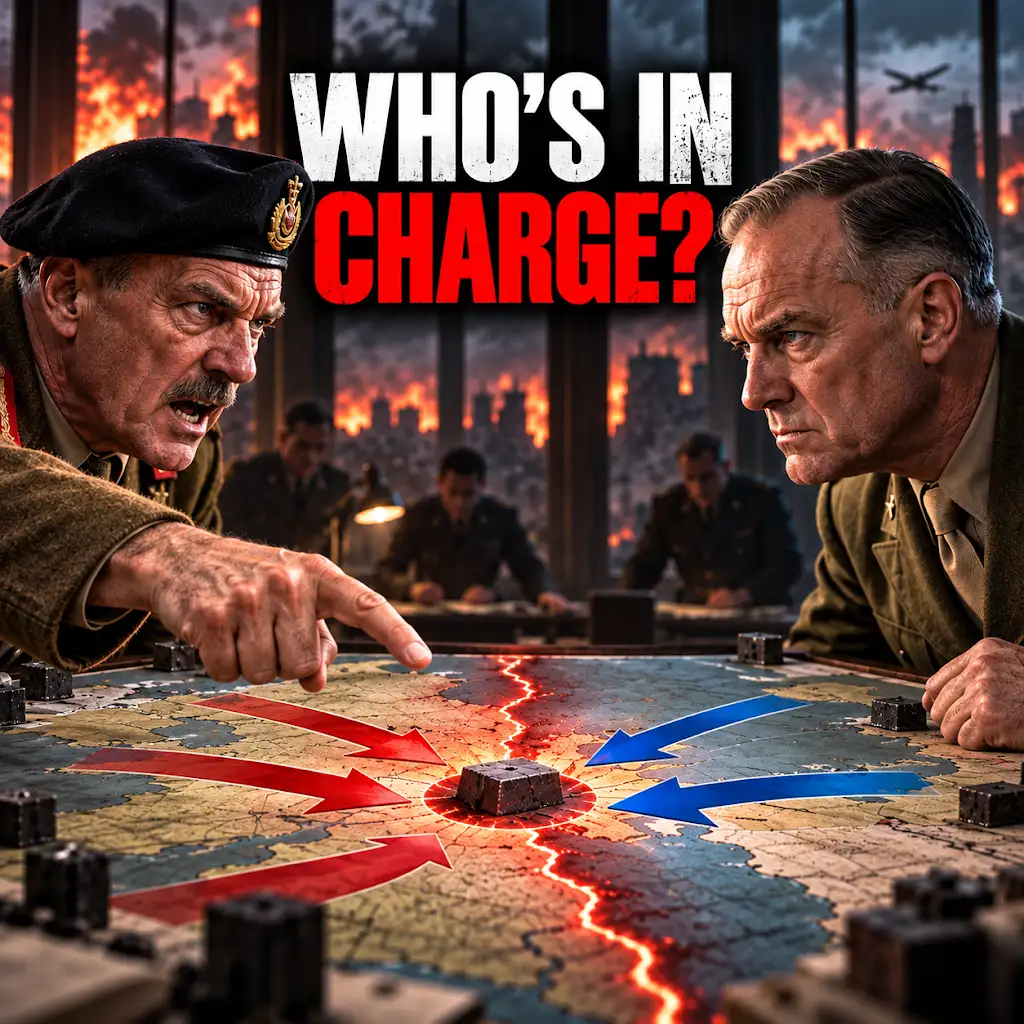
Eisenhower Gave Montgomery 2 U.S. Armies—Then He Wanted More
FAQs
What was the Eisenhower Montgomery rivalry?
The Eisenhower Montgomery rivalry refers to the competition and strained relationship between General Dwight D. Eisenhower and General Bernard Montgomery during World War II.
Why did the rivalry between Eisenhower and Montgomery exist?
The rivalry between Eisenhower and Montgomery stemmed from differences in military strategy, personality clashes, and competition for recognition and command authority.
How did the Eisenhower Montgomery rivalry impact World War II?
The rivalry between Eisenhower and Montgomery had a significant impact on the coordination and effectiveness of Allied military operations in Europe, particularly during the planning and execution of the D-Day invasion.
Did Eisenhower and Montgomery ever reconcile their differences?
While Eisenhower and Montgomery were able to work together to achieve victory in Europe during World War II, their rivalry persisted even after the war ended, and they never fully reconciled their differences.
What is the legacy of the Eisenhower Montgomery rivalry?
The Eisenhower Montgomery rivalry is remembered as a complex and contentious chapter in military history, highlighting the challenges of leadership, collaboration, and personal dynamics in times of war.