Montgomery’s strategic acumen and decisive leadership played a crucial, albeit often debated, role in the Allied victory during the Battle of the Bulge. As commander of the 21st Army Group, his responsibilities extended across a vast front, encompassing significant portions of the Allied forces engaged in the desperate defense against the German offensive. While General Eisenhower, Supreme Allied Commander, bore the ultimate command, Montgomery’s tactical brilliance and his ability to impose order on a chaotic situation were instrumental in stemming the German tide and ultimately contributing to the defeat of Hitler’s last major gamble.
The early hours of December 16, 1944, brought a chilling surprise to the Allied forces. The Germans, under the guise of secrecy and exploiting a period of poor weather that grounded Allied air power, launched a massive offensive through the Ardennes Forest. This sector of the front, manned by relatively inexperienced American troops, was chosen for its perceived weakness and the dense terrain that favored a surprise attack. The initial German thrust, codenamed Unternehmen Wacht am Rhein (Operation Watch on the Rhine), achieved remarkable initial success, punching deep into Allied lines and creating a “bulge” in the front that gave the battle its name.
The Shock and the Initial German Gains
The Ardennes offensive was a meticulously planned and brutally executed operation. German forces, bolstered by elite Panzer divisions, broke through thinly held Allied defenses with astonishing speed. The element of surprise was paramount, and the Germans achieved it with devastating effect. Allied commanders, caught completely off guard, scrambled to understand the scale and intent of the attack. Reports of breakthroughs, isolated units, and collapsing front lines flooded into headquarters, creating an atmosphere of confusion and urgency.
The Breakdown of Intelligence and Communication
One of the most significant factors contributing to the initial Allied shock was a severe breakdown in intelligence. Allied reconnaissance had largely dismissed the possibility of a major offensive in the Ardennes, focusing their attention on other sectors of the front. This intelligence failure allowed the Germans to mass their forces and launch their attack virtually undetected. Compounding this was the effect of the winter weather, which severely hampered aerial reconnaissance and made ground observation difficult. Communication lines were also disrupted by the German advance, further isolating Allied units and hindering effective command and control.
The Initial American Response and the Retreat
The initial American forces in the Ardennes, often comprising National Guard divisions and newer draftees, were ill-prepared for the ferocity and scale of the German onslaught. Many units were overrun, forced to retreat in disarray, or cut off from the main body of Allied forces. The rapid German advance created pockets of resistance, but the overall picture was one of tactical disintegration in many areas. The iconic image of overwhelmed American soldiers struggling to hold the line against determined German armor became a grim reality in the early days of the battle.
The Battle of the Bulge, a pivotal confrontation during World War II, saw American forces, including those from Montgomery’s command, facing a surprise German offensive in the winter of 1944. For a deeper understanding of the strategies employed and the impact of this battle on the course of the war, you can read a related article that provides insights into the military tactics and personal stories from the front lines. Check it out here: related article.
Montgomery Takes Command of the Northern Shoulder
As the crisis deepened, General Dwight D. Eisenhower, the Supreme Allied Commander, recognized the immediate need to consolidate Allied defenses and restore a cohesive command structure. He understood that the battle was rapidly evolving into a critical turning point, and decisive action was required. Eisenhower entrusted General Bernard Montgomery, commander of the British 21st Army Group, with the vital task of stabilizing the northern shoulder of the Ardennes salient. This was a critical position, as it prevented the German forces from fully exploiting their breakthroughs and threatening vital Allied supply lines and communication hubs.
The Urgent Need for Centralized Command
In the chaotic initial days of the battle, Allied command and control had become fragmented. Eisenhower recognized that a more unified and decisive leadership was needed to counter the German offensive effectively. He made the difficult decision to temporarily place all Allied troops north of the German penetration under Montgomery’s command. This move, while potentially controversial given inter-allied command dynamics, was seen as a necessary step to streamline operations and ensure a coordinated response. Montgomery’s reputation for meticulous planning and his experience in large-scale operations made him the ideal candidate for this crucial role.
Eisenhower’s Strategic Decision
Eisenhower’s decision to delegate tactical command of the northern sector to Montgomery was a calculated risk. He understood that Montgomery’s direct command style and his rigorous approach to military operations could bring much-needed order to the unfolding crisis. The Supreme Allied Commander’s primary concern was to halt the German advance at all costs, and he believed Montgomery was the best positioned to achieve this objective in the northern sector. This decision highlighted the trust Eisenhower placed in Montgomery’s abilities to manage complex military situations under extreme pressure.
Montgomery’s Arrival and Assessment
Upon receiving his new command, Montgomery swiftly moved to the front lines. He established his headquarters and immediately began to assess the situation on the ground. His presence was a morale booster for the hard-pressed Allied troops, and his calm, authoritative demeanor instilled a sense of confidence. Montgomery’s initial assessment confirmed the gravity of the situation but also revealed opportunities for a strong defensive stand. He recognized the need to establish a cohesive defensive line and to prepare for a counterattack.
Establishing a Cohesive Defensive Line
Montgomery’s immediate priority was to arrest the German advance and establish a stable defensive front. He understood that a piecemeal defense would be unsustainable against the determined German assault. His methodical approach involved consolidating existing units, reinforcing threatened sectors, and establishing a clear chain of command. He meticulously organized the defenses, focusing on key terrain features and vital communication nodes to create a formidable barrier against the advancing German forces.
Consolidating Allied Forces
Montgomery’s first action was to bring order to the somewhat scattered Allied forces north of the German salient. He began withdrawing units that were in exposed or untenable positions and redeploying them to create a more robust defensive line. This involved difficult decisions, including ordering tactical withdrawals to prevent larger encirclements and to preserve fighting strength. He ensured that units were properly supplied and reinforced, a critical factor in sustaining a prolonged defense.
The Importance of the Meuse River
A key strategic objective for Montgomery was to prevent the Germans from crossing the Meuse River. This natural obstacle represented a significant barrier to their further advance into Belgium and towards Antwerp. Montgomery personally visited units along the Meuse, emphasizing the importance of holding this vital line. He ensured that defensive positions were well-prepared and that reserves were positioned to counter any German attempts to cross.
Implementing a Unified Command Structure
Montgomery’s decisive leadership was crucial in establishing a unified command structure. He personally met with his subordinate commanders, clearly defining their objectives and responsibilities. He fostered a sense of shared purpose and ensured that all units understood their role within the overall defensive plan. This clear chain of command was vital in coordinating defensive actions and preventing the kind of ad-hoc responses that had characterized the initial stages of the battle.
The “Stranglehold” Strategy
Montgomery’s defensive strategy, often referred to as the “stranglehold” approach, aimed to gradually wear down the German offensive. Instead of attempting a frontal assault to break the bulge, he focused on consolidating the northern flank, denying the Germans any further significant gains, and systematically attacking their flanks and rear to cut off their supply lines and isolate their spearheads. This methodical approach, while perhaps less glamorous than a swift counter-offensive, proved highly effective in bleeding the German forces.
The Role of the British and Commonwealth Forces
While the Battle of the Bulge is often primarily associated with the American struggle, the British and Commonwealth forces under Montgomery’s command played a vital and often underestimated role in stabilizing the northern front. Their presence and their determined defense were instrumental in preventing the German offensive from achieving its ultimate objectives and contributed significantly to the eventual Allied victory.
Holding the Northern Shoulder
British and Canadian divisions were heavily involved in holding the northern shoulder of the Ardennes salient. These experienced troops, battle-hardened from previous campaigns, proved to be a formidable barrier to the German advance. They fought tenaciously in often brutal winter conditions, establishing defensive strongpoints and engaging in fierce fighting to prevent further German penetrations. Their steadfastness in holding these critical positions was vital in allowing the Americans to regroup and prepare for counterattacks.
The Fierce Fighting around Elsenborn Ridge
One notable example of the British and Commonwealth contribution was the tenacious defense of Elsenborn Ridge by Canadian troops. This strategically important high ground became a focal point of intense fighting. The Canadians held the ridge against repeated German assaults, inflicting heavy casualties on the enemy and preventing them from exploiting a crucial gateway into Belgium. Their bravery and resilience in this sector were crucial in stemming the German tide.
Reinforcing American Units
Beyond their direct defensive roles, British and Commonwealth forces also provided crucial reinforcements and support to American units. This included the deployment of artillery units, armored elements, and logistical support, which helped to bolster the American defense and counter the German attacks. The spirit of cooperation and mutual support between the Allied forces was a testament to their shared commitment to defeating the enemy.
The Battle of the Bulge was a significant turning point during World War II, showcasing the resilience of the American armies in the face of a surprise German offensive. For those interested in exploring more about this pivotal moment in history, you can read a related article that delves into the strategies and outcomes of the battle. Understanding the complexities of this conflict can provide valuable insights into the broader context of the war. To learn more, check out this informative piece on the topic at In the War Room.
The Counter-Offensive and the Turning of the Tide
| Metric | Details |
|---|---|
| Commander | General Bernard Montgomery (British 21st Army Group, took command of northern sector) |
| Battle | Battle of the Bulge (Ardennes Counteroffensive) |
| Dates | December 16, 1944 – January 25, 1945 |
| Montgomery’s Role | Commanded the northern sector of the Allied forces during the battle |
| Forces under Montgomery | British XXX Corps, US First and Ninth Armies (northern flank) |
| Number of troops (approx.) | Over 250,000 Allied troops in Montgomery’s sector |
| Objective | Stop German advance and relieve besieged American forces in Bastogne |
| Outcome | Successful containment and counterattack, contributing to Allied victory |
| Casualties in Montgomery’s sector | Approximately 20,000 Allied casualties |
| Significance | Montgomery’s leadership helped stabilize the northern flank and coordinate counteroffensive efforts |
Once the German offensive had been blunted and a stable defensive line established, Montgomery began to plan and execute the Allied counter-offensive. His strategy was to systematically reduce the German salient, pushing the enemy back and restoring the original front lines. This phase of the battle was characterized by coordinated attacks and the gradual erosion of German strength.
The Allied Counter-Attack
The Allied counter-offensive, launched in late December and early January, saw a concerted effort to dislodge the Germans from the territory they had gained. Montgomery’s forces played a significant role in this push from the north, coordinating their attacks with American forces advancing from the south. The aim was to squeeze the German salient from both sides, severing their supply lines and forcing their retreat.
The Advance from the North
Montgomery’s forces, including British, Canadian, and American units under his command, systematically advanced from the north. They pushed back German units, recaptured lost territory, and inflicted further casualties on the enemy. This methodical advance, while costly, was essential in restoring the Allied front and preventing the Germans from consolidating their gains.
The Strategic Significance of the Victory
The Allied victory in the Battle of the Bulge had profound strategic significance. It marked the last major offensive by the German army on the Western Front. The heavy losses in men and materiel sustained by the Germans were irreplaceable and significantly weakened their ability to continue the war. The battle also demonstrated the resilience and fighting spirit of the Allied forces, particularly the American soldiers who bore the brunt of the initial assault. Montgomery’s leadership in organizing the defense and executing the counter-offensive was a critical factor in achieving this decisive victory.
The Erosion of German Military Strength
The Battle of the Bulge proved to be a pyrrhic victory for Germany. The offensive, intended to divide the Allied forces and secure a separate peace, instead resulted in the decimation of elite German units. The losses in experienced troops and vital equipment were a severe blow from which the German army never fully recovered. This effectively crippled their ability to launch any further significant offensives.
The Reassertion of Allied Momentum
With the German offensive decisively repulsed, the Allies were able to regain the initiative and resume their advance towards Germany. The Battle of the Bulge, while a serious challenge, ultimately served to reaffirm the resolve and the overwhelming material superiority of the Allied forces. The path to final victory was now more clearly defined.
Montgomery’s role in the Battle of the Bulge, though sometimes viewed through the prism of inter-allied rivalries and personality clashes, was undeniably crucial. He was the steady hand that imposed order on chaos, the strategic mind that devised an effective defensive plan, and the determined leader who oversaw the critical counter-offensive. His ability to command, to inspire, and to meticulously plan under extreme pressure was a vital component of the Allied victory, a victory that ultimately hastened the end of World War II.
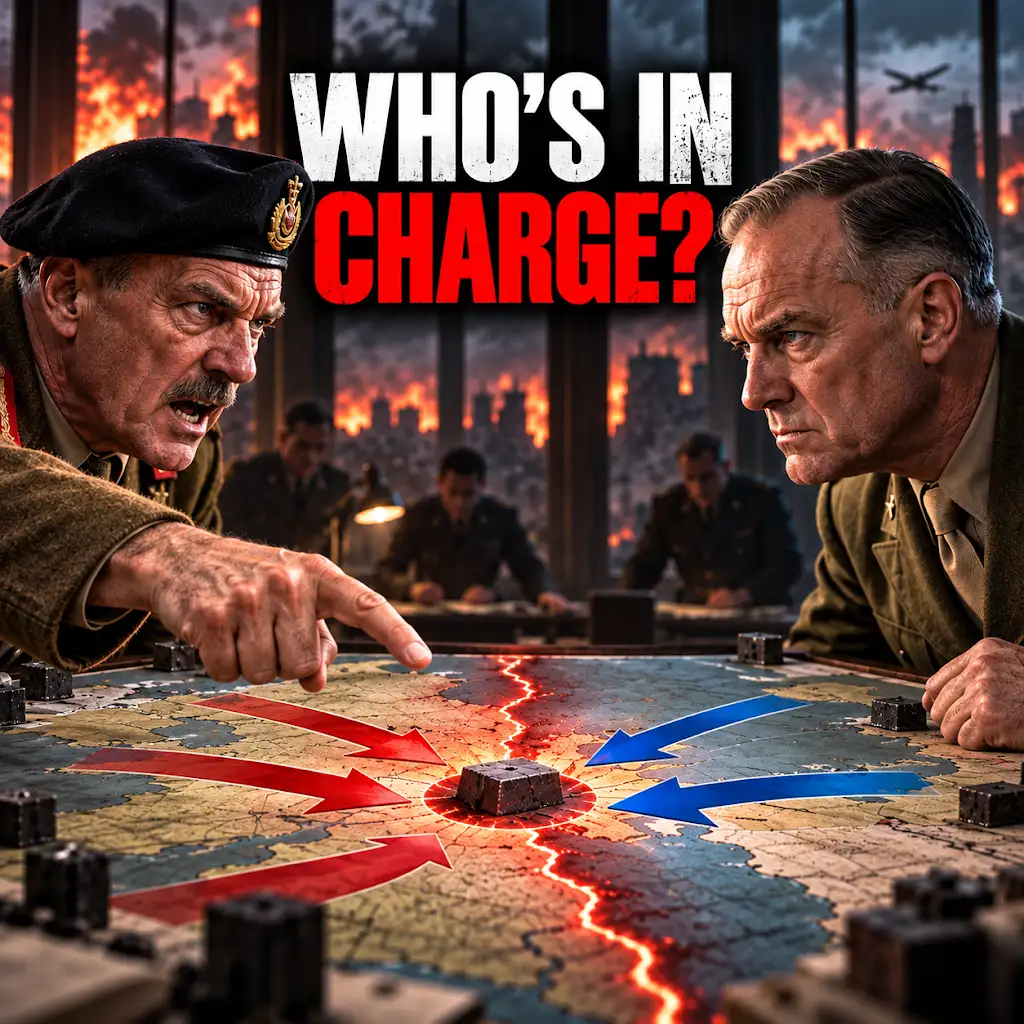
Eisenhower Gave Montgomery 2 U.S. Armies—Then He Wanted More
FAQs
What was the Battle of the Bulge?
The Battle of the Bulge was a major World War II battle that took place from December 16, 1944, to January 25, 1945. It was the last major German offensive campaign on the Western Front during the war.
Who was Montgomery in the context of the Battle of the Bulge?
General Bernard Montgomery was a British military commander who played a key role in the Battle of the Bulge as the commander of the British 21st Army Group, which included American forces.
What were the American armies involved in the Battle of the Bulge?
The American armies involved in the Battle of the Bulge were the First Army, Third Army, and Ninth Army. These armies, along with British and other Allied forces, played a crucial role in repelling the German offensive.
What was the outcome of the Battle of the Bulge?
The Battle of the Bulge resulted in a decisive Allied victory, with the German offensive being halted and eventually pushed back. The battle also significantly weakened the German military and hastened the end of World War II in Europe.
How did the Battle of the Bulge impact the course of World War II?
The Battle of the Bulge marked a turning point in the war, as it was the last major German offensive on the Western Front. The heavy losses suffered by the Germans during the battle weakened their military capabilities and paved the way for the Allies to advance into Germany and ultimately achieve victory in Europe.