The Titan II missile, a cornerstone of America’s Cold War nuclear deterrent, was a colossal machine designed for one purpose: to deliver devastation. Its massive Minuteman II variant, a two-stage liquid-fueled rocket, stood as a potent symbol of American military might, capable of carrying a thermonuclear warhead and striking targets with devastating accuracy. Yet, the very complexity and power that defined these titans also held the seeds of their vulnerability. While the public imagination often focused on the catastrophic potential of a launch failure or a nuclear exchange, the reality of operating such sophisticated hardware was that even the smallest, seemingly insignificant oversight could precipitate disaster. This was starkly illustrated by the chilling incident at the Titan II ICBM complex near Searcy, Arkansas, on September 19, 1980, an event that almost unleashed a nuclear catastrophe due to the most mundane of errors: an eight-pound socket dropped during maintenance.
The Titan II missile system represented a significant leap in American strategic missile technology during the height of the Cold War. Deployed in underground silos across the United States, these ICBMs were designed to be a rapid-response deterrent, capable of surviving a first strike and retaliating with overwhelming force. Their development and deployment were a direct response to the Soviet Union’s burgeoning nuclear arsenal, a high-stakes game of escalation and counter-escalation that defined the geopolitical landscape for decades.
Origins and Purpose
The Titan program, initiated in the late 1950s, was initially conceived as a follow-on to the Atlas missile. However, the Titan II was a far more advanced and robust system. Its liquid-fueled engines provided greater thrust and payload capacity, allowing it to carry the more powerful W53 thermonuclear warhead. The choice of liquid fuel, while powerful, also presented significant logistical and safety challenges. Unlike solid-fuel rockets, Titan II required constant fueling and defueling, and its propellants—highly corrosive and volatile hypergolic fuels—posed a constant risk.
The W53 Warhead: A Devastating Payload
The W53 warhead, carried by the Titan II, was a weapon of immense destructive power. With a yield estimated to be in the megaton range, its detonation would have resulted in widespread devastation, incinerating vast areas and leaving behind a deadly radioactive fallout. The presence of such a potent weapon on high alert, coupled with the inherent risks of the missile system itself, amplified the gravity of any operational malfunction. The entire system was a tightly controlled ballet of immense power and intricate engineering, where a single misstep could have catastrophic consequences.
Silo Deployment and Operational Readiness
The Titan II missiles were housed in hardened underground silos, designed to withstand significant blast effects. These silos were located in strategic areas across states like Arizona, Arkansas, and Missouri. The constant readiness of these missiles was paramount, requiring a complex network of personnel, sophisticated monitoring systems, and rigorous maintenance protocols. The crews responsible for these systems operated under immense pressure, knowing that the fate of millions rested on their vigilance and precision. The potential for a catastrophic accident was a constant, albeit often unspoken, concern.
The Titan II accident, which involved the catastrophic failure of an eight-pound socket, highlights the critical importance of safety protocols in handling nuclear missile systems. For a deeper understanding of the implications of this incident and its impact on military operations, you can read a related article that discusses the broader context of nuclear safety and the lessons learned from such accidents. To explore this further, visit this article.
The Dreaded September Night in Arkansas
The night of September 19, 1980, began like any other for the crew of Titan II Missile Complex 394-7 near Searcy, Arkansas. Located deep within the fertile farmland of the state, the complex housed a single Titan II intercontinental ballistic missile, poised and ready to fulfill its grim purpose. The routine nature of the mission, however, was about to be shattered by an event so mundane in its origin, yet so terrifying in its potential consequences, that it would become a stark reminder of the fragility of even the most formidable military machines.
Routine Maintenance Underway
At the heart of the incident was a seemingly routine maintenance operation. Technicians were working on the complex’s primary control system, a critical component responsible for the missile’s guidance and firing sequence. These tasks, while essential for ensuring the system’s readiness, involved working in close proximity to the highly volatile liquid propellants and the equally dangerous thermonuclear warhead. The meticulousness required of these personnel cannot be overstated. Every action was subject to strict protocols, designed to minimize risk. However, even the most stringent protocols are ultimately dependent on human execution.
The Propellant Leak: A Fateful Discovery
During the maintenance, a leak was discovered in one of the missile’s fuel lines. This was not an immediate cause for alarm in itself; leaks, particularly minor ones, were not unheard of in such complex and aging systems. However, the nature of the propellant—a mixture of hydrazine and nitrogen tetroxide—meant that even a small leak could quickly escalate into a serious hazard. Hydrazine is a highly flammable and toxic liquid, while nitrogen tetroxide is a powerful oxidizer that readily ignites flammable materials. The combination was a recipe for disaster.
The Critical Location of the Leak
The leak occurred in the second stage of the missile, a particularly sensitive area given its proximity to the warhead. The precise location and rate of the leak became crucial factors in the unfolding events. The crew’s immediate priority was to contain the leak and prevent the highly volatile propellants from reaching an ignition source. This task, however, was made immeasurably more difficult by the subsequent actions of the maintenance crew.
The Gravity of the Eight-Pound Socket
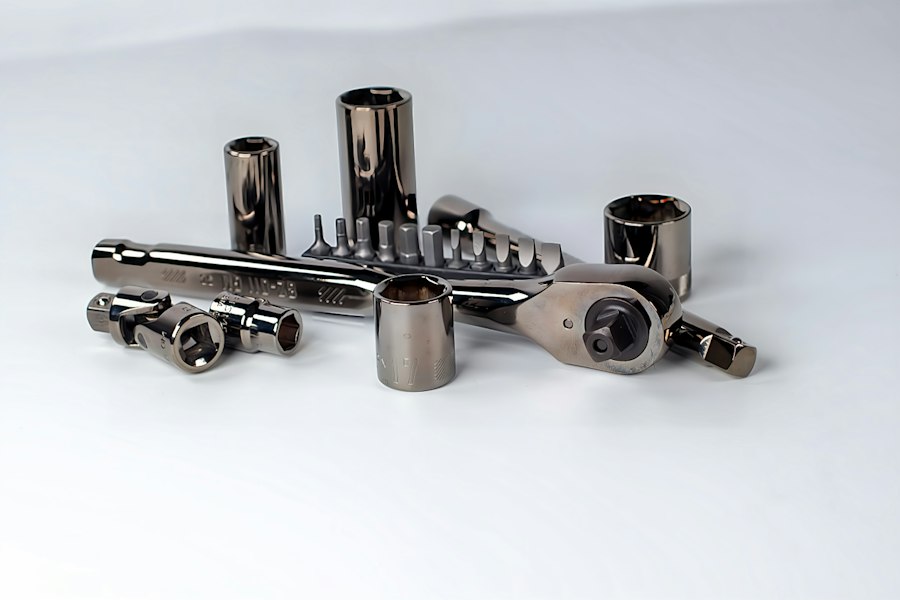
The seemingly innocuous eight-pound socket, a common tool in any mechanic’s arsenal, became the unlikely catalyst for a near-cataclysmic event. Its presence in the missile silo, and its subsequent role in the unfolding crisis, highlighted a critical breakdown in safety procedures and a chilling demonstration of how a single oversight could amplify the inherent dangers of the Titan II system.
An Unattended Tool
During the maintenance, the eight-pound socket, along with other tools, had been placed on a temporary rack. In the confined and pressurized environment of the missile silo, any object not secured could easily become a projectile. The exact circumstances under which the socket became dislodged are still debated, but its movement was inevitable, and its trajectory was to have devastating consequences. The lack of strict accountability for tools in this high-risk environment would prove to be a critical failure.
The Fall and the Impact
The socket, dislodged from its precarious perch, began its descent. Its path led it directly towards the missile’s second-stage fuel line, the very line that had developed the leak. The impact of the heavy socket, while not designed to puncture the reinforced fuel line, struck a sensitive fitting. This seemingly minor impact was enough to exacerbate the existing leak, causing a more significant and rapid release of the volatile propellant.
The Domino Effect of Ignition
The escaping propellant, a highly reactive mixture, came into contact with air. The combination of fuel, oxidizer, and the potential for static electricity or a spark from the falling socket or other equipment created the perfect conditions for ignition. The ensuing explosion was not the catastrophic detonation of the nuclear warhead, but rather a violent chemical explosion of the rocket fuel itself. This explosion, however, was potent enough to cause significant damage to the missile and its warhead.
The Escalating Crisis: From Leak to Catastrophe
The initial chemical explosion was merely the beginning of a rapidly escalating crisis. The blast, while not a nuclear detonation, was powerful enough to rupture the missile’s fuel tanks and damage its intricate internal systems. The volatile propellants, now unleashed in greater quantities, created an increasingly dangerous environment within the silo.
The Blast and its Aftermath
The explosion ripped through the silo, sending shudders through the ground for miles around. While the hardened silo was designed to withstand significant forces, the concentrated blast from the fuel explosion caused substantial damage. Structural integrity was compromised, and critical systems were rendered inoperable. The immediate concern shifted from containing a leak to dealing with the aftermath of a violent explosion and the imminent threat of further ignition.
The Threat of Warhead Detonation
The primary fear, of course, was the potential detonation of the W53 nuclear warhead. While the chemical explosion did not directly trigger the nuclear mechanism, the intense heat, shockwaves, and potential for secondary explosions from damaged components created a terrifyingly real possibility of accidental nuclear detonation. The integrity of the warhead itself, designed to withstand extreme conditions, was now being tested in ways its designers could have scarcely imagined.
The “Cook-Off” Scenario
A particularly horrifying scenario that emerged was the risk of a “cook-off.” This refers to a situation where the heat and pressure from the burning propellants could eventually cause the conventional explosives within the warhead to detonate, which in turn could potentially initiate the nuclear chain reaction. The minutes and hours that followed the initial explosion were a desperate race against time to prevent such a catastrophic outcome.
The Titan II accident, which involved the failure of an eight-pound socket, serves as a stark reminder of the potential dangers associated with handling nuclear weapons. For a deeper understanding of the implications of this incident and its impact on safety protocols, you can read a related article that explores the broader context of nuclear weapon management. This insightful piece can be found here, providing valuable information on the lessons learned from such critical events.
The Heroic Response and Near Miss
| Metric | Details |
|---|---|
| Incident Name | Eight Pound Socket Titan II Accident |
| Date | August 5, 1980 |
| Location | Little Rock Air Force Base, Arkansas, USA |
| Cause | Dropping of an 8-pound socket during maintenance, puncturing the missile’s fuel tank |
| Missile Type | Titan II Intercontinental Ballistic Missile (ICBM) |
| Fuel Type | Aerozine 50 (fuel) and nitrogen tetroxide (oxidizer) |
| Resulting Damage | Fuel leak and subsequent explosion of the missile silo |
| Casualties | 1 fatality (Airman David Livingston) |
| Impact on Program | Accelerated decommissioning of Titan II missile program |
| Safety Lessons | Improved maintenance protocols and handling procedures for missile systems |
In the face of unimaginable danger, the personnel at the Titan II complex and the responding emergency crews exhibited extraordinary courage and professionalism. Their actions, often under extreme duress and in the face of immense personal risk, are a testament to their training and dedication.
The Evacuation and Containment Efforts
Upon recognizing the severity of the situation, immediate evacuation orders were issued for the surrounding areas. The military and civilian emergency services worked in concert to contain the threat. Specialized teams, equipped with protective gear, were deployed to assess the damage, monitor radiation levels, and attempt to prevent further escalation. The volatile nature of the propellants made these operations incredibly hazardous.
The Role of the Titan II Crews
The men who had been on duty during the incident, and those who were part of the emergency response, faced the terrifying prospect of a nuclear catastrophe. Their knowledge of the system, their training, and their unwavering commitment to duty were critical in mitigating the disaster. They worked under the constant threat of secondary explosions and the potential for a nuclear detonation, demonstrating remarkable resilience.
The Unforeseen Escape Route
Remarkably, the damaged missile and its warhead did not detonate. While the exact reasons remain subject to analysis, it is believed that the specific sequence of damage, combined with the rapid response of the emergency crews, prevented the critical conditions for nuclear detonation from being met. The integrity of the warhead’s safety mechanisms, though tested to their limits, ultimately held. The eight-pound socket, while it initiated the cascade of events, did not lead to the unimaginable. The Titan II accident near Searcy, Arkansas, stands as a chilling reminder that even the most sophisticated and powerful military technology is vulnerable to the smallest of errors, and that the consequences of such errors can be devastatingly close to the edge of human comprehension.

How a Dropped Socket Destroyed a Titan II Missile
FAQs
What is the Titan II missile?
The Titan II missile was an intercontinental ballistic missile (ICBM) developed by the United States during the Cold War era.
What happened during the eight pound socket Titan II accident?
During the accident, an eight pound socket fell from a work platform and punctured the missile’s fuel tank, causing a massive explosion.
When did the eight pound socket Titan II accident occur?
The accident took place on September 19, 1980, at a Titan II missile complex near Damascus, Arkansas.
What were the consequences of the Titan II accident?
The explosion resulted in the death of one Air Force member and the injury of 21 others. It also led to the release of toxic fumes and the evacuation of nearby residents.
What was the aftermath of the Titan II accident?
Following the accident, the damaged missile was decommissioned, and the Titan II missile program was eventually phased out in favor of newer missile systems.