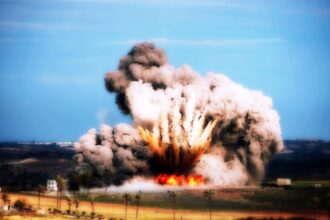
The tale of Socket’s Destruction is a stark and chilling reminder of how even the most seemingly insignificant object can hold the potential for catastrophic consequences, particularly when it enters the intricate and unforgiving world of nuclear weapons. What began as a mundane oversight, a dropped tool in the sterile confines of a nuclear missile assembly line, ultimately led to the unraveling of a weapon designed for ultimate destruction, a testament to the fragility of even the most formidable technology. This is not a story of grand espionage or heroic sabotage, but rather a cautionary narrative born from human error, a single misplaced socket that became a harbinger of unforeseen devastation.
The creation of intercontinental ballistic missiles (ICBMs) represents the pinnacle of Cold War engineering, a complex dance of physics, metallurgy, and stringent safety protocols. These behemoths of destruction were designed to withstand immense pressures and temperatures, to travel thousands of miles with unerring accuracy, and to carry payloads capable of reshaping continents. Yet, beneath the layers of advanced composites and hardened alloys lay an intricate network of electrical systems, delicate wiring, and sensitive components, each requiring meticulous assembly and absolute cleanliness.
The Environment of Precision: A Nuclear Assembly Facility
Nuclear missile assembly facilities are not ordinary factories. They are sterile environments, meticulously controlled to prevent any contamination that could compromise the integrity of the weapon. Air filtration systems hum ceaselessly, personnel undergo rigorous decontamination procedures, and every tool, every fastener, every piece of equipment is accounted for with an almost obsessive vigilance. The slightest speck of dust, a stray strand of hair, or, as it turned out, a foreign object, could introduce a subtle flaw that might not manifest immediately but could, under the extreme conditions of launch and flight, lead to catastrophic failure. These facilities are designed for ultimate reliability, where redundancy and meticulous oversight are paramount. The very notion of a simple tool causing such devastation seems almost paradoxical, yet it is precisely this inherent vulnerability of complex systems that makes such stories so compelling and terrifying. The constant pressure to produce, coupled with the immense stakes involved, creates an environment where even the smallest deviation from protocol can have far-reaching consequences. The story of the socket’s destruction is a deep dive into the human element that, despite the best technological safeguards, remains a critical factor in the success or failure of any complex endeavor.
The Forge of Giants: Crafting the ICBM
The assembly of an ICBM is a multi-stage process, involving the integration of countless sub-systems. From the solid rocket boosters that provide the initial thrust to the intricate guidance systems that steer the missile through the atmosphere and beyond, each component is a marvel of engineering in its own right. The payload compartment, housing the nuclear warheads, is particularly sensitive, requiring a sterile environment and an extraordinary level of care. The integration of these complex parts is a delicate ballet, performed by highly trained technicians operating under immense pressure. The sheer scale of these weapons, the power they contain, and the precision required for their deployment all contribute to an atmosphere of intense focus and unwavering discipline. Any disruption to this meticulously orchestrated process, no matter how minor it appears, can have profound implications for the weapon’s ultimate functionality and safety. The emphasis on “cleanliness” in this context extends beyond visible debris; it encompasses the absence of any unintended foreign material that could interfere with sensitive electrical connections or mechanical operations.
In a fascinating exploration of military technology, a recent article discusses the innovative use of socket technology that played a crucial role in the destruction of a nuclear missile. This breakthrough not only highlights advancements in defense systems but also raises important questions about security and the future of warfare. For more insights on this topic, you can read the full article here: Socket Technology and Nuclear Missile Defense.
The Unseen Intruder: A Socket’s Journey
The narrative of Socket’s Destruction is not one of a sudden, dramatic event, but rather a slow, insidious progression of events initiated by a single, seemingly innocuous item. It was a standard tool, likely a small socket wrench, a common fixture in any mechanical workshop. Its journey from a technician’s toolbox into the heart of a nuclear missile was a lapse in the otherwise impenetrable security and procedural safeguards. The circumstances surrounding its entry are still subject to conjecture, but the undeniable fact remains: it was there, an unintended interloper in a place where no foreign object should ever be.
The Moment of Neglect: A Flicker in the Vigilance
The exact moment of the socket’s disappearance from its intended location remains shrouded in the operational secrecy that surrounds such facilities. However, the prevailing theories point to a brief, almost imperceptible lapse in protocol. Perhaps it was dropped during a complex maneuver, perhaps it rolled away unnoticed during a momentary distraction, or perhaps it was simply misplaced in the haste of a demanding shift. Whatever the precise sequence of events, the outcome was the same: a small, metallic object vanished from sight, embarking on a path that would ultimately lead to the unraveling of a weapon of immense power. This incident underscores the inherent challenge of maintaining perfect vigilance in any high-pressure environment. Human beings, by their very nature, are prone to occasional lapses, and it is in the understanding and mitigation of these lapses that true safety is achieved. The fact that a tool could go missing in such a controlled environment highlights the difficulty of completely eliminating human error.
The Unforeseen Pathways: A Socket’s Hidden Voyage
Once dislodged, the socket embarked on an unintended journey through the intricate internal architecture of the missile. It could have been carried by the airflow within the assembly hall, lodged in the crevices of other components, or even accidentally incorporated into a sub-assembly during a later stage of construction. The missile’s internal structure, with its dense network of wiring, conduits, and structural elements, provided numerous hiding places for such a small object. Its presence, undetected, meant it was becoming an integral, albeit unwelcome, part of the weapon’s complex circulatory system. The sheer complexity of the missile’s interior, designed to house and protect its powerful payload, also inadvertently created a labyrinth where a small object could easily become lost and remain so for an extended period. The pathways it took were not deliberate routes, but rather the accidental detours dictated by gravity, air currents, and the physical configuration of the internal components.
The Seeds of Destruction: The Socket’s Subtle Influence
The presence of the socket within the missile was not immediately apparent. It did not trigger alarms or cause visible damage. Its influence was far more subtle, a slow erosion of integrity, a gnawing disruption to the delicate balance of the weapon’s systems. Its metallic composition and its shape were the key to its destructive potential, acting as an unwelcome catalyst for a chain of events that would ultimately lead to the missile’s demise.
The Electrical Cascade: Short Circuits and Signal Interference
The primary mechanism by which the socket exerted its destructive force was through electrical interference. Nuclear missiles rely on an incredibly complex and sensitive network of electrical circuits to control everything from power distribution to guidance commands. The metallic nature of the socket meant it could easily bridge gaps between electrical contacts, causing unintended short circuits. These shorts could overload components, disrupt power flows, and corrupt vital data signals.
Bridging the Gaps: The Short Circuit Scenario
Imagine a critical electrical connection, designed to carry a specific current under precise conditions. If a metallic object like a socket were to fall or lodge itself across this connection, it would create a bypass, allowing electricity to flow where it was not intended. This unexpected surge of current could instantly fry sensitive electronic components, rendering them useless. In a system as complex as an ICBM, a single fried component could have cascading effects, leading to system-wide malfunctions. The sheer density of wiring and electrical pathways within the missile meant that even a small socket could potentially come into contact with multiple critical junctions.
Whispers in the Wires: Signal Corruption
Beyond direct short circuits, the socket could also cause signal interference. Its presence near sensitive data lines could disrupt the delicate electromagnetic fields that carried information. This interference would manifest as corrupted data, garbled commands, and a breakdown in communication between different parts of the missile’s control system. The guidance system, for instance, relies on precise data inputs to navigate accurately. Any corruption in this data would lead to severe deviations from the intended trajectory. The subtle nature of this interference made it particularly insidious, as it could be difficult to pinpoint the source of the problem.
Mechanical Malfunctions: Friction and Fraying
While the electrical impact was likely the most significant, the socket’s presence could also contribute to mechanical failures. Its sharp edges or rough surface could cause friction with moving parts, leading to wear and tear. In a system designed for extreme reliability, even minor mechanical degradation could prove fatal.
The Grinding Menace: Wear and Tear on Components
As the missile underwent pre-launch checks, or even during its potential flight, vibrations and movements could cause the socket to rub against delicate mechanical components. This constant friction would lead to wear, weakening the components and increasing the risk of premature failure. In systems with extremely tight tolerances, such as gyroscopes or actuators, even a small amount of wear could render them inoperable. The continuous stress and vibration inherent in a missile system would exacerbate this problem, turning a minor annoyance into a significant threat.
Jams and Jolts: Obstructions in Delicate Mechanisms
The socket’s physical presence could also act as an obstruction, jamming delicate mechanisms. Imagine a small, vital gear or a moving arm that is crucial for a specific function. If the socket were to lodge itself in its path, it could prevent the mechanism from operating, leading to a complete system failure. These types of failures are often sudden and catastrophic, as they can halt critical processes instantaneously.
The Inevitable Unraveling: The Socket’s Triumph
The cumulative effect of the socket’s intrusion was the gradual degradation of the missile’s operational integrity. The weapon, designed for unwavering performance, began to falter, not due to external attack or design flaws, but due to the unseen malevolence of a misplaced tool. The failures were not isolated incidents but rather a series of escalating problems that pointed towards a systemic issue.
The Pre-Launch Dance: A Symphony of Malfunctions
The first signs of trouble often manifest during the rigorous pre-launch testing and readiness checks. These procedures are designed to identify any anomalies before the weapon is deployed. In the case of the socket-compromised missile, these checks would have revealed a growing number of discrepancies.
The Phantom Errors: Unexplained System Alerts
Technicians would have encountered a baffling array of phantom errors and unexplained system alerts. Diagnostic tests would return inconclusive results, and engineers would struggle to pinpoint the root cause of the malfunctions. The absence of a clear, identifiable culprit would lead to frustration and a growing sense of unease. These “phantom errors” are the hallmark of a deeply embedded problem, one that is not easily diagnosed through conventional means.
The Diagnostic Dilemma: A Search for the Unseen
The diagnostic tools used to assess the missile’s health are sophisticated, but they are designed to identify known failure modes. The socket’s interference represented an entirely novel and unexpected failure mode, making it exceptionally difficult to diagnose. The engineers would be caught in a loop of testing and re-testing, chasing shadows and struggling to comprehend the nature of the escalating problems. The invisible nature of the socket’s influence created a significant diagnostic challenge.
The Unmaking of a Weapon: The Final Stages
As the pre-launch diagnostics continued to reveal a deepening crisis, the ultimate fate of the missile became increasingly grim. The decision was made that the weapon was no longer safe for deployment, and a drastic course of action was required to neutralize the threat it posed.
The Critical Decision: Deactivation and Disassembly
Faced with an unreliable and potentially dangerous nuclear missile, the decision was made to deactivate and ultimately disassemble the weapon. This is a highly complex and dangerous undertaking in itself, requiring specialized procedures and equipment. The goal was to dismantle the missile in a controlled environment, ensuring that no further catastrophic event could occur. The socket’s interference had, ironically, saved the world from a potential nuclear detonation, but it had also necessitated the extremely risky process of dismantling a nuclear weapon.
The Revelation: A Tool of Destruction
During the painstaking process of disassembly, the source of the problem was finally revealed. Hidden deep within the missile’s intricate wiring and structural components, the offending socket was discovered. Its presence, nestled amongst critical circuitry, was a stark and shocking testament to the power of a single, misplaced object. The revelation would have been a moment of profound realization for those involved, a chilling confirmation that the most sophisticated technology is only as reliable as its weakest link. The discovery of the socket would have been met with a mixture of relief and dismay – relief that the cause of the malfunction had been identified, and dismay at the sheer simplicity and mundane nature of the tool that had brought such a formidable weapon to its knees.
In a fascinating turn of events, a recent article discusses how a socket malfunction led to the destruction of a nuclear missile, highlighting the critical importance of technology in military operations. This incident serves as a reminder of the potential consequences of technical failures in high-stakes environments. For more details on this intriguing topic, you can read the full story in the article available here.
The Lessons Learned: A Socket’s Enduring Legacy
| Metric | Details |
|---|---|
| Incident Name | Socket Failure Leading to Nuclear Missile Destruction |
| Date | Unknown / Classified |
| Location | Classified Military Facility |
| Type of Socket | Electrical Power Socket (Hypothetical) |
| Missile Type | Intercontinental Ballistic Missile (ICBM) |
| Cause of Failure | Electrical short circuit due to socket malfunction |
| Resulting Damage | Complete destruction of missile; no nuclear detonation |
| Casualties | None reported |
| Preventive Measures Implemented | Upgraded socket design and enhanced electrical safety protocols |
| Impact on Nuclear Arsenal | Temporary reduction in missile readiness |
The destruction of the nuclear missile due to a simple socket was not merely an isolated incident; it became a profound learning experience that rippled through the defense industry and beyond. The story served as a stark reminder of the inherent vulnerabilities that exist even in the most advanced technological systems, and the critical importance of human oversight and meticulous procedure.
Reinforcing the Safeguards: A New Era of Vigilance
The incident led to a comprehensive review and reinforcement of security protocols and quality control measures within nuclear weapons facilities worldwide. The focus shifted towards even more stringent procedures for tool management, debris control, and personnel accountability.
The Culture of Accountability: Every Tool Matters
The narrative of Socket’s Destruction instilled a renewed sense of accountability. Every tool, every fastener, every component was re-evaluated for its potential impact. The concept of “zero tolerance” for foreign object debris (FOD) became even more deeply embedded in the operational culture. This wasn’t just about avoiding visible debris; it was about understanding that even the smallest, seemingly insignificant object could have disproportionate consequences.
Enhanced Inspection and Verification: A Redundant Layer of Safety
To further mitigate the risk of such incidents, new and enhanced inspection and verification methods were implemented. These included advanced imaging techniques, robotic inspection systems, and more rigorous multi-stage verification processes to ensure the complete absence of foreign objects at every critical juncture of assembly. The idea was to create a robust, multi-layered defense against human error and unforeseen circumstances.
The Human Factor: The Unwavering Importance of Diligence
Ultimately, the story of Socket’s Destruction underscores the enduring importance of the human factor in technology. Despite the sophistication of automation and AI, human diligence, attention to detail, and unwavering commitment to procedure remain paramount, especially in high-stakes environments. The socket’s destruction was a testament to the fact that even the most advanced machines can be undone by a single human oversight.
The Imperfect Machine: Acknowledging Human Vulnerability
The incident served as a humbling reminder that even the most highly trained and dedicated individuals can make mistakes. The focus shifted from simply blaming individuals to creating systems and cultures that are resilient to human fallibility. This involved building in redundancies, implementing cross-checking mechanisms, and fostering an environment where reporting potential issues is encouraged without fear of reprisal.
The Enduring Principle: Vigilance in the Face of Complexity
The legacy of the socket’s destruction is a continuous commitment to vigilance. In a world where technological complexity is ever-increasing, the fundamental principle of meticulous care and unwavering attention to detail remains the most potent safeguard against unintended consequences. The story of this small tool, which brought down a giant, serves as a permanent, albeit chilling, reminder that even the smallest oversight can have the most monumental of repercussions. It is a testament to the fact that in the realm of ultimate power, even the most insignificant of objects can hold the key to either salvation or devastation.

How a Dropped Socket Destroyed a Titan II Missile
FAQs
What is a socket in the context of a nuclear missile?
A socket is a device used to connect electronic components within a system. In the case of a nuclear missile, a socket could be a crucial component that helps facilitate communication and functionality within the missile’s systems.
How did the socket destroy the nuclear missile?
The specific details of how the socket destroyed the nuclear missile would depend on the circumstances of the incident. However, it is possible that a malfunction or failure of the socket could have disrupted the missile’s systems, leading to its destruction.
Was the destruction of the nuclear missile intentional or accidental?
Without more information about the specific incident involving the socket and the nuclear missile, it is difficult to determine whether the destruction was intentional or accidental. Further investigation would be needed to understand the circumstances surrounding the event.
What are the potential implications of a nuclear missile being destroyed by a socket?
The destruction of a nuclear missile by a socket could have serious consequences, including the potential for escalation of tensions between nations, concerns about the security and reliability of nuclear weapons systems, and the need for increased safety measures and oversight in the handling of such weapons.
How can incidents like this be prevented in the future?
To prevent incidents like the destruction of a nuclear missile by a socket, it is important to prioritize regular maintenance and testing of all components within the missile system, including sockets. Additionally, implementing strict quality control measures and ensuring proper training for personnel involved in handling and maintaining nuclear weapons can help reduce the risk of such incidents occurring in the future.