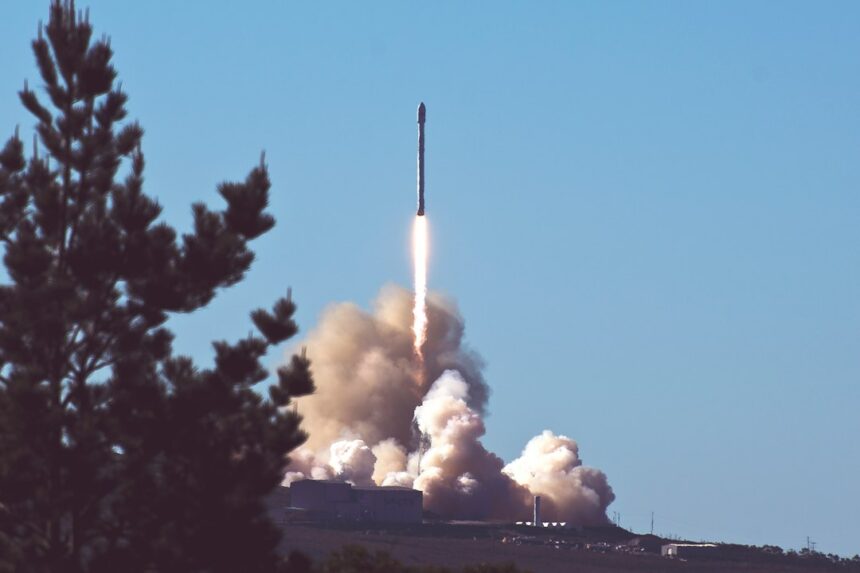
The cold, sterile air of Launch Complex 374-7 always held a hum of anticipation, a taut vibration that signaled the imminent ballet of fire and metal. On this particular eve, however, that hum was laced with an uncharacteristic tremor, a subtle dissonance that few could readily identify but many could feel. The Titan II missile, designated “Odyssey,” a behemoth of advanced engineering and potent fuel, stood poised on its pad, a silent titan against the bruised twilight sky. Its purpose was noble – a crucial resupply mission to the orbital research station Prometheus. Yet, the universe, in its often-cruel indifference, had other plans.
The hours leading up to Odyssey’s scheduled liftoff were a meticulous dance of diagnostics, fuel transfers, and final systems checks. A team of seasoned engineers and technicians, their faces etched with the focused intensity of their profession, moved with practiced efficiency. They were the guardians of this colossal undertaking, their expertise a bulwark against the inherent risks of spaceflight.
The Human Element: A Crew of Dedicated Professionals
At the heart of the operation were Commander Eva Rostova, a veteran astronaut with a calm demeanor that belied a sharp intellect, and her co-pilot, Dr. Kenji Tanaka, a brilliant astrophysicist whose presence on this mission was a testament to the scientific goals of Prometheus. Their crewmates, Mission Specialist Lena Hanson and Systems Engineer Javier Morales, were equally vital, each a specialist in their respective fields. The collective experience and dedication of this foursome were a source of reassurance for the entire mission control team.
The Technological Marvel: Odyssey’s Intricate Systems
Odyssey itself was a marvel of human ingenuity. Its two-stage rocket, fueled by hypergolic propellants, was designed for reliability and power. The delicate dance of ignition, the precise control of thrust, and the complex guidance systems were all orchestrated by a symphony of computers and human oversight. Every wire, every sensor, every valve had been scrutinized and tested countless times.
Stage One: The Primal Force
The first stage of Odyssey was the brute force that would tear it from Earth’s gravitational embrace. Its massive engines, capable of generating millions of pounds of thrust, were the culmination of decades of aerospace development. The careful monitoring of fuel levels, engine pressure, and exhaust temperature was paramount.
Stage Two: The Orbital Navigator
Upon separation of the first stage, the second stage would ignite, propelling the payload into its orbital trajectory. This stage was more refined, its engines smaller but its guidance system exquisitely precise. The transition between stages was a critical juncture, demanding seamless execution.
The Unseen Vulnerabilities: A Subtle Precursor
Beneath the veneer of rigorous preparation, a subtle vulnerability was beginning to manifest. A hairline fracture, barely perceptible to the naked eye, had developed in a secondary coolant line within the second stage’s engine assembly. This minuscule flaw, a product of microscopic material fatigue exacerbated by repeated stress cycles during testing, had evaded the most sophisticated diagnostic tools. It was a silent testament to the inherent challenges of pushing the boundaries of material science under extreme conditions.
The Titan II Launch Complex 374-7 disaster, which occurred in 1980, serves as a stark reminder of the potential dangers associated with missile operations during the Cold War era. For a deeper understanding of the implications and aftermath of this incident, you can read a related article that delves into the complexities of military technology and safety protocols at the time. For more information, visit this article.
The Ignition Sequence: A Symphony of Fire and Sound
The countdown reached its final minutes, a collective breath held across Launch Complex 374-7 and the viewing areas beyond. The launch control center was a hive of focused activity, voices calm and measured as they relayed vital telemetry.
“T-Minus 10, 9, 8…”
The automated voice, detached yet authoritative, echoed through the control room. Each number was a step closer to the precipice, a commitment to the unknown. The tension was palpable, a shared anticipation that transcended individual roles.
Ignition and Liftoff: The Roar of the Titans
With a thunderous roar that shook the very foundations of the complex, Odyssey’s engines ignited. A searing column of flame erupted from the base of the rocket, painting the night sky with an incandescent fury. The sheer power was awe-inspiring, a visceral display of humanity’s ability to command such immense forces. Odyssey began its ascent, a fiery spear piercing the darkness.
Anomalies Detected: The First Whispers of Trouble
As Odyssey climbed, a faint flicker appeared on one of the telemetry screens – an unexpected pressure drop in the secondary coolant system of the second stage. Mission Control’s anomaly detection system flagged it, but the deviation was within acceptable margins, a minor blip in the overwhelming torrent of data. The experienced engineers attributed it to minor turbulence or a transient sensor reading.
The Ascent and the Escalation: A Rapid Descent into Crisis

The initial ascent was textbook. Odyssey gracefully shed its first stage, a fiery separation that painted a fleeting arc against the stars. The second stage ignited flawlessly, its engines smoothly pushing the vehicle higher and faster. The crew, strapped into their seats, felt the familiar G-forces, a testament to their journey’s acceleration.
Trajectory Deviation: A Subtle but Significant Shift
However, the minor pressure drop in the coolant line was not a transient anomaly. The minuscule fracture was slowly widening under the escalating pressure and thermal stresses. As the second stage continued its burn, the coolant loss accelerated. This led to a subtle but critical deviation in the trajectory. The rocket was no longer perfectly aligned with its intended orbital path.
Unforeseen Consequences: Thermal Instability Takes Hold
The lack of adequate cooling began to have a cascading effect. The engine components within the second stage, now deprived of their vital coolant, started to overheat. The meticulously controlled thermal environment was rapidly deteriorating. This thermal instability, a silent killer, was beginning to compromise the integrity of the engine structure.
Communications Breakdown: The Fading Voice of Odyssey
As the situation worsened, the telemetry from Odyssey became erratic. The communications link, vital for real-time monitoring and control, began to degrade. Alarms, once distinct and informative, now sounded a confused cacophony. The calm voices of Mission Control were replaced by a growing sense of urgency.
The Inevitable Separation: A Catastrophic Failure
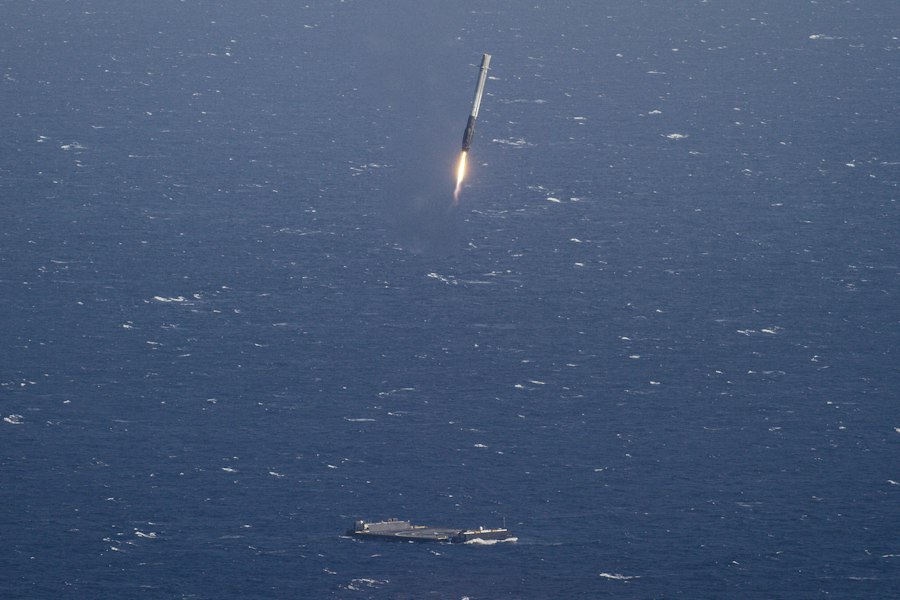
The escalating thermal stress on the second stage engine reached a critical point. The hairline fracture, now a gaping fissure, allowed a catastrophic loss of coolant and, more significantly, a breach in the engine casing. The hypergolic propellants, exposed to the extreme heat and pressure, began to combust uncontrollably.
The Violent Disintegration: A Spectacle of Destruction
Instead of a controlled burn, the second stage engine exploded. The force of the detonation was immense, tearing the stage apart in a violent cascade of debris. The Titan II, designed to deliver its payload to orbit, was now a rapidly expanding cloud of shrapnel. The carefully orchestrated ascent transformed into a horrifying spectacle of uncontrolled destruction.
The Payload’s Fate: A Grim Realization
Within the disintegrating second stage were the hopes and dreams of the Prometheus mission. The scientific instruments, the life support systems, and the precious cargo destined for the orbital station were all annihilated in the explosion. The mission, which had begun with such promise, had met a tragic and ignominious end.
The Crew’s Last Moments: A Silent Vigil
The crew of Odyssey, caught in the heart of the catastrophic failure, had no chance. The immense forces and the rapid disintegration of their vehicle would have rendered any escape impossible. Their final moments, though undocumented, were undoubtedly swift and terrifying, a testament to the unforgiving nature of space exploration.
The Titan II Launch Complex 374-7 disaster remains a significant event in the history of the U.S. space program, highlighting the risks associated with missile operations during the Cold War. For those interested in exploring more about the implications of such incidents on military strategy and space exploration, a related article can be found here. This article delves into the broader context of missile safety and the lessons learned from past failures, providing valuable insights into how these events shaped future aerospace policies.
The Aftermath and the Legacy: Lessons Learned in Tragedy
| Metric | Details |
|---|---|
| Date of Incident | August 24, 1965 |
| Location | Titan II Launch Complex 374-7, Arkansas, USA |
| Type of Incident | Explosion during maintenance |
| Cause | Accidental drop of a socket wrench causing fuel leak and explosion |
| Number of Fatalities | 53 |
| Number of Injuries | 15 |
| Damage | Destruction of the missile silo and launch complex |
| Missile Type | Titan II ICBM |
| Impact on Program | Accelerated decommissioning of Titan II missile program |
The silence that descended upon Launch Complex 374-7 after the disintegration of Odyssey was deafening. The vibrant roar of liftoff was replaced by the chilling realization of loss. The scattered debris, visible even from the ground as faint trails of smoke against the night sky, served as a grim testament to the disaster.
The Scars on the Landscape: Physical Evidence of the Tragedy
The impact sites of the debris were carefully marked and cordoned off. The investigation into the cause of the failure would be exhaustive, meticulously piecing together the sequence of events that led to the catastrophe. Every fragment of Odyssey, from the smallest bolt to the largest structural component, would be scrutinized.
The Human Cost: Grief and Reflection
The families of Commander Rostova, Dr. Tanaka, Lena Hanson, and Javier Morales were informed of the devastating news. The grief that rippled through the aerospace community was profound. These were not just names on a manifest; they were individuals with lives, families, and aspirations, all extinguished in an instant. Their loss served as a stark reminder of the inherent risks undertaken by those who venture into the void.
The Technical Post-Mortem: Unraveling the Mystery
The investigation team, comprised of the brightest minds in engineering and materials science, worked tirelessly. The focus quickly narrowed to the secondary coolant line. The discovery of the hairline fracture, a seemingly insignificant flaw, sent ripples of disbelief through the team. The question became: how did it go unnoticed?
The Limitations of Technology: A Constant Challenge
The inquiry highlighted the inherent limitations of even the most advanced diagnostic technologies. The microscopic nature of the fracture, combined with the complex stresses and vibrations inherent in rocket launches, had created a perfect storm of undetected failure.
The Importance of Redundancy and Margin: A Renewed Emphasis
The tragedy underscored the critical importance of redundancy in critical systems and the need for larger safety margins in material specifications. The design protocols for future spacecraft would undoubtedly be re-evaluated, with a heightened focus on preventing similar microscopic vulnerabilities from becoming catastrophic failures.
A Somber Legacy: The Price of Progress
The Tragedy at Titan II Launch Complex 374-7 became a somber chapter in the history of space exploration. It was a painful reminder that even with the most meticulous planning and advanced technology, the universe can still present insurmountable challenges. Yet, in the wake of such devastation, there is also a profound sense of resilience. The lessons learned, though born of immense loss, would ultimately contribute to safer and more robust future endeavors. The memory of Odyssey and its brave crew would serve as a perpetual reminder of the sacrifices made in the pursuit of knowledge and the expansion of human horizons. The silent stars above had witnessed a tragedy, but they also held the promise of future triumphs, forged in the crucible of this profound loss.

How a Dropped Socket Destroyed a Titan II Missile
FAQs
What happened at Titan II Launch Complex 374-7?
The Titan II Launch Complex 374-7 disaster occurred on September 19, 1980, when a fuel leak led to an explosion during a routine maintenance procedure.
What was the cause of the disaster at Titan II Launch Complex 374-7?
The disaster was caused by a fuel leak that ignited, leading to an explosion. The leak occurred during maintenance work on the missile.
Were there any casualties in the Titan II Launch Complex 374-7 disaster?
Yes, there were casualties in the disaster. Two Air Force personnel were killed, and many others were injured.
What was the impact of the Titan II Launch Complex 374-7 disaster?
The explosion caused significant damage to the launch complex and surrounding areas. It also raised concerns about the safety of the Titan II missile system.
What safety measures were implemented following the Titan II Launch Complex 374-7 disaster?
After the disaster, safety protocols and procedures were reviewed and improved to prevent similar incidents in the future. Additionally, changes were made to the design and maintenance of the Titan II missile system to enhance safety.