The Arkansas Nuclear Missile Accident: A Cold War Crisis
The shadow of nuclear annihilation loomed large over the United States throughout the Cold War. For decades, the nation lived under the constant threat of Soviet aggression, a threat that necessitated the development and deployment of a vast arsenal of nuclear weapons. Among these were the intercontinental ballistic missiles (ICBMs) strategically positioned across the country, silent sentinels ready to unleash unimaginable destruction. One such site, a Titan II missile complex near Damascus, Arkansas, became the epicenter of a terrifying incident in September 1980, an event that brought the nation precariously close to a nuclear catastrophe. This near-miss, often overshadowed by more dramatic Cold War confrontations, serves as a stark reminder of the inherent dangers of maintaining such a powerful and volatile arsenal.
The Cold War’s Nuclear Paradox
The Cold War was characterized by an escalating arms race, a relentless competition between the United States and the Soviet Union to develop and stockpile nuclear weapons. This strategy of Mutually Assured Destruction (MAD) paradoxically aimed to prevent war by ensuring that any nuclear attack would result in the complete annihilation of both aggressor and defender. While this doctrine may have deterred large-scale conflict, it placed the world in a perpetual state of unease, with the constant possibility of accidental or intentional nuclear war. The United States maintained numerous ICBM silos across its territory, each housing a missile capable of delivering a devastating nuclear payload. These facilities were designed with multiple safety mechanisms and strict protocols, yet the sheer power and complexity of the weapons meant that the margin for error was infinitesimally small.
Life in the Shadow of the Titan II
The Titan II missile was a behemoth of Cold War technology, standing over 100 feet tall and weighing more than 150,000 pounds. It was the largest and most powerful land-based missile in the U.S. arsenal, carrying a single warhead with a yield of nine megatons – roughly 600 times the power of the atomic bomb dropped on Hiroshima. Silos housing these missiles were scattered across states like Arkansas, Arizona, and Missouri, operating 24/7 with highly trained crews. Life for these missile crews was a unique blend of routine and intense pressure. They lived and worked in underground facilities, constantly monitoring the status of their missile, aware that they were custodians of a weapon that could end civilization. The isolation, the long shifts, and the ever-present knowledge of the destructive power at their fingertips created a psychologically demanding environment. The missile complex near Damascus, Arkansas, designated as “570-4,” was one of these crucial but potentially dangerous installations.
The Importance of Preparedness
The existence of nuclear weapons demanded an unprecedented level of preparedness. Extensive training, rigorous maintenance schedules, and layered safety protocols were all put in place to mitigate the risks. However, the human element, the inherent fallibility of any complex system, remained a significant factor. The possibility of human error, equipment malfunction, or unforeseen circumstances was a constant concern for military planners and civilian populations alike. The Arkansas incident would tragically highlight these vulnerabilities.
The Cold War era was marked by numerous tense moments, including several nuclear missile accidents that could have had catastrophic consequences. One such incident occurred in Arkansas, where a missile mishap raised alarms about the safety protocols in place during this precarious period. For a deeper understanding of the complexities and dangers associated with nuclear weapons during the Cold War, you can read a related article that explores various incidents and their implications at this link.
The Night of the Incident: A Cascade of Errors
The Initial Trigger: A Simple Dropped Wrench
The events that unfolded on September 18, 1980, began with a seemingly innocuous event deep within the Titan II missile silo at 570-4. A technician performing routine maintenance on the missile’s second stage had accidentally dropped a 3-pound socket wrench. This small object, propelled by gravity, fell approximately 70 feet and struck a critical component – the missile’s fuel pump. The impact itself was not the immediate cause of the catastrophic events, but it initiated a chain reaction that would quickly escalate into a full-blown crisis.
The Leaking Fuel: A Silent Threat
The impact of the wrench ruptured a seal on the fuel pump, leading to a slow but steady leak of highly volatile liquid propellant. This highly reactive fuel, a mixture of hydrazine and nitrogen tetroxide, is corrosive and extremely dangerous. As the propellant began to escape, it formed a toxic cloud within the confined space of the missile silo. The technicians, alerted to the leak, were forced to evacuate the silo, a standard procedure when dealing with such hazardous materials. However, the leak continued unabated, creating an increasingly perilous situation.
The Pressurized Dilemma: A Dangerous Choice
The situation in the silo became increasingly desperate as the propellant continued to leak. The missile’s complex internal systems were designed to maintain a precise internal pressure. As the fuel leaked, the pressure within the silo began to fluctuate. To combat this, the crew activated the silo’s purge system, attempting to vent the escaping propellant. However, this action inadvertently exacerbated the problem. The purge system, designed to remove inert gases, was not equipped to handle the volatile nature of the leaking fuel. The situation was further complicated by the inherent danger of the warhead itself. The nine-megaton Mark 6 warhead, while designed with multiple safety features, was a potent nuclear device. The primary concern was that the leaking propellant could potentially detonate the warhead, leading to a devastating nuclear explosion.
The Escalation: From Leak to Explosion
The Propellant’s Fury: Igniting the Danger
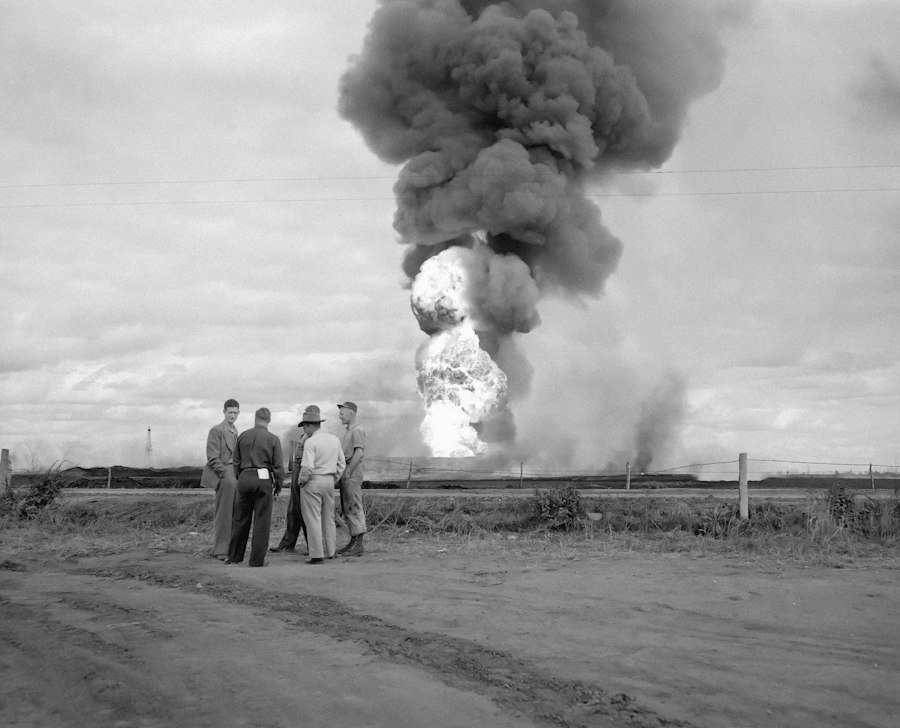
The combination of the leaking fuel and the activated purge system created a volatile environment within the silo. The propellant, in its gaseous state, was highly flammable. The exact ignition source remains a subject of some debate, but it is believed that a spark, possibly generated by the malfunctioning purge system or static electricity, ignited the highly concentrated propellant vapors. This ignition did not immediately detonate the nuclear warhead, but it did cause a powerful conventional explosion within the silo.
The Blast and the Aftermath: Damage and Danger
The conventional explosion ripped through the missile silo, causing significant structural damage. The blast was powerful enough to breach the silo’s concrete lid, sending debris flying. Crucially, the explosion did not detonate the nuclear warhead. The warhead itself was designed with several layers of safety mechanisms to prevent accidental detonation, including inertia switches and explosive bolts that would need to be activated in a specific sequence. The conventional explosion, while violent, did not replicate this precise sequence. However, the explosion did dislodge the nine-megaton warhead, sending it tumbling down the damaged silo. The physical integrity of the warhead was now compromised, raising new fears about its stability.
The Immediate Response: A Race Against Time
The alarms sounded across the command center, alerting military and civilian authorities to the unfolding disaster. The immediate priority was to prevent a nuclear detonation, which was now a very real possibility. Emergency response teams, including specialized hazardous materials units and nuclear weapons experts, were dispatched to the site. The situation was incredibly complex: they were dealing with a damaged nuclear missile, leaking highly toxic and flammable propellant, and the constant threat of a secondary explosion or a nuclear detonation.
The Containment and De-escalation: A Fragile Success
The Critical Decision: To Intervene or Not
As the situation stabilized in the immediate aftermath of the explosion, a critical decision had to be made: how to safely remove the damaged warhead from the silo. The missile was no longer in a stable condition, and the presence of the leaking propellant, even after efforts to vent it, posed a persistent risk. Furthermore, the compromised warhead itself was a source of immense concern. Military engineers and nuclear safety experts were faced with an unprecedented challenge. They had to devise a plan to extract a potentially unstable nuclear weapon from a compromised silo without triggering a catastrophic event.
The Complex Extraction: A Delicate Operation
The operation to remove the warhead was a high-stakes, meticulous undertaking. It required specialized equipment and a highly skilled team working under immense pressure. The technicians had to carefully maneuver through the damaged silo, dealing with residual propellant and the ever-present danger of further collapse or ignition. The process involved the use of heavy-duty cranes and specialized tools designed to handle nuclear components. Every movement was calculated, every action was meticulously planned, as the slightest misstep could have had dire consequences. The goal was to secure the warhead and transport it to a safer location for further assessment and eventual deactivation.
The Evacuation and Quarantine: Protecting the Public
In anticipation of the potential for a nuclear detonation or the release of significant amounts of toxic material, authorities implemented a local evacuation. Residents within a designated radius of the missile complex were instructed to leave their homes. This precautionary measure, while disruptive, was deemed necessary to ensure public safety. The area around the silo was cordoned off, creating a secure zone for the ongoing emergency response operations. The presence of military personnel, HAZMAT teams, and security forces underscored the gravity of the situation.
The Cold War era was marked by numerous incidents that could have escalated into catastrophic events, one of which occurred in Arkansas involving a nuclear missile accident. This incident serves as a stark reminder of the precarious nature of nuclear arsenals during that tense period. For a deeper understanding of such events and their implications, you can read more in a related article on the topic at In The War Room. The discussions surrounding these accidents highlight the importance of nuclear safety and the lessons learned from history.
The Lingering Questions and Lessons Learned
| Metric | Details |
|---|---|
| Incident Name | 1968 Arkansas Titan II Missile Explosion |
| Date | September 18, 1968 |
| Location | Damascus, Arkansas |
| Missile Type | LGM-25C Titan II |
| Cause | Accidental drop of a socket during maintenance, puncturing the missile’s fuel tank |
| Explosion Type | Fuel explosion (non-nuclear) |
| Nuclear Detonation | No |
| Casualties | 1 fatality (Airman David Livingston), several injuries |
| Damage | Destruction of missile silo and missile |
| Radiation Release | None reported |
| Response Time | Immediate evacuation and emergency response |
| Significance | Highlighted risks of nuclear missile accidents during the Cold War |
The Human Factor: A Constant Vulnerability
The Arkansas nuclear missile accident served as a stark and undeniable reminder of the inherent vulnerabilities in any system involving complex technology and human operators. While the U.S. military maintained rigorous training and safety protocols, the incident underscored that human error, even in its most seemingly insignificant forms, could have catastrophic consequences. The dropped wrench, a simple oversight, initiated a chain of events that brought the world to the precipice of nuclear disaster. This incident highlighted the need for continuous re-evaluation of procedures, ongoing training, and the recognition that even the best-laid plans can be undone by a moment of inattention.
The Legacy of the Incident: A Near Miss Remembered
In the aftermath of the accident, the Titan II missile system was reassessed, and improvements were made to safety protocols. The incident was extensively investigated, and lessons were learned about the handling of volatile propellants and the safety of nuclear warheads in compromised environments. While the world was spared a nuclear catastrophe, the memory of the event lingered. It became a case study in nuclear safety and a cautionary tale about the dangers of the Cold War arms race. The facility itself was eventually decommissioned, and the Titan II missile system was phased out of service, partly due to the inherent risks exposed by the Arkansas incident.
The Importance of Vigilance: A Perpetual Responsibility
The Arkansas nuclear missile accident is a critical footnote in the history of the Cold War. It represents a moment when the abstract threat of nuclear war became a tangible, immediate danger. The successful de-escalation of the crisis was a testament to the professionalism and dedication of the emergency responders, but it also highlighted the precariousness of the situation. The incident serves as a perpetual reminder that maintaining a nuclear arsenal is a responsibility of immense magnitude, one that requires constant vigilance, unwavering attention to detail, and a deep understanding of the potential consequences of even the smallest misstep. The Cold War may have ended, but the lessons learned from near misses like the Arkansas incident remain profoundly relevant in a world still grappling with the existence of nuclear weapons. The silent sentinels of the Cold War, though largely dismantled, left behind a legacy of caution and a profound appreciation for the fragility of peace.

How a Dropped Socket Destroyed a Titan II Missile
FAQs
What happened during the Cold War nuclear missile accident in Arkansas?
During the Cold War nuclear missile accident in Arkansas, a Titan II intercontinental ballistic missile exploded in its silo near Damascus, Arkansas on September 18, 1980.
What caused the nuclear missile accident in Arkansas?
The nuclear missile accident in Arkansas was caused by a maintenance technician dropping a wrench socket, which punctured the missile’s fuel tank, leading to a series of events that resulted in the explosion.
Was there a nuclear warhead on the missile during the accident?
Yes, there was a nuclear warhead on the Titan II missile during the accident in Arkansas. However, the warhead did not detonate and was safely recovered after the explosion.
What were the consequences of the Cold War nuclear missile accident in Arkansas?
The explosion resulted in the death of one Air Force member and injuries to several others. It also led to the release of toxic fumes and the contamination of the surrounding area with radioactive debris.
How did the Cold War nuclear missile accident in Arkansas impact nuclear safety protocols?
The nuclear missile accident in Arkansas highlighted the risks associated with maintaining and operating nuclear weapons. It prompted a review of safety protocols and procedures, leading to improvements in nuclear weapon handling and maintenance practices.