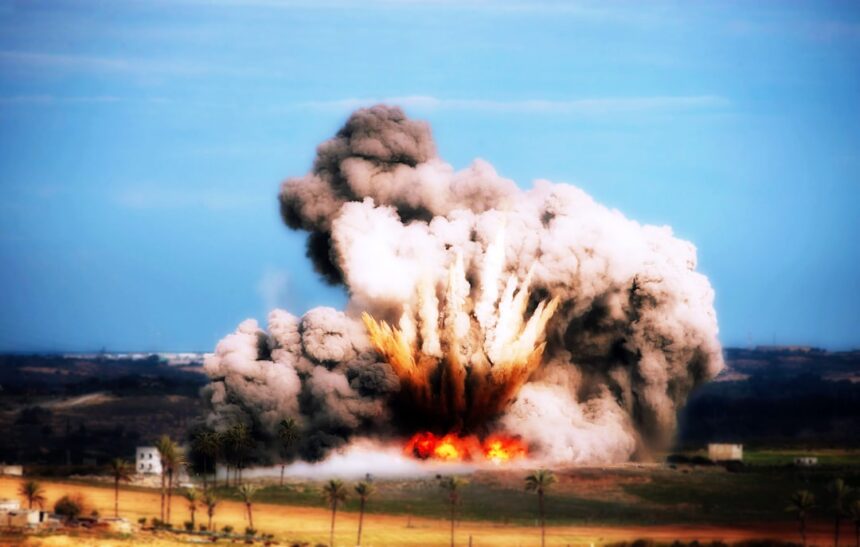
The annals of history are often etched with tales of triumph and innovation, but beneath the surface of progress, a darker narrative frequently unfolds – one of human error, unforeseen consequences, and near-catastrophic events. The Cold War, a period characterized by ideological tension and a relentless arms race, is particularly rife with such stories. The documentary Atomic Bloopers: Cold War Nuclear Weapons Accidents seeks to illuminate these chilling episodes, peeling back the layers of secrecy and propaganda to reveal the chilling reality of humanity’s brush with nuclear oblivion.
The dawn of the nuclear age was heralded with awe and trepidation. The destructive power unleashed at Hiroshima and Nagasaki in 1945 irrevocably altered the global landscape, ushering in an era defined by the existential threat of nuclear annihilation. The Cold War, a protracted standoff between the United States and the Soviet Union, amplified this fear exponentially. Both superpowers engaged in a feverish build-up of their nuclear arsenals, each seeking to achieve strategic superiority over the other. This was not merely a theoretical exercise; it was a practical, albeit terrifying, endeavor involving the development, production, testing, and deployment of increasingly sophisticated and potent nuclear weapons. The documentary Atomic Bloopers delves into this precarious environment, illustrating how the very instruments designed for deterrence became sources of immense danger through human fallibility.
The Arms Race: A Perilous Escalation
The impetus behind the Cold War arms race was rooted in a complex interplay of geopolitical anxieties, ideological competition, and technological ambition. Following World War II, the ideological chasm between the capitalist West, led by the United States, and the communist East, dominated by the Soviet Union, widened into an abyss. The development of nuclear weapons by both nations transformed this ideological struggle into a literal life-or-death contest. The early days saw a race to build more warheads, then to deliver them more effectively, leading to the development of intercontinental ballistic missiles (ICBMs) capable of reaching any point on the globe. This escalating spiral of weaponization created a scenario where the unthinkable – a full-scale nuclear exchange – became a constant, albeit low-probability, threat.
Technological Hubris and the Quest for Dominance
The relentless pursuit of military superiority drove rapid advancements in nuclear technology. Engineers and scientists, often working under immense pressure and with considerable resources, pushed the boundaries of what was technically feasible. This often led to designs that were complex, experimental, and, as Atomic Bloopers demonstrates, prone to unexpected failures. The very notion of creating weapons capable of vaporizing cities fostered a unique form of technological hubris, where the potential for catastrophic error was sometimes underestimated or downplayed in the fervent pursuit of an edge over the adversary. The documentary highlights instances where technological ambition outpaced safety protocols, setting the stage for potential disaster.
The Doctrine of Mutually Assured Destruction (MAD)
A central tenet of Cold War nuclear strategy was the doctrine of Mutually Assured Destruction (MAD). This chillingly logical concept posited that a full-scale nuclear attack by one superpower would inevitably result in devastating retaliation from the other, leading to the complete annihilation of both. While intended to prevent war, MAD also created a precarious balance of terror, where the slightest miscalculation or accidental launch could trigger a global catastrophe. The documentary explores how the ever-present threat of MAD created a high-stakes environment where even minor accidents involving nuclear weapons carried the potential for world-ending consequences.
For those interested in the intricate history of Cold War tensions and the potential disasters that accompanied the nuclear arms race, the documentary on nuclear weapons accidents provides a chilling perspective. A related article that delves deeper into the implications of these incidents can be found at this link, where you can explore further insights into how close the world came to catastrophe during this fraught period.
Whispers of Disaster: Unveiling the Accidental Detonations
The most terrifying aspect of nuclear weapons is their inherent power. However, Atomic Bloopers reveals that it wasn’t always the enemy’s missiles that posed the greatest threat. A significant portion of the documentary focuses on actual accidents that occurred during the handling, storage, and transportation of nuclear devices. These incidents, often shrouded in secrecy for decades, offer a stark reminder of how close the world has come to nuclear catastrophe due to sheer human error, mechanical malfunction, or environmental factors. The film meticulously reconstructs these events, using archival footage, expert testimony, and chilling eyewitness accounts to paint a vivid picture of the near-misses.
The Accidental Detonation: When Safety Measures Failed
The documentary meticulously details several instances where nuclear weapons, or components thereof, accidentally detonated or came perilously close to doing so. These were not controlled detonations during testing, but rather unintended explosions that could have had devastating consequences. The sheer scale of destruction that even a “partial” nuclear detonation could cause is a recurring theme, underscoring the immense danger inherent in these weapons. Atomic Bloopers meticulously examines the chain of events that led to these accidents, often highlighting overlooked safety protocols or critical human errors.
The Broken Arrow Incidents: More Than Just “Lost” Weapons
The term “Broken Arrow” is the military code for an accident involving nuclear weapons that does not create the risk of nuclear war. However, Atomic Bloopers demonstrates that the reality behind these incidents was often far more complex and frightening. The documentary explores several “Broken Arrow” events, revealing that the danger was not always solely about the potential for a nuclear explosion but also the dispersal of highly radioactive materials. These accidents, whether involving planes crashing with nuclear payloads, submarines sinking, or weapons malfunctioning on the ground, underscore the fragility of containment and the long-lasting environmental consequences of even non-nuclear explosions involving nuclear materials.
The Palomares Incident: A Scar on the Spanish Coast
One of the most prominent examples discussed in Atomic Bloopers is the 1966 Palomares hydrogen bomb accident. An American B-52 bomber collided with a KC-135 tanker during a mid-air refueling operation over the coast of Spain. The collision resulted in the catastrophic release of four hydrogen bombs from the bomber. While none of the bombs detonated with their full nuclear yield, conventional explosives within two of them did detonate, scattering highly radioactive plutonium across the surrounding landscape. The documentary provides a harrowing account of the cleanup operation, the long-term health consequences for those involved, and the lingering contamination. The film uses archival footage of the scorched earth and the desperate efforts to contain the spread of radioactive dust, illustrating the immense challenge of dealing with such an event.
The Thule Air Base Accident: A Melting Ice Cap and Lingering Radiation
Another significant event explored is the 1968 Thule Air Base B-52 crash in Greenland. A B-52 carrying four nuclear weapons caught fire and crashed near the air base. The resulting inferno destroyed the aircraft and scattered radioactive material across the ice. The documentary highlights the immense logistical and environmental challenges faced by the clean-up crews, working in extreme conditions to recover the plutonium. The melting ice cap continues to be a concern, with fears that buried radioactive debris could be released into the Arctic environment. Atomic Bloopers emphasizes the long-term ecological impact and the ongoing, albeit often unseen, threat posed by these buried contaminants.
Mechanical Failures and Human Oversight: A Deadly Combination
The documentary dedicates significant segments to dissecting the specific causes of these accidents, often pointing to a confluence of mechanical failures and lapses in human judgment. In many cases, sophisticated safety mechanisms were either bypassed, failed to function as intended, or were overridden due to operational pressures. The film presents expert analyses of the engineering flaws and the critical decision-making processes that went awry, offering a sobering insight into the human element in high-stakes environments. The dedication of the documentary to detailing these failures underscores the inherent risks associated with handling such volatile technology.
The Near Misses: When the World Held its Breath
Beyond actual accidents, Atomic Bloopers also shines a light on the chilling near misses – moments when a catastrophic event was averted by the slimmest of margins. These incidents, often born from misinterpretations of radar signals, technical glitches in early warning systems, or simple human error, highlight the precariousness of the nuclear standoff and the constant risk of accidental escalation. The documentary’s exploration of these near misses serves as a stark reminder of the fragility of peace during the Cold War.
Stanislav Petrov and the False Alarm: A Single Individual’s Courage
A particularly compelling narrative within Atomic Bloopers is the story of Stanislav Petrov, a Soviet lieutenant colonel who, in 1983, was on duty at a nuclear early warning center when the system reported multiple incoming US intercontinental ballistic missiles. Protocol dictated that he report the attack to his superiors, initiating a retaliatory strike. However, Petrov, trusting his intuition and noting the system’s inconsistencies, believed the alarms to be false. He disobeyed protocol and reported a system malfunction, a decision that likely prevented a full-scale nuclear war. The documentary emphasizes the immense pressure on Petrov and the courage it took to make a decision that went against established procedure, showcasing how individual judgment, in a critical moment, can have global ramifications.
The Able Archer 83 Exercise: Mistaken for a Real Attack
The documentary also revisits the NATO military exercise “Able Archer 83,” conducted in November 1983. The Soviets, hypersensitive to perceived threats, interpreted the realistic nature of the exercise – which involved simulated nuclear release procedures – as a genuine prelude to a Western nuclear strike. The heightened tension during this period, coupled with the exercise’s unprecedented realism, brought the world perilously close to a devastating miscalculation. Atomic Bloopers effectively conveys the palpable fear and the diplomatic maneuvers that were necessary to de-escalate the situation, illustrating how simulations, intended to prepare for war, can inadvertently heighten the risk of actual conflict.
The Human Element: Fear, Pressure, and Fallibility
At the heart of Atomic Bloopers: Cold War Nuclear Weapons Accidents lies the undeniable truth that even the most sophisticated technology is ultimately operated and maintained by human beings. The documentary consistently emphasizes the immense pressure, fear, and the inherent fallibility that permeated the lives of those tasked with handling nuclear weapons. The psychological toll of living under the constant shadow of nuclear war, combined with the immense responsibility, created a fertile ground for errors of judgment and mechanical failures.
The Psychological Burden: Living with the Bomb
The documentary explores the profound psychological impact on individuals who worked directly with nuclear weapons. These were not abstract threats; they were tangible devices of unimaginable power. The constant awareness of the potential for catastrophic failure, coupled with the secrecy and the inherent dangers of their work, undoubtedly took a significant toll. Atomic Bloopers offers glimpses into this often-unseen human cost, highlighting the immense stress under which these individuals operated.
The Crew Under Pressure: Stories from the Missile Silos and Bombers
The film provides a human face to the statistics by recounting the experiences of those who served in missile silos, on nuclear submarines, and in bomber crews. These individuals lived and worked in environments where the slightest error could have catastrophic consequences. The documentary features interviews and archival material that shed light on the daily routines, the constant vigilance, and the underlying fear that accompanied their duties. The stories of near-misses and close calls recounted by veterans offer a visceral understanding of the human drama behind the nuclear threat.
The Cold War era was marked by a tense standoff between superpowers, but it also bore witness to numerous nuclear weapons accidents that could have had catastrophic consequences. For those interested in exploring this topic further, a compelling documentary sheds light on these incidents and their implications. You can find more information in a related article that discusses the historical context and the lessons learned from these near-misses. To read more, visit this insightful piece that delves into the complexities of nuclear safety during a time of heightened geopolitical tension.
The Imperfect System: Maintenance, Training, and Oversight
Beyond individual psychology, Atomic Bloopers also scrutinizes the systemic issues that contributed to accidents. Inadequate training, rushed maintenance schedules, and insufficient oversight are all presented as significant factors in the chain of events leading to various incidents. The documentary argues that the sheer scale of the nuclear enterprise, coupled with the pressures of the Cold War, sometimes led to corners being cut and safety protocols being compromised.
The Cost of Secrecy: Hindering Open Communication
The pervasive culture of secrecy surrounding nuclear weapons development and deployment, while intended to protect national security, often proved detrimental to safety. The lack of open communication between different branches, departments, and even within units meant that lessons learned from one incident were not always effectively disseminated, leading to a repetition of mistakes. Atomic Bloopers illustrates how this compartmentalization of information hindered the overall safety and security of nuclear arsenals.
The Human Factor in Automation: When Machines Fail and Humans React
While the documentary acknowledges the role of automation in nuclear systems, it also emphasizes that human intervention remains critical. The film explores instances where automated systems malfunctioned, and the human operators either failed to detect the malfunction or reacted incorrectly. Conversely, it also highlights situations where human override of automated systems, as in the case of Stanislav Petrov, proved to be the crucial factor in preventing disaster. This highlights the complex and often precarious interplay between human and machine in the nuclear age.
Echoes in the Present: Lessons from the Atomic Past
Atomic Bloopers: Cold War Nuclear Weapons Accidents is not merely a historical recounting of past blunders; it serves as a crucial cautionary tale for the present and the future. The documentary argues that the lessons learned from these Cold War near-misses are as relevant today as they were during the height of the nuclear standoff. The existence of nuclear weapons, the potential for human error, and the ever-present specter of accidental escalation remain significant global concerns.
The Enduring Threat: Nuclear Weapons in the 21st Century
Despite the end of the Cold War, nuclear weapons continue to exist, and the risks associated with them have not vanished. The documentary draws a direct line from the accidents of the past to the ongoing challenges of nuclear proliferation, the modernization of arsenals, and the potential for misuse or accidental detonation. Atomic Bloopers implicitly argues for the continued need for vigilance, robust safety measures, and a commitment to disarmament.
Proliferation and the New Nuclear Powers
The documentary subtly underscores the risks associated with the spread of nuclear technology to new nations. As more countries acquire nuclear capabilities, the potential for accidents and miscalculations can increase, especially in regions with ongoing political instability. The film’s focus on past accidents serves as a stark reminder of the inherent dangers, regardless of who possesses the technology.
The Evolving Landscape of Warfare: Cyber Threats and Nuclear Arsenals
The documentary also implicitly touches upon the evolving nature of warfare and how cyber threats could potentially interact with nuclear command and control systems. The intricate digital networks that manage nuclear arsenals are vulnerable to sophisticated cyberattacks, raising new and complex risks that build upon the legacy of human error.
The Importance of Remembrance and Education
Ultimately, Atomic Bloopers: Cold War Nuclear Weapons Accidents champions the power of remembrance and education. By bringing these forgotten incidents to light, the documentary aims to foster a greater understanding of the true cost of nuclear weapons and the importance of preventing future catastrophes. The film serves as a powerful educational tool, urging viewers to consider the past to inform the future.
A Call for Deeper Understanding: Beyond the Headlines
The documentary strives to move beyond sensational headlines and delve into the nuanced realities of nuclear weapon accidents. It seeks to educate a new generation about the dangers and the historical context, ensuring that the lessons learned from these near-misses are not forgotten. The film implicitly argues that a well-informed public is crucial for advocating for peace and responsible nuclear policy.
The Legacy of Near Misses: A Constant Reminder
The echoes of these atomic bloopers continue to resonate. They serve as a constant, albeit often silent, reminder of humanity’s capacity for both creation and destruction. Atomic Bloopers: Cold War Nuclear Weapons Accidents is a crucial and timely documentary that forces us to confront the terrifying fragility of our existence and the imperative to learn from our most dangerous mistakes. It is a testament to the fact that sometimes, the most significant lessons are learned not from grand victories, but from the chilling proximity to utter disaster.

How a Dropped Socket Destroyed a Titan II Missile
FAQs
What is the Cold War nuclear weapons accident documentary about?
The documentary explores various incidents during the Cold War where nuclear weapons were involved in accidents or near-misses, highlighting the potential dangers and consequences of such events.
When was the Cold War nuclear weapons accident documentary released?
The release date of the documentary may vary depending on the specific production, but it generally focuses on incidents that occurred during the Cold War period, which lasted from the late 1940s to the early 1990s.
Which incidents are covered in the Cold War nuclear weapons accident documentary?
The documentary may cover incidents such as the 1961 Goldsboro B-52 crash, the 1980 Damascus Titan missile explosion, and the 1968 Thule Air Base B-52 crash, among others.
Who are the key figures interviewed in the Cold War nuclear weapons accident documentary?
The documentary may feature interviews with military personnel, historians, experts on nuclear weapons, survivors of accidents, and other individuals with firsthand knowledge or experience related to the incidents covered.
Where can I watch the Cold War nuclear weapons accident documentary?
The documentary may be available for streaming on various platforms such as streaming services, documentary channels, or through online rental or purchase. Check with the production company or distributor for specific viewing options.