The Korean Demilitarized Zone, or DMZ, stands as a stark and somber monument to a conflict that never truly ended. More than just a border, it is a physical manifestation of a divided nation, a scarred landscape that has witnessed decades of tension, propaganda, and the constant threat of renewed hostilities. This heavily fortified strip of land, stretching approximately 250 kilometers across the Korean Peninsula, is not merely a geographical feature but a profound historical artifact, a testament to the Cold War’s enduring legacy and the unresolved trauma of the Korean War. Its very name, “Demilitarized Zone,” is a grim irony, for it is one of the most militarized borders on Earth, a place where millions of soldiers stand perpetually on alert. The history of the DMZ is inextricably linked to the birth of two Koreas, the brutal conflict that defined them, and the ongoing struggle for reunification.
The Korean Peninsula, unified for centuries under various dynasties, found itself a pawn in the grand geopolitical chess game of the 20th century. Following Japan’s defeat in World War II, the peninsula, which had been under Japanese colonial rule since 1910, was divided along the 38th parallel by the victorious Allied powers. The Soviet Union occupied the north, and the United States administered the south, with the initial intention of establishing a unified, independent Korea. However, ideological differences and the escalating Cold War quickly solidified this temporary division into two distinct states: the Democratic People’s Republic of Korea (DPRK) in the north and the Republic of Korea (ROK) in the south.
The Korean War: A Conflict Forged in Ideology
The political chasm between the two Koreas widened throughout the late 1940s. Driven by a desire to reunify the peninsula under communist rule, North Korea, with the backing of the Soviet Union and later China, launched a full-scale invasion of the South in June 1950. The ensuing Korean War was a brutal and devastating conflict that drew in international forces, primarily the United States-led United Nations Command on behalf of South Korea, and Chinese People’s Volunteer Army on behalf of North Korea. The war raged for three years, characterized by brutal offensives and counter-offensives, immense civilian casualties, and widespread destruction.
The Armistice Agreement: A Fragile Peace
After years of bloody fighting, the warring parties finally agreed to an armistice on July 27, 1953, at Panmunjom, a village located at the heart of the peninsula. The Armistice Agreement, signed by the UN Command, the Korean People’s Army, and the Chinese People’s Volunteer Army, brought an end to the active hostilities but crucially, did not establish a peace treaty. This means that the two Koreas remain technically at war to this day, with the DMZ serving as the de facto border between them. The armistice agreement stipulated the establishment of a Military Demarcation Line (MDL), which generally follows the front lines at the time of the ceasefire, and a 4-kilometer-wide buffer zone on either side of the MDL – the Demilitarized Zone. This zone, intended to be free of military personnel and fortifications, became a highly militarized reality.
The Bridge of No Return, located in the Korean Demilitarized Zone (DMZ), serves as a poignant reminder of the division between North and South Korea, symbolizing the complex history of the Korean War and its aftermath. For a deeper understanding of this historical site and its significance, you can read a related article that explores the broader context of the DMZ and its impact on Korean relations. To learn more, visit this article.
The DMZ: A Landscape of Contradictions
The Korean DMZ is a place of profound paradoxes. It is a buffer zone designed to prevent conflict, yet it is home to some of the world’s largest concentrations of military forces. It is a no-man’s-land, yet it harbors unique ecosystems and a small, albeit precarious, human presence. The stark reality of the DMZ is a constant reminder of the unresolved division and the deep mistrust that persists between the North and the South.
The Military Demarcation Line (MDL): The Fissure of Division
At the very center of the DMZ lies the Military Demarcation Line (MDL). This is not a fence or a wall, but an imaginary line that snakes across the peninsula. Along the MDL, within the DMZ, are the Joint Security Area (JSA) at Panmunjom, a site of historical significance and ongoing diplomatic tension, and various observation posts and guard towers. Soldiers from both sides stand mere meters apart, separated by the MDL, a silent testament to the fragile ceasefire. The tension within the JSA is palpable, a place where high-stakes negotiations and tense encounters have become a recurring feature.
The Civilian Control Line (CCL): A Second Layer of Defense
Beyond the heavily guarded DMZ itself lies the Civilian Control Line (CCL). This is a perimeter that extends further south of the DMZ, and in some areas, north of it as well. The CCL is designed to restrict civilian access to areas deemed strategically important or potentially dangerous due to proximity to the DMZ. Entering the CCL requires special permits and is subject to strict military oversight. This creates a buffer zone where civilian life is significantly curtailed, with only a limited number of agricultural communities permitted to operate under stringent military supervision. These communities, often referred to as “propaganda villages” by the other side, live a life dictated by the constant presence of military personnel and the ever-present threat of renewed conflict.
Life on the Edge: The Human Element of the DMZ
Despite its formidable defenses and the constant threat of war, the DMZ is not entirely devoid of human life. Small communities persist within the CCL, and the DMZ itself, though largely uninhabited by civilians, has become a peculiar sanctuary for wildlife and a site of historical fascination. The stories of those who live and work in and around the DMZ are often tinged with a unique blend of resilience, caution, and a lingering hope for peace.
The “Propaganda Villages”: Symbols of National Pride and Division
Within the DMZ, on the southern side, lies the village of Daeseong-dong, often referred to as “Freedom Village.” Residents of Daeseong-dong are South Korean citizens, but they live under unique conditions. They are exempt from military service and taxes, but they must also abide by a strict curfew and are subject to constant military surveillance. The village is intentionally kept well-lit at night and boasts a flagpole, the tallest in the world at one time, flying the South Korean flag as a direct counterpoint to a similarly tall flagpole in the North’s propaganda village, Kijong-dong. Kijong-dong, on the other hand, is largely uninhabited, its buildings and lights designed to project an image of prosperity and normalcy to the South, a tactic widely understood as propaganda.
The Wildlife Haven: An Unintended Sanctuary
The extensive militarization and restricted access to the DMZ have, ironically, created an unintended sanctuary for a wide array of wildlife. With human activity severely limited, the natural ecosystems within the DMZ have flourished. Endangered species, including cranes, deer, bears, and even tigers, have found refuge in this heavily guarded strip of land. The DMZ has become a unique ecological corridor, a testament to nature’s resilience in the face of human conflict. Conservationists advocate for the DMZ to be recognized as a UNESCO World Heritage site, transforming a symbol of division into a global symbol of preservation.
The DMZ as a Symbol and a Stage
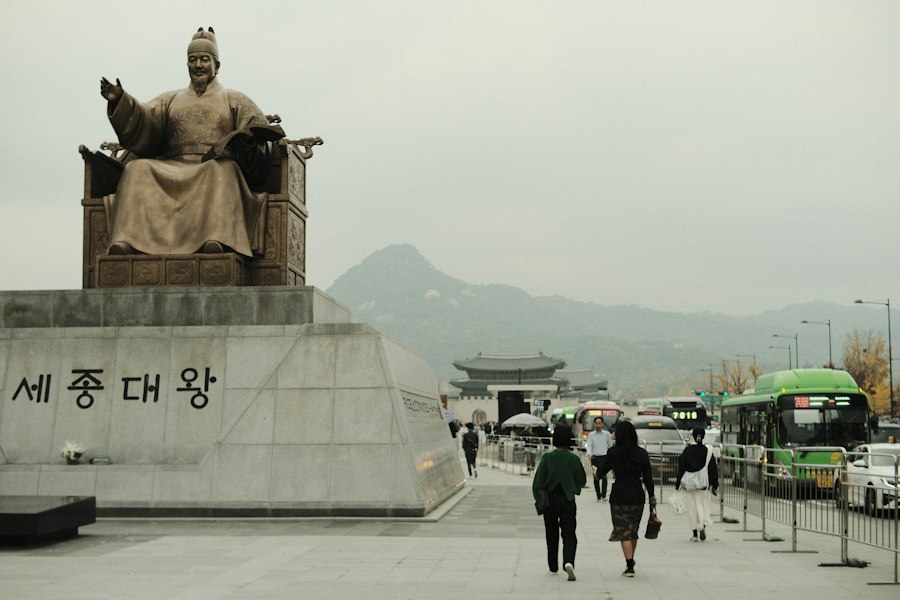
The Korean DMZ transcends its physical boundaries, serving as a powerful symbol of the Cold War’s enduring legacy and the ongoing division of the Korean people. It is also a stage upon which diplomatic dramas unfold, moments of tension, and rare glimpses of hope for reconciliation. The DMZ is a place that evokes a complex mix of fear, fascination, and a deep-seated yearning for unity.
The Tensions and Incidents: A Constant Undercurrent of Danger
The DMZ has been the site of numerous incidents, skirmishes, and provocations over the decades. From infiltrations and artillery exchanges to the infamous Axe Murder Incident in 1976, which resulted in the death of two US Army officers, the DMZ has been a constant flashpoint. These events serve as stark reminders of the fragility of the armistice and the ever-present danger of renewed conflict. The heavily fortified nature of the DMZ, with millions of troops, minefields, and sophisticated surveillance systems, creates an environment where miscalculation or escalation could have devastating consequences.
Reunification Efforts and Diplomatic Overtures: Glimmers of Hope
Despite the persistent tensions, there have been moments of hopeful engagement and dialogue along the DMZ. Summit meetings between leaders of North and South Korea have occasionally taken place, with the JSA in Panmunjom serving as a prominent venue. These meetings, though often fraught with challenges and followed by periods of renewed tension, offer glimpses of a potential future where the DMZ might one day cease to exist. The symbolic crossing of the MDL by leaders, the joint efforts in demining certain areas, and the shared cultural exchanges, however limited, represent attempts to bridge the divide and foster a sense of shared Korean identity.
The Bridge of No Return, a significant landmark in the Korean Demilitarized Zone, serves as a poignant reminder of the division between North and South Korea. This bridge was used for prisoner exchanges after the Korean War, symbolizing both hope and despair. For those interested in exploring more about the historical context and the ongoing tensions in the region, a related article can be found here, which delves deeper into the complexities of the DMZ and its impact on Korean history.
The Future of the DMZ: A Hope for Peace and Reconciliation
| Metric | Details |
|---|---|
| Name | Bridge of No Return |
| Location | Korean Demilitarized Zone (DMZ), between North Korea and South Korea |
| Purpose | Used for prisoner exchanges after the Korean War |
| Year Built | 1953 |
| Significance | Named because prisoners crossing it could not return to their original side |
| Notable Event | Used during Operation Little Switch and Operation Big Switch prisoner exchanges |
| Current Status | Closed and replaced by the nearby Freedom Bridge for crossings |
| Length | Approximately 100 meters |
| Material | Steel and concrete |
The Korean DMZ represents a profound challenge and an enduring question for the future of the Korean Peninsula. Its existence is a constant reminder of the unresolved conflict and the human cost of division. However, it also holds within it the potential for transformation, a symbol of hope for eventual reunification and lasting peace.
From Division to Dialogue: The Long Road to Reunification
The path to reunification is undoubtedly long and complex, fraught with political, economic, and social hurdles. However, the existence of the DMZ, while a symbol of division, also serves as a focal point for discussions and efforts aimed at reconciliation. The hope remains that one day, the heavily guarded fences and the ever-present soldiers will be replaced by bridges of understanding and cooperation, transforming this scar on the land into a testament to the resilience of the Korean spirit and the triumph of peace over division.
A Symbol of What Was and What Could Be
The Korean DMZ, the “Bridge of No Return,” is more than just a military boundary. It is a historical artifact, a natural sanctuary, and a powerful symbol of the enduring division of a nation. Its story is a testament to the devastating impact of ideological conflict, the resilience of the human spirit, and the persistent hope for a future where the peninsula is whole once more. The DMZ stands as a somber reminder of the past, but also, for many, a beacon of hope for a united and peaceful future. The legacy of this unique and formidable border continues to shape the destinies of millions, a constant reminder that the Korean War, though no longer actively fought, has never truly ended.

America Sent an Aircraft Carrier to Cut Down One Tree
FAQs
What is the Bridge of No Return in the Korean DMZ?
The Bridge of No Return is a bridge located in the Korean Demilitarized Zone (DMZ) that was used for prisoner exchanges during the Korean War.
Why is it called the Bridge of No Return?
The bridge earned its name because once a prisoner crossed the bridge, they were not allowed to return to their side of the border. This was a symbolic gesture to show the finality of their decision to cross.
When was the Bridge of No Return used for prisoner exchanges?
The Bridge of No Return was used for prisoner exchanges at the end of the Korean War in 1953. Prisoners from both sides were brought to the bridge, and they had to choose whether to cross to the other side or stay.
What is the significance of the Bridge of No Return in Korean history?
The Bridge of No Return symbolizes the division and tensions between North and South Korea. It serves as a reminder of the human cost of war and the ongoing conflict on the Korean Peninsula.
Can visitors access the Bridge of No Return in the Korean DMZ?
No, the Bridge of No Return is located in the Joint Security Area (JSA) of the Korean DMZ, which is a highly restricted area. Visitors are not allowed to access the bridge without special permission and supervision from military authorities.