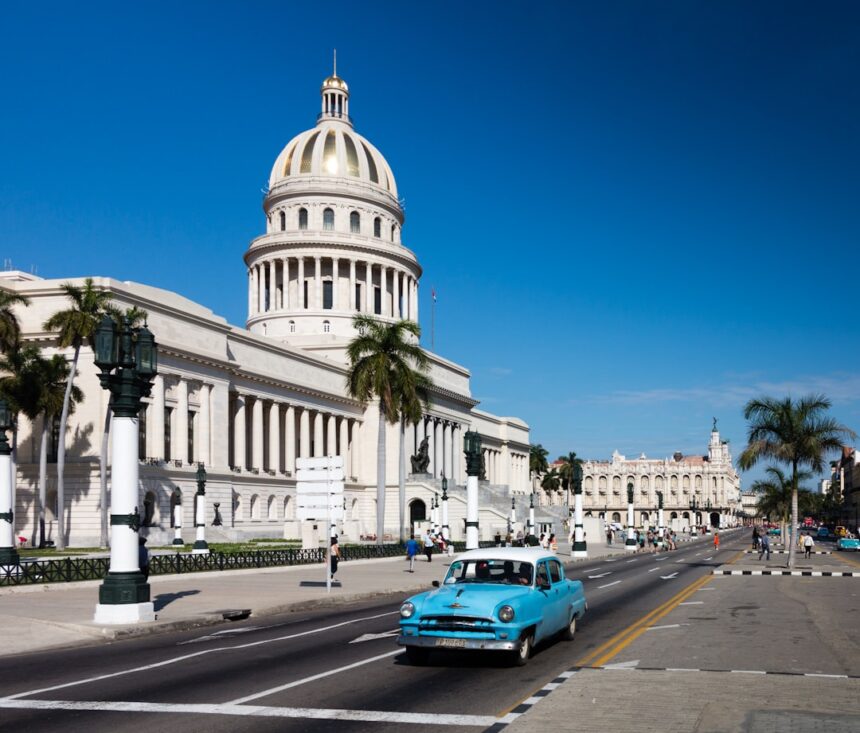
The chilling prospect of a full-scale invasion of Cuba, a concept once relegated to the dusty archives of Cold War contingency plans, has resurfaced, igniting a firestorm of debate and concern. Leaked documents and insider accounts suggest that the Joint Chiefs of Staff, in a clandestine assessment, have presented a proposal for such a military operation, a move that promises to be fraught with peril and carries the potential for catastrophic consequences. This article delves into the multifaceted implications of this audacious plan, examining its strategic underpinnings, the formidable challenges it presents, and the profound ethical and geopolitical ramifications that loom large.
The specter of the Bay of Pigs invasion, a humiliating failure in 1961, hangs heavy over any discussion of U.S. military action in Cuba. This ill-fated attempt to overthrow Fidel Castro’s regime, orchestrated by the CIA with significant military planning, ended in disaster, bolstering Castro’s image and solidifying his alliance with the Soviet Union. The Joint Chiefs’ current proposal, even if couched in more sophisticated military parlance, cannot escape the shadow of this historical precedent.
Historical Context and Lessons Unlearned
The Bay of Pigs was not merely a tactical blunder; it was a strategic miscalculation rooted in a fundamental misunderstanding of Cuban society and the political landscape of the time. The assumption that a disaffected populace would rise up in support of the invaders proved to be profoundly incorrect. Instead, the invasion galvanized nationalist sentiment and consolidated power for Castro.
The Role of Intelligence and Misinformation
A key failing of the Bay of Pigs was the reliance on flawed intelligence and the propagation of misinformation. The exiles were ill-equipped, the air support was inadequate, and the operational details were compromised. Any modern invasion plan would need to address these intelligence gaps with a level of rigor and accuracy that has historically been elusive in such complex environments.
The Impact on Regional Alliances
The Bay of Pigs significantly strained U.S. relations with Latin American nations, many of whom viewed the invasion as an unacceptable act of imperial overreach. A new invasion of Cuba would undoubtedly provoke similar, if not stronger, condemnation from regional partners, potentially isolating the United States on the international stage.
The Evolution of Cuban Military Capabilities
Crucially, Cuba in the 21st century is not the same nation it was in 1961. While still a smaller military force compared to the United States, it has evolved significantly, benefiting from decades of military cooperation with its allies, including the Soviet Union and later Russia. The Joint Chiefs’ proposal would need to account for these advancements, which include more sophisticated air defenses, improved training, and a more integrated command structure.
Modern Cuban Defense Systems
Cuba has invested in modern Soviet-era and domestically produced air defense systems, capable of posing a significant threat to low-flying aircraft and cruise missiles. The island’s geography also lends itself to defensive tactics, with dense terrain and a long coastline presenting challenges for conventional amphibious assaults.
The Cuban Militiaman and Popular Resistance
Beyond the formal military, Cuba boasts a highly organized and mobilized civilian militia. The potential for widespread popular resistance, fueled by nationalistic fervor and a deep-seated distrust of U.S. intervention, is a significant factor that cannot be underestimated. The Joint Chiefs’ proposal would need to grapple with the prospect of an protracted insurgency and the immense human cost of suppressing it.
In light of the recent proposal by the Joint Chiefs regarding a potential invasion of Cuba, it is essential to consider the broader implications of such military actions. An insightful article that delves into the historical context and strategic considerations of U.S. interventions in Cuba can be found at In The War Room. This piece provides a comprehensive analysis of past U.S. policies towards Cuba and the potential consequences of renewed military engagement in the region.
Strategic Objectives: Ambition Versus Reality
The underlying motivations for such a drastic proposal remain shrouded in speculation, but likely revolve around a perceived threat posed by the current Cuban government, potential instability in the region, or a desire to reassert U.S. influence. However, the strategic objectives, whatever they may be, must be weighed against the immense risks and the questionable likelihood of achieving them through military means.
The “Threat” of Modern Cuba
While the Cuban government remains authoritarian, its direct threat to U.S. national security in the current geopolitical climate is debatable. The economic and political influence of Cuba has waned considerably since the Cold War, and its military capabilities, while improved, are not on par with major global powers. The justification for a costly and dangerous invasion would require a compelling and demonstrable threat that has not been widely articulated.
Intelligence Assessment of Cuban Capabilities
A thorough and objective assessment of Cuba’s current military and political capabilities would be paramount. This would need to go beyond ideological assumptions and focus on concrete data regarding troop strength, weaponry, intelligence networks, and the potential for internal dissent or popular support for the government.
The Role of Russia and China
The potential for involvement from other global powers, such as Russia and China, which have historically maintained ties with Cuba, adds another layer of complexity. The U.S. would need to carefully consider the implications of a conflict that could potentially draw in other major geopolitical actors, escalating the situation far beyond a bilateral issue.
Defining Success: A Moving Target?
Defining success for an invasion of Cuba is a complex undertaking. Is the objective regime change? The installation of a pro-U.S. government? The dismantling of perceived threats? Each of these objectives carries its own set of challenges and potential pitfalls.
The Perils of Nation-Building
History is replete with examples of successful military interventions that have faltered in the subsequent nation-building phase. The complex social, political, and economic landscape of Cuba would present immense challenges in establishing a stable and legitimate post-invasion government. The potential for a power vacuum and prolonged instability is a significant concern.
The Economic and Social Cost of Occupation
An extended military occupation of Cuba would come with an astronomical economic and social cost for the United States. The resources required to maintain order, rebuild infrastructure, and provide essential services would be immense, diverting critical funds from other domestic and international priorities. Furthermore, the potential for ongoing resistance and insurgency would necessitate a sustained military presence, leading to a perpetual drain on resources and human lives.
The Human Cost: A Price Too High to Pay?

Beyond the strategic and geopolitical considerations, the most profound and disturbing aspect of any invasion proposal is the inevitable human cost. The loss of American lives, Cuban lives, and the potential for widespread suffering and displacement are consequences that demand the most serious ethical scrutiny.
Civilian Casualties and Humanitarian Crisis
A military invasion, by its very nature, is an inherently violent undertaking. The risk of significant civilian casualties in a densely populated island nation like Cuba is a grave concern. Bombardments, ground combat, and the disruption of essential services could lead to a humanitarian crisis of immense proportions, with shortages of food, water, and medical care.
The Impact on the Cuban Population
The Cuban population, already facing economic challenges, would bear the brunt of the conflict. Displacement, injury, and loss of life would be devastating. The psychological trauma inflicted by an invasion and the ensuing occupation could have long-lasting repercussions on Cuban society.
The Ethical Imperative of Non-Intervention
The principle of non-intervention, while not absolute, carries significant ethical weight. The unilateral decision to invade a sovereign nation, particularly without clear and imminent threat, raises fundamental questions about international law and the moral obligations of powerful nations.
The Fate of U.S. Service Members
The brave men and women of the U.S. military would be placed in harm’s way, facing a determined and potentially entrenched enemy. The risks of casualties, injuries, and the psychological toll of prolonged combat are significant factors that must be weighed heavily by any decision-maker.
The Psychological Impact of Warfare
The experience of combat can have profound and lasting psychological effects on soldiers, including post-traumatic stress disorder (PTSD). The potential for a protracted conflict in Cuba could exacerbate these issues, leading to long-term challenges for returning veterans.
The Morale and Readiness of U.S. Armed Forces
The commitment of significant military resources to an invasion of Cuba could also impact the morale and readiness of U.S. armed forces for other potential global threats. The diversion of personnel and equipment could leave other regions vulnerable.
The Geopolitical Fallout: A World Unraveling

The international repercussions of a U.S. invasion of Cuba would be seismic, potentially reshaping global alliances, igniting new conflicts, and undermining decades of diplomatic progress. The ripple effects would be felt far beyond the Caribbean.
Alienating Latin America and the Caribbean
The nations of Latin America and the Caribbean, many of whom have historically advocated for non-intervention and respect for sovereignty, would likely react with widespread condemnation. Such an action could lead to a significant deterioration of U.S. relations with its neighbors, potentially creating opportunities for rival powers to expand their influence.
The Organization of American States (OAS)
The OAS, a regional body dedicated to promoting peace and security, would be deeply divided. The United States’ unilateral action would likely be viewed as a violation of the organization’s principles, potentially leading to its marginalization or even dissolution.
The Rise of Anti-American Sentiment
A U.S. invasion would undoubtedly fuel a surge of anti-American sentiment throughout the region, potentially destabilizing governments and creating fertile ground for extremist ideologies.
Undermining International Law and Norms
The unilateral invasion of a sovereign nation, even a small one, sets a dangerous precedent. It would weaken the international legal framework designed to prevent such actions and could embolden other nations to pursue their own aggressive agendas.
The United Nations Security Council
The United Nations Security Council would likely be a forum of intense debate, with the potential for vetoes and international condemnation. Such an action could further erode the effectiveness and legitimacy of the UN as a global peacekeeping body.
The Shifting Global Balance of Power
The destabilizing effect of an invasion could lead to a recalibration of global power dynamics. Nations that oppose the U.S. action could find common cause, potentially leading to the formation of new alliances and a more fragmented and unpredictable world order.
In light of the recent discussions surrounding the Joint Chiefs’ proposal for a Cuba invasion, it is essential to consider the broader implications of military interventions in the region. A related article explores the historical context and potential consequences of such actions, shedding light on past military strategies and their outcomes. For further insights, you can read more in this detailed analysis that delves into the complexities of U.S. foreign policy in Latin America.
Diplomatic Alternatives: Paths Not Taken?
| Metrics | Data |
|---|---|
| Year | 1962 |
| Proposal Name | Joint Chiefs Cuba invasion proposal |
| Location | Cuba |
| Participants | Joint Chiefs of Staff |
| Purpose | Overthrow Fidel Castro’s government |
Given the overwhelming risks and potential costs, it is imperative to explore and exhaust all diplomatic alternatives before even contemplating military intervention. The Joint Chiefs’ proposal, if it exists, represents a failure of imagination and a dangerous reliance on brute force over reasoned diplomacy.
Re-engagement and Dialogue
Instead of isolation and confrontation, the U.S. could pursue a strategy of renewed engagement and dialogue with Cuba. This could involve lifting or easing existing sanctions, fostering cultural and educational exchanges, and working collaboratively on shared challenges such as climate change and disaster preparedness.
The Benefits of Sanctions Relief
The current U.S. embargo against Cuba has had a detrimental impact on the Cuban economy and its people. A more nuanced approach, with targeted sanctions relief, could foster economic development and potentially create greater openness within Cuba.
People-to-People Diplomacy
Encouraging “people-to-people” diplomacy can build bridges between American and Cuban citizens, fostering mutual understanding and breaking down long-held stereotypes.
Regional Cooperation and Diplomacy
Working with regional partners through organizations like the OAS could provide a more effective and legitimate framework for addressing any concerns the U.S. may have regarding Cuba. Collaborative diplomatic efforts can wield greater influence and ensure broader international support.
The Power of Collective Diplomacy
A united front from Latin American and Caribbean nations, advocating for specific policy changes or reforms within Cuba, would carry more weight than unilateral U.S. action.
Focusing on Human Rights and Democratic Reforms
Instead of demanding immediate regime change through military force, the U.S. could focus on supporting human rights and democratic reforms within Cuba through diplomatic pressure, civil society engagement, and the provision of assistance to independent media and organizations.
The Gradual Path to Change
History has shown that societal change is often a gradual process. Focusing on incremental improvements in human rights and democratic freedoms, through sustained diplomatic engagement, may be a more realistic and less destructive path to progress.
In conclusion, the mere consideration of a Joint Chiefs’ proposal for a Cuba invasion is a deeply troubling development. It represents a gamble with devastating potential consequences, a disregard for historical lessons, and a likely abandonment of diplomatic solutions. The risks of escalating conflict, immense human suffering, and geopolitical isolation far outweigh any perceived benefits. The United States would be wise to resist this siren song of military might and instead recommit itself to the patient, persistent, and ultimately more effective pursuit of diplomatic engagement and peaceful coexistence. The ghosts of past failures serve as stark warnings, and to ignore them would be an act of profound and potentially catastrophic folly.

The Pentagon Plan to Fake an Attack on America—and Blame Cuba
FAQs
What is the Joint Chiefs Cuba invasion proposal?
The Joint Chiefs Cuba invasion proposal refers to a plan developed by the United States Joint Chiefs of Staff in 1962 to overthrow the Cuban government led by Fidel Castro.
What was the purpose of the Joint Chiefs Cuba invasion proposal?
The purpose of the Joint Chiefs Cuba invasion proposal was to remove Fidel Castro from power and eliminate the perceived threat of communism in Cuba.
Did the Joint Chiefs Cuba invasion proposal come to fruition?
No, the Joint Chiefs Cuba invasion proposal did not come to fruition. The plan, known as Operation Northwoods, was ultimately rejected by President John F. Kennedy.
What were the implications of the Joint Chiefs Cuba invasion proposal?
The Joint Chiefs Cuba invasion proposal and the subsequent rejection of the plan by President Kennedy highlighted the tensions and concerns surrounding the Cold War and the United States’ approach to dealing with communist regimes in the Western Hemisphere.
How is the Joint Chiefs Cuba invasion proposal viewed in historical context?
The Joint Chiefs Cuba invasion proposal is viewed as a controversial and significant moment in Cold War history, shedding light on the lengths to which the United States was willing to go to combat the spread of communism.