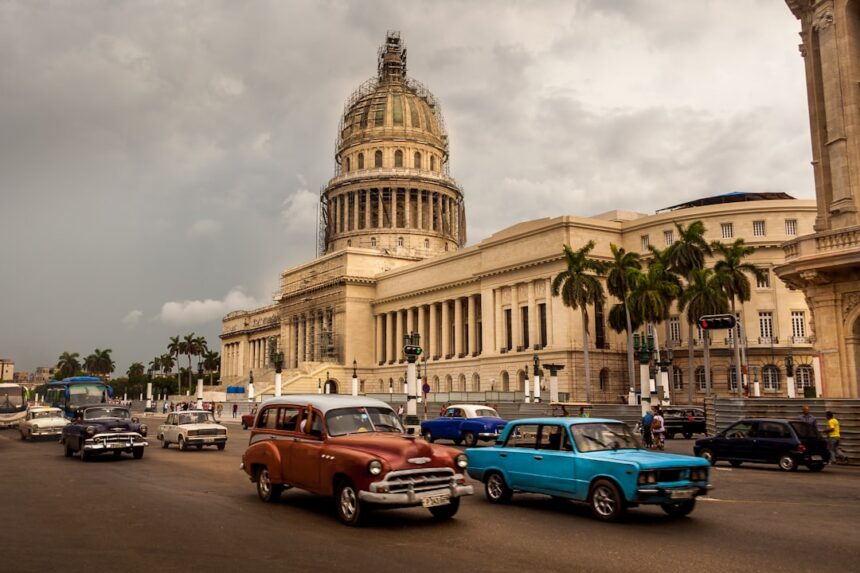
The flickering images of archival footage, the somber pronouncements of leaders, and the personal testimonies of those who lived through it – a new documentary, “Cuban History: Cold War Documentary,” offers a compelling and comprehensive journey into the heart of Cuba’s tumultuous experience during the Cold War. This meticulously crafted film eschews sensationalism, instead opting for a nuanced exploration of the island’s complex geopolitical positioning, its revolutionary fervor, and the enduring impact of its struggle for sovereignty on the global stage. It is a narrative that is not simply about superpower rivalries, but about the aspirations and resilience of a nation caught in their ideological crossfire.
The Spark of Revolution: From Batista’s Grip to Castro’s Rise
The documentary begins by painting a vivid picture of pre-revolutionary Cuba. It delves into the pervasive corruption and social inequality that characterized the era of Fulgencio Batista’s dictatorship, a regime propped up by unwavering American support. The film meticulously details the growing discontent among the Cuban populace, fueled by economic exploitation and the perceived subservience of the nation to foreign interests. Through rare and powerful archival footage, viewers are transported to the bustling streets of Havana, witnessing the stark contrasts between opulent American-owned resorts and the impoverished barrios where the majority of Cubans struggled to survive. The documentary’s strength lies in its ability to humanize this historical period, moving beyond dry facts to evoke the palpable sense of injustice and the burgeoning desire for change.
The 26th of July Movement: A Young Fidel’s Bold Gambit
Central to this early narrative is the emergence of Fidel Castro and his clandestine movement. “Cuban History: Cold War Documentary” dedicates significant attention to the audacious Moncada Barracks attack in 1953, portraying it not as a strategic triumph, but as a defining moment of defiance that ignited the revolutionary spirit. The film’s narration skillfully weaves together accounts of Castro’s charismatic leadership, the idealism of his followers, and the brutal suppression they faced. The exile in Mexico and the subsequent guerrilla warfare in the Sierra Maestra are presented as crucial stages in the movement’s development, highlighting the strategic acumen and unwavering determination of the rebels.
The Sierra Maestra: A Symbol of Resistance
The mountainous terrain of the Sierra Maestra becomes a potent symbol of Cuban resistance in the documentary. Viewers are shown grainy footage of the rebels, often emaciated but resolute, navigating the treacherous landscape. The film underscores the deep connection forged between the guerrillas and the rural peasantry, whose support and sustenance were vital to the survival of the revolution. Personal anecdotes from individuals who remember sheltering the rebels or providing them with food bring a deeply personal dimension to this phase of the struggle, emphasizing that the revolution was not merely an abstract political event but a lived experience for ordinary Cubans.
For those interested in a deeper understanding of Cuban history during the Cold War, the documentary “Cuba: The Forgotten Revolution” offers an insightful perspective on the events that shaped the island’s political landscape. This film delves into the complexities of the Cuban Revolution and its implications for U.S.-Cuba relations. To explore more about this topic, you can read a related article that provides additional context and analysis at this link.
The Bay of Pigs: A Defining Moment of National Identity
The triumph of the revolution in 1959 ushered in a new era for Cuba, but it also set the stage for its most intense confrontation with the United States. The documentary meticulously dissects the events leading up to and immediately following the ill-fated Bay of Pigs invasion in 1961. It presents a comprehensive account of the CIA’s covert operations, the training of Cuban exiles, and the strategic miscalculations that led to the resounding defeat of the invaders. The film underscores the profound impact of this event on Cuban national identity, solidifying a sense of self-reliance and forging a deep-seated distrust of American intervention.
The United States’ Perspective: Fear and Containment
“Cuban History: Cold War Documentary” does not shy away from exploring the American motivations behind its increasingly hostile stance towards Cuba. It details the escalating tensions, the economic sanctions, and the deep-seated fear within the U.S. government of a communist outpost just ninety miles off its coast. The documentary effectively communicates the prevailing Cold War anxieties that shaped American foreign policy, portraying Cuba as a pawn in a larger ideological chess match. Interviews with former American officials, while limited, offer glimpses into the strategic thinking and the perceived existential threat that Cuba represented to the American worldview.
The Cuban Response: Defiance and Alignment
In response to the perceived aggression, Cuba’s alignment with the Soviet Union became a crucial strategic imperative. The documentary illustrates how this alliance, born out of necessity and shared ideological ground, profoundly shaped Cuba’s trajectory for decades to come. It explores the economic and military support that flowed from Moscow, which allowed Cuba to withstand American pressure. However, it also subtly hints at the complexities and potential drawbacks of such a dependent relationship, laying the groundwork for future challenges.
The Missile Crisis: The World on the Brink
The Cuban Missile Crisis of 1962 stands as the chilling apex of the Cold War’s threat to global peace, and “Cuban History: Cold War Documentary” dedicates a substantial and gripping portion of its runtime to this critical period. The film reconstructs the tense thirteen days with a remarkable ability to convey the palpable fear and uncertainty that gripped the world. It draws upon declassified documents, expert analysis, and survivor testimonies to provide a multi-faceted perspective on the brinkmanship between the superpowers.
The Discovery and the Escalation
The documentary vividly depicts the moment of discovery of Soviet missile sites in Cuba, showcasing the U-2 spy plane photographs that sent shockwaves through Washington. It meticulously details President Kennedy’s deliberations, the internal debates within his administration, and the various options considered, from a full-scale invasion to diplomatic negotiations. The film highlights the critical role of Soviet Premier Khrushchev, whose decision to place missiles in Cuba was a bold, and arguably reckless, gamble.
The Blockade and the Brink of Nuclear War
The implementation of the naval blockade, or “quarantine” as it was termed, is portrayed as a pivotal moment, bringing the world closer to nuclear annihilation than ever before. The film conveys the sheer tension of Soviet ships approaching the blockade line and the agonizing wait for a potential confrontation. Interviews with individuals who recall the pervasive fear of nuclear war, the practice drills, and the profound sense of helplessness, make this section of the documentary particularly poignant. The documentary emphasizes that while the crisis was a superpower standoff, Cuba was the physical ground upon which this existential gamble was played out.
The Cuban Perspective: A Nation Under Siege
Crucially, the documentary ensures that the Cuban perspective is not lost amidst the superpower machinations. It highlights Fidel Castro’s defiant stance, his willingness to use the missiles if attacked, and his frustration with being a pawn in the larger game. The film suggests that while Cuba sought Soviet protection, it also harbored its own agency and a deep-seated desire to defend its sovereignty against any perceived threat. The human cost of this confrontation, the fear in the eyes of ordinary Cubans, is never far from the surface.
The Long Shadow of the Soviet Union: Prosperity and Peril
The aftermath of the Missile Crisis saw Cuba firmly entrenched as a Soviet ally, a relationship that would define its economic and political landscape for the next three decades. “Cuban History: Cold War Documentary” explores the era of significant Soviet aid, which allowed Cuba to develop its healthcare and education systems to remarkably high standards, achievements that are often lauded even by critics. The documentary showcases images of well-stocked hospitals and thriving schools, presenting a stark contrast to the pre-revolutionary era.
The Economic Ties: A Double-Edged Sword
The film meticulously examines the economic dependence on the Soviet Union, illustrating how subsidized sugar sales and preferential trade agreements provided a semblance of stability. However, it also delves into the inherent fragility of this arrangement, highlighting how Cuba’s economy became increasingly intertwined with the fortunes of the Soviet bloc. The documentary uses archival footage of bustling Soviet-era factories and vast agricultural projects to illustrate the scale of this economic partnership.
The Social Landscape: Achievements and Sacrifices
The documentary acknowledges the significant social progress Cuba made under Soviet patronage, particularly in public health and education. It features interviews with Cuban citizens who benefited from these programs, expressing gratitude for the opportunities provided. However, it also acknowledges the sacrifices made, including limitations on personal freedoms and the pervasive influence of a single political ideology. The film attempts to strike a balance, showcasing the positive outcomes while also acknowledging the inherent drawbacks of the system.
In exploring the complexities of Cuban history during the Cold War, one can gain deeper insights by watching a compelling documentary that delves into the events and tensions of that era. A particularly informative resource is available at In the War Room, which offers a detailed examination of the geopolitical dynamics that shaped Cuba’s role in the Cold War. This documentary not only highlights key events but also provides context for understanding the lasting impact of these historical moments on contemporary Cuba.
The Fall of the Wall, The Collapse of an Empire: Cuba’s “Special Period”
The dramatic collapse of the Soviet Union and the fall of the Berlin Wall in 1989-1991 triggered an unprecedented crisis for Cuba, ushering in what became known as the “Special Period.” “Cuban History: Cold War Documentary” dedicates a significant and somber section to this era, portraying it as a period of profound hardship and economic dislocation. The film uses stark imagery of empty shelves in stores, rationed food, and widespread public transportation challenges to convey the severity of the crisis.
Economic Devastation: The End of an Era
The documentary effectively illustrates the immediate impact of the loss of Soviet subsidies. Cuba’s primary export markets disappeared overnight, and the flow of essential goods ceased. The film shows footage of former Soviet-bloc vehicles breaking down, their parts no longer available, and the struggle to maintain essential services. Expert analysis details the crippling effect of the U.S. embargo, which was intensified during this period, exacerbating Cuba’s isolation.
Social Resilience: The Human Spirit in Adversity
Despite the economic devastation, the documentary also highlights the remarkable resilience of the Cuban people. It features personal stories of individuals who adapted to the new realities, finding creative solutions to overcome shortages and maintain a sense of community. The film showcases the emergence of small private enterprises and the increased reliance on traditional farming methods as Cubans were forced to become more self-sufficient. This section of the documentary underscores the enduring strength of the human spirit in the face of immense adversity.
The Political Ramifications: Reorientation and Reform
The “Special Period” also forced a political reorientation within Cuba. The documentary explores the government’s efforts to diversify its economy, particularly through tourism, and the limited economic reforms that were introduced to alleviate the crisis. It discusses the delicate balancing act between maintaining socialist principles and adapting to the new global economic order. The film offers a glimpse into the internal debates and the strategic decisions made by the Cuban leadership during this critical juncture.
Cuba’s Enduring Legacy: A Symbol of Resistance and Complexity
As “Cuban History: Cold War Documentary” draws to a close, it leaves the viewer with a profound understanding of Cuba’s complex and often contradictory journey. The film refrains from offering simplistic judgments, instead presenting a nuanced tapestry of historical events, ideological struggles, and human experiences. It acknowledges the enduring impact of the Cold War on Cuba, shaping its identity, its political system, and its relationship with the rest of the world.
The United States Embargo: A Lingering Imprint
The documentary dedicates time to the persistent U.S. embargo, examining its motivations, its effectiveness, and its profound impact on Cuban society. It presents arguments from various perspectives, highlighting the differing views on its necessity and its consequences. The film utilizes archival footage of protests and diplomatic exchanges to illustrate the long-standing tension between the two nations.
The Cuban Model: A Subject of Debate
The film concludes by reflecting on the enduring legacy of the Cuban model, acknowledging both its achievements and its criticisms. It presents Cuba as a nation that, despite its challenges, has maintained a unique path, often in defiance of dominant global forces. The documentary encourages viewers to move beyond simplistic stereotypes and to engage with the multifaceted reality of Cuban history and its ongoing evolution. It is a testament to the power of a small island nation to carve out its own identity amidst the titanic struggles of the 20th century, a story that continues to resonate and provoke thought in the 21st.
The Pentagon Plan to Fake an Attack on America—and Blame Cuba
FAQs
What is the Cuban history Cold War documentary about?
The Cuban history Cold War documentary explores the history of Cuba during the Cold War era, focusing on the political, social, and economic impact of the conflict between the United States and the Soviet Union on the island nation.
What are some key events covered in the Cuban history Cold War documentary?
The documentary covers key events such as the Cuban Revolution, the Bay of Pigs invasion, the Cuban Missile Crisis, and the subsequent relationship between Cuba, the United States, and the Soviet Union during the Cold War.
Who are the main figures and leaders featured in the Cuban history Cold War documentary?
The documentary features prominent figures such as Fidel Castro, Che Guevara, John F. Kennedy, Nikita Khrushchev, and other leaders who played significant roles in shaping the history of Cuba during the Cold War.
What are some of the themes explored in the Cuban history Cold War documentary?
The documentary explores themes such as revolution, communism, anti-imperialism, nuclear brinkmanship, and the global impact of the Cold War on small nations like Cuba.
Where can I watch the Cuban history Cold War documentary?
The Cuban history Cold War documentary may be available for streaming on various platforms such as Netflix, Amazon Prime, or other streaming services. It may also be available for purchase or rental on DVD or Blu-ray.