Covert government operations, by their very nature, operate in the shadows, their existence often denied or obscured for decades, if not centuries. They represent the clandestine hand of the state, acting beyond the usual bounds of public scrutiny and legal oversight. These operations, driven by a complex interplay of national security concerns, ideological struggles, and the pursuit of geopolitical advantage, have shaped the course of history in profound, albeit often unseen, ways. From the subtle manipulation of public opinion to the outright overthrow of regimes, governments have consistently employed secret means to achieve their objectives. Understanding this hidden dimension of power reveals a crucial aspect of human governance and the perpetual dance between transparency and secrecy.
The practice of clandestine intelligence gathering and covert action is not a modern invention. Its roots extend back to the dawn of organized societies, where survival and dominance often hinged on knowing an adversary’s intentions before they were revealed. Ancient rulers and states understood the value of spies, disinformation, and the subtle undermining of rivals. These early forms of covert operations, while lacking the technological sophistication of their modern counterparts, laid the groundwork for the intricate networks and methods that would evolve over millennia. The pursuit of power, in its most fundamental sense, often necessitated operating outside the bright light of day.
Early Intelligence Gathering: The Eyes and Ears of Empires
The earliest civilizations recognized the strategic importance of information. Empires like the Egyptians, Assyrians, and Babylonians employed individuals to gather intelligence on neighboring kingdoms, tribal movements, and potential internal threats. These agents, often disguised as merchants, travelers, or even slaves, provided crucial data that informed military strategies, diplomatic negotiations, and the general administration of their vast territories. The Book of Genesis itself alludes to spying, with Abraham sending out spies before entering the land of Canaan. This practice was not merely about observation; it was about gaining a decisive advantage in a world where open conflict was a constant possibility. The ability to anticipate an enemy’s moves, understand their strengths and weaknesses, and identify internal divisions was paramount to maintaining power and expanding influence.
The Art of Deception and Psychological Warfare in Antiquity
Beyond simple espionage, ancient leaders were also adept at employing deception and psychological tactics. Sun Tzu’s “The Art of War,” a foundational text on military strategy written in ancient China, famously states, “All warfare is based on deception.” This principle was put into practice through various means. Generals would feign retreats to lure enemies into ambushes, spread false rumors to sow confusion among enemy ranks, and engage in elaborate displays of strength to intimidate potential adversaries. The use of symbols, rituals, and propaganda, even in its rudimentary ancient forms, aimed to bolster morale on one’s own side while demoralizing the enemy. The sacking of cities was often accompanied by widespread destruction and terror, designed not just to defeat the immediate enemy but to serve as a stark warning to others.
The Persian Empire and the Royal Road’s Intelligence Network
The Achaemenid Persian Empire, under rulers like Cyrus the Great and Darius I, developed a remarkably sophisticated intelligence system. The vast network of roads, particularly the Royal Road, facilitated not only trade and communication but also the rapid movement of messengers carrying vital intelligence. Specialized riders, known as “angarium,” could cover vast distances, ensuring that reports from the far reaches of the empire reached the king with remarkable speed. This system allowed for swift responses to rebellions, invasions, and other threats. The empire’s vastness necessitated such an infrastructure, and its success in maintaining order and projecting power for centuries is a testament to the effectiveness of its covert and overt communication networks.
For those interested in delving deeper into the intriguing history of secret government operations, a compelling article can be found at In the War Room. This resource explores various covert missions and the implications they have had on global politics, shedding light on the often hidden aspects of governmental strategies throughout history.
The Medieval and Renaissance Eras: Espionage in a Feudal and Shifting Landscape
As the medieval world transitioned into the Renaissance, the nature of warfare and statecraft evolved, and with it, the methods of covert operations. The rise of centralized monarchies and the increasing complexity of international relations created new incentives for espionage and intrigue. The Renaissance, in particular, witnessed a flourishing of arts, sciences, and also political maneuvering, where secret agents and subtle manipulation played significant roles in the rise and fall of city-states and kingdoms.
The Rise of Organized Espionage Networks in Italian City-States
The Italian Renaissance was a period of intense political rivalry between powerful city-states like Venice, Florence, and Milan. These independent entities, constantly vying for economic and territorial dominance, developed highly organized espionage networks. Venice, in particular, was renowned for its sophisticated intelligence service, known as the Segreto. Its agents operated throughout Europe, gathering information on political alliances, military movements, and economic vulnerabilities of rival states. This intelligence was crucial for Venice’s survival as a maritime power, enabling it to anticipate threats and maintain its advantageous position in Mediterranean trade. The meticulous record-keeping and systematic reporting of Venetian spies set a precedent for future intelligence agencies.
Machiavelli’s Observations on Secret Means
Niccolò Machiavelli, in his seminal work “The Prince,” offered a pragmatic and often cynical analysis of statecraft, explicitly acknowledging the necessity of covert actions. He discussed the use of spies to gather intelligence on rivals and the importance of maintaining a facade of virtue while employing less savory methods when necessary. Machiavelli’s writings reflected the realities of Renaissance politics, where princes often had to resort to deception, bribery, and even assassination to secure their power and advance their interests. His work, while controversial, provided a theoretical framework for understanding the practical application of covert operations in the pursuit of political goals.
The Tudor Court and the Shadowy World of Walsingham
During the reign of Queen Elizabeth I of England, Sir Francis Walsingham established one of the most effective and feared intelligence networks in Europe. Operating in a period of intense religious and political turmoil, with Catholic powers seeking to depose the Protestant queen, Walsingham’s network was instrumental in thwarting numerous plots, including the Babington Plot, which led to the execution of Mary, Queen of Scots. His agents were embedded in courts across Europe, intercepting letters, bribing officials, and even engaging in assassination plots. Walsingham’s dedication to state security, achieved through clandestine means, was a cornerstone of Elizabeth’s long and largely successful reign. His operations highlight the personal commitment and organizational skill required to run such a complex and dangerous undertaking.
The Age of Revolutions and Imperial Expansion: Covert Actions on a Global Scale

The Enlightenment and the subsequent Age of Revolutions ushered in an era of profound ideological shifts and unprecedented global expansion. Governments, both established and revolutionary, increasingly resorted to covert operations to spread their ideologies, destabilize adversaries, and secure colonial territories. The stakes were higher, and the methods employed became more daring and widespread.
The French Revolution and the Use of Propaganda and Subversion
The French Revolution, a seismic event that reshaped Europe, was not only a struggle of overt armies but also a sophisticated campaign of propaganda and subversion. Revolutionary factions employed clandestine means to spread their ideals, both within France and to neighboring countries. They supported revolutionary movements abroad, disseminated pamphlets and newspapers that demonized monarchies, and engaged in acts of sabotage and intimidation against perceived counter-revolutionaries. Napoleon Bonaparte, a master strategist, further honed these techniques, using his intelligence services to gather information on his enemies and employing agents to sow discord and undermine enemy morale. The concept of ideological warfare, where covert actions aimed to win hearts and minds, became increasingly prominent.
British Imperialism and the East India Company’s Covert Influence
The expansion of the British Empire, particularly in India, was heavily reliant on covert operations and proxy warfare. The East India Company, a private entity that gradually acquired political and military power, frequently employed spies, bribed local rulers, and instigated conflicts between Indian states to further its own interests and those of the British Crown. The “Great Game,” the term used to describe the strategic rivalry between the British and Russian Empires for influence in Central Asia, was largely fought through covert means, including espionage, expeditions, and the support of local factions. This era demonstrated how economic interests could be deeply intertwined with clandestine intelligence gathering and manipulation.
American Independence and the Role of Secret Committees
The American Revolution also saw the nascent United States employ covert operations. The Continental Congress established secret committees to gather intelligence, acquire arms, and engage in diplomatic overtures that were best kept from public view. Figures like Benjamin Franklin, while ostensibly a diplomat, also engaged in espionage and covert diplomacy in France to secure crucial alliances and financial aid. These early operations, though rudimentary by modern standards, were vital in the successful prosecution of the war and the establishment of a new nation. The need for secrecy was paramount, as any revelation could have jeopardized the fragile support they were trying to garner.
The World Wars and the Cold War: A New Era of Espionage and Covert Intervention

The 20th century witnessed the unprecedented scale and technological advancement of covert operations. The two World Wars and the subsequent Cold War era saw intelligence agencies become powerful instruments of state policy, employing methods ranging from sophisticated code-breaking and infiltration to large-scale sabotage and political subversion. The ideological battle between superpowers created a fertile ground for a vast array of secret activities.
World War I: Code-Breaking and the Zimmermann Telegram
World War I saw the emergence of sophisticated intelligence gathering techniques, most notably in the realm of code-breaking. The British famously intercepted and deciphered the Zimmermann Telegram, a secret communication from the German Foreign Office to the German ambassador in Mexico, proposing an alliance against the United States. This revelation was a crucial factor in bringing the U.S. into the war. Intelligence agencies on both sides engaged in extensive espionage, using agents to gather information on enemy troop movements, industrial capacity, and morale. The war also saw the beginnings of organized psychological warfare through propaganda disseminated to enemy populations.
World War II: The OSS, SOE, and the Birth of Modern Intelligence Agencies
World War II was a crucible for the development of modern intelligence agencies. The United States established the Office of Strategic Services (OSS), which conducted a wide range of covert operations, including sabotage, guerrilla warfare, and intelligence gathering behind enemy lines. Britain’s Special Operations Executive (SOE) played a vital role in supporting resistance movements in occupied Europe, organizing sabotage missions and providing vital intelligence to Allied forces. These organizations pioneered techniques in communications, infiltration, and psychological operations that would form the basis for post-war intelligence services. The sheer scope and audacity of their missions demonstrated the critical role of covert action in a global conflict.
The Cold War: The CIA, KGB, and the Shadow War
The Cold War between the United States and the Soviet Union was a protracted ideological and geopolitical struggle that was fought, in large part, through covert means. The Central Intelligence Agency (CIA) and the Komitet Gosudarstvennoy Bezopasnosti (KGB) engaged in a global shadow war, employing a vast array of tactics. These included:
Propaganda and Disinformation Campaigns: Both superpowers used covert means to spread propaganda and disinformation designed to discredit the other, influence public opinion in neutral countries, and sow discord within adversary nations. Radio Free Europe and Voice of America were overt tools, but there were many more clandestine operations designed to manipulate narratives.
Covert Interventions and Regime Change Operations: The CIA and KGB were involved in numerous covert operations aimed at influencing or overthrowing foreign governments. Examples include the CIA’s involvement in the 1953 Iranian coup d’état, the 1954 Guatemalan coup, and the Soviet Union’s interventions in Hungary (1956) and Czechoslovakia (1968). These operations often involved providing funding and support to opposition groups, orchestrating coups, and engaging in paramilitary actions.
Espionage and Counter-Espionage: The constant struggle to penetrate enemy intelligence agencies and protect one’s own was a defining feature of the Cold War. The exchange of defectors, the planting of moles, and the development of increasingly sophisticated surveillance technologies were all part of this ongoing battle. The defection of KGB officer Vitaly Yurchenko, for example, led to the exposure of numerous Soviet agents in the U.S.
The Arms Race and Covert Technology Development: The intense competition in military technology often involved covert research and development, with nations seeking to gain an advantage by understanding the adversary’s technological advancements through espionage and by developing new, secret weapon systems.
The history of secret government operations is a fascinating and often controversial subject that reveals the lengths to which nations will go to protect their interests. For those interested in exploring this topic further, a related article provides an in-depth look at various covert missions and their implications on global politics. You can read more about these intriguing operations in the article found here. Understanding these hidden aspects of governance can shed light on current events and the ongoing impact of these clandestine activities.
The Post-Cold War Era and the Evolving Landscape of Covert Operations
| Operation Name | Year | Description |
|---|---|---|
| Operation Gladio | 1952 | A clandestine NATO operation involving secret “stay-behind” armies in Europe during the Cold War. |
| Operation Northwoods | 1962 | A proposed false flag operation by the U.S. Department of Defense to justify military intervention in Cuba. |
| Operation CHAOS | 1967 | A domestic espionage project conducted by the CIA to infiltrate and monitor anti-war and civil rights groups in the U.S. |
| Operation Mockingbird | 1950s-1970s | A CIA program to influence and control media organizations for propaganda purposes. |
The collapse of the Soviet Union did not signal the end of covert government operations. Instead, the nature and scope of these activities have evolved in response to new global challenges, including the rise of non-state actors, asymmetric warfare, and the increasing interconnectedness of the world through technology.
The Rise of Non-State Actors and the Challenge to State Sovereignty
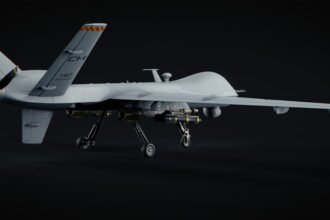
The 21st century has seen the rise of powerful non-state actors, such as terrorist organizations and international criminal syndicates, which pose significant threats to national security and global stability. Governments have responded by adapting their covert operations to counter these new adversaries. This includes enhanced intelligence gathering through cyber espionage, the use of drones for surveillance and targeted strikes, and the disruption of terrorist financing networks. The lines between state and non-state actors have blurred, leading to new forms of clandestine warfare.
Cyber Warfare and the Digital Battlefield
The digital realm has become a new frontier for covert operations. Governments are increasingly engaged in cyber espionage, seeking to steal sensitive information from adversaries, disrupt critical infrastructure, and influence political processes through online manipulation. The attribution of these attacks can be extremely difficult, making it challenging to hold perpetrators accountable. The development of sophisticated hacking tools and the ability to conduct operations with a high degree of deniability have made cyber warfare a potent and pervasive tool of covert action.
The Dilemma of Transparency and Accountability
As covert operations become more sophisticated and their potential impact more far-reaching, the perennial tension between secrecy and accountability becomes even more pronounced. The lack of transparency in these operations can lead to public distrust, overreach, and the erosion of democratic principles. Balancing the need for effective intelligence and national security with the imperative of democratic oversight remains a significant challenge for governments worldwide. The debate over the ethical implications and legal boundaries of covert actions continues to be a vital aspect of modern governance. The long-term consequences of operations conducted in the shadows are often debated only after their exposure, highlighting the ongoing struggle to reconcile the demands of security with the principles of open society.
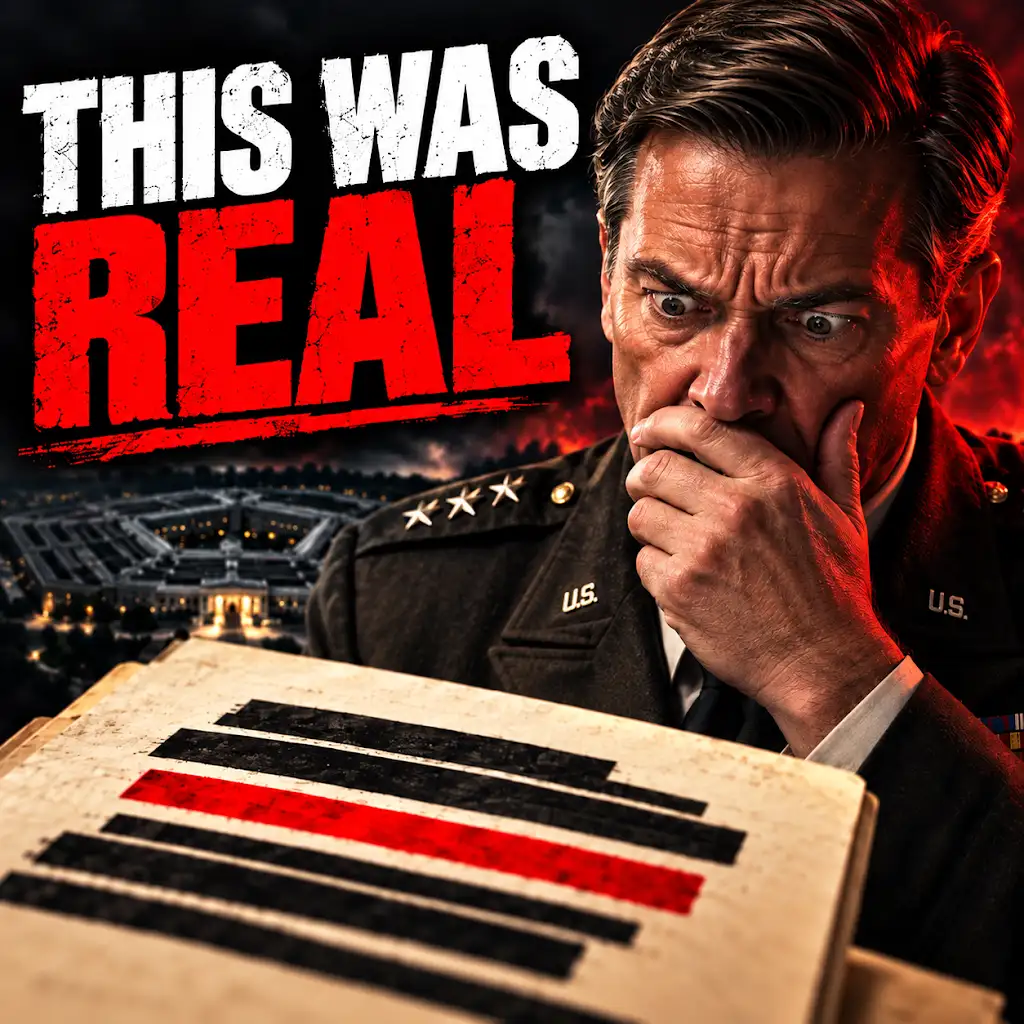
The Pentagon Plan to Fake an Attack on America—and Blame Cuba
FAQs
What are secret government operations?
Secret government operations are covert activities conducted by a government or its agencies, often without the knowledge of the public or other branches of government. These operations can include espionage, sabotage, and other clandestine activities.
What is the history of secret government operations?
Secret government operations have been a part of history for centuries, with examples dating back to ancient times. In modern history, secret government operations have been used in various conflicts and wars, as well as in intelligence gathering and counterintelligence efforts.
What are some examples of secret government operations in history?
Examples of secret government operations in history include the CIA’s involvement in the overthrow of governments in Iran and Guatemala, the NSA’s surveillance programs, and the FBI’s COINTELPRO operations targeting civil rights activists in the United States.
What are the ethical and legal implications of secret government operations?
The ethical and legal implications of secret government operations are complex and often controversial. While some argue that these operations are necessary for national security, others raise concerns about civil liberties, transparency, and accountability.
How have secret government operations shaped the course of history?
Secret government operations have had a significant impact on the course of history, influencing international relations, political developments, and the balance of power between nations. These operations have also shaped public perceptions of government and have been the subject of ongoing debate and scrutiny.