The vast, unforgiving expanse of the Atlantic Ocean, in October of 1962, became the improbable stage for a drama that could have plunged the world into nuclear annihilation. Amidst the escalating tensions of the Cuban Missile Crisis, a singular act of defiance, carried out by a man largely unknown to the global public, averted a catastrophe. This is the story of Vasili Arkhipov, the unsung hero whose courage and clear-headedness in a moment of extreme peril proved to be one of humanity’s greatest strokes of luck.
The year 1962 was a year of simmering geopolitical friction, but it reached a boiling point in October. The United States, under President John F. Kennedy, discovered photographic evidence of Soviet ballistic missile sites being constructed in Cuba, just ninety miles off the coast of Florida. This revelation sent shockwaves through Washington and the international community. The presence of offensive nuclear weapons so close to American soil was deemed an unacceptable threat, a direct violation of the Monroe Doctrine and a dangerous shift in the strategic balance of power.
The Discovery and the President’s Dilemma
The U-2 spy planes, flying high and fast over the island, provided undeniable proof. Images revealed launch pads, missile transporters, and the telltale signs of a rapid build-up. President Kennedy was presented with this intelligence on October 16th. The options laid before him were stark and terrifying: a surgical air strike to destroy the missile sites, a full-scale invasion of Cuba, or a naval blockade, termed a “quarantine” to avoid the semantics of an act of war. Each path carried the immense risk of Soviet retaliation, potentially escalating to a nuclear exchange.
The Soviet Perspective: Khrushchev’s Gamble
From the Soviet perspective, the deployment of missiles in Cuba was a calculated move. Premier Nikita Khrushchev saw it as a defensive measure to protect Fidel Castro’s communist regime from further American aggression, following the failed Bay of Pigs invasion in 1961. It was also a strategic countermeasure to American Jupiter missiles stationed in Turkey, bordering the Soviet Union. The placement of Soviet missiles in Cuba was intended to level the playing field, to restore a sense of strategic parity and deter future American actions against Soviet allies.
The Brinkmanship of Diplomacy
The following days were characterized by intense diplomatic maneuvering and public posturing. The US imposed a naval blockade around Cuba, demanding the removal of the missiles. Soviet ships, many carrying further military supplies, steamed towards the blockade line. The world held its breath, fearing a direct confrontation at sea. The rhetoric from both sides was fiery, and the possibility of miscalculation or accidental escalation loomed large.
Vasili Arkhipov played a crucial role during the Cuban Missile Crisis in October 1962, as he famously refused to authorize a nuclear strike that could have led to catastrophic consequences. For a deeper understanding of the events surrounding this pivotal moment in history, you can read a related article that explores the implications of Arkhipov’s decision and the broader context of the Cold War. Check it out here: Vasili Arkhipov and the Cuban Missile Crisis.
A Submarine Beneath the Waves: The B-59 and its Dangerous Mission
While the world’s attention was focused on the high-stakes diplomatic chess match played out in Washington and Moscow, a different kind of tension was unfolding beneath the surface of the Atlantic Ocean. The Soviet submarine B-59, a diesel-electric vessel armed with nuclear torpedoes, was operating in international waters near Cuba, tasked with intercepting American naval vessels involved in the blockade. Unbeknownst to many, this particular submarine carried a secret weapon – a nuclear torpedo, capable of inflicting devastating damage.
The Grim Reality of the Blockade
The B-59 was part of a group of Soviet submarines deployed to counter the American blockade. Their mission was fraught with danger. They were operating in an environment where they were likely to be detected and harassed by American warships. The submarines were ordered to fire their torpedoes if they believed they were being attacked, a directive that created an extremely volatile situation given the high-pressure environment and the limited communication with Moscow.
The Nuclear Option: A Deadly Deterrent
The presence of a nuclear torpedo on board the B-59 was a chilling detail that amplified the stakes. This was not just a conventional military encounter; it was a potential gateway to nuclear war. The decision to arm a submarine with such a weapon, and to give its commander the authority to use it under certain conditions, highlighted the extreme lengths to which both superpowers were willing to go. The submarine crews were isolated, operating under immense stress, with limited information about the broader geopolitical landscape.
The Isolation and Uncertainty of Submarine Warfare
Life aboard a Soviet submarine during this period was one of intense confinement, constant vigilance, and profound isolation. Communication with Moscow was sporadic and often delayed. The crews were operating under strict orders, but the realities of naval warfare could quickly outpace pre-programmed directives. They were the unseen players, the ones facing immediate, tangible threats, often with only their training and their commanders’ judgment to guide them.
The Confrontation: Depth Charges and Desperate Decisions
On October 27th, 1962, known as “Black Saturday,” the B-59 found itself in a perilous situation. American destroyers, part of the blockade fleet, detected the submarine and began dropping non-lethal practice depth charges. These were intended to force the submarine to surface, to identify it, and to signal their presence. However, for the crew of the B-59, already under immense stress and with damaged communication systems, these explosions were perceived as a direct attack.
The Misinformation and the Fear
The crew of the B-59 had been cut off from Moscow for days. Their radio was damaged, and they had received no clear orders about the unfolding crisis. The constant barrage of depth charges, even if non-lethal, was interpreted by the submarine’s captain, Valentin Savitsky, as a clear indication that war had begun. The pressure on Savitsky was immense. He believed his submarine was under direct attack and that his only recourse was to retaliate.
The Authority to Launch: A Terrifying Power
The B-59 was armed with three torpedoes, one of which was a nuclear weapon. Under Soviet naval doctrine at the time, the submarine’s captain, along with two other senior officers, had the authority to launch a nuclear torpedo if they believed their vessel was under direct attack and communication with command was impossible. This represented an extraordinary delegation of power, a potential trigger for global catastrophe in the hands of a few men under duress.
The Dissenting Voice: Vasili Arkhipov’s Stance
It was at this critical juncture that Vasili Arkhipov, the flotilla commander and second-in-command of the B-59, stepped forward. Savitsky, convinced that war had erupted, ordered the preparation of the nuclear torpedo for launch. However, Arkhipov, who had been in a separate compartment and was not privy to the full extent of Savitsky’s conviction of attack, disagreed. He believed the depth charges were merely signals, not a prelude to annihilation.
The Unsung Hero: Arkhipov’s Courage and Conviction
Vasili Arkhipov’s role in this moment of ultimate crisis is what elevates him to the status of an unsung hero. Faced with a captain intent on launching a nuclear weapon and the terrifying prospect of triggering a global war, Arkhipov chose a different path. His calm demeanor, his refusal to be swept up in the panic, and his unwavering conviction in the need for verification were instrumental in averting disaster.
The Authority and the Override
While Captain Savitsky held command of the B-59, the doctrine for launching a nuclear weapon required the agreement of two other senior officers. Arkhipov, as the flotilla commander and second-in-command, held significant influence. He vehemently argued against launching the nuclear torpedo, citing the lack of definitive proof of an attack and the catastrophic consequences of such an action. He appealed to the other senior officer present, Ivan Maslennikov, to also refuse his assent.
The Power of Doubt and Reason
Arkhipov’s reasoning was rooted in a fundamental understanding of the immense stakes involved. He knew that the depth charges were likely signaling devices, not actual weapons of destruction. He understood that a single, unauthorized nuclear launch could lead to immediate and devastating retaliation from the United States, engulfing the world in a conflict from which there would be no recovery. His skepticism and his insistence on rational assessment in the face of extreme pressure were remarkable.
The Weight of a World on his Shoulders
The pressure on Arkhipov must have been immense. He was essentially defying his captain in a high-stakes military situation. Yet, he stood his ground. He appealed to the better judgment of his fellow officers, using his authority and his moral conviction to steer the submarine away from the precipice. His courage was not the courage of a soldier charging into battle, but the quiet, resolute courage of someone who understood the profound responsibility he bore and chose to act with immense restraint.
The Fate of Humanity in a Submarine Compartment
The fate of millions, indeed billions, hung in the balance within the cramped confines of the B-59. The decision to launch or not to launch the nuclear torpedo was not made in the halls of power in Washington or Moscow, but in that tense submarine compartment. Arkhipov’s refusal to grant his assent, and his successful persuasion of Maslennikov to do the same, meant that the nuclear option remained unused.
Vasili Arkhipov played a crucial role during the Cuban Missile Crisis in October 1962, as his decision to withhold consent for a nuclear strike helped avert a potential catastrophe. His actions have been the subject of various analyses, shedding light on the importance of individual decision-making in high-stakes situations. For a deeper understanding of the events surrounding this pivotal moment in history, you can read more in this insightful article on the topic at In the War Room.
The Aftermath: Relief and the Quiet Hero
| Date | Event | Metric |
|---|---|---|
| October 27, 1962 | Cuban Missile Crisis | Vasili Arkhipov prevented a nuclear launch |
The immediate aftermath of the Cuban Missile Crisis saw a palpable sense of relief sweep across the globe. The world had teetered on the brink and managed to pull back. However, for Vasili Arkhipov, the events of October 27th, 1962, remained largely unknown to the wider public for decades. His act of heroism was not met with parades or accolades; it was a silent victory, a burden carried by those who understood its significance.
The Slow Revelation of the Truth
The full story of Vasili Arkhipov’s role only began to emerge much later, through declassified documents and the accounts of those involved. For years, his name was absent from the historical narratives of the Cuban Missile Crisis, overshadowed by the pronouncements of presidents and premiers. It was a testament to the secretive nature of Cold War operations and the tendency to focus on the more visible figures of power.
Acknowledgment and Recognition
As the story of the B-59 and Arkhipov’s intervention became more widely known, there was a growing recognition of his vital contribution. While he never sought the spotlight, his actions became a powerful symbol of individual agency in the face of overwhelming systemic pressures. He represented the critical importance of individual judgment and moral fortitude, even in the most extreme circumstances.
The Legacy of Restraint
Vasili Arkhipov’s legacy is one of profound restraint and clear-sightedness. He serves as a potent reminder that even in the most dire of situations, human reason and ethical considerations can prevail. His story underscores the fact that history is not solely shaped by grand pronouncements and sweeping policies, but often by the quiet, courageous decisions of individuals who stand firm against the tide of perceived inevitability.
The Importance of the Unsung
The story of Vasili Arkhipov highlights the crucial role of the “unsung heroes” in history. These are the individuals whose actions, though often unseen and uncelebrated, have a profound and lasting impact on the course of events. Their courage and integrity often lie in their refusal to be complicit in destruction and their unwavering commitment to what is right, even when it is the hardest path to take.
Vasili Arkhipov’s intervention aboard the B-59 on that fateful day in October 1962 was not just a moment of individual bravery; it was a profound affirmation of humanity’s capacity for reason and restraint in the face of unprecedented peril. His name may not be as widely recognized as those of Kennedy or Khrushchev, but his contribution to averting nuclear Armageddon is undeniable. He remains a testament to the power of one individual to make a difference, a silent guardian whose courage saved the world.
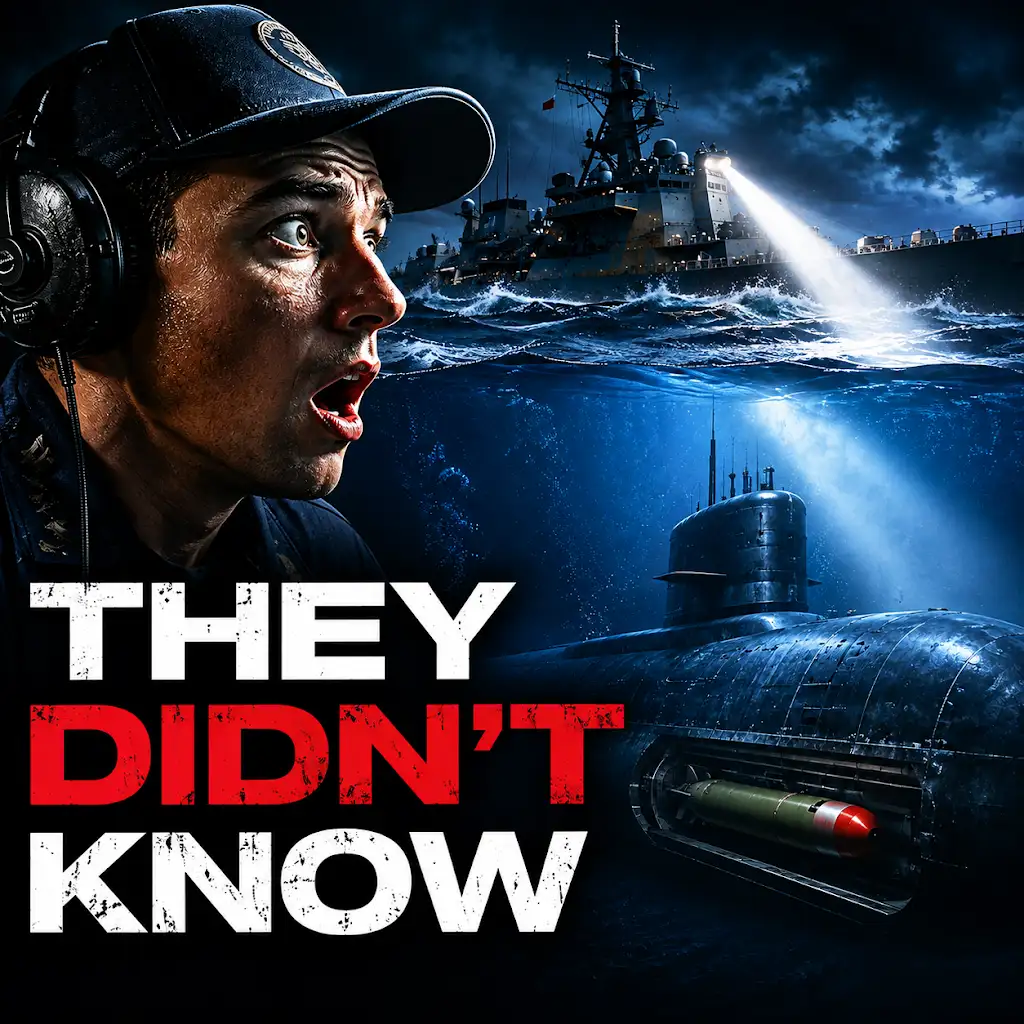
The U.S. Navy Didn’t Know This Submarine Had a Nuclear Torpedo
FAQs
Who was Vasili Arkhipov?
Vasili Arkhipov was a Soviet naval officer who played a critical role in preventing a nuclear war during the Cuban Missile Crisis in October 1962.
What happened in October 1962?
In October 1962, the Cuban Missile Crisis occurred, which was a 13-day confrontation between the United States and the Soviet Union over Soviet ballistic missiles deployed in Cuba.
What was Vasili Arkhipov’s role in the Cuban Missile Crisis?
Vasili Arkhipov was the second-in-command on a Soviet submarine during the Cuban Missile Crisis. He refused to authorize the use of nuclear torpedoes against US warships, preventing a potential nuclear war.
How did Vasili Arkhipov prevent a nuclear war?
Vasili Arkhipov’s refusal to authorize the use of nuclear torpedoes during the Cuban Missile Crisis prevented a potential nuclear war by avoiding a direct confrontation between the US and the Soviet Union.
What was the outcome of the Cuban Missile Crisis?
The Cuban Missile Crisis ended with the Soviet Union agreeing to remove its missiles from Cuba in exchange for the US promising not to invade Cuba and to remove its missiles from Turkey. This event is considered one of the closest times the world came to nuclear war.