The Poseidon Torpedo, officially designated as Status-6, represents a significant advancement in underwater warfare technology. Developed by Russia, this unmanned underwater vehicle (UUV) is designed to deliver devastating payloads to enemy coastal installations and naval assets. Its unique capabilities, including long-range stealth and the ability to operate at great depths, position it as a formidable tool in modern naval arsenals.
The Poseidon Torpedo is not merely a weapon; it embodies a strategic shift in how nations approach maritime security and deterrence. As global tensions rise and the nature of warfare evolves, the Poseidon Torpedo stands out as a symbol of innovation in military technology. Its development reflects a growing emphasis on asymmetric warfare, where nations seek to leverage advanced technologies to counterbalance traditional military strengths.
The Poseidon Torpedo’s potential to disrupt naval operations and threaten coastal cities underscores its importance in contemporary defense strategies. This article delves into the history, design, capabilities, and implications of the Poseidon Torpedo, providing a comprehensive overview of its role in modern naval warfare.
Key Takeaways
- The Poseidon Torpedo is a cutting-edge underwater weapon designed for naval warfare.
- The Poseidon Torpedo has a rich history of development and has undergone significant advancements over the years.
- The design and components of the Poseidon Torpedo are carefully engineered for maximum efficiency and effectiveness.
- The propulsion and navigation systems of the Poseidon Torpedo are state-of-the-art, allowing for precise and agile maneuverability.
- The Poseidon Torpedo boasts impressive warhead and payload capabilities, making it a formidable weapon in naval combat.
History and Development of the Poseidon Torpedo
The origins of the Poseidon Torpedo can be traced back to Russia’s strategic response to perceived threats from NATO and other adversaries. In the early 2010s, as tensions escalated in various geopolitical arenas, Russian military planners recognized the need for a new class of weapon that could operate undetected in hostile waters.
The development of the Poseidon Torpedo was marked by significant technological challenges. Engineers and scientists worked tirelessly to create a vehicle that could withstand extreme underwater pressures while maintaining stealth and maneuverability. The project was shrouded in secrecy for years, with limited information available to the public.
However, in 2018, Russian President Vladimir Putin unveiled the Poseidon during a state address, revealing its existence and capabilities to the world. This announcement not only showcased Russia’s technological prowess but also served as a warning to other nations regarding the evolving nature of underwater warfare.
Design and Components of the Poseidon Torpedo
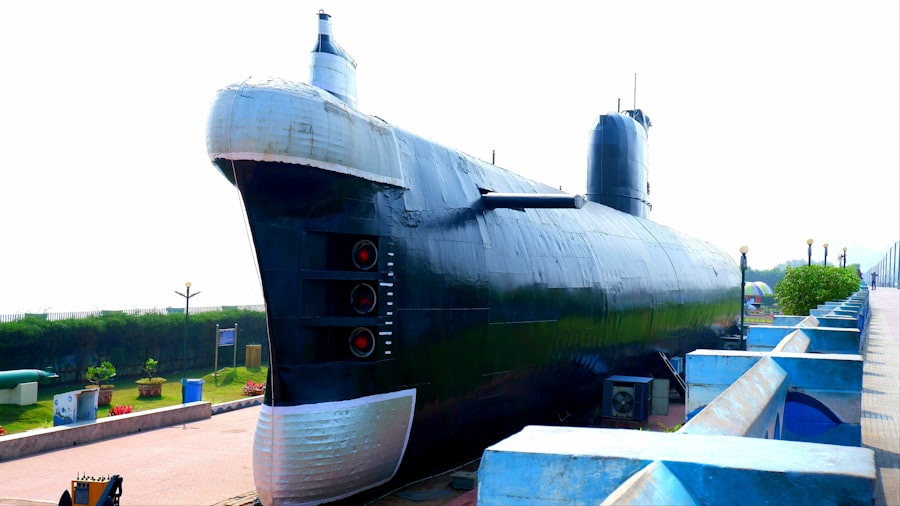
The design of the Poseidon Torpedo is characterized by its sleek, elongated shape, which allows it to navigate through water with minimal resistance. Measuring approximately 24 meters in length, it is significantly larger than traditional torpedoes, reflecting its role as a strategic weapon rather than a conventional one. The exterior is constructed from advanced materials that provide durability and stealth, making it difficult for enemy sonar systems to detect.
Internally, the Poseidon is equipped with a range of sophisticated components that enhance its operational capabilities. These include advanced sensors for environmental monitoring, communication systems for data transmission, and onboard computers for processing information and executing complex maneuvers. The integration of artificial intelligence allows the Poseidon to adapt to changing conditions in real-time, making it a highly autonomous system capable of executing missions without direct human intervention.
Propulsion and Navigation Systems
| System | Metrics |
|---|---|
| Propulsion | Thrust, Efficiency, Fuel Consumption |
| Navigation | Position, Speed, Course |
| Integrated System | Performance, Reliability, Safety |
The propulsion system of the Poseidon Torpedo is one of its most remarkable features. Unlike conventional torpedoes that rely on propellers, the Poseidon utilizes a nuclear-powered engine that enables it to travel long distances without the need for frequent recharging or refueling. This nuclear propulsion system not only extends its operational range but also allows it to remain submerged for extended periods, enhancing its stealth capabilities.
In terms of navigation, the Poseidon is equipped with advanced inertial navigation systems and GPS technology that enable precise positioning even in challenging underwater environments. The combination of these systems allows the torpedo to navigate complex underwater terrains while avoiding detection by enemy forces. Additionally, its ability to operate at depths of over 1,000 meters further complicates efforts by adversaries to track or intercept it.
Warhead and Payload Capabilities
The warhead capabilities of the Poseidon Torpedo are among its most alarming features. It is designed to carry a nuclear payload that can deliver catastrophic damage to coastal cities or naval bases. Reports suggest that the torpedo can be equipped with multiple types of warheads, including thermonuclear devices capable of generating massive explosions.
This versatility makes it a potent threat against both military and civilian targets. The payload capacity of the Poseidon allows it to carry not only nuclear warheads but also conventional explosives or other specialized munitions. This flexibility enhances its utility in various operational scenarios, enabling it to adapt to different mission requirements.
The potential for widespread destruction associated with its nuclear capabilities has raised concerns among international security experts, prompting discussions about arms control and the implications of such weapons on global stability.
Targeting and Guidance Systems
The targeting and guidance systems integrated into the Poseidon Torpedo are critical for ensuring mission success. Utilizing a combination of sonar technology and advanced algorithms, the torpedo can identify and track targets with remarkable accuracy. Its ability to operate autonomously means that it can make real-time decisions based on environmental data and target movements, significantly increasing its effectiveness in combat situations.
Moreover, the Poseidon’s guidance systems are designed to minimize collateral damage while maximizing impact on designated targets. This precision targeting capability is essential for military planners who seek to achieve strategic objectives without escalating conflicts unnecessarily. The integration of artificial intelligence further enhances these systems, allowing for adaptive responses based on changing battlefield conditions.
Deployment and Launching Methods
The deployment of the Poseidon Torpedo is designed to be flexible and adaptable to various operational contexts.
This versatility allows for strategic surprise, as adversaries may find it challenging to predict where or how the torpedo will be deployed.
Submarine launch platforms are particularly advantageous due to their inherent stealth capabilities. By launching from beneath the surface, submarines can position themselves closer to enemy shores without detection, increasing the likelihood of successful strikes. Additionally, surface vessels equipped with advanced launching systems can deploy the Poseidon in open waters, further complicating enemy defense strategies.
Operational Use and Effectiveness
The operational use of the Poseidon Torpedo has been a topic of considerable interest among military analysts and strategists. While it has not yet been deployed in active combat scenarios, its mere existence serves as a powerful deterrent against potential adversaries. The psychological impact of knowing that such a weapon is available can influence decision-making at high levels of government and military command.
In terms of effectiveness, the Poseidon’s unique capabilities allow it to operate in environments where traditional naval assets may struggle. Its ability to evade detection and strike from unexpected angles makes it a valuable asset in asymmetric warfare scenarios. As nations continue to develop their naval strategies in response to emerging threats, the Poseidon Torpedo’s role as a strategic deterrent will likely remain significant.
Advantages and Disadvantages of the Poseidon Torpedo
The advantages of the Poseidon Torpedo are numerous and compelling. Its long-range capabilities allow for strikes against distant targets without exposing launch platforms to enemy fire. The nuclear propulsion system provides extended operational endurance, while its stealthy design minimizes detection risks.
Furthermore, its versatility in payload options enhances its utility across various mission profiles. However, there are also disadvantages associated with this advanced weapon system. The complexity of its technology may pose challenges in terms of maintenance and operational readiness.
Additionally, reliance on nuclear capabilities raises ethical concerns regarding escalation and potential civilian casualties in conflict scenarios. As nations grapple with these issues, discussions surrounding arms control and non-proliferation will become increasingly relevant.
Future Developments and Upgrades
Looking ahead, future developments related to the Poseidon Torpedo are likely to focus on enhancing its capabilities further while addressing existing limitations. Ongoing research into artificial intelligence may lead to even more sophisticated targeting algorithms and autonomous decision-making processes. Additionally, advancements in materials science could improve its stealth features and overall durability.
Moreover, as geopolitical dynamics shift, nations may explore collaborative efforts or arms control agreements aimed at regulating underwater warfare technologies like the Poseidon Torpedo. The international community’s response to such developments will play a crucial role in shaping future naval strategies and ensuring stability in maritime regions.
The Impact of the Poseidon Torpedo on Naval Warfare
In conclusion, the Poseidon Torpedo represents a transformative force in naval warfare that challenges traditional paradigms of military engagement. Its advanced design, formidable capabilities, and strategic implications underscore its significance as both a weapon and a deterrent. As nations navigate an increasingly complex security landscape, understanding the impact of such technologies will be essential for policymakers and military leaders alike.
The emergence of the Poseidon Torpedo highlights the need for ongoing dialogue about arms control and international security frameworks that address emerging threats in underwater warfare. As this technology continues to evolve, its influence on global military strategies will undoubtedly shape future conflicts and redefine how nations approach maritime security challenges.
The Poseidon torpedo, a cutting-edge underwater drone developed by Russia, operates using advanced technology that allows it to travel at high speeds and evade detection. Its unique propulsion system and autonomous navigation capabilities enable it to reach targets with remarkable precision. For a deeper understanding of military innovations and their implications, you can read more in this related article on military strategies and technologies at In the War Room.
WATCH THIS! The Secret Russian Weapon That Terrifies NATO
FAQs
What is the Poseidon torpedo?
The Poseidon torpedo is a nuclear-powered and nuclear-armed unmanned underwater vehicle (UUV) developed by Russia. It is designed to be used as a long-range strategic weapon capable of carrying a nuclear warhead.
How does the Poseidon torpedo work?
The Poseidon torpedo is propelled by a nuclear reactor and is capable of traveling at high speeds and depths. It is designed to be launched from submarines and can operate autonomously for extended periods of time. The torpedo is equipped with a nuclear warhead and is intended to be used as a retaliatory or deterrent weapon.
What is the purpose of the Poseidon torpedo?
The Poseidon torpedo is intended to serve as a strategic deterrent and a means of ensuring the capability to deliver a nuclear strike against potential adversaries. It is designed to be capable of bypassing existing missile defense systems and striking targets with devastating force.
How is the Poseidon torpedo different from other torpedoes?
The Poseidon torpedo is unique in that it is powered by a nuclear reactor, allowing it to travel long distances at high speeds and depths. It is also designed to carry a nuclear warhead, making it a highly potent and destructive weapon. Additionally, the Poseidon torpedo is intended for use as a strategic, long-range weapon rather than for traditional anti-ship or anti-submarine warfare.