
The world has teetered on the precipice of nuclear annihilation more times than most people realize. Often, these terrifyingly close calls were not the result of calculated aggression, but rather the chilling consequence of human error, misinterpretation, and the ever-present fog of war. The Cuban Missile Crisis is perhaps the most widely known instance of this, but other, less publicized events have brought humanity perilously close to a catastrophic conflict. One such episode, often overshadowed by its more dramatic counterparts, demonstrates how a simple misunderstanding, amplified by the immense pressures of the Cold War, could have irrevocably altered the course of history. This is the story of a close call, a moment where misunderstanding almost led to nuclear war.
The Cold War was a period of intense geopolitical tension between the United States and the Soviet Union, two superpowers locked in an ideological struggle that permeated every aspect of international relations. The world was divided into two camps, each armed with increasingly sophisticated and devastating nuclear arsenals. The constant threat of mutually assured destruction (MAD) cast a long shadow, forcing leaders to navigate a treacherous landscape of brinkmanship and deterrence.
The Specter of Escalation
The doctrine of MAD, while intended to prevent direct conflict, also created a perpetual state of anxiety. Each perceived provocation, each military buildup on the opposing side, was viewed through a lens of potential escalation. The slightest miscalculation could, in theory, trigger a chain reaction leading to global catastrophe. This atmosphere of fear and suspicion made it incredibly difficult for diplomats and military leaders to maintain clear lines of communication and understanding.
Technological Advancements and Their Perils
The rapid development of military technology during this era, particularly in the realm of nuclear weapons and delivery systems, added another layer of complexity and danger. Intercontinental ballistic missiles (ICBMs), nuclear submarines, and advanced surveillance systems created an environment where early warning systems were paramount, but also vulnerable to false alarms. The speed at which a nuclear conflict could unfold meant that reaction times were measured in minutes, leaving little room for error or deliberation.
The Human Element in a High-Stakes Game
Ultimately, however, it was the human element that remained the most unpredictable factor. The immense psychological pressure on decision-makers, the fallibility of human perception, and the potential for individual error within complex command structures all contributed to the inherent risks of the Cold War. These factors, combined with the immense destructive power at their fingertips, created a volatile cocktail that frequently brought the world to the brink.
The Cold War era was fraught with tension, and one of the most critical moments nearly led to nuclear disaster due to a series of misunderstandings. An insightful article that delves into this precarious period is available at In the War Room, where it explores how miscommunication and misinterpretation of intentions between superpowers brought the world to the brink of nuclear conflict. Understanding these historical events is crucial in preventing similar crises in the future.
The Unseen Threat: A System on Alert
In the tense geopolitical climate of the late 1970s, the Soviet Union, like the United States, maintained a high state of military readiness. Its early warning systems were designed to detect any incoming ballistic missile attack, providing crucial minutes for retaliation. These systems, while advanced for their time, were not infallible. They relied on a complex interplay of sensors, radar, and human interpretation, each stage a potential point of failure.
The Technological Backbones of Defense
The Soviet early warning network comprised a sophisticated array of radar stations, including powerful over-the-horizon systems and ground-based radar installations. Satellite surveillance also played a role, providing a broader, albeit less immediate, picture of potential threats. The information gathered from these disparate sources was then fed into command centers, where it was analyzed by military personnel.
The Burden of Interpretation
The human operators within these command centers bore an enormous responsibility. They were tasked with distinguishing between genuine threats and false alarms, a task made incredibly difficult by atmospheric conditions, celestial phenomena, and even the reflection of sunlight off clouds or ice. A single anomaly, a fleeting signal, could be interpreted as the precursor to a full-scale attack.
The Cold War’s Constant Hum of Anxiety
Every radar blip, every satellite image, was viewed through the prism of the Cold War. Suspicion was rampant, and the slightest deviation from the expected could be interpreted as a hostile act. This ingrained paranoia meant that even ambiguous data was often treated with the utmost seriousness, fostering an environment where a proactive, even preemptive, response might be considered.
The False Dawn: A Glitch in the Machine

It was during one such period of heightened tension, though not necessarily directly linked to a specific overt crisis, that a malfunction within the Soviet early warning system occurred. The specifics are debated and shrouded in declassified records, but the outcome was undeniably terrifying. A series of readings, likely generated by a rare atmospheric event or a technical anomaly in a satellite, triggered an alarm within the Soviet command structure.
The Triggering Event: A Confluence of Errors
The exact nature of the glitch remains classified, but it is believed to have involved a misinterpretation of data from a Soviet satellite. This satellite, designed to detect missile launches, may have registered a reflection of sunlight off atmospheric ice crystals or some other non-hostile phenomenon as the heat signature of a ballistic missile. This false signal was then cross-referenced with other, less definitive data points.
The Chain Reaction of Alert
This initial false alarm initiated a cascade of events within the Soviet military. Warning systems, designed to err on the side of caution, began to indicate an incoming attack. The urgency of the situation would have been amplified by the existing anxieties of the Cold War. Personnel would have moved through pre-determined protocols, escalating the alert status of Soviet nuclear forces.
From Anomaly to Imminent Threat
The speed at which this process unfolded would have been breathtaking. What began as a technical glitch could have rapidly escalated into a perceived existential threat. The automated systems, coupled with the pressure on human operators, would have created a situation where the distinction between a drill and reality blurred, and the decision to retaliate might have seemed like the only rational course of action.
The Ticking Clock: A Near-Miss in the Kremlin

The alarm bells were ringing not just in the Soviet Union, but potentially in the minds of the Soviet leadership as well. The protocols for responding to a detected nuclear attack were clear: retaliate before the enemy’s missiles could strike. The question was, how quickly could the highest echelons of power confirm the threat and authorize a response?
The Role of the “Nuclear Briefcase”
The Soviet Union, much like the United States, possessed a mobile command and control system, often referred to as the “nuclear briefcase” or “chemodanchik.” This briefcase contained the codes and mechanisms necessary for the leader to authorize a nuclear strike, even when separated from traditional command centers. The presence of this device signified the ultimate authority and the terrifying immediacy of nuclear war.
The Crucible of Decision
Imagine the scene within the Kremlin or wherever the Soviet leader was located. Alarms blaring, reports flooding in, the stark reality of an incoming attack. The pressure to act, to defend the nation, would have been immense. The leadership would have been faced with an agonizing choice: trust their systems and retaliate, potentially initiating global annihilation, or delay, risking a devastating first strike.
The Whispers of Doubt: A Critical Intervention
This is where the human element, the capacity for doubt and critical thinking, proved to be humanity’s saving grace. It is believed that at this crucial juncture, individuals within the Soviet command structure, perhaps on the ground or at a higher level of analysis, questioned the validity of the incoming data. They may have pointed to inconsistencies, questioned the source of the alarm, or noted the lack of corroborating evidence from other sources.
The tension during the Cold War was marked by numerous close calls, one of which nearly led to nuclear conflict due to a simple misunderstanding. A recent article explores this chilling episode in detail, highlighting how miscommunication and misinterpretation of intentions can escalate into catastrophic scenarios. For those interested in understanding the gravity of such situations, the article can be found here: read more. It serves as a reminder of the importance of clear communication in international relations to prevent history from repeating itself.
The Unsung Heroes: Moments of Clarity Amidst Chaos
| Event | Details |
|---|---|
| Incident | During the Cuban Missile Crisis, a Soviet submarine almost launched a nuclear torpedo in response to depth charges from US forces. |
| Consequences | This misunderstanding could have escalated the crisis into a full-scale nuclear war between the US and the Soviet Union. |
| Lessons Learned | The incident highlighted the dangers of miscommunication and the need for clear channels of communication to prevent catastrophic misunderstandings. |
In the face of overwhelming pressure and the terrifying prospect of nuclear war, it was the reasoned judgment of a few individuals that averted catastrophe. These were not necessarily high-ranking politicians, but rather the technical experts and military personnel on the ground who understood the limitations of the systems they operated.
The Ground Truthers: Expertise Versus Automation
These individuals, possessing a deep understanding of the nuances of their warning systems, would have recognized the anomalies as likely false positives. They would have known that certain atmospheric conditions could mimic the signature of a missile launch, or that a technical malfunction was a distinct possibility. Their knowledge provided a crucial counterpoint to the automated alerts.
The Power of Questioning
The courage to speak up in such a high-stakes environment cannot be overstated. To challenge the established protocols and the seemingly irrefutable evidence from their own systems would have required immense bravery and a profound sense of responsibility. They risked being accused of insubordination or even treason if their doubts were dismissed.
The Delay That Saved the World
By raising their concerns and demanding further verification, these individuals managed to create a critical delay. This pause allowed for more thorough analysis, the gathering of additional information, and ultimately, the realization that the alarm was false. The world breathed a collective sigh of relief, though it would never know how close it had come to disaster.
Lessons from the Brink: Vigilance and Communication
The incident, though largely unacknowledged at the time, served as a stark reminder of the inherent dangers of relying solely on technology in matters of national security, especially when that technology is entwined with nuclear weapons. It highlighted the critical need for robust communication, both within nations and between them.
The Importance of Redundancy and Verification
This close call underscored the necessity of redundant warning systems and multiple layers of verification. No single alarm should be treated as absolute proof of an incoming attack. Independent checks and balances, involving both human and technological elements, are essential to prevent a single point of failure from triggering a catastrophic response.
The Fragility of Détente
The incident also underscored the fragility of détente and the constant need for open channels of communication between adversarial powers. Even during periods of reduced tension, misunderstandings can arise. Maintaining reliable communication lines, even for the purpose of clarifying potential threats, is crucial in de-escalating tensions and preventing miscalculations.
The Enduring Legacy of Human Judgment
Ultimately, this near-miss stands as a testament to the enduring importance of human judgment, critical thinking, and the courage to question. In an age of increasing automation, it is the human capacity for reasoned decision-making, for doubt, and for empathy that can sometimes stand as the last bulwark against unimaginable destruction. The world may never know the names of those who averted nuclear war on that particular day, but their actions serve as a powerful reminder that even in the face of overwhelming technological power, the human element remains indispensable. The lessons learned, though often whispered in the corridors of power, continue to inform the complex and perilous dance of global security.
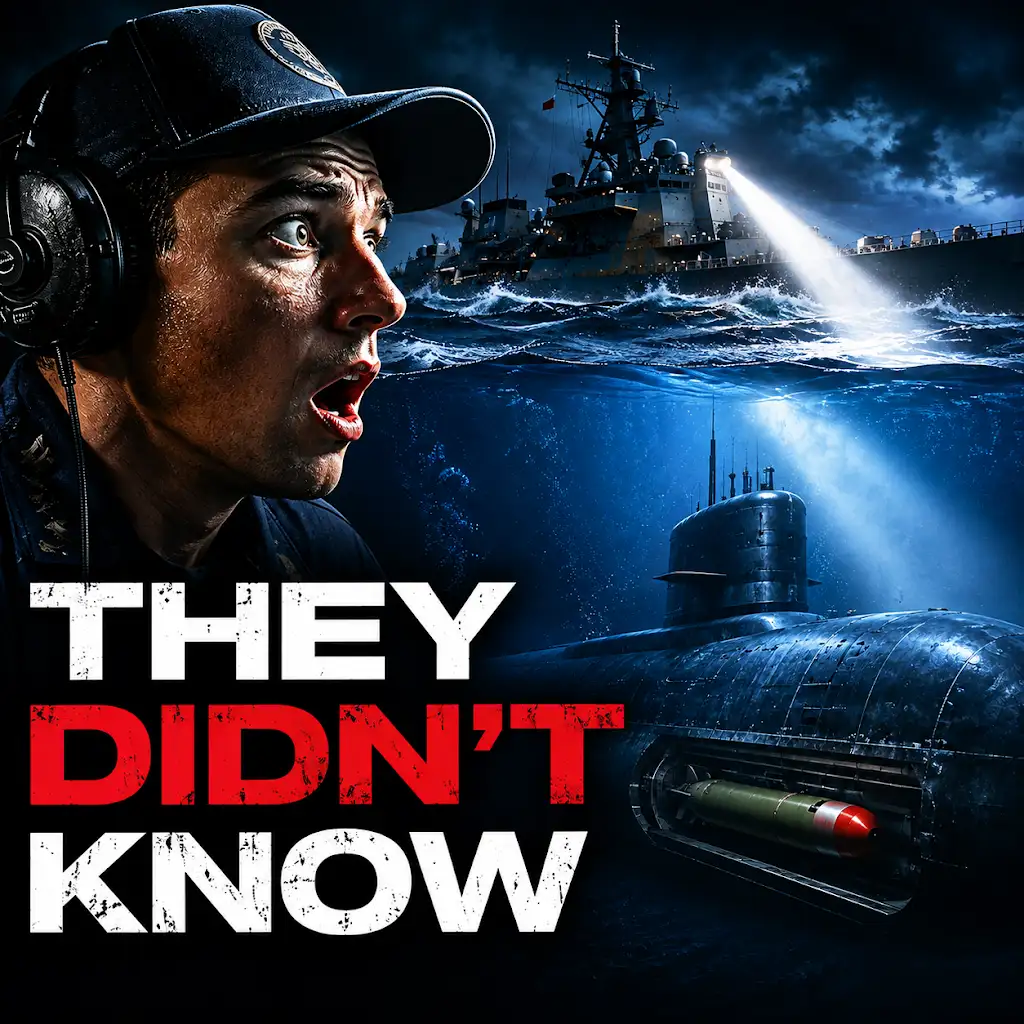
The U.S. Navy Didn’t Know This Submarine Had a Nuclear Torpedo
FAQs
What was the misunderstanding that almost caused nuclear war?
The article discusses a specific incident where a misinterpreted satellite signal led to the false belief that a nuclear attack was imminent, almost causing a retaliatory response.
How close did the world come to nuclear war due to this misunderstanding?
The article explains that the world came dangerously close to nuclear war, with the potential for catastrophic consequences, as a result of the misunderstanding.
What were the consequences of the misunderstanding?
The article outlines the potential consequences of the misunderstanding, including the possibility of a devastating nuclear conflict and the loss of countless lives.
What measures have been taken to prevent similar misunderstandings in the future?
The article details the steps that have been taken to prevent similar misunderstandings, such as improved communication protocols and technological advancements.
What lessons can be learned from this incident?
The article explores the lessons that can be learned from this incident, including the importance of clear communication and the need for robust safeguards to prevent nuclear conflict.