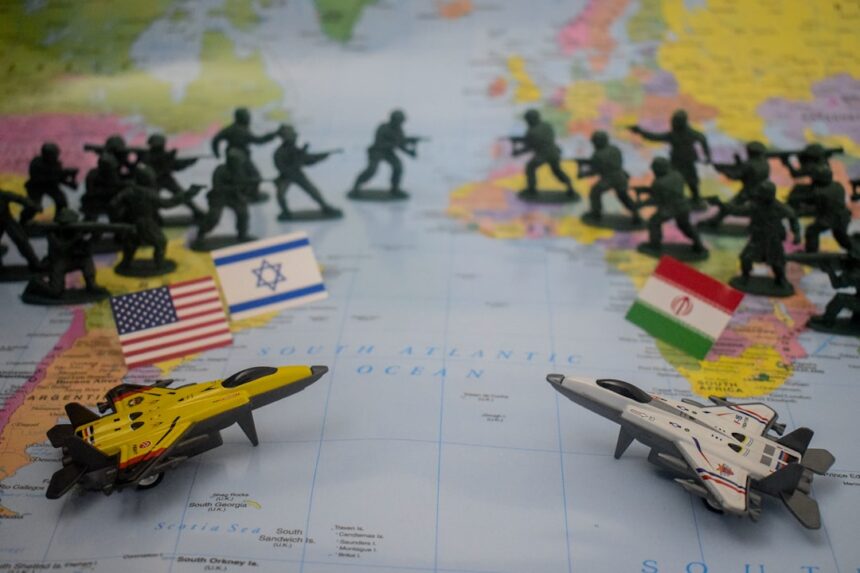
The expansive waters of the Arctic and North Atlantic, once a region of relative strategic quiet, are increasingly becoming a focal point of heightened geopolitical tension. At the heart of this growing friction lies the perceived westward and northward expansion of the North Atlantic Treaty Organization (NATO) and its implications for Russia’s vital Northern Fleet. This confluence of military posturing and strategic anxieties is reshaping regional security dynamics, forcing a re-evaluation of deterrence and defense strategies on both sides.
The strategic landscape of the Arctic and North Atlantic has undergone a profound transformation in recent decades. Once dominated by the Cold War’s bipolar confrontation, the region is now characterized by a complex interplay of rising Arctic powers, renewed great power competition, and the evolving operational capabilities of key naval forces.
The Arctic: A New Frontier for Competition
Climate Change and its Geopolitical Impact
The melting of Arctic ice, a stark consequence of global climate change, has unlocked new shipping routes and exposed previously inaccessible natural resources. This has not only spurred economic interest from a multitude of nations but has also elevated the strategic importance of the region. For Russia, the Northern Sea Route represents a potential economic lifeline and a means to project power more readily into the Pacific. For NATO members, particularly those with Arctic coastlines, the increased accessibility presents both opportunities and security challenges. The potential for increased maritime traffic, resource extraction, and military presence necessitates a coordinated response to ensure regional stability and freedom of navigation.
Emerging Arctic Powers and their Naval Ambitions
Beyond the traditional Arctic states, countries like China have declared themselves as “near-Arctic states” and are actively investing in ice-capable vessels and infrastructure. This growing international presence adds another layer of complexity to the region’s security calculus, requiring NATO and Russia to consider a broader spectrum of actors and their potential influence. The development of Arctic-capable naval forces by various nations signals a future where the region will demand greater attention and potentially more robust military presence.
Russia’s Northern Fleet: A Cornerstone of Soviet and Russian Power
For Russia, the Northern Fleet, headquartered in Severomorsk, has historically been the crown jewel of its naval power. Inheriting the bulk of the Soviet Union’s strategic submarine force, it remains the backbone of Russia’s nuclear deterrent and a crucial instrument for projecting power globally. Its operational radius extends across the Norwegian Sea, the North Atlantic, and into the Arctic Ocean, making it a formidable force with significant strategic reach.
The Legacy of the Soviet Northern Fleet
The Soviet Union heavily invested in its Northern Fleet, recognizing its unparalleled strategic importance. This legacy includes a vast network of bases, extensive submarine construction capabilities, and a doctrine centered on maintaining a robust presence in the waters bordering its European and North American adversaries. The sheer scale of its submarine force, particularly its ballistic missile submarines (SSBNs), was designed to ensure a second-strike capability in any nuclear conflict.
Modernization and Refurbishment Efforts
Despite facing significant economic challenges in the post-Soviet era, Russia has consistently prioritized the modernization and refurbishment of its Northern Fleet. This includes the development of new generations of nuclear-powered submarines, advanced surface combatants, and a renewed focus on aerial and underwater surveillance capabilities. The aim is to maintain its technological edge and operational effectiveness in a rapidly evolving security environment.
The ongoing discussions surrounding NATO expansion and its implications for the Northern Fleet of Russia have garnered significant attention in recent geopolitical analyses. A related article that delves deeper into this topic can be found at In the War Room, where experts explore the strategic maneuvers of both NATO and Russia in the Arctic region, highlighting the potential consequences for regional security and military balance.
NATO Expansion and its Perceived Threat to Russia
The eastward and northward expansion of NATO since the end of the Cold War has been a central grievance for Russia, perceived as a direct challenge to its security interests and a violation of perceived assurances made during the dissolution of the Soviet Union. While NATO maintains that its expansion is a defensive measure driven by the sovereign choices of independent nations, Russia views it as an encircling maneuver that brings military infrastructure closer to its borders.
The Enlargement of NATO: A Historical Perspective
The Dissolution of the Warsaw Pact and Subsequent Accessions
Following the collapse of the Soviet Union and the dissolution of the Warsaw Pact, several former Soviet bloc countries sought and gained membership in NATO. This process, which began in the late 1990s, continued with subsequent waves of accession, gradually extending the alliance’s reach towards Russia’s western borders. Each new member brought with it a commitment to collective defense, a principle that Russia views with apprehension.
Russia’s Interpretation of NATO’s Defensive Posture
Russia argues that NATO’s expansion has fundamentally altered the strategic balance in Europe, pushing military capabilities and infrastructure into what it considers its sphere of influence. It views the deployment of missile defense systems and the potential for forward basing of NATO forces as inherently offensive, despite NATO’s insistence on their purely defensive nature. This divergence in interpretation is a significant driver of ongoing tensions.
The Arctic Dimension of NATO’s Expansion
While much of the focus has been on NATO’s expansion into Eastern Europe, the alliance’s growing presence and activity in the Arctic and North Atlantic regions are also a cause for concern for Russia. The increased naval exercises, the interoperability of allied forces, and the potential for strategic basing in proximity to Russian maritime approaches are closely monitored by Moscow.
Russian Response: Strengthening the Northern Fleet

In response to perceived NATO encroachment and the evolving security environment, Russia has embarked on a significant effort to strengthen and modernize its Northern Fleet. This strategy involves a multi-pronged approach aimed at enhancing its deterrent capabilities, projecting power, and securing its Arctic interests.
Enhancing Submarine Capabilities: The Core of the Deterrent
The Importance of SSBNs and SSNs
Submarines, particularly Ballistic Missile Submarines (SSBNs) and Attack Submarines (SSNs), remain the cornerstone of the Northern Fleet’s strength. Russia continues to develop and deploy advanced nuclear-powered submarines, such as the Borei-class SSBNs and the Yasen-class SSNs. These vessels are designed to be stealthier, quieter, and equipped with more advanced weaponry, enhancing their ability to penetrate anti-submarine warfare defenses and to project power effectively.
The Role of Silent Running and Advanced Sonar Evasion
A key focus of Russian submarine development is on improving “silent running” capabilities and evading advanced sonar detection systems. The ability of a submarine to operate undetected is paramount for both strategic deterrence and for conducting offensive operations. Investments in hull design, propulsion systems, and noise reduction technologies are central to this effort.
Modernizing Surface Fleets and Aerospace Support
New Frigates, Corvettes, and Aircraft Carriers
Beyond submarines, Russia is also investing in its surface fleet, introducing new classes of frigates and corvettes equipped with modern anti-ship missiles, air defense systems, and electronic warfare capabilities. While the revival of a large, Western-style aircraft carrier program remains a distant prospect, Russia is exploring options for enhancing its carrier aviation capabilities, potentially through the deployment of short take-off and vertical landing (STOVL) aircraft.
Strengthening Anti-Submarine Warfare (ASW) Capabilities
The effectiveness of the Northern Fleet is heavily reliant on its ability to operate in conjunction with its air and land-based assets. Russia is bolstering its anti-submarine warfare capabilities through the deployment of advanced maritime patrol aircraft, helicopters, and a network of shore-based sensor systems designed to detect and track enemy submarines.
Increased Naval Exercises and Operational Readiness
Large-Scale Drills and Simulated Operations
To maintain a high level of operational readiness and to test its capabilities, the Northern Fleet routinely conducts large-scale naval exercises. These drills often simulate complex scenarios, including anti-submarine warfare, anti-surface warfare, and amphibious assault operations. Such exercises are closely watched by NATO and serve as a demonstration of Russia’s military posture.
Training in High-Latitude Environments
A significant emphasis is placed on training in the challenging high-latitude environments of the Arctic and North Atlantic. This includes operations in icy conditions, navigating in reduced visibility, and conducting complex maneuvers under extreme weather. This specialized training is crucial for maintaining the operational effectiveness of the Northern Fleet in its primary operating theaters.
NATO’s Counter-Response and Enhanced Deterrence
NATO’s response to the perceived resurgence of Russian naval power, particularly its Northern Fleet, has been to reinforce its own presence, enhance its intelligence-gathering capabilities, and conduct more frequent and complex exercises in the North Atlantic and Arctic regions. The alliance’s aim is to maintain a credible deterrent and to ensure the security of its maritime approaches.
Reinforcing the Maritime Front: Increased Naval Presence
Enhanced Patrols and Forward Deployment
NATO nations are increasing their naval patrols in key areas of the North Atlantic, including the Greenland-Iceland-UK (GIUK) gap, a historically significant chokepoint for naval movements. There is also a greater emphasis on forward deployment of naval assets from various member states, creating a more persistent allied presence in proximity to Russian maritime routes.
Interoperability and Joint Operations
A core element of NATO’s strategy is to ensure the interoperability of its member nations’ naval forces. This involves extensive joint exercises designed to synchronize command and control, standardize operating procedures, and enhance the collective ability to respond to any potential threat. The focus is on ensuring that allied naval assets can operate seamlessly together.
Strengthening Intelligence, Surveillance, and Reconnaissance (ISR)
Advanced Maritime Surveillance Aircraft and Satellites
NATO is investing heavily in advanced Intelligence, Surveillance, and Reconnaissance (ISR) capabilities to maintain a comprehensive understanding of Russian naval activities. This includes the deployment of advanced maritime patrol aircraft equipped with sophisticated radar and sonar systems, as well as the utilization of satellite imagery and other space-based assets to monitor movements and activities.
Underwater Acoustic Monitoring Networks
The alliance is also expanding and enhancing its underwater acoustic monitoring networks. These networks, deployed strategically in key maritime areas, are designed to detect and track submarines with greater accuracy and to provide early warning of potential incursions. This passive listening capability is a crucial component of NATO’s anti-submarine warfare efforts.
Increased Frequency and Scope of NATO Exercises
Trident Juncture and Cold Response
NATO has significantly increased the frequency and scope of its major military exercises. Exercises like “Trident Juncture” and “Cold Response” are designed to test the alliance’s ability to deploy and sustain forces in challenging environments, including Arctic conditions, and to simulate large-scale combat operations. These exercises serve as a clear signal of NATO’s commitment to collective defense.
Exercises Focused on Anti-Submarine Warfare and Maritime Interdiction
A particular focus of recent NATO exercises has been on anti-submarine warfare (ASW) and maritime interdiction operations. These drills aim to refine the alliance’s ability to locate, track, and neutralize submarines, and to enforce maritime security through coordinated naval actions. The emphasis is on demonstrating a robust capability to counter any potential naval threat.
The ongoing discussions surrounding NATO expansion have significant implications for Russia’s Northern Fleet, particularly as tensions in the Arctic region continue to rise. A recent article explores how the increased presence of NATO forces in Northern Europe is prompting Russia to enhance its naval capabilities and strategic posture in the Arctic. For more insights on this topic, you can read the full article here. This development not only affects military dynamics but also raises questions about security and cooperation in a region that is becoming increasingly important for global geopolitics.
The Escalating Risk of Miscalculation and Accidental Conflict
| Country | Year of NATO Expansion | Response from Northern Fleet Russia |
|---|---|---|
| Poland | 1999 | Increased military exercises in the Baltic Sea |
| Lithuania | 2004 | Deployed warships to the Baltic Sea |
| Estonia | 2004 | Heightened surveillance of NATO activities |
The heightened military activity and increased proximity of NATO and Russian naval forces in the North Atlantic and Arctic regions inherently raise the risk of miscalculation and accidental conflict. The potential for unforeseen incidents, misinterpretations of intentions, or technical malfunctions in a high-stakes environment cannot be ignored.
The “Gray Zone” of Naval Encounters
Close Encounters and Shadowing Operations
Both NATO and Russian naval vessels frequently operate in close proximity, often shadowing each other’s movements. While often conducted professionally, these close encounters can increase the likelihood of misunderstandings or unintended interactions. The line between routine naval operations and provocative actions can become blurred in such scenarios.
The Role of Rules of Engagement and De-escalation Protocols
The establishment and adherence to clear rules of engagement and robust de-escalation protocols are paramount in mitigating the risk of accidental conflict. However, in times of heightened tension, the interpretation and application of these protocols can become strained, potentially leading to dangerous escalations.
The Impact of Advanced Military Technology
Autonomous Systems and Cyber Warfare
The increasing integration of advanced military technologies, including autonomous systems and cyber warfare capabilities, introduces new layers of complexity. The potential for autonomous systems to operate in ways not fully anticipated by their operators, or for cyberattacks to disrupt command and control systems, could lead to unintended consequences and rapid escalations.
The Challenge of Attribution in a Hybrid Warfare Environment
In a contemporary security environment characterized by hybrid warfare, the ability to accurately attribute actions can be challenging. This can complicate de-escalation efforts, as the responsible party may not be immediately identifiable, leading to suspicions and retaliatory impulses.
The Strategic Implications for Northern European Security
The ongoing naval rivalry between NATO and Russia in the North Atlantic and Arctic has profound strategic implications for Northern European security. Countries in this region, caught between two major military powers, face an increasingly complex and potentially volatile security landscape.
The Defense of Critical Maritime Chokepoints
The strategic importance of maritime chokepoints, such as the GIUK gap, is amplified by the current tensions. Ensuring the security of these passages is a primary concern for NATO, as their interdiction by Russia could have significant implications for transatlantic reinforcement and resupply.
Maintaining Freedom of Navigation and Access
The ability of all nations to exercise freedom of navigation in international waters is a cornerstone of maritime security. The current climate raises concerns about potential limitations or challenges to this freedom, particularly in the context of increased naval posturing and the assertion of national interests.
In conclusion, the expansion of NATO and the subsequent strengthening of Russia’s Northern Fleet have transformed the North Atlantic and Arctic into a region of heightened geopolitical sensitivity. This dynamic, fueled by differing strategic interpretations and a legacy of historical mistrust, necessitates a cautious and well-calibrated approach from all parties involved. The focus on maintaining robust deterrence, enhancing transparency, and fostering open lines of communication will be crucial in navigating this complex security environment and mitigating the risks of miscalculation. The strategic waters of the north, once a quiet frontier, now stand as a stark reminder of the evolving nature of global security.

Russia’s Nuclear Submarines Depend on This Arctic Lifeline
FAQs
What is NATO expansion?
NATO expansion refers to the process of adding new member countries to the North Atlantic Treaty Organization, a military alliance established in 1949.
What is the Northern Fleet of Russia?
The Northern Fleet is a unit of the Russian Navy, responsible for operations in the Arctic and Northern Atlantic regions. It is one of the four main fleets of the Russian Navy.
How does NATO expansion impact the Northern Fleet of Russia?
NATO expansion is viewed as a security threat by Russia, particularly in the context of the Northern Fleet. The increased presence of NATO forces in the region is seen as a potential challenge to Russian naval operations.
What are the concerns surrounding NATO expansion in the Northern region?
The concerns surrounding NATO expansion in the Northern region include the potential for increased military tensions, competition for control of Arctic resources, and the risk of maritime incidents or accidents.
What are the implications of NATO expansion for the security dynamics in the Northern region?
NATO expansion in the Northern region has the potential to alter the security dynamics by increasing military presence and activities, potentially leading to a more complex and tense security environment.