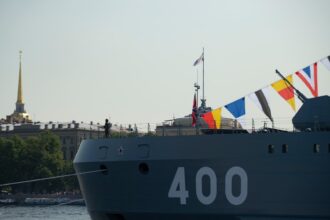
The biting winds sweeping across the Kola Peninsula carry more than just the scent of pine and sea spray; they whisper tales of immense power, of silent, submerged deterrents that represent a significant pillar of Russia’s strategic capabilities. This remote, strategically vital region in northwestern Russia, bordering Norway and Finland, is the primary home of Russia’s formidable nuclear-powered ballistic missile submarine (SSBN) fleet. A closer examination of this fleet, nestled within the stark beauty and unforgiving climate of the Kola Peninsula, reveals a complex ecosystem of naval operations, technological prowess, and geopolitical significance.
The Kola Peninsula is not merely a geographical location; it is the operational and logistical nexus for the Russian Northern Fleet, one of the four branches of the Russian Navy. Within this sprawling naval base complex, particularly around the city of Murmansk and its surrounding inlets, the SSBN fleet finds its sanctuary and its launching pad. The peninsula’s strategic importance stems from its ice-free ports, crucial for year-round operations, and its proximity to the open waters of the Barents Sea, offering submarines relatively unimpeded access to the Atlantic and Arctic Oceans.
Murmansk: The Naval Metropolis
Murmansk, the largest city north of the Arctic Circle, serves as the administrative and operational hub for the Northern Fleet. Its deep-water ports and extensive infrastructure are essential for the maintenance, resupply, and deployment of the SSBNs. The sheer scale of naval activity concentrated here is impressive, a testament to Russia’s enduring commitment to its strategic nuclear forces.
The Rostrele-Gremikha Complex
One of the most significant facilities on the Kola Peninsula is the Rostrele-Gremikha naval base. This complex has historically housed and continues to be a vital operational area for the Northern Fleet’s SSBNs. Its well-developed piers, maintenance workshops, and living quarters for personnel underscore the extensive resources dedicated to supporting these highly specialized vessels. The strategic location provides direct access to the open sea, minimizing transit times for submarines heading on patrols.
Severomorsk: Command and Control
While Murmansk is the administrative center, Severomorsk, a closed city also on the Kola Peninsula, is the de facto command and control center for the Northern Fleet. It is here that strategic decisions are made, operational plans are formulated, and the vast resources of the fleet are coordinated. The presence of top-tier naval leadership and intelligence gathering capabilities further solidifies Severomorsk’s critical role in managing the SSBN fleet.
Barents Sea: The Patrol Grounds
The Barents Sea, a marginal sea of the Arctic Ocean, is the primary operational theater for the Kola-based SSBNs. Its vastness and relatively deep waters provide ample space for submarines to conduct their patrols undetected. The strategic objective of these patrols is to maintain a credible nuclear deterrent, ensuring that Russia’s second-strike capability remains intact.
The Importance of Ice-Free Ports
The Kola Peninsula’s most significant geographical advantage is its access to ice-free ports, a rarity in the Arctic. This allows the Northern Fleet to operate its SSBNs throughout the year, without being hampered by frozen waterways. This consistent operational readiness is paramount for maintaining a strategic nuclear deterrent, as submarines must be able to deploy at any given time.
Strategic Access to the Atlantic
From the Kola Peninsula, SSBNs have relatively direct access to the North Atlantic. This is crucial for projecting power and maintaining a presence in waters that are strategically important for global naval operations. The ability to reach these areas quickly and discreetly is a key component of the SSBN mission.
The strategic significance of the Russian SSBN fleet stationed in the Kola Peninsula has been a topic of extensive analysis, particularly in light of recent geopolitical tensions. For a deeper understanding of the implications of this fleet on global security dynamics, you can read a related article that explores the operational capabilities and future developments of Russia’s submarine forces. For more information, visit this article.
Russia’s SSBN Classes: A Lineage of Deterrence
The backbone of Russia’s strategic nuclear deterrent is its fleet of nuclear-powered ballistic missile submarines. These vessels are a testament to decades of Soviet and Russian naval engineering, each generation representing advancements in stealth, missile technology, and operational endurance. The Kola Peninsula is home to several of these formidable classes, each with its own unique capabilities and role.
The Delta Class: The Enduring Stalwarts
The Delta class submarines, including the Delta III and Delta IV variants, have been a cornerstone of the Soviet and Russian SSBN fleet for decades. While some have been decommissioned or are in the process of being retired, a number of Delta IV submarines continue to serve, equipped with the potent Sineva (SS-N-23) ballistic missiles. These submarines are renowned for their robust design and significant missile payload.
Delta IV: The Last of its Kind
The Delta IV class, designated Project 667BDRM “Delfin” by the Russians, represents the pinnacle of Soviet SSBN design before the advent of the Borei class. These submarines are armed with the R-29RMU2 Sineva and the more modern R-29RMU2.1 Layner ballistic missiles, which are capable of carrying multiple warheads. Their long patrols and survivability have made them a vital component of Russia’s strategic forces.
Operational Longevity
The Delta class submarines have demonstrated remarkable operational longevity, a testament to their robust construction and the continuous efforts in maintenance and modernization. Despite their age, they continue to contribute significantly to Russia’s nuclear deterrence posture, often operating from the Kola Peninsula.
The Typhoon Class: Giants of the Cold War
The Typhoon class, designated Project 091 “Akula” (though this designation is also used for other Soviet attack submarines, leading to potential confusion), are the largest submarines ever built. While these behemoths were designed during the Cold War, only one, the Dmitry Donskoy, remains in service, primarily as a testbed for new missile systems, specifically the Bulava (SS-N-32) missile, intended for the Borei class. Their immense size and missile capacity made them a formidable force, though their operational status today is primarily experimental.
A Testbed for Future Technologies
The Dmitry Donskoy, the sole surviving Typhoon, has been extensively refitted and serves a crucial role in testing the latest Russian intercontinental ballistic missiles (ICBMs). This repurposing highlights the ongoing evolution of Russia’s strategic nuclear capabilities, with older platforms adapted to support the development of newer, more advanced systems.
Reduced Operational Patrols
Unlike their predecessors, the Typhoon class submarines do not undertake routine operational patrols in the same capacity. Their primary function has shifted towards research, development, and testing, a crucial step in ensuring the effectiveness of future generations of SSBNs.
The Borei Class: The Future of Russian Deterrence
The Borei class (Project 955 “Borey” and Project 955A “Borey-A”) represents the new generation of Russian SSBNs, designed to replace older classes and ensure Russia’s strategic nuclear superiority for decades to come. These submarines are characterized by advanced stealth technology, greater maneuverability, and the capacity to carry a significantly larger number of more advanced ballistic missiles. The Kola Peninsula is the operational base for these cutting-edge vessels.
Project 955 “Borey”: The Vanguard
The initial Borei class submarines, such as the Yury Dolgorukiy, Alexander Nevsky, and Vladimir Monomakh, are already operational and have conducted patrols from the Kola Peninsula. These submarines are armed with the Bulava (RSM-56) solid-propellant ballistic missile, which is capable of carrying multiple independently targetable re-entry vehicles (MIRVs).
Project 955A “Borey-A”: Enhanced Capabilities
The Borei-A subclass represents an evolution of the Borei design, incorporating further enhancements in stealth, acoustic signature reduction, and weapon systems. Submarines like the Knyaz Vladimir and Generalissimus Suvorov are part of this more advanced iteration, signaling Russia’s commitment to maintaining a cutting-edge SSBN fleet.
The Bulava Missile System
The Bulava missile is a key component of the Borei class. This solid-fuel ICBM is designed to be highly survivable against missile defense systems, making it a critical element of Russia’s second-strike capability. Its deployment on the Borei class signifies a significant leap in Russia’s strategic missile technology.
The Operational Ecosystem: Maintaining the Deterrent
The presence of SSBNs on the Kola Peninsula is not just about the submarines themselves; it encompasses a complex operational ecosystem that ensures their readiness, effectiveness, and security. This includes specialized support vessels, training facilities, and a highly trained workforce.
Support and Maintenance Infrastructure
The operational readiness of the SSBN fleet relies heavily on a robust network of support and maintenance infrastructure. This includes specialized repair ships, floating docks, and extensive onshore facilities for the maintenance of complex nuclear propulsion systems and missile launch systems.
Specialized Repair Ships
A crucial element of the SSBN support infrastructure are specialized repair ships. These vessels are equipped with the tools, machinery, and expertise to perform complex repairs and maintenance on submarines while they are at sea or in port. This minimizes the time submarines spend out of operational service.
Floating Docks and Dry Docks
For more extensive maintenance and repair work, the Kola Peninsula’s naval bases are equipped with large floating docks and dry docks. These facilities allow for the complete hull inspection and repair of submarines, ensuring their structural integrity and operational safety.
Training and Readiness Exercises
Maintaining a high level of operational readiness requires continuous training and rigorous exercises. The Northern Fleet conducts numerous drills and simulations to ensure that crews are proficient in all aspects of submarine operations, from navigation and combat to emergency response.
Crew Training and Simulation
The crews of SSBNs undergo extensive and highly specialized training. This includes simulator training for both submarine operations and missile launch procedures, as well as live-fire exercises (often conducted in remote training areas) to maintain proficiency with the weapon systems.
Operational Patrols and Exercises
Regular operational patrols are the most critical aspect of maintaining deterrence. These patrols are conducted in secrecy, often for extended periods, to demonstrate the fleet’s readiness and to deter potential adversaries. Joint exercises with other naval units are also conducted to test coordination and interoperability.
The Strategic Significance: A Global Power Projection
The Russian SSBN fleet based on the Kola Peninsula is a cornerstone of Russia’s global strategic posture. Its presence is a clear signal of its commitment to nuclear deterrence and its ability to project power on a global scale, influencing geopolitical dynamics and international security.
Maintaining a Second-Strike Capability
The primary mission of the SSBN fleet is to ensure Russia’s second-strike capability. This means that even if Russia were to suffer a devastating first strike, its SSBNs would be able to survive and retaliate, thus deterring any aggressor from initiating such an attack. The vastness of the oceans and the stealth of the submarines make them incredibly difficult to locate and neutralize.
Survivability and Deterrence
The inherent survivability of SSBNs in the vastness of the ocean is what makes them such a potent deterrent. Their ability to remain submerged and undetected for extended periods ensures that a retaliatory strike is always a credible threat, regardless of the state of surface or land-based forces.
The Silent Guardians
These submarines are often referred to as “silent guardians” due to their covert nature. Their ability to operate undetected in the depths of the ocean provides a constant, albeit unseen, reassurance of Russia’s nuclear deterrent.
Geopolitical Influence and Power Projection
The SSBN fleet is not just a military asset; it is also a significant tool of geopolitical influence. Its deployment and operational status are closely monitored by other global powers, and its capabilities are a factor in strategic calculations and international arms control discussions.
Signaling Intent and Resolve
The operational tempo and deployments of the SSBN fleet can be used to signal Russia’s intent and resolve in various geopolitical situations. Modern deployments and exercises are often interpreted as deliberate messages to other nations regarding Russia’s strategic priorities.
Arms Control Negotiations
The existence and capabilities of the SSBN fleet play a crucial role in international arms control negotiations. The balance of strategic nuclear forces, heavily influenced by the SSBN component, is a constant consideration in discussions about disarmament and non-proliferation.
The strategic significance of the Russian SSBN fleet based in the Kola Peninsula has been a topic of increasing interest among defense analysts. This region serves as a critical bastion for Russia’s nuclear deterrent capabilities, allowing for a formidable presence in the North Atlantic. For a deeper understanding of the implications of this fleet on global security dynamics, you can read more in this insightful article about the evolving naval strategies in the Arctic. Check it out here: naval strategies in the Arctic.
Challenges and the Future of the Kola-Based SSBNs
| Submarine | Class | Commissioned | Homeport |
|---|---|---|---|
| TK-208 Dmitry Donskoy | Typhoon-class | 1981 | Severodvinsk |
| TK-20 Severstal | Typhoon-class | 1986 | Severodvinsk |
| TK-17 Arkhangelsk | Typhoon-class | 1987 | Severodvinsk |
| TK-208 Dmitriy Donskoy | Typhoon-class | 1981 | Severodvinsk |
Despite their strategic importance, the SSBN fleet and its operational base on the Kola Peninsula face a number of challenges. These include the aging of some submarine classes, the need for continuous modernization, and the environmental considerations associated with nuclear operations. The future will likely see a continued reliance on the Borei class and further technological advancements.
Aging Infrastructure and Submarines
Some of the infrastructure and submarine classes on the Kola Peninsula are aging, requiring significant investment in modernization and replacement. The continuous operational demands place a strain on both the vessels and the supporting facilities.
Modernization of Facilities
The naval bases on the Kola Peninsula are undergoing a continuous process of modernization to keep pace with the evolving needs of the SSBN fleet. This includes upgrading command and control systems, improving maintenance facilities, and ensuring compliance with modern environmental standards.
Decommissioning and Replacement
As older submarine classes are decommissioned, there is a constant need to replace them with newer, more capable vessels. The transition from the Delta class to the Borei class exemplifies this ongoing process of renewal and technological advancement.
Environmental and Safety Concerns
Operating a fleet of nuclear-powered submarines inevitably raises environmental and safety concerns. Strict protocols and advanced safety measures are in place to mitigate risks associated with nuclear propulsion and the storage and handling of nuclear materials.
Nuclear Waste Management
The responsible management of nuclear waste generated by the fleet is a critical aspect of operations. Extensive facilities and protocols are in place for the safe storage, processing, and disposal of spent nuclear fuel and other radioactive materials.
Emergency Preparedness
Given the inherent risks associated with nuclear power, emergency preparedness is paramount. The Northern Fleet maintains highly trained emergency response teams and conducts regular drills to ensure a swift and effective response to any potential accidents or incidents.
The Continued Dominance of the Borei Class
The future of Russia’s SSBN fleet on the Kola Peninsula is undeniably linked to the Borei class. As the primary platform for Russia’s modern nuclear deterrent, these submarines will continue to operate from this strategic location, embodying the nation’s commitment to maintaining a powerful and credible strategic nuclear capability.
Technological Advancements
Future iterations of the Borei class and their associated missile systems are expected to incorporate further technological advancements, enhancing their stealth, survivability, and strategic effectiveness. This ensures that Russia’s deterrent remains relevant in an ever-evolving security landscape.
Continued Operational Importance
The Kola Peninsula will remain the vital home for these strategic assets, a testament to its enduring geopolitical and military significance. The silent watchers of the deep, patrolling the unforgiving waters of the Arctic and beyond, will continue to be a defining feature of Russia’s defense strategy for years to come.

Russia’s Nuclear Submarines Depend on This Arctic Lifeline
FAQs
What is the Russian SSBN fleet?
The Russian SSBN fleet, also known as the Northern Fleet, is a strategic branch of the Russian Navy that operates nuclear-powered ballistic missile submarines (SSBNs). These submarines are equipped with intercontinental ballistic missiles (ICBMs) and are a key component of Russia’s nuclear deterrent.
Where is the Kola Peninsula?
The Kola Peninsula is a large peninsula in the far northwest of Russia. It is located in the Murmansk Oblast and is bordered by the Barents Sea to the north and the White Sea to the east. The Kola Peninsula is home to several important naval bases, including those used by the Russian SSBN fleet.
How many SSBNs are based on the Kola Peninsula?
The Kola Peninsula is home to a significant portion of Russia’s SSBN fleet. It is estimated that there are several SSBNs based in the region, including submarines of the Delta and Borei classes. These submarines are equipped with nuclear missiles and play a crucial role in Russia’s nuclear deterrence strategy.
What is the strategic importance of the Kola Peninsula for the Russian SSBN fleet?
The Kola Peninsula is strategically important for the Russian SSBN fleet due to its proximity to the Arctic Ocean and the European theater. The peninsula provides easy access to the open sea, allowing SSBNs to quickly deploy and patrol in strategic locations. Additionally, the region’s harsh climate and remote location provide a degree of natural protection for the submarines and their bases.
What are the implications of the Russian SSBN fleet’s presence on the Kola Peninsula?
The presence of the Russian SSBN fleet on the Kola Peninsula has significant implications for global security and nuclear deterrence. The fleet’s submarines are capable of carrying a large number of nuclear warheads, and their presence in the region underscores Russia’s commitment to maintaining a credible nuclear deterrent. Additionally, the fleet’s activities and capabilities are closely monitored by other countries, particularly those with strategic interests in the Arctic region.