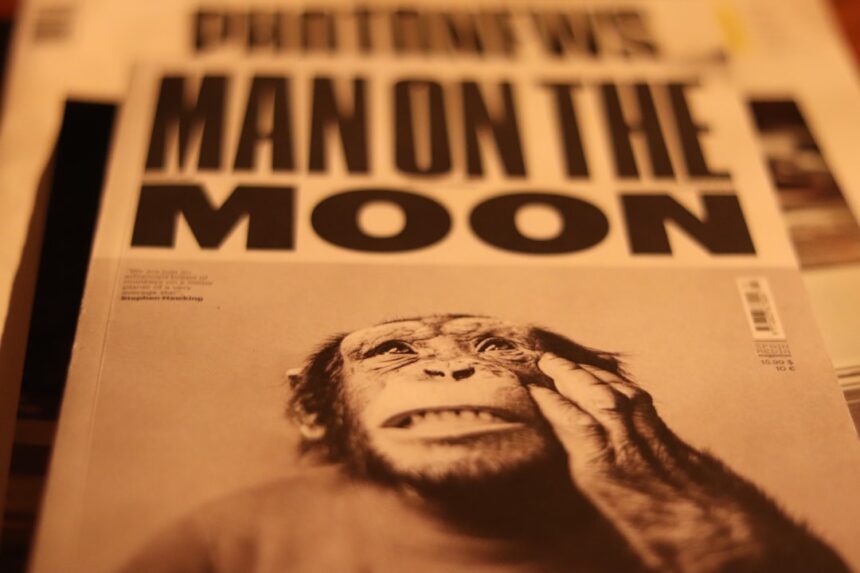
You’ve probably heard about remote viewing, the idea of “seeing” things far away with your mind. Well, Ingo Swann, a name that comes up a lot in these discussions, apparently did something pretty wild: he claimed he could remotely view the Moon. Not just orbit it, but actually penetrate it. This is where things get interesting, and honestly, a little mind-bending. So, what exactly is this “Penetration Moon” business and why is it such a fascinating story?
The Core Idea: What is Penetration Moon?
At its heart, Ingo Swann’s “Penetration Moon” concept isn’t about physically drilling into the Moon. It’s a bit more nuanced, suggesting that through the practice of remote viewing, one could gain access to information and perceptions beneath the Moon’s surface. Imagine being able to perceive what lies within a solid object, not by touching it, but by extending your consciousness. That’s the essence of it. Swann, a key figure in the development of remote viewing protocols, believed that the techniques he and others were refining could go beyond surface-level observations. For him, “penetration” implied an ability to discern hidden structures, internal environments, and perhaps even processes occurring within the Moon, as if its solid exterior were merely a transparent veil.
This wasn’t a casual thought; it was a concept he explored and developed within the framework of his remote viewing experiences. He wasn’t just reporting seeing craters; he was suggesting a deeper level of perceptual access. The idea is that the mind, when properly trained and directed, could bypass physical limitations and interact with the informational field of an object, including its internal composition and hidden aspects.
Ingo Swann’s intriguing experiences with remote viewing, particularly his claims regarding the moon, have sparked considerable interest in the realm of parapsychology and extraterrestrial studies. For those interested in exploring similar topics, a related article can be found at In The War Room, which delves into the implications of remote viewing and its potential connections to government projects and UFO phenomena. This article provides a broader context for Swann’s work and its impact on the understanding of consciousness and reality.
The Origins: Beyond Surface Observations
Ingo Swann wasn’t just a random person claiming psychic abilities. He was involved with research projects, most notably the Stanford Research Institute (SRI) and later, the U.S. government’s controversial Stargate Project. These programs aimed to explore the potential of psychic phenomena for intelligence gathering. Within this context, Swann’s abilities were rigorously, if sometimes controversially, tested.
It was during these explorations that Swann began to articulate his ideas about deeper forms of remote viewing. He found that his targets, whether geographical locations or conceptual objects, often yielded more than just visual data. He described encountering sensory information that seemed to come from within the target. The Moon, being a celestial body with a complex geological history, became a prime candidate for this kind of deeper investigation.
The “Penetration” Process: How Did It Supposedly Work?
Swann’s approach to remote viewing, often referred to as “Controlled Remote Viewing” (CRV), involved a structured methodology. It wasn’t about passively waiting for images to appear but actively engaging in a disciplined mental process. When it came to the Moon, the “penetration” aspect involved applying these CRV protocols with the specific intent of perceiving beyond the lunar surface.
The idea was to shift one’s focus from the external appearance of the Moon to its internal “essence” or informational signature. This would involve moving through different “stages” of perception, often described in terms of sensory input: tactile sensations, temperature changes, internal structures, and even abstract concepts related to its formation and composition.
What Swann Claimed to “See”
This is where the story gets truly intriguing. Swann didn’t just claim to see a hollow Moon. His accounts were more detailed and varied. He described sensing internal structures, vast caverns, and even indications of non-terrestrial activity. These weren’t necessarily literal, concrete images in the way we perceive a photograph, but rather a complex tapestry of sensory impressions and informational data that he interpreted as representing internal lunar features.
He often spoke of sensing a difference in density, temperature variations that suggested internal voids, and even echoes of past events or geological processes occurring deep within the Moon. Some interpretations of his claims even suggested he perceived evidence of artificial structures or technology beneath the surface. It’s important to remember that these were Swann’s subjective experiences and interpretations, communicated through his unique conceptual framework.
Ingo Swann’s intriguing experiences with remote viewing and his claims about the moon have sparked significant interest in the realms of both science and the paranormal. For those looking to delve deeper into the implications of his work, a related article can be found that explores the intersection of consciousness and space exploration. This article provides valuable insights into how Swann’s theories may challenge our understanding of reality and the universe. You can read more about this fascinating topic in the article here.
The Scientific and Skeptical Response
Unsurprisingly, the concept of “Penetration Moon” has been met with significant skepticism from the scientific community.
Lack of Empirical Evidence
The most significant hurdle for Swann’s claims is the absence of verifiable, empirical evidence that directly supports his assertions of penetrating the Moon’s interior through remote viewing. Science relies on testable hypotheses and reproducible results. Remote viewing, by its very nature, is difficult to subject to such rigorous scientific scrutiny.
Alternative Explanations
Skeptics often propose alternative explanations for Swann’s perceptions. These can include:
- Confirmation Bias: The tendency to interpret ambiguous data in a way that confirms pre-existing beliefs or expectations. If Swann believed in the possibility of internal lunar features, he might have unconsciously filtered his perceptions to align with that belief.
- Subconscious Processing: The human brain is incredibly adept at processing vast amounts of information, much of which operates at a subconscious level. It’s possible that Swann’s mind was drawing upon his extensive knowledge of lunar geology, physics, and even science fiction, synthesizing it into what he perceived as direct remote viewing experiences.
- Pareidolia: The psychological phenomenon where the mind perceives a familiar pattern where none exists, like seeing faces in clouds. This could apply to abstract sensory data being interpreted as specific structures.
- Psychological Projection: The unconscious transference of one’s own unacceptable thoughts or feelings onto another person or object. While less direct, it’s a possibility in the interpretation of subjective experiences.
- Misinterpretation of Data: Even within the context of remote viewing, the interpretation of the received data is subjective. What one viewer perceives as a cavern, another might interpret as a geological anomaly or even an artifact of the viewing process itself.
The Nature of Remote Viewing Data
A core challenge is the inherent ambiguity of remote viewing data. It’s often described as impressionistic, symbolic, or even surreal. Translating these subjective impressions into concrete, verifiable statements about the physical reality of the Moon is a monumental task. Swann’s descriptions, while vivid, remain within the realm of his personal experience, lacking the objective, quantifiable data that the scientific method demands for confirmation.
The “Hollow Moon” Hypothesis and its Precursors
It’s worth noting that the idea of the Moon being hollow or having internal anomalies isn’t entirely new, and Swann’s claims can be seen as a modern manifestation of older, often pseudoscientific, theories.
- Early Speculation: Even before the space age, some theories, often fueled by amateur observations and imaginative writing, speculated about unusual lunar properties. These were largely born from speculation rather than any form of rigorous inquiry.
- The “Moonquake” Anomaly: Following the Apollo missions, scientists noted that the Moon, when struck by lunar modules or meteorites, rang like a bell for extended periods. This “ringing” phenomenon led to speculation about internal structures and less dense interiors than a solid sphere of rock would exhibit. However, scientific explanations for this phenomenon generally involve the Moon’s composition, the nature of its seismic waves, and the lack of water or atmosphere to dampen them, rather than evidence of vast internal voids.
Swann’s “Penetration Moon” concept taps into this existing fascination with the Moon’s mysteries, reinterpreting seismic data and other anomalies through the lens of his remote viewing abilities. He wasn’t necessarily proposing a wholly original idea of a hollow Moon, but rather a method to explore and “confirm” such possibilities beyond conventional scientific means.
The Legacy and Continuing Fascination
Ingo Swann’s “Penetration Moon” story, while controversial, continues to hold a certain allure. It speaks to our innate curiosity about the unknown and the potential of the human mind.
The “What If” Factor
The allure of “Penetration Moon” lies in its inherent “what if” factor. What if Swann was onto something? What if there are ways of perceiving reality that science hasn’t yet fully grasped? This kind of thinking appeals to a sense of wonder and a desire to believe in possibilities beyond the mundane. It’s the same kind of fascination that draws people to discussions of UFOs, ancient astronauts, and other unexplained phenomena.
The Role in Remote Viewing Lore
Swann’s claims about the Moon are deeply embedded in the lore of remote viewing. They serve as an example of the ambitious and far-reaching applications that proponents attribute to the practice. For those who believe in or practice remote viewing, “Penetration Moon” is often cited as a prime example of its potential power and the depth of information that can be accessed. It elevates remote viewing from a mere information-gathering tool to a method of profound ontological exploration.
A Catalyst for Discussion
Whether one accepts Swann’s claims or not, the “Penetration Moon” story serves as a catalyst for important discussions. It forces us to consider:
- The Nature of Consciousness: What are the limits of human perception and consciousness? Can the mind truly operate independently of physical senses?
- The Boundaries of Science: Where does science end and other forms of knowing begin? Are there phenomena that lie beyond the current scope of scientific investigation?
- The Interpretation of Evidence: How do we critically evaluate subjective experiences versus objective data? What constitutes sufficient proof for extraordinary claims?
The story of Ingo Swann and his “Penetration Moon” is a testament to the enduring human desire to explore the unknown, pushing the boundaries of what we believe is possible. While definitive proof remains elusive, the narrative itself is a captivating chapter in the ongoing exploration of consciousness and the universe around us. It’s a reminder that even in our most scientifically understood celestial neighbors, there might still be depths yet to be uncovered, whether through telescopes or through the uncharted territories of the mind.
He Remote Viewed the Moon. Then Something Saw Him.
FAQs
What is the Ingo Swann Penetration Moon story?
The Ingo Swann Penetration Moon story is a claimed account by Ingo Swann, a well-known psychic and remote viewer, of his alleged involvement in a government-led remote viewing project to explore the moon.
When did the Ingo Swann Penetration Moon story take place?
The Ingo Swann Penetration Moon story allegedly took place in the 1970s, during the height of the Cold War and the space race between the United States and the Soviet Union.
What is remote viewing?
Remote viewing is the practice of seeking impressions about a distant or unseen target using paranormal means, such as extrasensory perception (ESP) or “sensing” with the mind.
Is there any evidence to support the claims made in the Ingo Swann Penetration Moon story?
There is no concrete evidence to support the claims made in the Ingo Swann Penetration Moon story. The story remains controversial and is considered by many to be unsubstantiated.
What is the significance of the Ingo Swann Penetration Moon story?
The Ingo Swann Penetration Moon story is significant in the realm of conspiracy theories and paranormal phenomena, as it has been cited as evidence of government involvement in psychic and remote viewing experiments. However, it is important to approach such claims with skepticism and critical thinking.