
So, you’re curious about Ingo Swann and this whole “humanoids on the Moon” thing? It’s a pretty wild story, and honestly, the short answer is: there’s no concrete, publicly accepted proof that Ingo Swann discovered humanoids on the Moon. What he did discover, through his remote viewing work, was a very strong impression of artificial structures and intelligent life that he believed was associated with the Moon. It’s a fascinating dive into the world of psychic phenomena and Cold War-era secret projects, and worth exploring if you’re intrigued by the unexplained.
The Man Who Saw More: Ingo Swann’s Background
Before we get into the Moon stuff, it’s important to understand who Ingo Swann was. He wasn’t just some random guy claiming to see things. Swann was a key figure in the development and testing of remote viewing, a controversial psychic ability where individuals are said to perceive information about a distant or unseen target using their mind.
Early Life and Psychic Stirrings
Swann’s childhood wasn’t exactly typical. He grew up in various places, experiencing a somewhat nomadic existence. From a young age, he reported having unusual experiences and an innate sensitivity to things others couldn’t perceive. These early impressions, though not fully understood at the time, laid the groundwork for his later work. He was an artist and a writer, and his creative mind seemed to be a fertile ground for these intuitive insights.
The Stanford Research Institute (SRI) Connection
The real turning point for Swann came when he became involved with the Stanford Research Institute (SRI) in the late 1960s and early 1970s. This was a period when the US government, particularly the CIA and the military, was deeply interested in parapsychology and psychic phenomena. They were looking for any potential advantage, especially during the Cold War. SRI was one of the leading institutions exploring these possibilities, and Swann was a prime candidate for their experiments.
Remote Viewing: A Tool for Exploration
At SRI, Swann, along with other subjects, was rigorously tested and trained in remote viewing. The idea was to see if they could accurately describe or even draw distant locations, objects, or even people without any conventional means of gathering information. Swann, in particular, became renowned for the detail and accuracy of his remote viewing sessions. He often described vivid sensory details, emotional impressions, and even complex structural information.
Ingo Swann’s intriguing claims about humanoids on the Moon have sparked considerable interest in the realm of ufology and extraterrestrial studies. For those looking to delve deeper into this fascinating topic, a related article can be found at In The War Room, which explores various accounts and theories surrounding extraterrestrial life and its potential presence on celestial bodies. This article provides a broader context to Swann’s experiences and the implications they may have for our understanding of the universe.
The Moon Target: A Cold War Psychic Gambit
The Moon became a particularly intriguing target for remote viewing. Given the intense competition with the Soviet Union and the mystery surrounding space, it was a natural subject for speculative exploration, even in the psychic realm.
The Genesis of the Moon Project
The specific details of how the Moon became a target for Swann can be a bit murky, as is often the case with declassified documents and the nature of psychic research. However, it’s widely understood that the US government, through various agencies, was funding research into remote viewing and its potential applications. The Moon represented a completely alien environment, a blank slate for psychic exploration, and a place where conventional intelligence gathering was limited.
Swann’s Initial Impressions
When Swann was tasked with remotely viewing the Moon, his descriptions went far beyond geological features or barren landscapes. He reported seeing what he interpreted as artificial structures, signs of intelligent activity, and even evidence of non-human life. These weren’t vague feelings; they were detailed descriptions of buildings, pathways, and even beings that he believed were not of Earth.
The “Humanoid” Element
The “humanoids” part of the story comes from Swann’s specific descriptions of the beings he perceived. He described them as tall, slender figures, often wearing some form of protective gear. He didn’t necessarily claim they were human in the terrestrial sense, but rather intelligent beings that bore some resemblance to the human form. The term “humanoid” is often used loosely in these contexts to describe beings with a bipedal, upright posture and recognizable facial features.
The Evidence (or Lack Thereof)
This is where things get tricky. When people talk about Ingo Swann’s “discovery,” they’re usually referring to his remote viewing reports. However, it’s crucial to distinguish between a psychic impression and empirical, verifiable evidence.
Remote Viewing Data
Swann’s remote viewing sessions were documented. Researchers would give him a target (often just a code or a general description), and he would then provide his impressions. These impressions were recorded, sometimes with drawings. The argument from proponents of remote viewing is that the accuracy and detail of these descriptions, especially when compared to later verified information (though not necessarily about extraterrestrial life on the Moon), are compelling.
The Absence of Hard Proof
The critical missing piece is independent, physical evidence. We have never found alien artifacts, structures, or living beings on the Moon through our robotic or human exploration. The Moon landings, while incredibly complex and successful missions, did not reveal any evidence of past or present intelligent life, humanoids or otherwise, in the way Swann described. This lack of corroborating physical evidence is the primary reason why Swann’s “discovery” is not accepted by mainstream science.
The “Blind” and “Double-Blind” Debate
Remote viewing research has often been debated in terms of its scientific rigor. Proponents argue that protocols like “blind” or “double-blind” viewing, where the viewer doesn’t know the target and the evaluator doesn’t know the viewer’s specific target, were used to minimize bias. Critics, however, point to potential flaws in experimental design, statistical anomalies, and the tendency for interpreters to find patterns that align with the viewer’s descriptions after the fact.
The Government’s Interest and Secrecy
The US government’s involvement with remote viewing, including projects like STAR GATE, is a well-documented, though often classified, aspect of the Cold War. The fact that they invested resources in this research suggests they saw some potential, even if it didn’t yield definitive results.
Project STAR GATE and Its Successors
The programs that explored remote viewing, including those at SRI, eventually evolved into larger, more comprehensive government initiatives. Project STAR GATE, which ran for many years, was one of the most prominent. Its stated goal was to investigate the potential military and intelligence applications of psychic phenomena.
Why the Secrecy?
The secrecy surrounding these programs is multifaceted. Firstly, there’s the natural inclination of intelligence agencies to keep their research under wraps, especially if they believe there’s a potential advantage to be gained. Secondly, there’s the inherent controversy of parapsychology. Acknowledging open pursuit of psychic powers might have been seen as unprofessional or even embarrassing by some within the government and scientific community.
What Did the Government Really Know?
This is the million-dollar question. Did the government fund remote viewing research because they genuinely believed in its potential, or were they hedging their bets, exploring all avenues, even the fringe ones? And if Swann’s reports about the Moon were so compelling, why wasn’t there a more concerted effort to follow up with actual space missions or further investigation? The official line is that remote viewing did not provide actionable intelligence that justified continued investment, leading to the eventual declassification and termination of many of these programs.
Ingo Swann’s intriguing claims about humanoids on the Moon have sparked considerable interest in the realm of ufology and space exploration. For those looking to delve deeper into the subject, a related article discusses various theories surrounding extraterrestrial life and their potential interactions with humanity. You can read more about these fascinating ideas in this detailed exploration that examines the implications of such encounters and their impact on our understanding of the universe.
Interpretation and Legacy
Ingo Swann’s story doesn’t end with his Moon visions. His legacy is complex, fascinating, and deeply divisive.
The Skeptical View
From a scientific perspective, the interpretation of Swann’s Moon visions as proof of humanoids on the Moon is a non-starter. Skeptics point out that:
- Subjectivity: Remote viewing is inherently subjective. What one person perceives can be vastly different from another, and interpretations can be influenced by pre-existing beliefs.
- Confirmation Bias: It’s easy to find patterns and connections that fit a desired outcome, especially when dealing with vague or impressionistic data.
- Lack of Falsifiability: The claims made through remote viewing are often difficult to falsify, which is a cornerstone of the scientific method. If a remote viewer “sees” something that isn’t there, it’s often explained away as a misinterpretation or an artifact of the process, rather than a failure of the core claim.
- No Corroborating Evidence: As mentioned repeatedly, there’s simply no physical evidence to support the existence of alien humanoids or artificial structures on the Moon.
The Believer’s Perspective
For those who believe in the validity of remote viewing and Swann’s experiences, his Moon visions are seen as significant. They might argue:
- Accuracy of Detail: Proponents often highlight instances where Swann’s remote viewing descriptions seemed to align with previously unknown information or later discoveries (though again, not necessarily about extraterrestrial life on the Moon).
- Government Interest: The fact that the government invested heavily in remote viewing research is seen as an indicator that there was something to it, even if they won’t admit it publicly.
- Suppression of Truth: Some believe that evidence of alien life or advanced civilizations on the Moon might have been deliberately suppressed by governments to avoid mass panic or to maintain a monopoly on advanced technologies.
Swann’s Own Contributions
Regardless of one’s stance on remote viewing, Ingo Swann was a prolific writer and thinker. He wrote several books detailing his experiences, his theories on consciousness, and his views on various phenomena. His work has inspired many in the parapsychological community and continues to be a subject of discussion. He was a complex character, an artist, an inventor, and a pioneer in exploring the outer limits of human perception.
Ultimately, whether you believe Ingo Swann discovered humanoids on the Moon boils down to how you interpret his experiences and the nature of consciousness itself. While there’s no scientific consensus or empirical proof to back up his claims, his story remains a compelling chapter in the history of fringe science and the enduring human fascination with the unknown, both within ourselves and in the vastness of space.
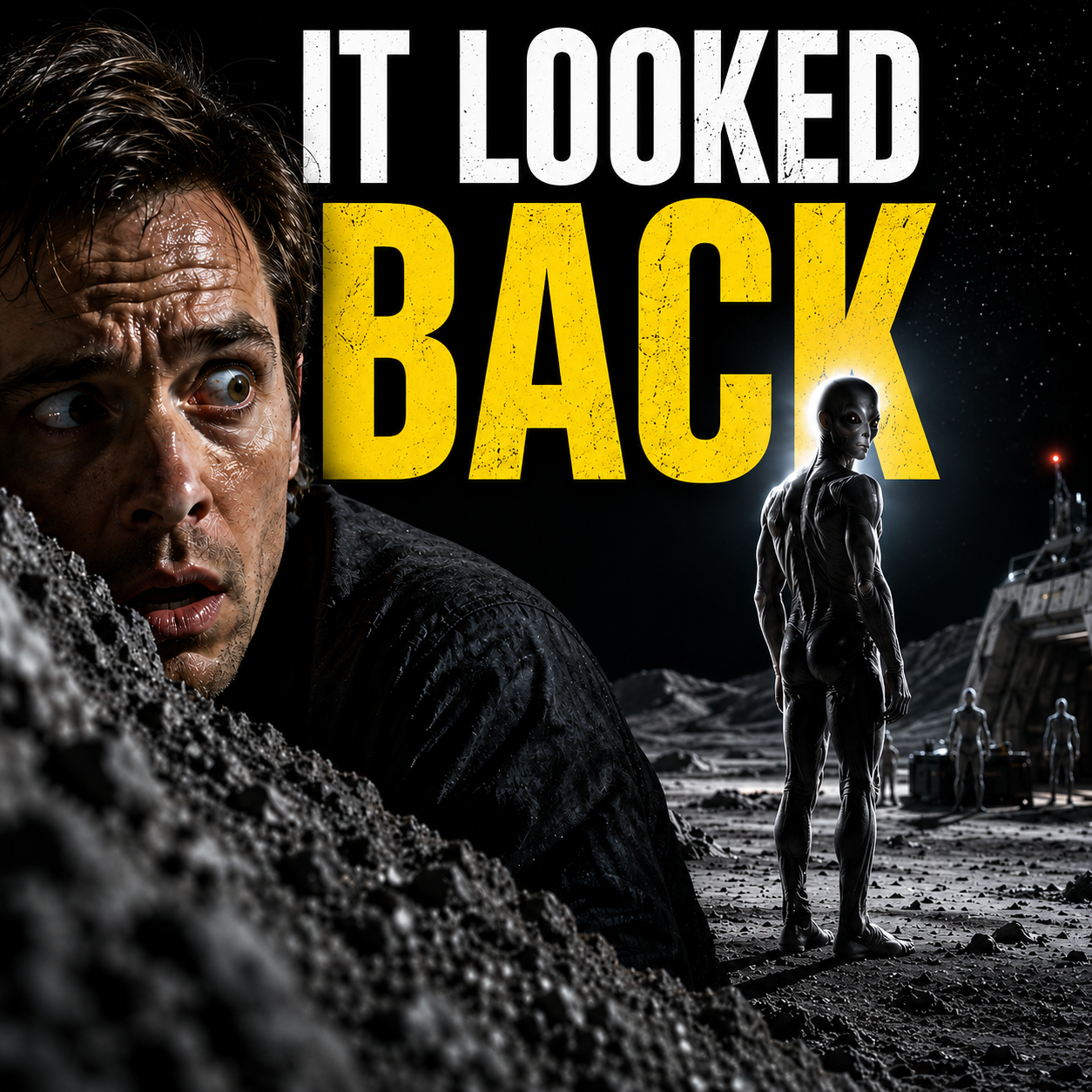
He Remote Viewed the Moon. Then Something Saw Him.
FAQs
What is the Ingo Swann humanoids on the Moon theory?
The Ingo Swann humanoids on the Moon theory suggests that there may be humanoid or extraterrestrial beings present on the Moon, as proposed by the late American parapsychologist and author Ingo Swann.
What evidence supports the Ingo Swann humanoids on the Moon theory?
Ingo Swann claimed to have remote viewed humanoid figures on the Moon during a research project with the Stanford Research Institute in the 1970s. However, there is no scientific evidence to support the existence of humanoids on the Moon.
Has the Ingo Swann humanoids on the Moon theory been scientifically proven?
No, the Ingo Swann humanoids on the Moon theory has not been scientifically proven. Remote viewing, the method Swann used to make his claims, is not considered a scientifically valid method for gathering evidence.
What do scientists and experts say about the Ingo Swann humanoids on the Moon theory?
Most scientists and experts dismiss the Ingo Swann humanoids on the Moon theory as pseudoscience and not based on credible evidence. The claims made by Swann are not considered to be scientifically valid.
Is there any credible evidence of humanoids or extraterrestrial beings on the Moon?
As of now, there is no credible evidence to support the existence of humanoids or extraterrestrial beings on the Moon. All claims of such sightings are considered to be speculative and not based on scientific evidence.