
Ingo Swann’s Moon Remote Viewing: A Fascinating Story
So, you’re curious about Ingo Swann and his work with remote viewing, specifically on the Moon? It’s a pretty wild story, and the short answer is, yes, Ingo Swann did claim to remotely view the Moon, and his experiences are a significant part of the history of remote viewing. It wasn’t just a casual peek; it involved specific experiments and claims that have intrigued and baffled people for decades. Let’s dive into what that was all about.
The whole idea of remote viewing didn’t just pop out of nowhere. It has its roots in a period of intense interest, particularly from government agencies, in exploring psychic phenomena.
Early Experiments and the CIA’s Interest
Back in the Cold War era, there was a real concern about what abilities the “other side” might possess. This led to the U.S. government, including the CIA and DIA, funding research into things like telepathy, precognition, and, eventually, remote viewing. They were looking for any potential advantage, even if it seemed a bit out there.
Stanford Research Institute (SRI)
A key player in this early research was the Stanford Research Institute (SRI). This is where Ingo Swann really got involved in a more structured, scientific setting. SRI was one of the primary places where controlled experiments in remote viewing were conducted, and Swann’s unique abilities made him a central figure.
Ingo Swann’s remarkable story of Moon remote viewing has captivated the interest of many, shedding light on the intriguing intersection of consciousness and space exploration. For those interested in delving deeper into the implications of his experiences and the broader context of remote viewing, a related article can be found at this link. This article explores the historical significance of remote viewing and its potential applications, providing a comprehensive overview of the subject.
Ingo Swann: The Man Behind the Claims
Ingo Swann wasn’t your typical scientist. He was an artist, a writer, and, by his own account, a natural psychic. His background and personality played a huge role in how remote viewing research developed.
An Unconventional Background
Swann had a lifelong history of experiencing what he described as psychic phenomena. This wasn’t something he was trained into; it was just part of his lived experience. When he encountered researchers at SRI, he brought this innate ability and a critical, often unconventional, perspective to their work. He wasn’t afraid to question the methodologies and push the boundaries of what was being explored.
His Role in Defining Remote Viewing
Swann is widely credited with coining the term “remote viewing.” More importantly, he was instrumental in developing and refining the protocols used in these experiments. He felt that early methods were too restrictive and didn’t allow for the phenomenon to manifest fully. He worked to create a more open-ended approach, which he believed was crucial for successful remote viewing.
The Famous Moon Viewing Experiment
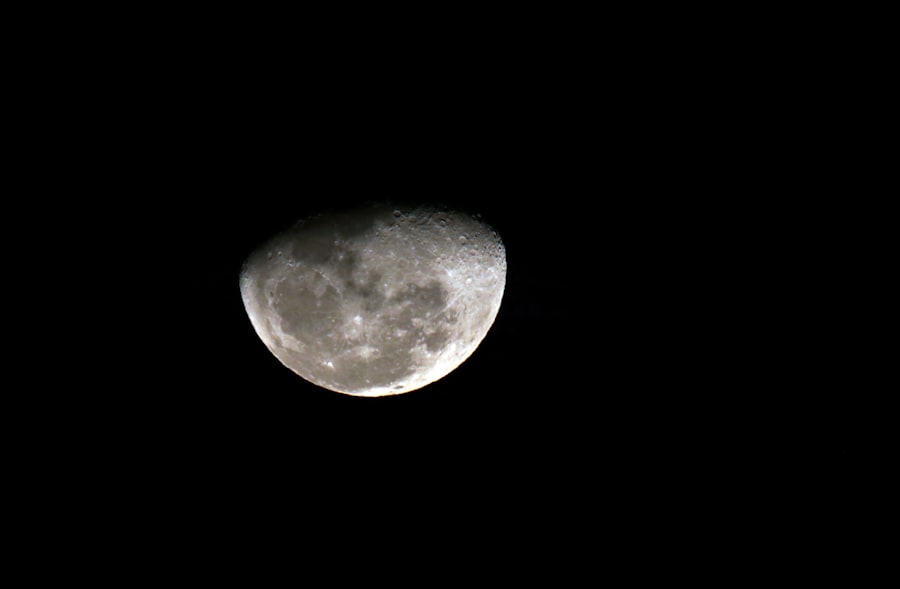
This is where things get really interesting. Swann’s alleged remote viewing of the Moon is one of the most talked-about incidents in the history of the field. It wasn’t just a general impression; it was a specific, targeted event.
The Setup: A Direct Request
The story goes that in 1973, Harold Puthoff, one of the SRI researchers working with Swann, was interested in the planet Jupiter. However, due to some technical issues with the SRI equipment, they decided to shift their focus. Puthoff then suggested they try the Moon. Swann, characteristically, was up for the challenge.
The Target: A Specific Point on the Moon
The crucial element of this experiment was the specificity of the target. Swann wasn’t just asked to “view the Moon.” He was given coordinates for a specific, supposedly unremarkable, location on the lunar surface. This was designed to ensure that his “viewing” was genuinely “remote” and not based on any pre-existing knowledge or imagination of what a typical moonscape might look like. He was given the latitude and longitude.
Swann’s Description: More Than Just Craters
According to Swann’s accounts, his remote viewing experience was detailed and multifaceted. He described not just the visual landscape of craters and dust but also what he perceived as anomalous structures or features that didn’t align with known scientific understanding at the time.
Perceived Structures and Anomalies
This is where the claims become particularly provocative. Swann didn’t just see rocks and dust. He reported sensing or seeing artificial-looking formations, structures that seemed “engineered,” and an overall impression of something that was not merely a natural celestial body. These descriptions were often vague but hinted at a presence or history on the Moon that was beyond conventional explanations.
The Challenge to Scientific Consensus
These descriptions were, of course, met with significant skepticism. Scientists at the time, and indeed today, operate on established models of lunar geology and history. Swann’s impressions, suggesting non-natural elements, directly challenged these established paradigms.
Verification and Controversy
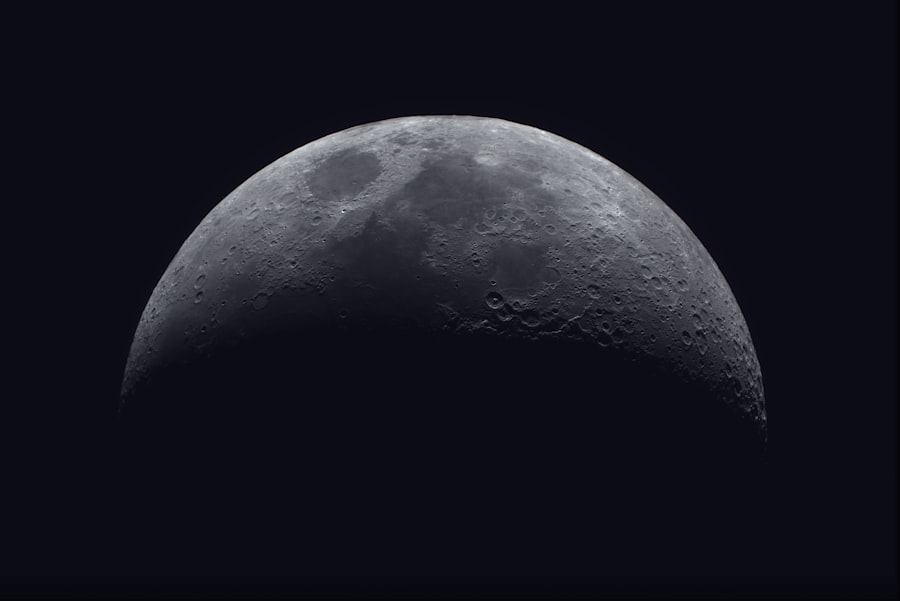
The big question with any extraordinary claim is verification. Did Swann’s descriptions match reality? This is where the story becomes a complex mix of evidence, interpretation, and ongoing debate.
The “Blind” Nature of the Experiment
A key aspect of the remote viewing protocol, and Swann’s Moon viewing, was its “blind” nature. Swann was not given any information about the target beforehand, other than the coordinates. The researchers themselves often didn’t know the specifics of what Swann might perceive, further aiming to prevent any unconscious signaling or cueing.
Comparing Descriptions to Lunar Data
After Swann provided his descriptions, researchers attempted to correlate them with available data about the Moon. This involved consulting lunar maps, photographic records, and scientific literature. The success of this comparison often depends on how one interprets Swann’s sometimes abstract or metaphorical descriptions.
The Role of Interpretation
This is a crucial point. Remote viewing descriptions are rarely like a photograph. They are often a blend of sensory impressions, emotions, and conceptual understandings. Interpreting these descriptions requires a degree of subjective judgment. What one person sees as a “strange formation,” another might dismiss as a trick of light or an imaginative embellishment.
The “Evidence” for Structures
Proponents of Swann’s work point to specific instances where his descriptions seemed to anticipate discoveries or features on the Moon that were not widely known or understood at the time of his viewing. However, critics argue that these correlations are often vague, post-hoc interpretations, or that Swann’s descriptions could have been generalized enough to fit many lunar locations.
Scientific Skepticism and Alternative Explanations
As you might expect, the scientific community has largely remained skeptical of Swann’s Moon viewing claims.
The Problem of Falsifiability
One of the main criticisms is the difficulty in rigorously falsifying the claims. If Swann describes something vague, and a later discovery vaguely matches it, it’s hard to definitively prove or disprove the claim. The lack of precise, measurable, and independently verifiable predictions makes it difficult to satisfy scientific standards.
Psychological and Cognitive Factors
Skeptics often attribute such experiences to psychological factors like confabulation, unconscious bias, wishful thinking, or even deliberate fabrication. The human mind is incredibly adept at finding patterns, even where none exist, and integrating new information into existing belief systems.
Ingo Swann’s remarkable story of Moon remote viewing has captivated many, shedding light on the intriguing intersection of consciousness and extraterrestrial exploration. For those interested in delving deeper into the broader implications of remote viewing and its historical context, a related article can be found at In The War Room, which explores various aspects of this fascinating subject. This article not only discusses Swann’s experiences but also examines the potential of human perception beyond conventional boundaries.
The Legacy and Impact of Moon Remote Viewing
| Metrics | Data |
|---|---|
| Remote Viewer | Ingo Swann |
| Target | The Moon |
| Story | Remote viewing of structures on the Moon |
| Outcome | Controversial and debated |
Regardless of whether you believe Swann’s claims about the Moon, his work and the experiments surrounding it have had a lasting impact on the field of psychic research.
Advancing Remote Viewing Protocols
Swann’s insistence on developing more effective protocols pushed the boundaries of how remote viewing was studied. His contributions helped to formalize the process, moving it from anecdotal accounts to more structured experimentation, even if those experiments remain controversial.
Fueling Further Research
The intrigue surrounding Swann’s Moon viewing, and other remote viewing experiments, spurred further research into psychic phenomena, both within government programs and in academic settings. It demonstrated a willingness, however temporary or limited, to explore unconventional avenues.
A Continuing Enigma
Ingo Swann’s Moon remote viewing remains a captivating and debated topic. It sits at the intersection of art, psychology, and the unexplained. Whether you view it as a groundbreaking demonstration of psychic ability or an intriguing product of the human mind, it’s undeniably a fascinating story that continues to spark curiosity. It highlights the enduring human desire to understand our universe and our place within it, even through unconventional means.
He Remote Viewed the Moon. Then Something Saw Him.
FAQs
What is the Ingo Swann Moon remote viewing story?
The Ingo Swann Moon remote viewing story refers to the claims made by Ingo Swann, a renowned psychic and remote viewer, about his alleged remote viewing sessions of the Moon. Swann claimed to have participated in a government-funded remote viewing project in which he remotely viewed the Moon and discovered various anomalies and structures.
When did Ingo Swann conduct the remote viewing sessions of the Moon?
Ingo Swann conducted the remote viewing sessions of the Moon in the early 1970s as part of a classified government program. The exact dates and details of the sessions have not been publicly disclosed due to the sensitive nature of the project.
What did Ingo Swann claim to have discovered during the remote viewing sessions of the Moon?
Ingo Swann claimed to have discovered various anomalies and structures on the Moon during his remote viewing sessions. He described seeing geometric shapes, artificial structures, and other unusual features that he believed were evidence of extraterrestrial activity or advanced civilizations.
Has there been any scientific evidence to support Ingo Swann’s claims?
There has been no scientific evidence to support Ingo Swann’s claims about his remote viewing sessions of the Moon. Remote viewing is a controversial and unproven practice, and the claims made by Swann have not been independently verified or substantiated by credible scientific research.
What is the general consensus on Ingo Swann’s Moon remote viewing story?
The general consensus on Ingo Swann’s Moon remote viewing story is that it is considered to be a controversial and unverified claim. While Swann was a respected figure in the field of psychic phenomena and remote viewing, his claims about the Moon have not been widely accepted or validated by the scientific community.