So, you’re curious about Ingo Swann and his remote viewing studies? The short answer is that Ingo Swann was a pivotal figure in the development and research of remote viewing, a purported psychic ability to perceive information about distant or unseen targets. He was instrumental in developing protocols and conducting studies, particularly with Stanford Research Institute (SRI), that aimed to explore and validate this phenomenon.
The Genesis of Remote Viewing: A Look at SRI
The story of Ingo Swann and remote viewing is deeply intertwined with the Stanford Research Institute (SRI). Back in the late 1960s and early 1970s, SRI became a hub for researchers interested in exploring the fringes of consciousness and parapsychology. They weren’t just dabbling; they were employing rigorous scientific methods, at least by the standards of the time, to investigate phenomena like extrasensory perception (ESP).
Early Explorations and the Birth of the Term
Before Ingo Swann became a household name in these circles, SRI was already engaged in research. However, it was Swann’s unique abilities and his insightful contributions that really shaped the direction of remote viewing research. He wasn’t just a subject; he was a collaborator, helping to refine the very concepts and methodologies being used. The term “remote viewing” itself is often attributed to this period at SRI, reflecting the idea of perceiving something from a distance, without conventional sensory input.
The CIA’s Involvement: Project SCANATE and STARGATE
It’s hard to talk about SRI and remote viewing without mentioning the U.S. government’s interest. The CIA, and later other intelligence agencies, funded research into psychic abilities, including remote viewing, as a potential intelligence-gathering tool. Projects like SCANATE (a precursor to STARGATE) and the larger STARGATE Project, which ran for decades, involved significant funding and oversight of research at institutions like SRI. This governmental backing lent a certain gravity to the research, even as it fueled controversy. The idea was to see if individuals could “see” or “view” remote locations, objects, or events that were classified or otherwise inaccessible.
Ingo Swann’s groundbreaking remote viewing experiments at the Stanford Research Institute (SRI) have sparked significant interest in the field of parapsychology and the potential of human consciousness. For those looking to delve deeper into the implications of these experiments and their impact on our understanding of perception and reality, a related article can be found at this link. This article explores the historical context and the scientific inquiries that arose from Swann’s work, providing valuable insights into the ongoing debate surrounding remote viewing and its applications.
Ingo Swann: The Visionary and The Scientist
Ingo Swann was far more than just a remote viewer; he was a complex individual with a keen intellect and a unique perspective on consciousness. His involvement with SRI wasn’t accidental; he possessed a natural aptitude for what he would later help define and teach.
A Natural Talent or Trained Skill?
One of the enduring questions surrounding remote viewing is whether it’s an innate talent or a skill that can be learned and honed. Swann, from his early experiences, seemed to possess a strong intuitive sense. However, his collaboration with SRI researchers like Hal Puthoff and Russell Targ led to the development of structured protocols designed to train others. This suggests a blend of inherent ability and learned technique. Swann himself often spoke about the importance of cultivating a receptive state of mind, a detachment from the analytical ego, which he believed was crucial for accessing this type of information.
The Protocols: Structuring the Unseen
Swann played a significant role in developing the practical methodologies that became known as remote viewing protocols. These were essentially step-by-step instructions designed to guide a person through the process of receiving psychic impressions. The goal was to standardize the experience, making it more amenable to scientific study and replication. These protocols often involved elements like:
- Target Concealment: The target would be randomly selected and kept hidden from the viewer.
- Blind Conditions: The viewer would have no knowledge of the target’s identity or nature.
- Structured Feedback: Information gained by the viewer would be recorded and later compared to the actual target, with careful analysis of the accuracy.
- Descriptive Language: Viewers were encouraged to describe their impressions using a specific vocabulary that distinguished between sensory data (shapes, colors, textures) and analytical interpretations.
Key SRI Remote Viewing Studies and Findings
The research conducted at SRI with Ingo Swann involved a variety of experimental designs, all aimed at testing the validity of remote viewing under controlled conditions. These studies are often cited by proponents of remote viewing, though they also face significant criticism from skeptics.
The “Crater” Study: A Landmark Experiment
One of the most frequently discussed studies involved Ingo Swann attempting to view the surface of Jupiter. The premise was simple: send him on a remote viewing “trip” to Jupiter. What made this study notable was the pre-arranged agreement to check the data against actual observations. The initial experiments were based on the idea of viewing a specific location on Jupiter, and Swann’s descriptions were compared to data that was not yet available at the time of the viewing. This added an element of predictive success if the descriptions aligned with later discoveries.
Detailed Descriptions and Unforeseen Details
During this experiment, Swann provided detailed descriptions of geological features, atmospheric phenomena, and what he perceived as large structures. The scientific community’s response to these findings was mixed. Proponents saw the uncanny accuracy of some of his descriptions as strong evidence for remote viewing. Critics, however, pointed to the inherent ambiguity in such descriptions and the potential for selective interpretation or confirmation bias. It’s worth noting that the available scientific literature from this era often highlights the “hits” while downplaying or not extensively detailing the “misses” or the ambiguities in the data.
The “Dimensional Shift” and Other Anomalous Findings
Beyond specific target viewing, some SRI studies explored more abstract aspects of remote viewing. Swann and others reported experiencing what they termed “dimensional shifts” or altered states of consciousness during remote viewing sessions. These experiences were often described as a sense of expanding awareness or interacting with information beyond the immediate physical environment.
Interpreting Subjective Experience
These subjective experiences were challenging to quantify and verify scientifically. While they were central to the remote viewers’ accounts, they often proved difficult to translate into objective data that could withstand rigorous scientific scrutiny. Researchers attempted to correlate these subjective states with physiological measurements, but the results remained largely inconclusive or open to multiple interpretations.
Critiques and Controversies
Despite the dedicated research at SRI, remote viewing has always been a subject of intense debate and skepticism. The studies involving Ingo Swann are no exception.
Methodological Concerns: Blinding and Bias
A primary area of criticism centers on the methodologies employed in remote viewing experiments. Critics argue that the studies, even those conducted at SRI, may not have been sufficiently “blinded.” This means there’s a possibility that subtle cues or information could have inadvertently leaked to the remote viewer, influencing their perceptions.
The “Clever Hans” Effect in Parapsychology
This concern is often related to the “Clever Hans” effect, named after a horse that appeared to perform arithmetic but was actually responding to subtle cues from its handler. In remote viewing, it’s argued that even without intentional deception, the researchers themselves might unconsciously provide hints or that the subject might pick up on subtle environmental or psychological cues. The nature of the feedback loop in remote viewing research has been a particular point of contention. If the feedback is not perfectly blind and objective, it can lead to a perceived correlation that isn’t truly indicative of psychic ability.
Reproducibility and Statistical Significance
A cornerstone of scientific validation is the ability to reproduce findings. Critics point to the fact that remote viewing studies, particularly those involving specific individuals like Swann, have proven difficult to replicate consistently and with strong statistical significance by independent researchers. While proponents might argue that remote viewing is a variable skill or that specific conditions are required for its manifestation, this lack of consistent reproducibility remains a significant hurdle for widespread scientific acceptance. The statistical analysis of results is also a complex area, with debates over whether the observed correlations are truly anomalous or simply within the bounds of chance, especially when considering the potential for selective reporting of positive results.
Ingo Swann’s groundbreaking work in remote viewing at the Stanford Research Institute (SRI) has sparked considerable interest in the field of psychic phenomena. His experiments not only challenged conventional scientific boundaries but also paved the way for further exploration into the capabilities of the human mind. For those looking to delve deeper into the implications of these studies, a related article can be found at In the War Room, which discusses the broader context of remote viewing and its impact on intelligence and military operations.
The Legacy of Ingo Swann and SRI
The work done at SRI with Ingo Swann has left an indelible mark on the landscape of parapsychology and the study of consciousness. Even with the ongoing debates, their research opened doors and sparked conversations.
Advancing Remote Viewing Techniques
Swann’s contributions weren’t just theoretical; they were practical. The protocols he helped develop provided a framework for others to explore remote viewing. These techniques, refined and adapted over time, are still used by individuals and groups who practice remote viewing today.
From Research Labs to Practice Groups
The transition from SRI’s research labs to independent practice groups and training programs highlights the enduring interest in remote viewing. While the scientific community may remain divided, the methodologies and principles that emerged from the SRI era continue to be a foundation for those seeking to develop and utilize their own perceived psychic abilities. The impact of Swann’s work is visible in the many books, courses, and communities dedicated to remote viewing that exist today.
A Continuing Dialogue on Consciousness
Ultimately, the research at SRI, with Ingo Swann at its forefront, contributed to a broader dialogue about the nature of consciousness and the potential limits of human perception. Whether one views remote viewing as a proven phenomenon or a series of psychological artifacts, the efforts to investigate it scientifically pushed the boundaries of how we think about mind and reality. The questions raised by these studies, about the interconnectedness of minds and information, continue to resonate. Even if definitive proof remains elusive, the exploration itself offers a glimpse into the persistent human curiosity about the unseen dimensions of existence.
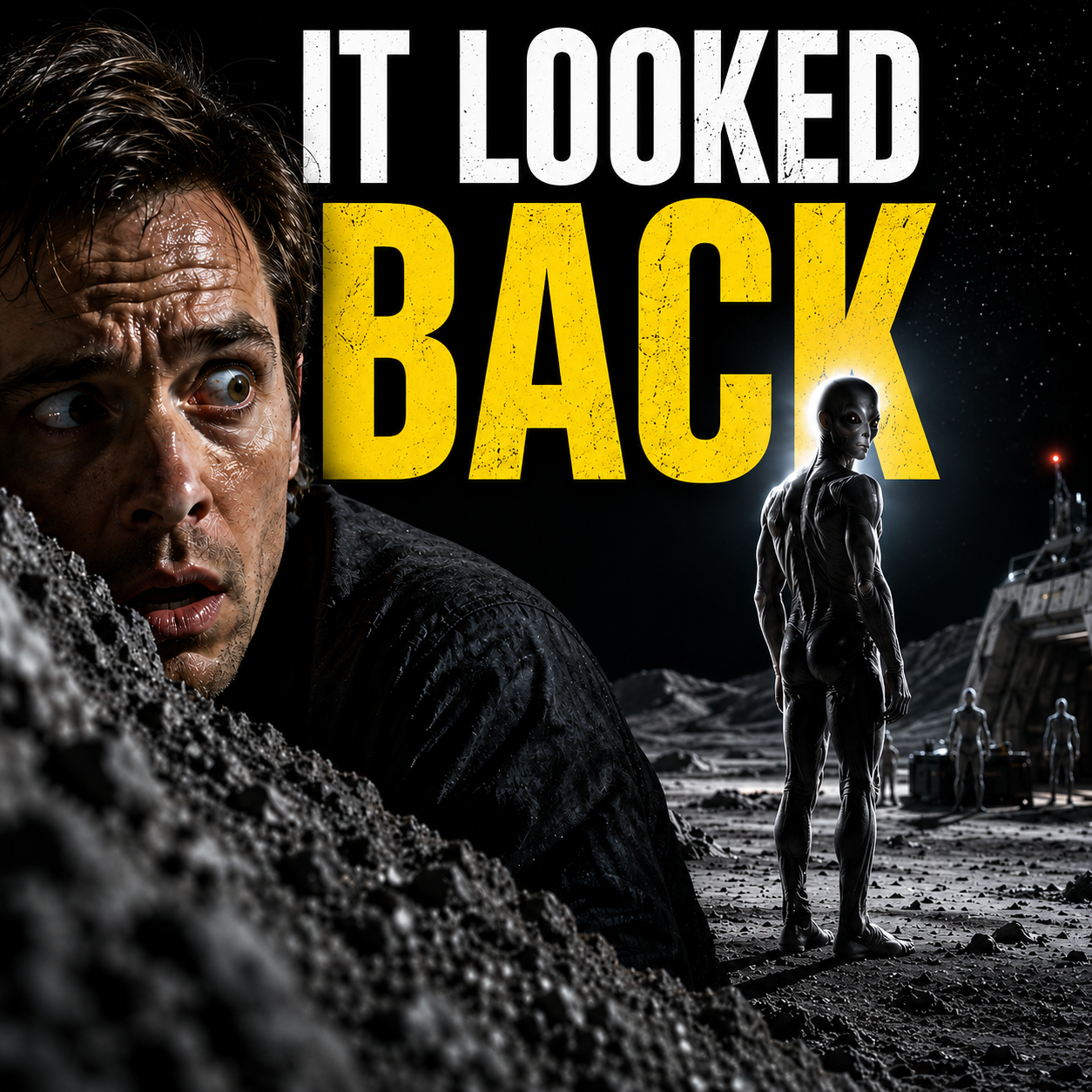
He Remote Viewed the Moon. Then Something Saw Him.
FAQs

What were the SRI remote viewing experiments conducted by Ingo Swann?
The SRI remote viewing experiments were a series of studies conducted by Ingo Swann and his colleagues at the Stanford Research Institute (SRI) in the 1970s and 1980s. The experiments aimed to investigate the phenomenon of remote viewing, which is the ability to perceive and describe details about a distant or unseen target using extrasensory perception.
What were the findings of the SRI remote viewing experiments?
The findings of the SRI remote viewing experiments suggested that remote viewing may have some validity as a phenomenon. Ingo Swann and his colleagues reported successful instances of remote viewing, where participants were able to accurately describe and perceive details about distant or hidden targets without any prior knowledge.
What impact did the SRI remote viewing experiments have on the field of parapsychology?
The SRI remote viewing experiments sparked significant interest and debate within the field of parapsychology. While some researchers viewed the findings as evidence of the existence of remote viewing and other forms of extrasensory perception, others remained skeptical and called for further investigation and replication of the results.
What is Ingo Swann’s role in the SRI remote viewing experiments?
Ingo Swann was a prominent figure in the SRI remote viewing experiments. He was a renowned psychic and artist who was known for his involvement in the development of the remote viewing protocol and his participation as a remote viewer in the experiments conducted at SRI.
What is the current status of research on remote viewing and parapsychology?
Research on remote viewing and parapsychology continues to be a topic of interest for some researchers, although it remains a controversial and often marginalized area of study within the scientific community. While some studies have reported positive results, the overall consensus within the mainstream scientific community remains skeptical of the existence of remote viewing and other forms of extrasensory perception.