
Has anyone ever found evidence of secret structures on the Moon using remote viewing? The short answer is: not in a way that’s been scientifically validated or widely accepted. While there are intriguing claims and passionate discussions within the remote viewing community, tangible, verifiable proof of hidden lunar bases or artificial formations remains elusive.
Remote viewing, for those unfamiliar, is a purported psychic ability to gather information about distant or unseen targets. Proponents suggest that trained individuals can access this information through mental imagery, intuition, or even detailed descriptions. When applied to celestial bodies like the Moon, the idea is that remote viewers might be able to “see” things that aren’t visible through traditional telescopes or even lunar probes. This concept has captured the imagination of many, fueling speculation about what might be hidden beyond our immediate sight.
The fascination with potential alien or human-made structures on the Moon isn’t new. For decades, people have scrutinized lunar photographs, seeking anomalies that hint at something more than natural geology. Remote viewing adds another layer to this intrigue, suggesting a way to bypass conventional observation methods and access hidden truths. However, the path from subjective experience to objective proof is a challenging one, especially in fields that lie outside mainstream scientific acceptance.
The Allure of the Unknown: Why the Moon?
The Moon has always held a special place in human consciousness. It’s our closest celestial neighbor, a constant presence in our night sky, and a subject of scientific exploration for centuries. This proximity, coupled with its stark, seemingly barren landscape, makes it a prime candidate for speculative theories. When people consider extraterrestrial life or hidden human endeavors, the Moon often comes to mind as a logical, albeit perhaps cliché, location.
Its perceived emptiness, paradoxically, makes it a perfect canvas for imagining what could be there. The idea of something hidden beneath the surface, or in obscure craters, feeds into a deep-seated human curiosity about secrets and discoveries. It taps into the thrill of the unknown, the possibility of finding something extraordinary in an otherwise familiar place.
In exploring the intriguing concept of remote viewing, particularly in relation to alleged secret structures on the Moon, one can find a wealth of information that delves into the mysteries surrounding our lunar neighbor. A related article that discusses these fascinating topics in depth can be found at this link: Remote Viewing and Secret Moon Structures. This piece examines the claims and experiences of individuals who have purportedly accessed hidden knowledge about the Moon through remote viewing techniques, shedding light on the ongoing debate regarding extraterrestrial life and advanced civilizations.
Remote Viewing: A Different Kind of Exploration
Remote viewing is a methodology that aims to bridge the gap between what we can physically perceive and what might exist beyond our normal senses. It’s often described as a mental discipline, requiring focus, training, and a willingness to trust one’s intuitive perceptions. The core principle is that consciousness is not confined to the physical body, and therefore, it can extend its awareness to remote locations.
When applied to the Moon, remote viewers are tasked with focusing their minds on the lunar target. They might be given coordinates, a general description, or simply the word “Moon.” The resulting impressions are then recorded and analyzed. These can range from abstract feelings and colors to detailed descriptions of landscapes, objects, and even perceived activities.
The allure for those interested in “secret moon structures” lies in the idea that remote viewing might be able to pick up on things that are deliberately concealed or simply not visible to the naked eye or standard cameras. It’s seen as a tool for uncovering the “real” Moon, beyond the surface presented to us.
The Process: How Remote Viewers Approach the Moon
The actual process of remote viewing, especially when targeting celestial bodies, can be quite structured for practitioners. It’s not typically a passive daydreaming session. Instead, it involves a series of protocols and techniques designed to elicit clear, objective impressions.
- Targeting: A specific lunar location might be chosen, perhaps a crater known for unusual features in photographs, or a general area of interest. Sometimes, a blind target is used, where the remote viewer has no prior information about the location they are “viewing.”
- Initial Impressions: The viewer begins by focusing their attention and allowing impressions to surface. This might involve a flood of sensory data – visual, auditory, tactile, or even olfactory. They might sketch what they see, jot down keywords, or record audio notes.
- Data Analysis: Once the viewing session is complete, the recorded data is analyzed. This is where the interpretation comes in. Viewers look for patterns, recurring themes, and specific details that seem significant.
The challenges here are immense. Differentiating between genuine psychic impressions and subconscious projections, imagination, or even information inadvertently picked up from prior knowledge (if the target isn’t truly blind) is a constant hurdle.
Common Themes in Lunar Remote Viewing Sessions
When remote viewers report on the Moon, certain themes tend to emerge, often fueled by existing popular culture narratives or speculative theories. These can include:
- Underground structures: Many reports speak of vast, cavernous spaces beneath the lunar surface, sometimes described as bases, tunnels, or even cities.
- Artificial geometry: Descriptions might include precise shapes, straight lines, or geometric patterns that contrast with the often rounded, natural forms of lunar geology.
- Advanced technology: Some viewers report sensing or seeing elements that suggest advanced technology, such as strange machinery, energy sources, or even functional spacecraft.
- Human or non-human presence: While not always explicit, many interpretations point towards the presence of intelligent beings, either past or present.
It’s important to note that these are interpretations of subjective experiences. What one person describes as a “vast underground cavern” might be another’s perception of a large lava tube, or something entirely different.
Notable Claims and Anecdotes: What People Say They’ve Seen
Over the years, numerous individuals and groups have come forward with claims of remote viewing secret structures on the Moon. These anecdotes, while compelling to those who believe in the validity of remote viewing, often lack the corroborating evidence required for scientific acceptance.
One of the most frequently cited examples comes from the U.S. military’s Stargate Project, a research program that investigated psychic phenomena, including remote viewing, for intelligence gathering. While the project was declassified, its findings remain controversial, and specific claims about lunar structures are generally not detailed in publicly released documents. However, within the remote viewing community, there are whispers and alleged reports of successful, albeit often vaguely described, remote viewings of unusual lunar features.
- The “Alien Base” Reports: Some remote viewers have claimed to “see” entire alien bases, complete with domes, towers, and even activity within them. These descriptions often vary significantly, which, proponents argue, is natural given the subjective nature of perception. Critics, however, point to the inconsistencies as evidence of imagination rather than psychic accuracy.
- Underground Cities: A recurring theme is the existence of subterranean cities or habitats. These are often described as being vast and complex, suggesting a long-term presence. The concept of underground structures makes sense for surviving harsh lunar conditions, adding a layer of logical appeal to these claims.
- Artificial Craters and Anomalies: Beyond bases, some viewers have reported seeing craters or geological formations that appear to be artificially created. These might be perfectly circular, unnaturally deep, or exhibit strange internal structures not typical of natural impacts.
It’s crucial to approach these claims with a critical yet open mind. The individuals making them are often sincere in their beliefs, and their experiences are real to them. The challenge is in verifying these experiences externally.
Analyzing the Evidence (or Lack Thereof)
When considering the evidence for secret moon structures through remote viewing, we immediately encounter a significant hurdle: the nature of remote viewing itself. It is an inherently subjective phenomenon. The data generated by remote viewers – their sketches, written descriptions, and verbal accounts – are personal interpretations of mental impressions.
- Subjectivity vs. Objectivity: The core issue is bridging the gap between a subjective experience and objective, verifiable proof. For a claim to be scientifically accepted, it must be repeatable, measurable, and observable by independent parties using standardized methods. Remote viewing, as it is currently practiced, struggles with this.
- Ambiguity and Interpretation: Lunar landscapes are already filled with formations that can appear unusual or artificial at first glance. Lava tubes, impact craters with peculiar ejecta patterns, and light and shadow play can all contribute to misinterpretations. When combined with the ambiguous nature of remote viewing impressions, it becomes easy for viewers to project existing theories or expectations onto their perceptions.
- Lack of Corroboration: The most significant “lack of evidence” is the absence of independent, external corroboration. If remote viewers were consistently and accurately identifying specific, verifiable artificial structures on the Moon, we would expect other remote viewers to report similar findings, or for these findings to correspond with anomalies detected by conventional scientific instruments (even if those anomalies are currently unexplained). This level of consistent, independently verifiable agreement has not materialized.
The scientific community generally views remote viewing as pseudoscience, lacking robust, reproducible evidence to support its claims. This doesn’t mean that the experiences of remote viewers are invalid to them, but rather that the phenomenon has not met the rigorous standards of scientific proof.
The Scientific Perspective: What Conventional Science Says
From a mainstream scientific standpoint, the concept of secret Moon structures discovered through remote viewing is not supported by evidence. Science relies on observable, measurable, and repeatable phenomena.
- Lunar Exploration Data: Decades of lunar exploration, from the Apollo missions to modern orbital probes like the Lunar Reconnaissance Orbiter (LRO), have provided a wealth of data about the Moon’s surface and subsurface. While these missions have revealed fascinating geological features and confirmed the Moon’s dynamic history, they have not uncovered any evidence of artificial structures or hidden bases. The resolution of the LRO’s cameras, for example, is incredibly high, capable of discerning objects down to the size of a small car. If there were large, obvious structures, they would likely have been detected.
- The Scientific Method: Science operates on the principle of falsifiability – the idea that a hypothesis must be able to be proven wrong. Claims about secret Moon structures through remote viewing are difficult to falsify. If a remote viewer “sees” something, and it’s later found to be natural geology, the explanation is often that the viewer was mistaken or misinterpreted their impressions. There’s no definitive test to prove the absence of a psychic perception.
- Skepticism and Alternative Explanations: Scientific skepticism is not about disbelief; it’s about demanding evidence. In the absence of verifiable proof, scientists tend to favor explanations grounded in known physical laws and phenomena. For perceived anomalies on the Moon, natural geological processes, optical illusions, and misinterpretations of images are the most likely explanations.
It’s important to distinguish between what science has proven and what remains unknown or speculative. While science has thoroughly mapped and analyzed the Moon, the vastness of space and the limitations of our current technology mean there are still mysteries. However, these mysteries are generally approached with scientific inquiry, not psychic exploration.
In recent discussions about the intriguing concept of remote viewing, many enthusiasts have been captivated by the idea of secret structures on the Moon. A fascinating article that delves deeper into this topic can be found on the website, where it explores various theories and accounts related to these mysterious lunar formations. For those interested in uncovering more about this subject, the article can be accessed through this link. It offers a compelling look at how remote viewing might reveal hidden truths about our celestial neighbor.
The Challenge of Proof and Validation
The central challenge in validating claims of secret Moon structures through remote viewing lies in the very nature of both the claimed structures and the method used to “discover” them.
Bridging the Subjective-Objective Divide
This is perhaps the most significant hurdle. Remote viewing generates subjective data – personal impressions, feelings, and mental imagery. For these claims to gain traction beyond those who already subscribe to the validity of remote viewing, they need to be translated into objective, verifiable data.
- Replicable Results: A key tenet of scientific proof is replicability. If remote viewing is a reliable method for detecting hidden structures, then different remote viewers, working independently, should be able to consistently identify the same structures at the same locations. This has not been widely demonstrated in a way that satisfies scientific scrutiny.
- Precise Localization: Claims often involve general descriptions. For instance, “there’s a large structure underground near the Sea of Tranquility.” For scientific validation, this would need to translate into precise coordinates that, when investigated by conventional means (e.g., radar penetration, subsurface seismic analysis), yield concrete evidence of artificiality.
The Role of Existing Lunar Imagery
Ironically, the very imagery that fuels much of the speculation can also be a source of misunderstanding.
- Pareidolia and Apophenia: Humans are wired to find patterns, even in random data. Pareidolia is the tendency to perceive a specific, often meaningful image in a random or ambiguous visual pattern (think seeing faces in clouds). Apophenia is the tendency to perceive meaningful connections between unrelated things. These psychological phenomena can lead people to interpret natural lunar features as artificial.
- Image Anomalies: Lunar photographs can contain anomalies due to lighting conditions, camera artifacts, processing errors, or the inherent strangeness of extraterrestrial geology. These are often the “evidence” that remote viewers might then latch onto or claim to have “seen” further details about.
The frustration for proponents of remote viewing is that they feel they are perceiving reality, while skeptics see either misinterpretation of subjective data or natural phenomena explained away. The gulf between these perspectives is immense, and for now, the evidence remains firmly on the side of natural explanations and the lack of verifiable artificial structures.
The Future of Lunar Exploration and Psychic Phenomena
While the current scientific consensus holds that there’s no evidence of secret Moon structures discovered via remote viewing, this doesn’t necessarily mean the conversation is over. The future of lunar exploration and our understanding of consciousness are both evolving fields.
- Advancements in Lunar Science: As our technology for exploring the Moon improves, we will undoubtedly uncover more about its geology and history. This increased knowledge will either provide explanations for perceived anomalies or potentially reveal truly inexplicable phenomena. Future missions may employ more advanced subsurface scanning techniques that could, in theory, detect buried structures of any kind, natural or artificial.
- Evolving Understanding of Consciousness: Research into consciousness, including phenomena like remote viewing, continues. While mainstream science remains skeptical, some areas of study explore the potential of consciousness to interact with or perceive reality in ways we don’t yet fully understand. Breakthroughs in neuroscience or quantum physics, however speculative, could one day offer new perspectives.
For now, the idea of secret Moon structures uncovered through remote viewing remains firmly in the realm of speculation and belief for those within the remote viewing community. The scientific community awaits concrete, verifiable evidence that aligns with established physical laws and rigorous methodologies. Until then, the Moon will continue to hold its mysteries, inviting both scientific inquiry and imaginative exploration. The journey of discovery, whether through telescopes or the mind’s eye, is far from over.
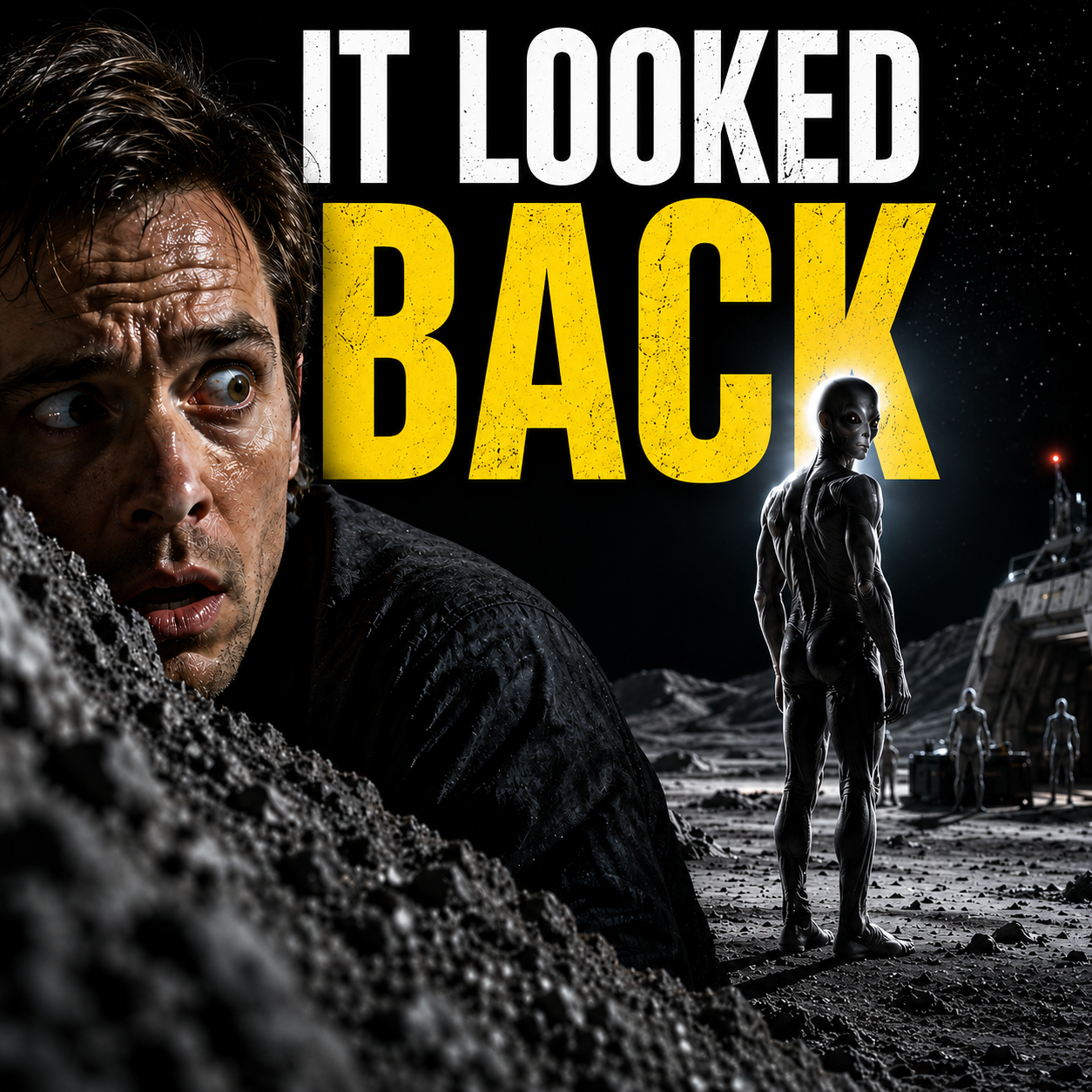
He Remote Viewed the Moon. Then Something Saw Him.
FAQs

What is remote viewing?
Remote viewing is the practice of seeking impressions about a distant or unseen target using paranormal means, such as extrasensory perception (ESP) or “sensing” with the mind.
What are the secret Moon structures that remote viewing claims to reveal?
According to some proponents of remote viewing, there are alleged secret structures on the Moon that are not visible to the naked eye or through conventional telescopes. These structures are said to be evidence of extraterrestrial activity or advanced civilizations.
Is there any scientific evidence to support the claims of remote viewing secret Moon structures?
The scientific community widely regards remote viewing as pseudoscience, and there is no empirical evidence to support the existence of secret Moon structures as revealed through remote viewing.
What do skeptics say about remote viewing secret Moon structures?
Skeptics argue that remote viewing is not a reliable or valid method for obtaining information about distant or unseen targets, and that claims of secret Moon structures are based on subjective interpretations and not supported by objective evidence.
What are some alternative explanations for the alleged secret Moon structures revealed through remote viewing?
Some alternative explanations for the alleged secret Moon structures include natural geological formations, optical illusions, or misinterpretations of data or images. These explanations are based on scientific principles and evidence, rather than paranormal or supernatural claims.