
So, did Ingo Swann actually see aliens on the moon? It’s a question that pops up a lot when you delve into the fascinating, and sometimes strange, world of remote viewing and psychic phenomena. The short answer? According to Swann himself and the accounts associated with his work, yes, he believed he did. But as with most things in this arena, the story is a bit more nuanced than a simple “yes.” It’s not about little green men in flying saucers necessarily, but rather about what Swann perceived through his remote viewing sessions and how those perceptions have been interpreted and discussed.
Ingo Swann was a pioneer, a central figure in the development and application of remote viewing, a controversial technique used to gather information about distant or unseen targets using psychic means. He was deeply involved with government-funded research into these abilities, most notably the Star Gate Project, which ran for decades and explored the potential of psychic phenomena for intelligence gathering.
What Exactly is Remote Viewing?
Remote viewing isn’t about mind-reading or clairvoyance in the traditional sense. It’s described as a disciplined mental process where an individual, the remote viewer, attempts to perceive information about a designated target, which could be a place, a person, an object, or even an event, without any conventional sensory input. The idea is that consciousness isn’t strictly bound by physical proximity, and information about any point in space-time can be accessed. Swann was one of the most skilled and prolific remote viewers, and his experiences often pushed the boundaries of what was considered possible.
The Star Gate Project’s Interest in the Moon
The moon, being Earth’s closest celestial neighbor, naturally became a subject of interest for remote viewers. The idea was to see if psychic abilities could provide information about its surface, its history, or any potential anomalies. These sessions were often conducted under controlled conditions, with protocols designed to minimize bias and ensure the information gathered was truly from the target. Swann participated in many such sessions, and it was during one of these that the supposed alien encounter occurred.
Ingo Swann, a renowned psychic and artist, claimed to have had extraordinary experiences during his time with the CIA’s Stargate Project, including a controversial assertion that he encountered extraterrestrial beings on the Moon. This intriguing topic has sparked much debate and curiosity among enthusiasts of the paranormal and space exploration. For those interested in delving deeper into the mysteries surrounding Swann’s claims and the broader implications of his experiences, you can read more in this related article: here.
Swann’s Moon Vision: The Alleged Structures and Beings
The core of the “aliens on the moon” narrative stems from specific remote viewing sessions conducted by Ingo Swann. He described seeing artificial structures and even beings on the lunar surface. These weren’t fleeting images; they were detailed perceptions that left a significant impression on him and those involved in documenting his work.
The Initial Session: A Glimpse of the Unexplained
According to accounts, one of the key sessions involved Swann being tasked with viewing the moon. He reportedly began to perceive elements that were clearly not natural formations. He described seeing large, geometrically precise structures, almost like ruins or abandoned bases, scattered across the lunar landscape. These were not the craters and mountains that dominate our visual understanding of the moon.
Detailed Descriptions of Lunar Structures
Swann’s descriptions included details about the material composition of these structures, their scale, and their apparent age. He spoke of smooth surfaces, sharp angles, and an overall impression of advanced, non-human engineering. This was a far cry from the barren, lifeless rock we typically associate with the moon.
The Encounter with Lunar Inhabitants
The most sensational aspect of these sessions was Swann’s alleged perception of beings associated with these structures. He didn’t describe them as the stereotypical little grey aliens. Instead, his descriptions varied, sometimes hinting at tall, slender figures, or beings that seemed more ethereal or energy-based. The key was that he perceived conscious entities that were not human and were clearly inhabiting or utilizing these lunar installations.
The “Tall, Thin Beings”
One recurring description from Swann involved tall, thin beings. These entities were often described as being seen near or within the structures. The details were often vague, as is common in remote viewing where impressions can be more conceptual than photographic, but the sense of intelligent life was strong.
The “Shadowy Figures”
At other times, Swann reported seeing more shadowy or indistinct figures, suggesting that perhaps these beings were not always in a fully manifest or easily perceivable form. This ambiguity is also typical of psychic impressions, where the mind tries to interpret subtle energetic cues.
Skepticism and Alternative Explanations: A Grounded Perspective
It’s crucial to approach such extraordinary claims with a healthy dose of skepticism. The world of psychic phenomena is fraught with challenges in terms of scientific validation and objective verification. While Swann was a highly regarded remote viewer, his experiences remain within the realm of subjective perception.
The Nature of Remote Viewing Data
Remote viewing data is inherently subjective. It’s interpreted by the viewer and then often by an analyst. This process is prone to individual biases, preconceptions, and the inherent limitations of human perception. What one person perceives as an alien structure, another might interpret as a geological anomaly or a trick of the mind.
Pareidolia and Expectation Bias
One common explanation for unusual perceptions is pareidolia, the tendency to perceive a specific, often meaningful image in a random or ambiguous visual pattern. In the context of remote viewing, especially when there’s an expectation of finding something unusual, the mind can readily construct meaning from vague impressions. Expectation bias, where a viewer unconsciously seeks out or interprets information that confirms their pre-existing beliefs, also plays a significant role.
Lack of Corroborating Physical Evidence
The most significant challenge to Swann’s claims is the complete absence of any corroborating physical evidence. Despite numerous lunar missions by various space agencies, including unmanned probes and manned landings, no alien structures, artifacts, or inhabitants have ever been detected by conventional scientific means. If there were artificial structures and beings on the moon, it’s highly probable that they would have been discovered by now.
The Moon Landings and Their Findings
The Apollo missions, in particular, conducted extensive surveys and landings on the moon. Astronauts explored various regions, collected geological samples, and deployed scientific instruments. Their extensive visual records and scientific data show a moon that is geologically diverse but devoid of any evidence of alien civilization.
The Problem of Verifiability
The fundamental issue with claims based on remote viewing is verifiability. While the experience of remote viewing might be genuine for the individual, the information received cannot be independently verified through traditional scientific methods. This doesn’t necessarily mean the information is false, but it means it exists outside the realm of empirical proof.
The Legacy of Swann’s Claims: Intrigue and Debate
Regardless of the validity of his specific moon encounter, Ingo Swann’s work and his claims have left an indelible mark on the discourse surrounding psychic abilities and unexplained phenomena. His moon visions, whether real or imagined, continue to fuel speculation and debate.
The Influence on Paranormal Communities
Swann’s accounts have become a cornerstone for many within the paranormal and UFO enthusiast communities. They are often cited as compelling evidence for extraterrestrial presence and advanced psychic capabilities. These stories resonate with those who feel traditional science has limitations and that there are deeper mysteries to explore.
The “Cover-Up” Narrative
For some, the lack of official acknowledgment or physical evidence for Swann’s lunar discoveries simply reinforces a narrative of a global cover-up. The idea is that governments or powerful organizations are aware of these truths but actively suppress them to maintain control or prevent mass panic.
Critiques and Rebuttals within the Remote Viewing Field
Even within the remote viewing community, there are varying interpretations and critiques of Swann’s moon encounter. Some proponents of remote viewing might argue that the targets are complex and that Swann’s perceptions were advanced even for experienced viewers. Others might suggest that the information received was symbolic or metaphorical, rather than literal.
The Importance of Methodological Rigor
Critics often point to the need for even greater methodological rigor in remote viewing protocols, especially when dealing with highly speculative targets. They argue that without extremely strict controls, it becomes difficult to distinguish between genuine psychic perception and elaborate mental constructions.
Ingo Swann, a well-known figure in the realm of remote viewing, claimed to have encountered extraterrestrial beings on the Moon during his sessions. His assertions have sparked considerable debate among enthusiasts and skeptics alike, leading to various interpretations of his experiences. For those interested in exploring this intriguing topic further, you might find a related article that delves into the implications of Swann’s claims and the broader context of UFO phenomena. You can read more about it in this insightful piece on UFOs and Remote Viewing.
Conclusion: An Enduring Mystery
| Question | Answer |
|---|---|
| Did Ingo Swann see aliens on Moon? | There are claims that Ingo Swann, a remote viewer, saw alien structures on the Moon during a remote viewing session, but these claims are not scientifically proven. |
So, did Ingo Swann encounter aliens on the moon? The definitive, scientifically verifiable answer remains a resounding “we don’t know.” Ingo Swann believed he did, and his detailed descriptions have captured the imagination of many. However, without concrete evidence, these accounts exist as compelling personal testimonies within the fascinating, often debated, landscape of psychic exploration.
The Power of Belief and Interpretation
Ultimately, the question of Swann’s moon encounter highlights the enduring human fascination with the unknown and our drive to find meaning in the unexplained. Whether one accepts his claims at face value or attributes them to the intricacies of the human mind, the story of Ingo Swann’s alleged lunar visit serves as a potent reminder of the mysteries that continue to intrigue us, both within the cosmos and within ourselves. The moon, in this narrative, becomes more than just a celestial body; it becomes a canvas for our deepest questions about life, consciousness, and our place in the universe.
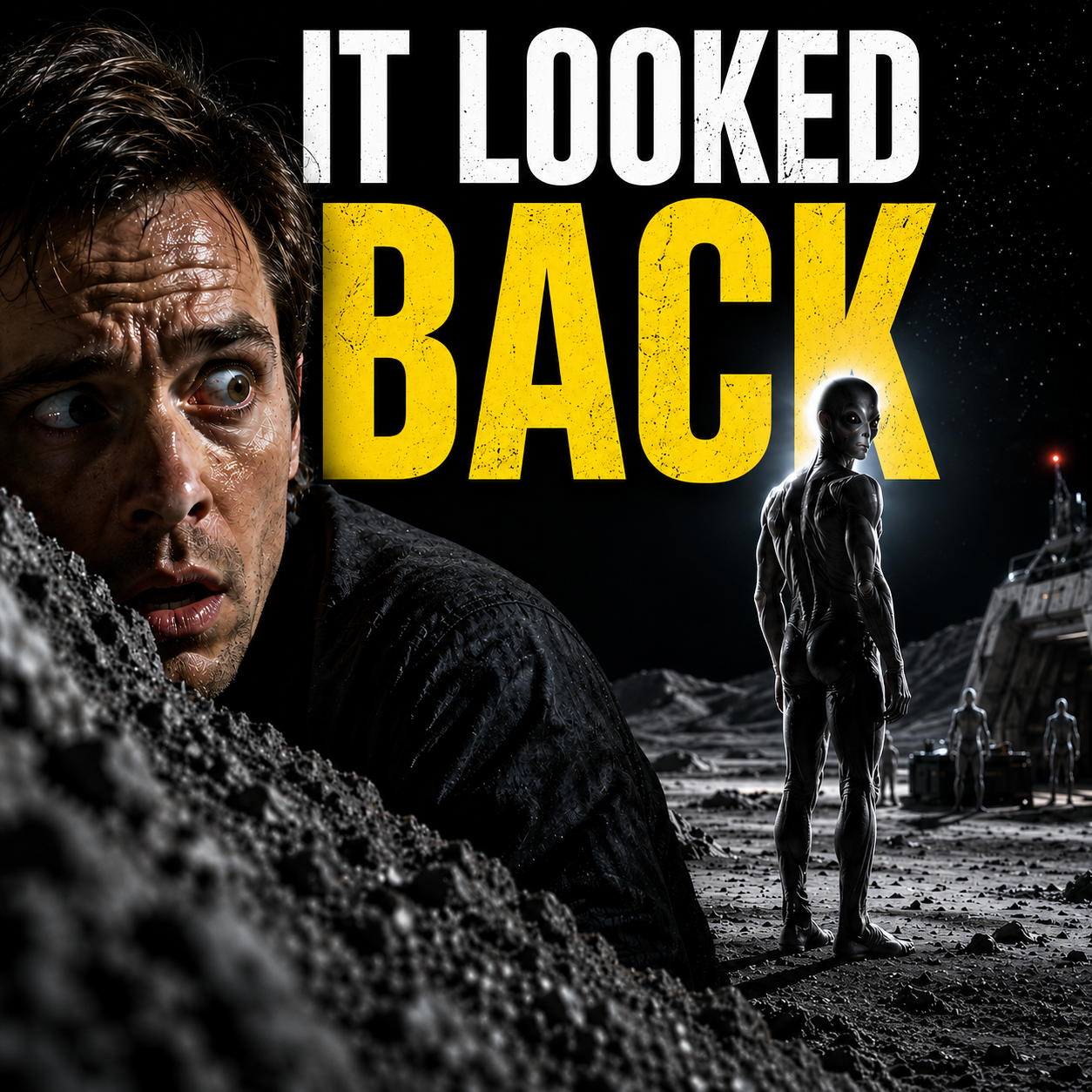
He Remote Viewed the Moon. Then Something Saw Him.
FAQs
1. Who is Ingo Swann and what is his connection to the Moon?
Ingo Swann was a renowned psychic, artist, and author who claimed to have been involved in a government-sponsored remote viewing program. He is known for his alleged psychic abilities and his interest in extraterrestrial phenomena, including claims of having remote viewed the Moon.
2. What is the claim that Ingo Swann saw aliens on the Moon?
Ingo Swann claimed that during a remote viewing session in 1975, he perceived the presence of extraterrestrial beings on the Moon. He described seeing humanoid figures and structures on the lunar surface, which he believed to be evidence of alien activity.
3. Is there any evidence to support Ingo Swann’s claim of seeing aliens on the Moon?
There is no scientific or empirical evidence to support Ingo Swann’s claim of seeing aliens on the Moon. His account is based on his personal experiences and alleged psychic perceptions, which are not verifiable through conventional scientific methods.
4. How has the scientific community responded to Ingo Swann’s claim?
The scientific community generally regards Ingo Swann’s claim of seeing aliens on the Moon as unsubstantiated and lacking credibility. Remote viewing and psychic phenomena are not considered valid scientific practices, and there is no consensus among scientists regarding the existence of extraterrestrial life on the Moon based on Swann’s claims.
5. What is the significance of Ingo Swann’s claim in the context of extraterrestrial research?
Ingo Swann’s claim of seeing aliens on the Moon has been cited by some UFO enthusiasts and conspiracy theorists as potential evidence of extraterrestrial activity. However, it is important to approach such claims with skepticism and critical thinking, as they lack empirical evidence and scientific validation.