Military deception operations, often cloaked in secrecy, represent a sophisticated and multifaceted aspect of warfare. Far from being mere battlefield tricks, these operations are meticulously planned strategies designed to mislead enemy decision-makers, influence their perceptions, and ultimately gain a tactical or strategic advantage. The history of warfare is replete with examples, from ancient stratagems to modern, technologically driven campaigns. Uncovering these operations requires a keen understanding of military doctrine, intelligence gathering, and the psychological elements that underpin conflict. This article delves into the nature of secret military deception operations, exploring their objectives, methods, historical evolution, and the challenges inherent in their detection and analysis.
At its core, military deception is the deliberate manipulation of an adversary’s perceptions. It aims to induce the enemy to take actions that are advantageous to oneself and detrimental to the adversary. This involves a complex interplay of intelligence, psychological operations, and the skillful presentation of false or misleading information. The success of any deception operation hinges on its ability to exploit the enemy’s biases, assumptions, and operational patterns.
Defining Deception: More Than Just a Ruse
Misdirection and False Information: The Core Mechanics
Psychological Exploitation: Targeting the Enemy Mind
Military deception is not simply about presenting a false picture. It is about understanding the psychological vulnerabilities of an adversary. This involves analyzing their decision-making processes, their levels of trust, their fear, and their desires. By tailoring deception to these psychological levers, commanders can create scenarios where the enemy is more likely to react in a predictable and favorable way. For instance, a feigned weakness might be used to lure an enemy into an ambush, exploiting their overconfidence or aggressive tendencies. Conversely, a display of overwhelming strength, even if fabricated, could be used to deter an attack. The psychological dimension is crucial; a perfectly executed technical deception can fail if it doesn’t resonate with the target’s mental state.
The Role of Intelligence in Deception
Intelligence plays a dual role in deception operations. Firstly, it is essential for identifying the adversary’s intelligence capabilities, their biases, and their decision-making apparatus. Understanding what information the enemy is likely to receive, how they process it, and who their key decision-makers are is paramount. Secondly, intelligence is used to create the plausible deniability and the supporting details that make a deception believable. This might involve fabricating false intelligence reports, planting misleading documents, or even orchestrating staged events that generate specific intelligence. The continuous flow of intelligence about the enemy’s reactions is also vital for adapting and refining the deception as it progresses.
Secret military deception operations have played a crucial role throughout history, often determining the outcomes of significant conflicts. For a deeper understanding of these tactics and their implications, you can explore a related article that delves into various historical examples and strategies employed in military deception. To read more, visit this article.
Historical Precedents: A Legacy of Stratagem
The art of military deception is as old as warfare itself. From the Trojan Horse to the elaborate feints of World War II, history is replete with examples of its efficacy. These historical instances provide invaluable lessons about the principles and practicalities of deception.
Ancient Warfare: Ingenuity and Illusion
The Napoleonic Era: Grand Illusions on the Battlefield
World War I: The Dawn of Industrialized Deception
World War II: The Apex of Deception as a Strategic Weapon
Operation Mincemeat: A Masterclass in Misdirection
The case of Operation Mincemeat is a classic illustration of how a carefully crafted deception can alter the course of a campaign. In 1943, British intelligence sought to mislead the Germans about the Allied invasion of Sicily. They concocted a fictitious persona, Major William Martin, a British Royal Marine, and placed falsified documents on his body, which was then dressed as a corpse and set adrift in Spanish waters. The intention was for the body to be discovered by the Spanish, who were neutral but known to pass intelligence to the Germans. The documents detailed a planned invasion of Greece and Sardinia, diverting German forces away from Sicily. The deception was a resounding success, leading to a significant weakening of Axis defenses in Sicily, which ultimately facilitated the Allied invasion. This operation highlights the importance of meticulous planning, the exploitation of neutral intermediaries, and the creation of seemingly innocuous but highly sensitive false information.
Operation Bodyguard: The Orchestration of Multiple Deceptions
Operation Bodyguard was an umbrella term for a series of deceptions undertaken by the Allies in the lead-up to the Normandy landings (D-Day) in 1944. Its primary objective was to convince the Germans that the main Allied invasion would occur elsewhere, primarily at the Pas-de-Calais, and that the Normandy landings were a diversion. This massive undertaking involved a multitude of deception techniques, including:
- Fictitious armies: The creation of the First United States Army Group (FUSAG) under the command of General George S. Patton. This phantom army, complete with dummy tanks, aircraft, and radio traffic, was located in southeastern England, appearing to be poised for an invasion across the narrowest part of the English Channel.
- Double agents: Utilizing double agents to feed misleading information to the German high command.
- Radio deception: Mimicking troop movements through simulated radio communications and traffic.
- Spoof landings: Conducting minor landings and demonstrations in other areas to further confuse the enemy.
The success of Operation Bodyguard was instrumental in ensuring that the German forces remained largely concentrated in the Pas-de-Calais, leaving Normandy with significantly fewer defenders than anticipated. This strategic deception reduced Allied casualties on D-Day and was a critical factor in the success of the Normandy campaign.
Modern Deception: Technology and the Information Age
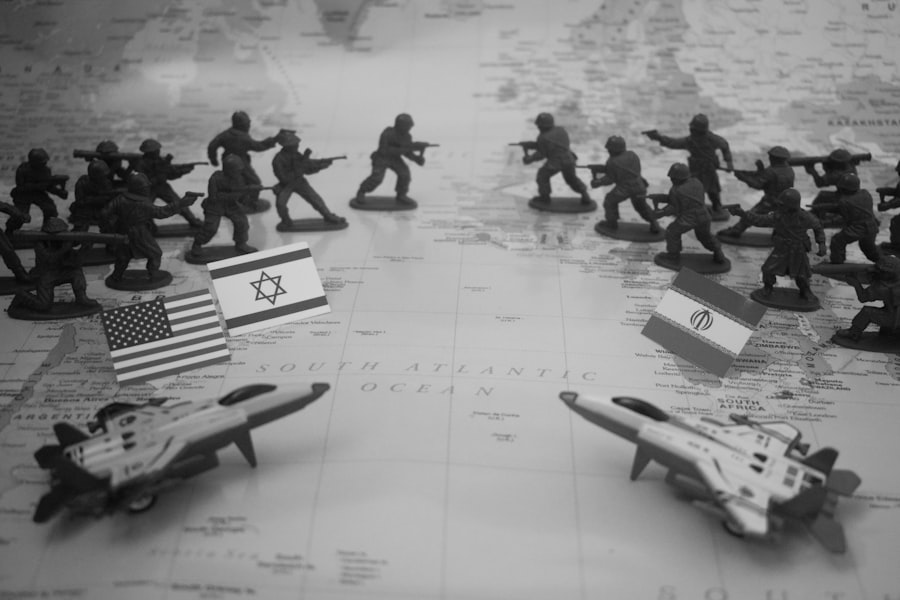
The advent of sophisticated technology and the pervasive nature of the information age have transformed military deception. While the fundamental principles remain, the tools and scale of these operations have evolved dramatically, presenting new challenges for detection and analysis.
The Digital Battlefield: Cyber and Information Warfare
In the modern era, deception operations increasingly leverage cyberspace and information warfare. This can involve spreading disinformation online, hacking into enemy communication systems to inject false messages, or creating sophisticated cyber deceptions that mimic legitimate network activity. The speed and reach of the internet allow for deception to be disseminated rapidly and to a wide audience, making it a powerful tool for influencing public opinion and sowing discord within an adversary’s society, as well as directly impacting military operations.
The Blurring Lines: Real and Virtual Operations
The distinction between real and virtual operations is becoming increasingly blurred. Deception can now be executed entirely within the digital realm, with no physical manifestation. This makes it incredibly challenging for adversaries to discern what is real and what is fabricated. For example, a simulated cyber-attack that appears to be a genuine breach could be used to draw enemy cyber defenses to a particular location, leaving them vulnerable to a real attack elsewhere. The psychological impact of witnessing a seemingly successful cyber-operation can be as potent as a physical one.
Algorithmic Deception: The Future of Misdirection
The rise of artificial intelligence and advanced algorithms presents a new frontier for military deception. AI can be used to generate highly convincing fake content, such as deepfake videos or synthesized audio, making it incredibly difficult to distinguish between genuine and fabricated information. Furthermore, AI can analyze vast amounts of data to identify optimal times and methods for deploying deceptive messages, tailoring them to exploit specific vulnerabilities within an adversary’s cognitive processes. The potential for algorithmic deception to operate at an unprecedented scale and speed poses a significant challenge for intelligence agencies aiming to uncover these operations.
Uncovering the Invisible: Methods of Detection and Analysis
The clandestine nature of military deception operations makes their detection and analysis a formidable task. It requires a multidisciplinary approach, combining human intelligence, technical surveillance, and sophisticated analytical techniques.
The Role of Human Intelligence (HUMINT)
Human intelligence remains a critical component in uncovering deception. This involves cultivating sources within the adversary’s military and intelligence agencies who can provide firsthand accounts of plans, intentions, and the information that is being disseminated. Effective HUMINT can reveal the underlying intent behind observed enemy actions, flagging discrepancies that might indicate a deception operation. Agents can provide context and nuance that technical means alone cannot capture.
Technical Surveillance and Signal Intelligence (SIGINT)
Technical surveillance, particularly Signal Intelligence (SIGINT), plays a vital role in monitoring enemy communications, electronic emissions, and network activity. By analyzing patterns, anomalies, and deviations from expected behavior, intelligence analysts can identify potential deception indicators. For example, unusually synchronized radio silence, the sudden appearance of new communication channels, or the consistent dissemination of specific narratives could all be red flags. However, sophisticated deception operations often employ techniques to mask their activities or to create noise that obscures the true signal.
Pattern of Life Analysis: Spotting Anomalies
Pattern of Life analysis involves meticulously studying the typical routines and behaviors of military units or adversary forces. When these patterns are disrupted or exhibit unusual deviations, it can signal a deliberate attempt to mislead. For instance, if a unit that is typically engaged in training suddenly relocates its assets or intensifies communication in a particular sector without a clear operational reason, it could be part of a deception designed to draw attention or create a false impression of an impending attack. This requires continuous monitoring and a deep understanding of normal operational tempos.
Deception Detection Through Adversary Analysis
A crucial aspect of uncovering deception is understanding the adversary’s strategic objectives and their propensity for deception. By analyzing their past behavior, their doctrinal approaches to warfare, and their known psychological traits, intelligence agencies can better anticipate when and how they might employ deception. This includes understanding their operational priorities, their risk tolerance, and their perceived vulnerabilities. If an adversary is facing a strategic disadvantage, they are more likely to resort to deception to level the playing field.
Secret military deception operations have played a crucial role in shaping the outcomes of various conflicts throughout history. These operations often involve intricate strategies designed to mislead adversaries and protect vital information. For a deeper understanding of the complexities and implications of such tactics, you can explore a related article that delves into the nuances of military deception and its historical significance. This insightful piece can be found at In the War Room, where you can learn more about the art and science behind these covert maneuvers.
The Ethical and Legal Quandaries of Deception
| Operation Name | Objective | Duration | Success Rate |
|---|---|---|---|
| Operation Bodyguard | To deceive the Germans about the location of the D-Day invasion | 6 months | High |
| Operation Mincemeat | To deceive the Axis powers about the invasion of Sicily | 2 months | Successful |
| Operation Fortitude | To deceive the Germans about the location of the Normandy invasion | Several months | High |
The use of military deception, while a recognized tool of warfare, is not without its ethical and legal complexities. The line between legitimate strategic deception and actions that could be considered unlawful or immoral can be a fine one.
The Morality of Deceiving an Enemy
The very act of deceiving, even in warfare, raises moral questions. However, within the context of armed conflict, deception is generally considered a legitimate tactic. The justification often lies in the belief that it can reduce casualties, shorten conflicts, and achieve objectives with less bloodshed than a direct, overt confrontation. The principle of proportionality and military necessity are often invoked to defend the ethical use of deception.
International Law and Deception Operations
International law, particularly the laws of armed conflict, does not explicitly prohibit military deception. However, certain aspects of deception could potentially violate international humanitarian law if they lead to the commission of war crimes. For example, deceiving an adversary into believing that a hospital is a military target would be a violation. The key distinction lies in whether the deception causes harm to protected persons or objects. Declarations of surrender, for instance, are protected under international law and cannot be feigned as part of a deception operation.
The Challenge of Attribution and Accountability
One of the most significant challenges in dealing with modern deception operations, especially those conducted in the digital realm, is attribution and accountability. When false information is spread by anonymous actors or through sophisticated misinformation campaigns, it can be extremely difficult to identify the perpetrators and hold them accountable. This lack of clear attribution can embolden state and non-state actors to engage in deceptive practices with less fear of reprisal.
The Future of Military Deception and its Countermeasures
As technology continues to advance, military deception operations will undoubtedly become more sophisticated and pervasive. The ability to detect and counter these operations will require constant innovation and adaptation.
The Arms Race in Deception and Counter-Deception
The landscape of military deception is characterized by an ongoing arms race. As new methods of deception are developed, so too are new techniques for detecting and countering them. This dynamic push and pull ensures that both offensive and defensive capabilities are constantly evolving. Innovations in artificial intelligence, machine learning, and advanced analytics are likely to play a significant role in both the creation and the detection of future deception operations.
Enhancing Intelligence Capabilities
To effectively counter sophisticated deception, intelligence agencies must continually enhance their capabilities. This includes investing in advanced analytical tools, fostering inter-agency collaboration, and developing highly skilled personnel who can interpret complex data and identify subtle indicators of deception. The ability to process and analyze vast amounts of information in near real-time will be crucial.
The Importance of Strategic Communication and Counter-Narratives
In the age of information warfare, strategic communication and the development of credible counter-narratives are essential tools for combating deception. By proactively disseminating accurate information and exposing deceptive tactics, nations can inoculate their populations and allies against manipulation. The ability to rapidly and effectively counter false narratives is paramount in preserving trust and maintaining strategic advantage.
Uncovering secret military deception operations is a continuous and evolving challenge. It demands a deep understanding of historical precedents, a keen awareness of modern technological capabilities, and a relentless pursuit of truth in an environment often characterized by deliberate obfuscation. As warfare continues to adapt, so too must the methods employed to reveal and neutralize the invisible strategies that seek to shape its outcome.
The Vietnam Plot That Made Soldiers Fear Their Own Guns
FAQs
What are secret military deception operations?
Secret military deception operations are strategic activities conducted by military forces to mislead the enemy and manipulate their perceptions, beliefs, and actions. These operations aim to conceal true intentions, capabilities, and activities, while simultaneously creating false impressions and confusion.
What are the objectives of secret military deception operations?
The objectives of secret military deception operations include protecting sensitive information, concealing military movements and intentions, creating uncertainty and confusion among enemy forces, and ultimately gaining a tactical or strategic advantage in warfare.
How are secret military deception operations conducted?
Secret military deception operations are conducted through a variety of means, including the use of false communications, dummy equipment and installations, feints, camouflage, and disinformation campaigns. These operations often involve careful planning, coordination, and execution by specialized military units.
What are some historical examples of secret military deception operations?
Historical examples of secret military deception operations include Operation Fortitude during World War II, where the Allies used fake radio traffic and dummy equipment to deceive the Germans about the location of the D-Day invasion. Another example is Operation Mincemeat, where the British used a deceased individual to plant false documents to mislead the Axis powers about the invasion of Sicily.
What are the ethical considerations of secret military deception operations?
Ethical considerations of secret military deception operations revolve around the principles of honesty, integrity, and the potential for civilian casualties or collateral damage. While deception is a common tactic in warfare, there are ongoing debates about the ethical boundaries and implications of using deception as a military strategy.