The geopolitical landscape surrounding Taiwan has become increasingly fraught, with the People’s Republic of China (PRC) reiterating its claim over the island and demonstrating a growing military capability that raises serious concerns in Washington and Taipei. In this tense environment, the United States plays a crucial role in bolstering Taiwan’s self-defense capabilities, primarily through the provision of advanced weaponry. The efficacy of Taiwan’s defense hinges not just on the quantity of arms, but critically on the quality and suitability of these weapons in deterring or repelling a potential invasion. This article will delve into the key categories of US-supplied weapons that are indispensable for Taiwan’s survival, examining their strategic importance and the specific systems that form the backbone of its defensive posture.
The rationale behind US arms sales to Taiwan is rooted in the Taiwan Relations Act of 1979, which obliges the United States to provide Taiwan with “arms of a nature to enable Taiwan to maintain a sufficient self-defense capability.” This policy, often referred to as “porcupine strategy,” aims to make Taiwan a difficult and costly target for the PRC, thereby deterring an attack. The weapons provided are designed to counter the PRC’s growing strengths, particularly its large navy, air force, and missile capabilities, while leveraging Taiwan’s inherent geographic advantages – the Taiwan Strait, a formidable natural barrier. The focus is on asymmetric warfare capabilities, enabling Taiwan to inflict unacceptable damage on an invading force and to sustain a prolonged defense.
Air Defense Systems: Guardians of the Sky
The ability to control the airspace over Taiwan is paramount. A successful invasion would likely begin with an air and missile barrage to degrade Taiwan’s defenses and establish air superiority. Therefore, robust air defense systems are a cornerstone of Taiwan’s security, and US-provided systems represent a critical component of this layered defense. These systems are designed to detect, track, and intercept a wide range of aerial threats, from fighter jets and bombers to cruise and ballistic missiles.
Patriot Missile Defense System
The MIM-104 Patriot is arguably the most recognized and crucial air defense missile system supplied by the United States to Taiwan. This surface-to-air missile (SAM) system is a mobile, all-weather system designed to counter tactical ballistic missiles, cruise missiles, and advanced aircraft. Taiwan has been a recipient of Patriot systems for decades, continually upgrading to newer variants, currently operating the PAC-2 and PAC-3 configurations. The PAC-3 variant is particularly significant as it is designed for “hit-to-kill” intercepts, meaning it destroys incoming missiles through kinetic impact rather than a proximity fuse, offering a higher probability of success against highly maneuverable ballistic missiles.
Strategic Importance of the Patriot
The strategic importance of the Patriot system lies in its ability to directly counter the PRC’s considerable missile arsenal. Beijing possesses a large and increasingly sophisticated inventory of ballistic and cruise missiles, many of which are specifically designed to target Taiwan. The Patriot batteries, strategically positioned across the island, can create “no-fly” zones and intercept these incoming threats, preventing catastrophic damage to critical infrastructure, military bases, and civilian centers. Its mobility allows for rapid redeployment, making it harder for an adversary to target and neutralize all batteries. Furthermore, its integration with Taiwan’s broader air defense network, including radar systems, enables early warning and a coordinated response. The psychological impact of a robust air defense network is also significant, potentially contributing to deterrence by raising the perceived cost of an attack.
Evolution and Upgrades
Taiwan’s ongoing upgrades to its Patriot systems, particularly to the PAC-3 MSE (Missile Segment Enhancement) variant, are crucial. The MSE version offers extended range, increased speed, and enhanced lethality against a wider spectrum of threats, including hypersonic missiles. This continuous technological advancement ensures that Taiwan’s air defense capabilities remain relevant and effective against the evolving capabilities of the PRC’s missile forces. The US commitment to providing these upgrades is a clear signal of its dedication to Taiwan’s security.
FIM-92 Stinger Man-Portable Air Defense System (MANPADS)
While the Patriot provides strategic area defense, the FIM-92 Stinger MANPADS offers crucial tactical air defense, empowering individual units to defend themselves against low-flying aircraft and helicopters. These shoulder-fired missiles are relatively lightweight, portable, and easy to operate, making them ideal for infantry, special forces, and even civilian militias. Taiwan’s procurement of Stingers allows for widespread deployment, creating a distributed and difficult-to-suppress air defense network.
Advantages of Stinger for Asymmetric Warfare
The Stinger’s value in an asymmetric warfare scenario cannot be overstated. In a conflict, Taiwan’s forces may be dispersed and operating in challenging terrain. Stingers provide these dispersed units with a means to engage enemy helicopters and aircraft that might attempt close air support or troop insertion. Their low cost and widespread availability enable Taiwan to equip a significant portion of its fighting force, increasing the overall threat to airborne assets. The psychological impact on enemy aircrews is also a factor; knowing that even small units can pose a lethal threat can influence operational planning and execution. The ability to deny the enemy freedom of movement in the low-altitude airspace is a critical component of Taiwan’s defense.
Integration and Training
Effective utilization of Stingers requires proper training and integration into battlefield communication networks. Taiwan’s forces receive extensive training on these systems, ensuring they can be employed effectively under combat conditions. The ability to quickly identify targets, acquire them, and launch a missile accurately is vital. The US provides not only the hardware but also the training and logistical support necessary for their sustained operational readiness.
In light of the ongoing tensions in the Taiwan Strait, the discussion surrounding the necessary U.S. weapons to effectively defend Taiwan has become increasingly critical. A related article that delves into this topic can be found on In The War Room, which explores the strategic implications and the types of military support that may be required to bolster Taiwan’s defense capabilities. For more insights, you can read the article here: In The War Room.
Anti-Ship Missiles: Projecting Power Across the Strait
The Taiwan Strait is the primary theater of any potential conflict, and control of its waters is a critical determinant of success. Taiwan’s defense strategy heavily relies on its ability to deny the PRC’s navy freedom of maneuver and to inflict significant damage on amphibious assault forces and naval escorts. US-supplied anti-ship missiles (AShMs) are key to achieving this objective, allowing Taiwan to project power across the strait and to make any invasion prohibitively costly.
Harpoon Anti-Ship Missiles
The RGM-84 Harpoon is a venerable and highly effective anti-ship missile that has been a staple of naval warfare for decades. Taiwan has procured various versions of the Harpoon, equipping its frigates, corvettes, and even land-based launch platforms. The Harpoon’s ability to fly at low altitudes, its radar guidance system, and its potent warhead make it a significant threat to surface vessels.
Deterring Amphibious Assaults
The primary role of Harpoon missiles in Taiwan’s defense is to deter and disrupt a PRC amphibious assault. Any invasion force would need to cross the strait, and the Harpoon’s range and destructive power make it a potent weapon against the large amphibious landing ships and their escort vessels that would be essential for such an operation. By being able to strike these ships from a distance, Taiwan’s forces can break up invasion formations, sink key vessels, and sow chaos among the attacking fleet, significantly complicating and potentially halting an invasion before it reaches Taiwanese shores.
Coastal Defense Batteries
The deployment of Harpoon missiles in coastal defense batteries provides Taiwan with a mobile and flexible land-based anti-ship capability. This allows for the defense of key coastal areas and straits without requiring dedicated naval vessels, further enhancing the island’s defensive posture. These batteries can be concealed and moved, making them difficult targets for enemy air or naval reconnaissance.
Naval Strike Missile (NSM) and Navalized Anti-Ship Missiles
More recent US arms sales have included the Naval Strike Missile (NSM), a more advanced anti-ship missile with enhanced capabilities. The NSM offers a longer range, a smaller radar cross-section, and sophisticated targeting algorithms, making it more difficult to detect and counter. Taiwan’s acquisition of NSMs signifies a commitment to modernizing its anti-ship capabilities and staying ahead of the PRC’s naval advancements.
Advanced Threat Mitigation
The NSM’s advanced features are designed to counter modern naval defenses, including electronic warfare systems and advanced missile defense systems on PRC warships. Its low-sea-skimming profile and stealth characteristics make it a challenging target for enemy radar. The ability to engage from greater distances further enhances Taiwan’s ability to strike before being detected. This technological edge is crucial in a conflict scenario where every advantage counts.
Armor and Ground Warfare Capabilities: Defending the Homeland
While the initial phases of a conflict might focus on air and sea, the ultimate defense of Taiwan’s territory relies on its ground forces. The PRC’s People’s Liberation Army (PLA) possesses a substantial ground force, and Taiwan must be equipped to engage and repel any landings or incursions. US-supplied armor and other ground warfare systems are vital for these defensive operations.
M1A2 Abrams Main Battle Tanks
The M1A2 Abrams is widely considered the most capable main battle tank in the world. Taiwan’s acquisition of these tanks represents a significant upgrade to its armored forces. While the terrain of Taiwan might present some challenges for heavy armor, the Abrams’ advanced protection, firepower, and mobility make it a formidable platform for engaging enemy armor and providing crucial fire support for infantry.
Overcoming Potential Incursions
In the event of a PRC amphibious landing or airborne assault, M1A2 Abrams tanks would be essential for repelling enemy ground forces. Their ability to withstand enemy fire and to deliver devastating artillery barrages would be crucial in urban combat and in defending key strategic locations. The psychological impact of facing such a well-armed and protected tank would also be significant for invading ground troops.
Logistics and Training Challenges
The introduction of the M1A2 Abrams into Taiwan’s inventory also presents significant logistical and training challenges. Maintaining and operating such complex machinery requires substantial resources, including specialized training for crews and maintenance personnel, as well as a robust supply chain for spare parts and ammunition. The US commitment to providing ongoing support for these systems is therefore critical to their long-term effectiveness.
Bradley Fighting Vehicles
The M2 Bradley Fighting Vehicle is a versatile armored personnel carrier and infantry fighting vehicle. It provides protected transport for infantry, allowing them to advance under fire and to dismount in a more secure manner. The Bradley also possesses its own armament, including a 25mm cannon and TOW anti-tank missiles, allowing it to engage enemy armor and other threats.
Enhancing Infantry Survivability
The Bradley’s primary contribution to Taiwan’s defense is enhancing the survivability and combat effectiveness of its infantry. In a scenario where PRC forces might attempt to establish beachheads or advance inland, Bradleys can provide crucial fire support and mobility to Taiwanese ground troops. Their ability to suppress enemy positions and to engage armored threats allows infantry to maneuver more effectively and to achieve their objectives.
Fire Support and Reconnaissance
Beyond troop transport, the Bradley’s armament makes it a valuable platform for fire support and reconnaissance. Its cannon can engage light armored vehicles and fortified positions, while its TOW missiles offer a potent anti-tank capability. This versatility allows the Bradley to fulfill multiple roles on the battlefield, making it a highly adaptable asset for Taiwan’s ground forces.
Artillery and Rocket Systems: Reaching Across the Strait
The ability to project fire across the Taiwan Strait, both for defensive purposes and to potentially disrupt PRC forces before they can launch an invasion, is a key element of Taiwan’s strategy. US-supplied advanced artillery and rocket systems play a critical role in this capability.
HIMARS (High Mobility Artillery Rocket System)
The M142 HIMARS is a wheeled, highly mobile rocket artillery system that can launch a variety of munitions, including rockets and guided missiles, with impressive accuracy and range. Taiwan’s acquisition of HIMARS is a significant step in its ability to conduct precision strikes against high-value targets deep within the PRC’s territory or against naval vessels in the Strait.
Deterrence and Pre-emptive Strike Capabilities
HIMARS provides Taiwan with a credible deterrence capability. The ability to strike key military installations, logistics hubs, or even naval concentrations on the mainland with precision makes the cost of an invasion significantly higher for the PRC. Furthermore, in a scenario where an invasion is imminent, HIMARS could be employed in a pre-emptive strike role to degrade the PRC’s ability to launch its forces. The psychological impact of knowing that their forward staging areas are vulnerable is a potent deterrent.
Precision and Range
The precision and extended range of HIMARS are its key advantages. Its guided rockets and missiles allow for pinpoint accuracy, minimizing collateral damage while maximizing effectiveness against specific targets. This capability is essential for striking critical infrastructure and military assets without causing widespread destruction. The mobility of HIMARS also allows it to rapidly deploy, fire, and relocate, making it difficult for the enemy to target.
M777 Howitzers
The M777 is a lightweight, towed 155mm howitzer that offers a significant improvement in range and accuracy over older artillery pieces. Taiwan’s procurement of M777s enhances its conventional artillery capabilities, allowing it to provide effective fire support to its ground forces and to engage targets at longer distances.
Supporting Ground Operations
In any ground engagement on Taiwan, the M777 howitzers would provide crucial indirect fire support. Their ability to deliver precise artillery barrages on enemy positions allows Taiwanese ground forces to advance and to engage enemy units with reduced risk. The extended range of the M777 means that these howitzers can operate from safer positions, while still effectively supporting front-line troops.
Area Denial and Suppression
Beyond direct fire support, M777s can also be used for area denial and suppression. By bombarding key routes or concentrations of enemy forces, they can prevent the enemy from maneuvering effectively or reinforcing their positions. This ability to shape the battlefield through indirect fire is a vital component of Taiwan’s defensive strategy.
In light of the ongoing tensions in the Taiwan Strait, discussions around the necessary US weapons to defend Taiwan have gained significant attention. A related article explores the strategic implications of military support for Taiwan and the types of systems that could enhance its defense capabilities. For more insights on this critical issue, you can read the full analysis in the article found here. This examination sheds light on the complexities of U.S. foreign policy and its commitment to Taiwan’s security.
Electronic Warfare and Intelligence, Surveillance, and Reconnaissance (ISR) Capabilities: The Unseen Battle
In modern warfare, the ability to understand the enemy’s intentions, disrupt their communications, and protect one’s own electronic infrastructure is as critical as possessing advanced weaponry. US-provided electronic warfare (EW) and ISR capabilities are vital for Taiwan to gain and maintain an information advantage over the PRC.
Advanced Radar and Surveillance Systems
Taiwan relies on a network of advanced radar and surveillance systems, many of which are supplied or enhanced by the US. These systems are crucial for early warning of incoming aerial and missile threats, as well as for tracking enemy naval movements. This includes systems like the AN/FPS-117 long-range 3D radar.
Early Warning and Situational Awareness
The ability to detect and track enemy aircraft and missiles at the earliest possible moment is paramount for Taiwan’s survival. Advanced radar systems provide the crucial early warning needed to scramble fighter jets, deploy air defense assets, and mobilize ground forces. This comprehensive situational awareness allows Taiwan to react effectively to threats and to make informed decisions during a conflict.
Tracking Naval Movements
ISR capabilities also extend to monitoring the movements of the PRC’s navy. By tracking warships, amphibious vessels, and support ships, Taiwan can gain valuable intelligence about potential invasion routes and timings. This intelligence allows for more effective deployment of defensive assets and can influence strategic decision-making.
Electronic Warfare Systems
US-supplied electronic warfare systems are designed to disrupt enemy communications, radar, and navigation systems. This can include jammers, decoys, and electronic intelligence gathering equipment. By degrading the PRC’s ability to communicate and coordinate its forces, Taiwan can create confusion and hinder its operational effectiveness.
Disrupting Enemy Command and Control
Effective electronic warfare can cripple an adversary’s command and control capabilities. By jamming enemy communication frequencies or spoofing their signals, Taiwan can sow chaos and prevent the PRC from effectively coordinating its air, sea, and land operations. This disruption can buy valuable time and create opportunities for Taiwan’s forces.
Protecting Taiwanese Communications
Equally important is the ability to protect Taiwan’s own communications and electronic systems from enemy interference. US-provided EW systems can also include measures to harden Taiwanese networks and to counter enemy electronic attacks, ensuring that Taiwan’s forces can maintain communication and coordination throughout a conflict.
The provision of these critical US weapons systems is not merely about arming Taiwan; it is about enabling a robust and credible defense posture. The focus on asymmetric capabilities, the emphasis on air and missile defense, and the development of the ability to project power across the strait are all strategic imperatives. As the geopolitical tensions surrounding Taiwan continue to evolve, the ongoing commitment of the United States to providing these advanced defensive capabilities will remain a crucial factor in maintaining peace and stability in the Indo-Pacific region. The ultimate success of Taiwan’s defense will depend on the effective integration of these diverse weapon systems, combined with rigorous training, strategic planning, and the unwavering resolve of its people.
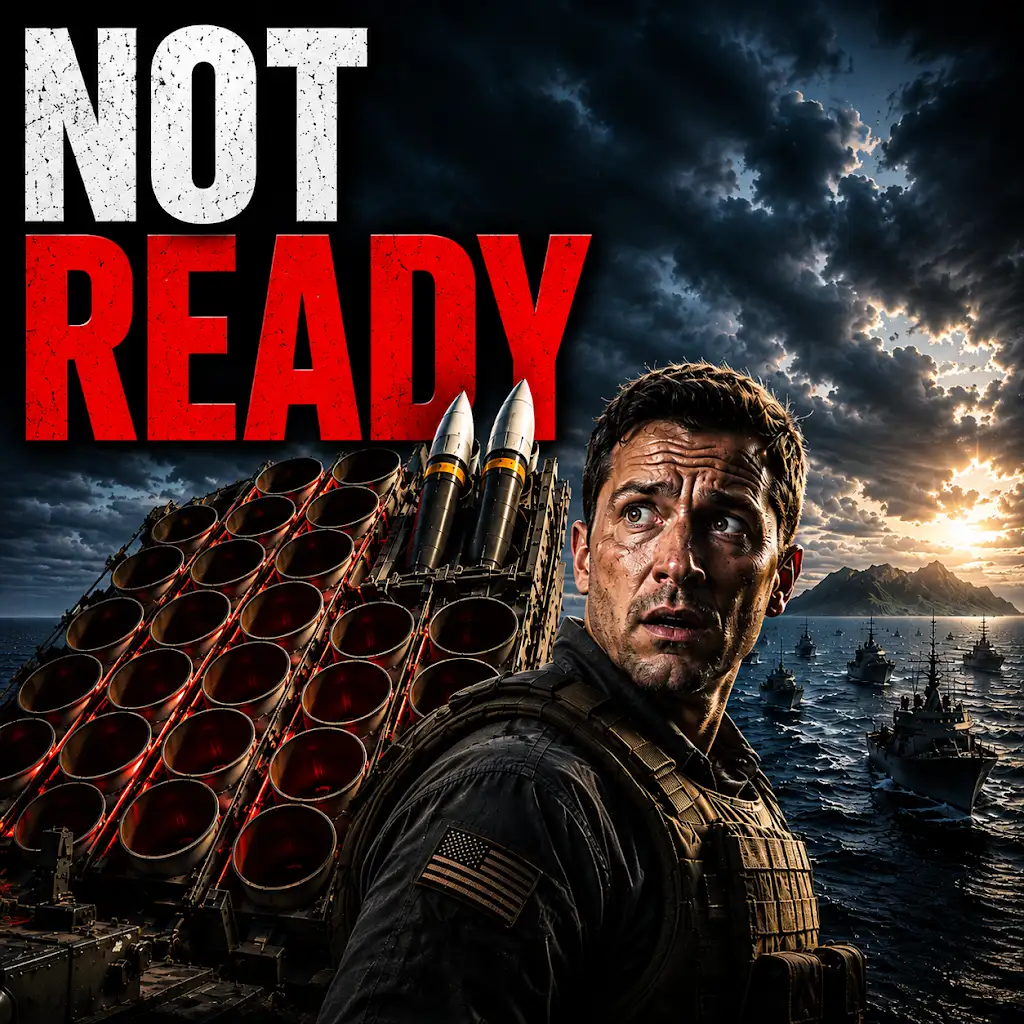
What Happens If China Moves Before America Rearms?
FAQs
What are the current US weapons needed to defend Taiwan?
The current US weapons needed to defend Taiwan include advanced fighter jets such as the F-16 and F-35, missile defense systems like the Patriot and THAAD, as well as advanced naval vessels and submarines.
Why are these weapons considered necessary for defending Taiwan?
These weapons are considered necessary for defending Taiwan due to the increasing military threats from China, which has been modernizing its military and increasing its presence in the Taiwan Strait. The weapons are crucial for deterring potential aggression and ensuring Taiwan’s security.
How does the US support Taiwan’s defense efforts?
The US supports Taiwan’s defense efforts through arms sales, military training and cooperation, as well as strategic partnerships. The US has also expressed its commitment to Taiwan’s security and has continued to provide necessary weapons and support.
What is the significance of US weapons in defending Taiwan?
The significance of US weapons in defending Taiwan lies in the deterrence of potential aggression, the maintenance of stability in the region, and the protection of Taiwan’s democratic way of life. These weapons also serve as a signal of US commitment to Taiwan’s security.
What are the potential implications of not providing US weapons to defend Taiwan?
The potential implications of not providing US weapons to defend Taiwan include increased vulnerability to military threats from China, destabilization in the region, and potential impact on US-Taiwan relations. It could also undermine Taiwan’s ability to defend itself and maintain its sovereignty.