China’s Strategic Calculation: Taiwan’s Role in Geopolitical Chess
For decades, Taiwan has occupied a unique and increasingly precarious position on the global geopolitical chessboard. More than just a self-governing island with a distinct identity, Taiwan represents a complex nexus of historical grievances, economic interests, and strategic ambitions for the People’s Republic of China (PRC). Beijing views the island as a renegade province, an integral part of its “one China” principle, and its eventual reunification, by force if necessary, remains a paramount national objective. This article delves into China’s multifaceted strategic calculation regarding Taiwan, exploring the underlying drivers of its assertive posture and the profound implications for regional and global security.
The roots of the Taiwan issue are deeply embedded in China’s tumultuous 20th-century history. Understanding this historical context is crucial to grasping Beijing’s unwavering resolve.
The Chinese Civil War and the Retreat to Taiwan
The protracted civil war between the Kuomintang (KMT) and the Chinese Communist Party (CCP) culminated in the KMT’s defeat on the mainland in 1949. The Nationalist government, led by Chiang Kai-shek, retreated to Taiwan, establishing a rival government that claimed to be the legitimate ruler of all of China. This marked the de facto division of China into two entities, the PRC on the mainland and the Republic of China (ROC) on Taiwan.
The “One China” Principle: Beijing’s Cornerstone Policy
From Beijing’s perspective, the existence of a separate government in Taiwan fundamentally challenges its sovereignty and territorial integrity. The “one China” principle, a core tenet of PRC foreign policy, asserts that there is only one sovereign state under the name China, and that the PRC is its sole legitimate government. Taiwan, therefore, is considered an inalienable part of China that must be unified with the mainland. This principle has been a non-negotiable red line for Beijing, shaping its diplomatic engagement with every nation.
The Shifting International Landscape and Diplomatic Recognition
The international community’s recognition of the PRC as the sole legitimate government of China has been a significant factor in the evolving status of Taiwan.
The United Nations and the PRC’s Rise
In 1971, the United Nations General Assembly adopted Resolution 2758, recognizing the People’s Republic of China as the “only legitimate representative of China to the United Nations” and expelling the representatives of Chiang Kai-shek from the place which they unlawfully occupied. This event was a major diplomatic victory for Beijing and a significant blow to the ROC’s international standing.
The “One China Policy” of Other Nations
While many countries acknowledge Beijing’s “one China” principle, they often maintain unofficial relations with Taiwan. This nuanced approach, often termed a “one China policy,” allows for economic and cultural ties while avoiding formal diplomatic recognition of Taiwan as an independent state. This diplomatic tightrope walk is a delicate balancing act that China continuously seeks to influence.
In recent discussions surrounding China’s strategic calculations regarding Taiwan, an insightful article titled “Understanding China’s Approach to Taiwan” provides a comprehensive analysis of the geopolitical dynamics at play. The piece delves into the historical context, military strategies, and economic factors influencing China’s stance on Taiwan, making it a valuable resource for anyone seeking to grasp the complexities of this critical issue. For further reading, you can access the article here: Understanding China’s Approach to Taiwan.
Strategic Imperatives: Why Taiwan Matters to Beijing’s Grand Design
Taiwan’s strategic importance to China extends far beyond historical claims. It is a critical component of Beijing’s broader geopolitical and economic ambitions.
Geostrategic Location and Maritime Security
Taiwan’s geographical position is of immense strategic value. Situated at the mouth of the East China Sea and the northern entrance to the South China Sea, it controls vital sea lanes of communication.
The First Island Chain and Power Projection
Taiwan is a key link in the “first island chain,” a series of island arcs that China perceives as a strategic barrier imposed by the United States and its allies, hindering its access to the Pacific Ocean. Gaining control of Taiwan would effectively break this chain, allowing China to project its military power further into the Pacific, challenging U.S. influence and securing its maritime interests.
Securing Trade Routes and Resource Access
The waters surrounding Taiwan are crucial for global trade, including the vast flow of energy resources and manufactured goods. Control over Taiwan would grant China significant leverage over these vital arteries, bolstering its economic security and its ability to influence global supply chains.
Economic Significance and Technological Dominance
Taiwan’s advanced economy and its leading role in critical technologies, particularly semiconductors, make it an even more attractive prize for Beijing.
The Semiconductor Powerhouse: TSMC and Global Dependence
Taiwan Semiconductor Manufacturing Company (TSMC) is the world’s largest contract chip manufacturer and a critical supplier to global technology giants. The PRC’s reliance on Taiwanese-made semiconductors is a significant vulnerability. Reunification would grant China immense control over this vital industry, potentially giving it a decisive advantage in the global technology race and reducing its dependence on foreign suppliers.
Integration with the Mainland Economy
Beijing envisions Taiwan’s seamless integration into its mainland economy, leveraging its technological expertise and skilled workforce to further bolster China’s economic growth and innovation. This economic synergy is seen as a critical step towards achieving comprehensive national rejuvenation.
The Military Dimension: Modernization and the Threat of Force
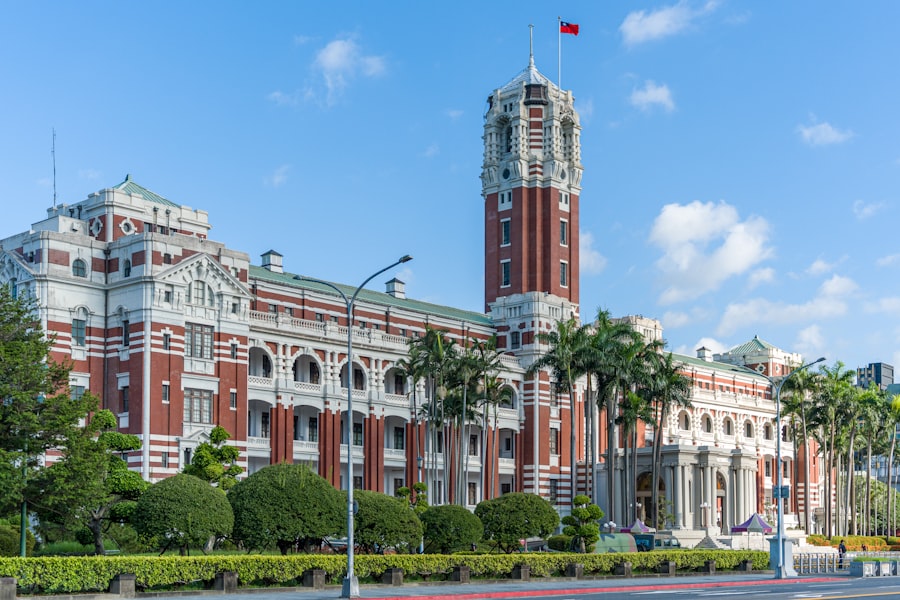
China’s military modernization, particularly the rapid expansion and advancement of the People’s Liberation Army (PLA), is inextricably linked to its ambitions regarding Taiwan.
Escalating Military Capabilities and Intentions
The PLA has undergone a sweeping transformation in recent decades, shifting from a land-centric force to a more sophisticated, multi-domain military capable of projecting power.
Amphibious Assault and Invasion Scenarios
Beijing has been developing and honing its capabilities for a potential amphibious assault on Taiwan. This involves the acquisition of advanced landing craft, transport aircraft, and specialized training exercises designed to simulate the complex challenges of invading an island defended by a determined adversary.
Naval and Air Power Projection
The development of China’s aircraft carriers, modern destroyers, and advanced fighter jets demonstrates a clear intent to challenge naval and air superiority in the Western Pacific. This capability is essential for isolating Taiwan and preventing external intervention.
Missile Capabilities and Deterrence
China possesses a formidable arsenal of ballistic and cruise missiles, many of which are specifically designed to target Taiwanese defenses and potential U.S. military bases in the region. These missiles serve as both a coercive tool and a deterrent against any military intervention.
The Dilemma of Military Intervention: Costs and Risks
While Beijing has clearly signaled its willingness to use force, a military invasion of Taiwan would come with immense costs and risks.
The Potential for Taiwanese Resistance
Taiwan possesses a well-trained and motivated military, capable of inflicting significant casualties on an invading force. The island’s rugged terrain and urbanized landscape also present considerable challenges for an amphibious assault.
The Specter of U.S. Intervention
The United States maintains a policy of “strategic ambiguity” regarding its commitment to defending Taiwan, but a clear intent to prevent a forceful takeover by China. U.S. military intervention, even if limited, could significantly escalate the conflict and lead to a direct confrontation between two nuclear-armed powers.
Economic Repercussions and International Condemnation
A military conflict over Taiwan would have devastating global economic consequences, disrupting supply chains and triggering a worldwide recession. Beijing would also face widespread international condemnation and potentially severe sanctions, isolating it on the global stage.
The Diplomatic Offensive and the Erosion of Taiwan’s International Space
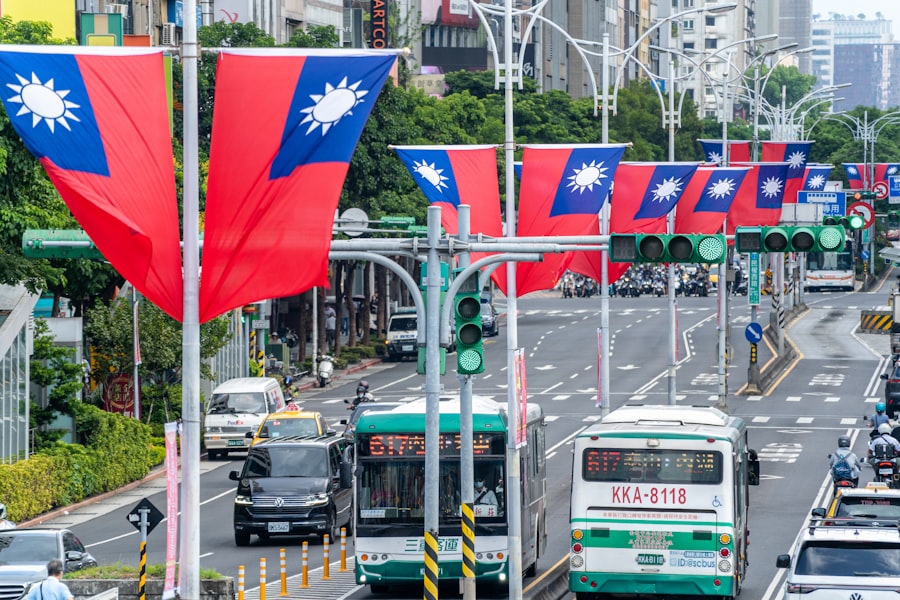
Beyond military posturing, China has relentlessly pursued a diplomatic strategy aimed at isolating Taiwan and diminishing its international presence.
The “One China” Principle as a Diplomatic Lever
Beijing actively leverages the “one China” principle in its diplomatic engagements with other nations, demanding that they sever official ties with Taiwan.
The “Quarantine” of Taiwan’s International Participation
China uses its influence to prevent Taiwan from participating in international organizations such as the World Health Organization (WHO) and the International Civil Aviation Organization (ICAO), arguing that such participation would legitimize Taiwan as a separate entity.
Coercing Diplomatic Recognition
Beijing has successfully persuaded a dwindling number of countries to switch their diplomatic recognition from Taipei to Beijing, further eroding Taiwan’s international standing and its ability to forge formal alliances.
The “Unification” Narrative and Domestic Cohesion
The pursuit of Taiwan’s unification with the mainland is a powerful narrative that the CCP uses to foster national pride and consolidate domestic support.
The “National Rejuvenation” Theme
The unification of Taiwan is often framed as a crucial step in achieving China’s grand objective of national rejuvenation, a concept that resonates deeply with a significant portion of the Chinese population.
Controlling Information and Shaping Public Opinion
The Chinese government exerts tight control over its media and information landscape, carefully shaping public opinion on the Taiwan issue and portraying any dissent as separatism and a threat to national unity.
In recent discussions surrounding China’s strategic calculations regarding Taiwan, it is essential to consider various perspectives on the geopolitical implications. An insightful article that delves into this topic can be found on In The War Room, which explores the intricate dynamics at play in the region. Understanding these factors is crucial for grasping the broader context of China’s ambitions and the potential responses from other nations. For more detailed analysis, you can read the article here.
The Future of Taiwan: Navigating a Minefield of Uncertainty
| Metrics | Data |
|---|---|
| Population of Taiwan | 23.57 million (2021) |
| China’s military presence near Taiwan | Regular air and naval exercises |
| Economic ties between China and Taiwan | Extensive trade and investment |
| Strategic importance of Taiwan to China | Geopolitical and security concerns |
The trajectory of Taiwan’s future remains one of the most significant geopolitical uncertainties of the 21st century. China’s strategic calculation is a dynamic and evolving phenomenon, influenced by internal political considerations, economic performance, and the shifting global balance of power.
The Spectrum of Beijing’s Options: From Coercion to Co-optation
Beijing’s approach to Taiwan is not monolithic and encompasses a range of potential strategies.
The “Peaceful Reunification” Slogan and its Limitations
While China officially advocates for “peaceful reunification,” its actions often suggest a willingness to employ coercive measures. The limitations of this slogan become apparent when faced with the reality of Taiwan’s democratic aspirations and its deep-seated desire for self-determination.
Economic Incentives and “One Country, Two Systems”
China has attempted to lure Taiwan with economic incentives and the promise of a “one country, two systems” framework, similar to what is in place in Hong Kong. However, the erosion of Hong Kong’s autonomy has made this model increasingly unappealing to the Taiwanese public.
The Growing Threat of Military Coercion
The increasing military capabilities of the PLA and the assertive rhetoric from Beijing suggest that the option of military coercion remains very much on the table, particularly if Beijing perceives an opportunity or a window of no return.
The Role of the International Community: A Delicate Balancing Act
The international community plays a crucial role in shaping the dynamics surrounding Taiwan, though its influence is often constrained.
Maintaining Deterrence and Strategic Ambiguity
The United States and its allies are engaged in a continuous effort to maintain a credible deterrent against Chinese aggression, while simultaneously navigating the complexities of strategic ambiguity to avoid provoking an unintended escalation.
Supporting Taiwan’s Democratic Resilience
Many democratic nations are committed to supporting Taiwan’s democratic institutions and its right to self-determination, offering moral and, to some extent, material support.
The Economic Interdependence Paradox
The deep economic interdependence between China and many Western nations presents a significant challenge, as a direct confrontation over Taiwan would have profound global economic repercussions. This paradox often tempers the willingness of some nations to take a more assertive stance.
Taiwan’s Own Agency and the Pursuit of Self-Determination
Ultimately, Taiwan’s future will be shaped by the choices and resilience of its own people. The island has forged a vibrant democracy and a distinct identity, and its citizens have shown a strong desire to maintain their way of life.
The Strength of Taiwanese Identity and Democratic Values
The growing sense of Taiwanese identity, distinct from Chinese identity, and the deep commitment to democratic values are powerful forces that will continue to shape the island’s resistance to coercion.
The Importance of International Solidarity
Taiwan relies heavily on the support and solidarity of democratic nations to deter aggression and maintain its space on the international stage. The ongoing commitment of these nations will be critical in the years to come.
In conclusion, China’s strategic calculation regarding Taiwan is a complex tapestry woven with threads of history, national ambition, economic imperative, and military power. The island is not merely a territorial claim but a linchpin in Beijing’s grand strategy to assert its dominance in the Indo-Pacific and redefine the global order. As the geopolitical landscape continues to shift, the future of Taiwan remains a critical flashpoint, demanding careful observation, nuanced understanding, and a commitment to maintaining peace and stability in a highly volatile region.
What Happens If China Moves Before America Rearms?
FAQs
What is China’s strategic calculation regarding Taiwan?
China’s strategic calculation regarding Taiwan is to assert its claim over the island and prevent it from seeking independence. China considers Taiwan as a part of its territory and has not ruled out the use of force to bring it under its control.
How does China view Taiwan’s relationship with other countries?
China views Taiwan’s relationship with other countries as a challenge to its One China policy, which asserts that there is only one China and Taiwan is a part of it. China opposes any official diplomatic relations between Taiwan and other countries.
What measures has China taken to assert its claim over Taiwan?
China has taken various measures to assert its claim over Taiwan, including military exercises near the island, diplomatic pressure to isolate Taiwan internationally, and economic incentives to encourage Taiwanese businesses and individuals to align with China’s interests.
What is the United States’ stance on the Taiwan issue?
The United States has a long-standing policy of “strategic ambiguity” regarding Taiwan, meaning it does not explicitly support Taiwan’s independence but has pledged to help Taiwan defend itself against any Chinese aggression. The US also maintains unofficial relations with Taiwan through the Taiwan Relations Act.
How does the Taiwan issue impact regional stability?
The Taiwan issue has the potential to impact regional stability as it involves the interests of not only China and Taiwan, but also the United States and other countries in the Asia-Pacific region. Tensions over Taiwan could lead to military conflict and disrupt economic and diplomatic relations in the region.