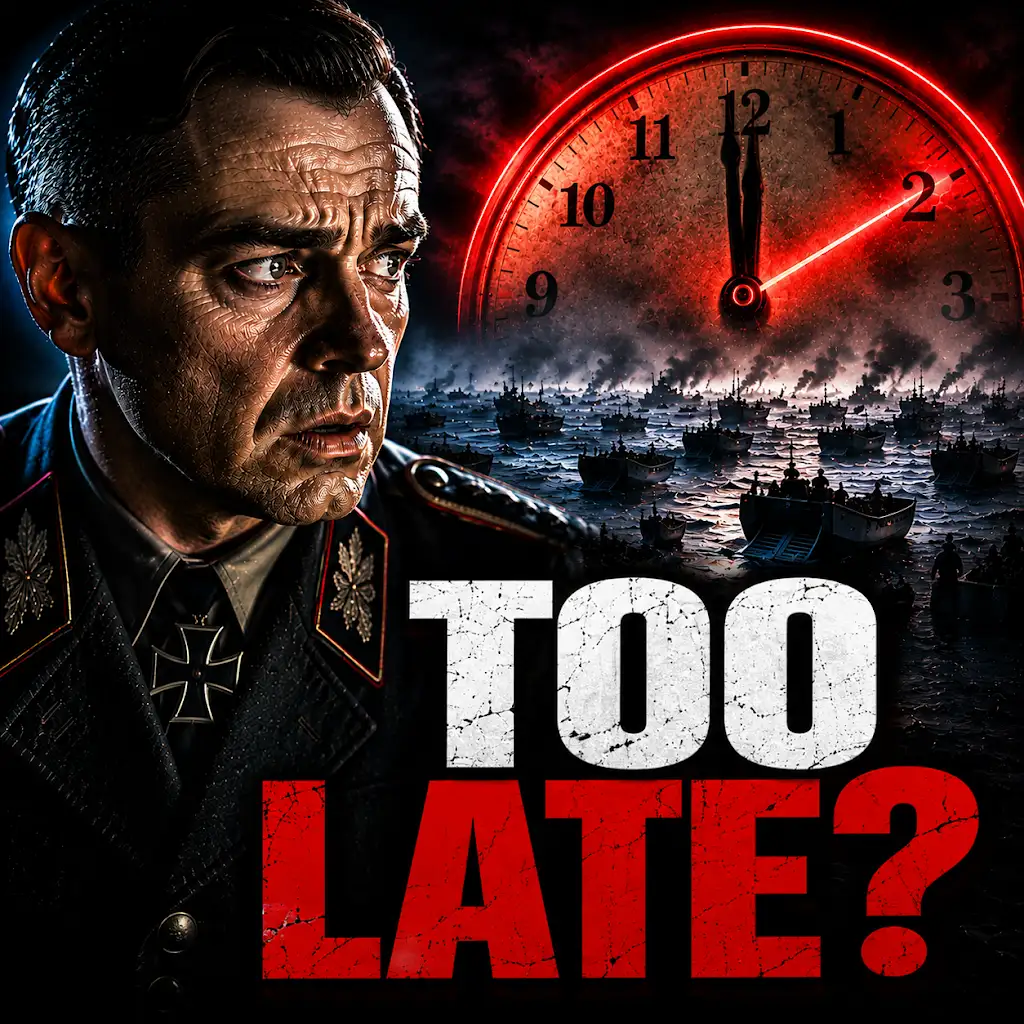
The question of why Germany delayed the deployment of its vital Panzer reserves during critical moments of World War II remains a persistent and complex historical puzzle. While the allure of a swift, decisive offensive utilizing the formidable armored fist was a cornerstone of German military doctrine, several factors converged to hamstring their ability to wield this weapon effectively when it might have mattered most. These delays were not born of a single catastrophic oversight, but rather a tangled web of strategic miscalculations, logistical nightmares, political infighting, and the inherent limitations of a wartime economy. Understanding these multifaceted reasons is crucial to grasping the broader arc of the conflict and the eventual defeat of the Third Reich.
In the initial years of the war, Germany’s success with its Panzer divisions fostered a dangerous sense of overconfidence. The Blitzkrieg, a concept built around the rapid concentration of armored forces, proved devastatingly effective in Poland and France. This early success created an expectation that such swift victories would become the norm, leading to a perception that large, readily available reserves of fully equipped and trained Panzer units were less critical than continuing the offensive momentum.
The “Lightning War” Doctrine and its Unintended Consequences
The very success of the Blitzkrieg doctrine inadvertently sowed the seeds of future delays. Commanders became accustomed to rapid advances and assumed that their mobile forces could always outrun and overwhelm enemy resistance. This led to a mindset where preserving strategic reserves, particularly of irreplaceable armored assets and trained crews, was often de-emphasized in favor of exploiting immediate tactical gains. The assumption was that battles would be won quickly, and subsequent offensives would be launched with fresh, albeit perhaps not entirely reconstituted, units.
Underestimation of Enemy Resilience and Adaptation
A critical flaw in the early German strategic thinking was a consistent underestimation of their opponents’ capacity to learn, adapt, and rebuild. The swift collapse of France, for instance, may have fostered a belief that other nations would follow a similar trajectory. This led to a failure to anticipate the prolonged and attritional nature of future campaigns, particularly on the Eastern Front. The expectation of quick victories meant that the need for deep, readily deployable reserves of armored formations was less of a priority than maintaining the tempo of operations.
The Siren Song of Offensive Operations
Throughout much of the war, the German military leadership was driven by a constant need to maintain the initiative and launch new offensives. This often meant that available Panzer divisions, even those designated as reserves, were frequently drawn into current operations to bolster attacking forces or plug gaps in the line. The strategic concept favored a continuous offensive cycle, rather than the measured build-up of forces for a truly decisive counterstroke or defensive stand.
The Eastern Front: A Graveyard of Reserves and Resources
The invasion of the Soviet Union in June 1941, codenamed Operation Barbarossa, proved to be the turning point of the war, and its insatiable demand for men and materiel had a profound impact on Germany’s ability to maintain effective Panzer reserves. The sheer scale of the Soviet Union, the harshness of its terrain and climate, and the tenacity of its resistance quickly depleted Germany’s existing armored strength.
The Enormous Attrition of Barbarossa
Operation Barbarossa consumed vast quantities of tanks, artillery, and experienced personnel. The rapid advances of the initial phase were followed by brutal fighting in the autumn and winter, leading to significant losses from combat, mechanical failure, and the unforgiving environment. Unlike the earlier campaigns in Western Europe, there was no swift victory that would allow for the easy replenishment of these losses.
The Insufficient Production Capacity
While German industry was remarkably efficient in producing tanks, it simply could not keep pace with the losses sustained on the Eastern Front, especially when considering the demands of other fronts and the need for ongoing offensive operations. The continuous deployment of existing Panzer divisions meant that any units that could have been considered reserves were often already engaged in combat. Furthermore, the quality of production, while high, was not always sufficient to overcome the sheer numbers being fielded by the Soviets, especially in the later stages of the war.
The Myth of German Technological Supremacy
While German tanks like the Panzer IV, Panther, and Tiger were often technologically superior to their Soviet counterparts in the early to mid-war period, this advantage was not always enough to overcome the numerical superiority of the Red Army. The focus on producing complex, high-quality, but slower-to-manufacture tanks meant that Germany struggled to field the sheer volume of armor necessary for large-scale offensive or defensive operations, further impacting the concept of deployable reserves.
Logistical Nightmares and the Tyranny of Distance
The logistical challenges faced by the Wehrmacht, particularly on the vast expanses of the Eastern Front, were a constant impediment to the effective deployment and maintenance of Panzer reserves. The ability to move, supply, and repair these complex machines over long distances was a critical factor that was repeatedly underestimated.
The Unreliable Infrastructure of the East
The Soviet Union’s road and rail networks were significantly less developed than those in Western Europe. This meant that the movement of Panzer divisions, with their heavy equipment and vast logistical tail, was an arduous and time-consuming process. Supply lines stretched to breaking point, making it difficult to ensure that tanks were adequately fueled, armed, and maintained, even when they were notionally in reserve.
The Strain on Repair and Maintenance
The constant combat and the unforgiving conditions of the Eastern Front placed immense strain on German maintenance and repair facilities. Many damaged tanks could not be brought back to Germany for extensive repairs, and field repairs were often insufficient for the complex systems of Panzer warfare. This meant that even tanks that were not actively engaged in combat were often out of action due to mechanical issues, further depleting the available pool of ready reserves.
The Intertwined Nature of Combat and Logistics
The German military often failed to adequately separate combat operations from logistical considerations. When a Panzer division was deployed, its logistical needs were immense. If these needs could not be met, the division’s combat effectiveness was severely compromised. This intertwined nature meant that any delay in logistical support could effectively render a Panzer reserve immobile and useless, even if the tanks themselves were present.
Political Infighting and the Führer’s Strategic Whims
Adolf Hitler’s increasingly erratic and personally driven strategic decisions, coupled with infighting amongst his senior military commanders, further exacerbated the delays in deploying Panzer reserves. The Führer’s distrust of his generals and his tendency to micromanage operations often led to decisions that were not strategically sound or militarily optimal.
Hitler’s Micromanagement and Unrealistic Expectations
Hitler’s desire to personally oversee military operations, often from his headquarters, meant that decisions about troop movements and deployments were frequently made without the benefit of on-the-ground assessment or the input of experienced commanders. This could lead to delays as his directives were debated, misinterpreted, or implemented with a lack of urgency by those who knew better. His often unrealistic expectations of quick victories also meant that the need for a carefully husbanded strategic reserve was often overlooked.
The Rivalry Amongst Commanders and the Lack of a Unified Strategy
There was considerable rivalry and disagreement amongst Hitler’s senior military leaders. These factions often vied for resources and influence, and their differing strategic visions could lead to delays as their proposals were debated and fought over. The absence of a truly unified and consistent grand strategy meant that the deployment of Panzer reserves could be dictated by the immediate needs of one faction or another, rather than a long-term, cohesive plan.
The Politicization of Military Decisions
The Nazi regime was inherently political, and military decisions were not always driven by purely strategic considerations. The desire for symbolic victories, the appeasement of political factions, or the pursuit of ideological objectives could all influence when and where Panzer reserves were deployed, often to the detriment of sound military judgment.
The Shifting Frontlines and the Reactive Nature of Defense
As the war progressed and Germany found itself increasingly on the defensive, the concept of a proactive strategic reserve of Panzer divisions became even more elusive. The need to react to enemy breakthroughs and reinforce threatened sectors often meant that any available armored formations were immediately thrown into the breach, rather than being held for a more decisive counteroffensive.
The Unfolding of the Allied Offensives
With the landings in North Africa, Italy, and Normandy, the Allies opened multiple fronts that stretched German resources thin. Each new offensive required a response, and the limited number of available Panzer divisions meant that they were constantly being moved to plug gaps and counter threats, leaving little opportunity for them to be held in reserve.
The Concept of “Fire Brigade” Tactics
The German Army increasingly adopted “fire brigade” tactics, deploying Panzer units to wherever the most immediate crisis occurred. While this could be effective in blunting local attacks, it prevented the concentration of forces necessary for a truly decisive counterattack or a well-planned defensive operation. The reserves were never allowed to “rest” and reconstitute properly; they were perpetually engaged in a desperate struggle.
The Loss of Offensive Capacity and the Perpetual Retreat
The loss of the initiative on the Eastern Front and the growing pressure on the Western Front meant that Germany was increasingly engaged in a war of attrition and maneuverable defense. The ability to launch large-scale armored offensives, which required significant reserves, was severely diminished. Consequently, the Panzer reserves that did exist were often insufficient to stem the tide of Allied advances, leading to a perpetual state of reactive defense and further depletion of armored strength.
In conclusion, the delays in deploying German Panzer reserves were not the result of a single, easily identifiable cause. Instead, they stemmed from a complex interplay of factors. The early, intoxicating successes of the Blitzkrieg fostered an overestimation of German military dominance and an underestimation of enemy resilience. The brutal and protracted nature of the Eastern Front consumed vast resources and manpower, far exceeding Germany’s production capacity. Logistical challenges, particularly the inadequate infrastructure of the East, hampered the movement and maintenance of these vital machines. Political infighting and Hitler’s personal intervention in strategic decision-making further disrupted the efficient deployment of forces. Finally, as the war shifted to a defensive posture, the need to react to constant Allied offensives meant that available Panzer formations were perpetually engaged, preventing the formation and effective utilization of true strategic reserves. These intertwined issues created a situation where Germany’s most potent weapon, its armored fist, was frequently unable to be wielded effectively when it was most needed, contributing significantly to the eventual defeat of the Third Reich.