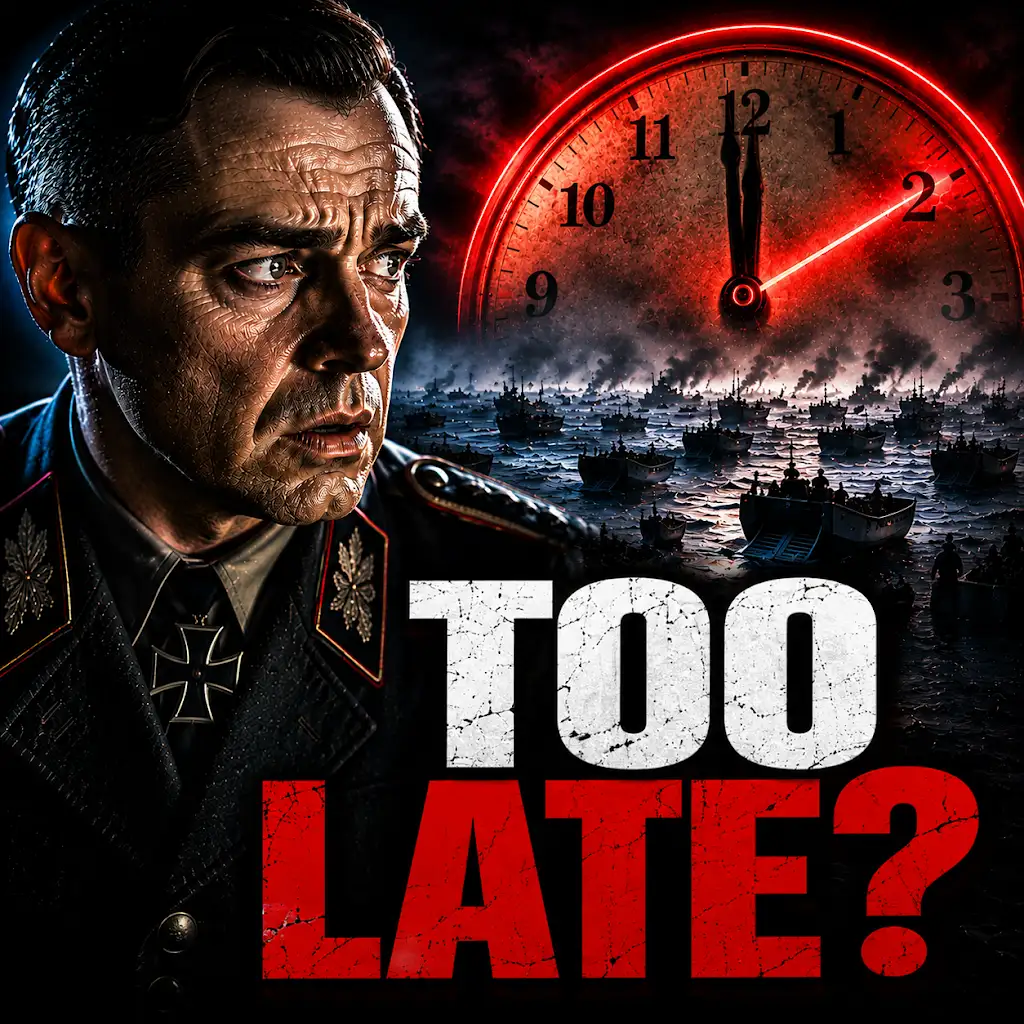
The Allied invasion of Normandy on June 6, 1944, known as D-Day, stands as a monumental turning point in World War II. For Germany, the defending power, the success of this operation marked the beginning of the end of their desperate struggle. The question of why Germany failed to stop D-Day is a complex one, involving a confluence of strategic miscalculations, intelligence failures, resource limitations, and a fundamental underestimation of Allied capabilities. It was not a single catastrophic error, but rather a series of interconnected weaknesses that ultimately allowed the Allies to establish a critical foothold on the continent.
The German leadership, particularly Adolf Hitler, operated under a pervasive sense of overconfidence in the strength of their Atlantic Wall and the prowess of their military. This belief, while rooted in earlier successes, blinded them to the reality of the evolving Allied threat.
The Atlantic Wall: A Fortress of Propaganda and Patchwork Defense
The “Atlantic Wall” was a vast network of coastal defenses, stretching from the Arctic Circle down to the Spanish border. It was envisioned as an impenetrable barrier against any Allied invasion. However, its reality was far less formidable than its name suggested.
Uneven Construction and Varying Strengths
While some sectors of the Atlantic Wall, particularly those in areas deemed most likely invasion points, boasted impressive fortifications like concrete bunkers, anti-tank obstacles, and heavily armed emplacements, many other stretches were sparsely defended. Resources and manpower were unevenly distributed, reflecting the German command’s own uncertainties about where the Allies would strike. This created significant vulnerabilities that the Allies were keen to exploit.
The Role of Coastal Artillery and Minefields
German coastal artillery was a significant threat, capable of inflicting heavy damage on landing craft and troops attempting to disembark. Extensive minefields were also laid along beaches and in potential landing zones. However, the effectiveness of these defenses was hampered by a lack of coordination, insufficient quantity in certain areas, and the ability of Allied engineers to overcome many of these obstacles with specialized equipment and tactics.
Underestimating Allied Resolve and Ingenuity
A critical flaw in German thinking was the underestimation of the Allied commitment to the invasion and their capacity for innovation. They believed the Allies lacked the necessary courage, planning, and technological advancements to breach their defenses.
The Misconception of Allied Morale
German propaganda often painted the Allies, particularly the British and Americans, as soft and lacking the ideological fervor of their own troops. This led to a belief that they would be easily deterred by initial casualties and would ultimately lack the sustained will to press an invasion forward. They failed to recognize the immense strategic imperative for the Allies to open a second front in Western Europe, a goal they had been planning for years.
Dismissal of Allied Amphibious Capabilities
Despite clear indications of Allied advancements in amphibious warfare, including the development of specialized landing craft and assault vehicles, the German military leadership did not fully grasp the scale and sophistication of these preparations. They viewed such operations as inherently risky and unlikely to succeed against determined defenses.
Intelligence Failures: The Fog of War and Decoy Operations
German intelligence, while possessing some impressive capabilities, suffered from significant blind spots and was ultimately outmaneuvered by Allied deception operations. This allowed the Allies to choose their landing sites and timing with a degree of surprise that was crucial to their success.
The Double Agent Network: A Two-Edged Sword
Germany relied heavily on its vast network of spies and double agents. However, this system was compromised by the success of British counterintelligence, which turned many German agents into double agents, feeding misinformation back to Berlin.
The Success of “Fortitude”: A Masterclass in Deception
The most significant intelligence failure stemmed from the Allied deception operation codenamed “Fortitude.” This elaborate plan aimed to convince the Germans that the main Allied invasion would occur at the Pas-de-Calais, the closest point to Britain.
The Phantom Army of FUSAG
As part of Fortitude, the Allies created the First U.S. Army Group (FUSAG), a fictional army purportedly commanded by General George S. Patton. This “army” was represented by inflatable tanks, wooden aircraft, and radio traffic designed to simulate a massive invasion force preparing to cross the English Channel at Pas-de-Calais. German aerial reconnaissance and espionage agents were fed carefully crafted information that reinforced this illusion.
Misdirection of German Reserves
The success of Fortitude was paramount in diverting German reserves and strategic planning away from Normandy. The German high command, convinced that Pas-de-Calais was the primary threat, stationed significant forces and fortifications in that region, leaving Normandy relatively less defended. This misallocation of resources was a critical factor in the Allies’ ability to gain a foothold.
Lack of Real-Time Reconnaissance and Inaccurate Assessments
While the Germans had some reconnaissance capabilities, they lacked the real-time, high-resolution intelligence necessary to accurately assess the true intentions and build-up of Allied forces in the weeks and days leading up to D-Day.
The Importance of Weather and Allied Secrecy
The volatile weather in the English Channel played a crucial role in obscuring Allied movements. Furthermore, the sheer scale of the Allied build-up and the stringent secrecy surrounding the operation made it difficult for German intelligence to piece together a coherent picture of the impending invasion. They often received fragmented or misleading information.
Resource Allocation and Strategic Dispersion: Fighting on Too Many Fronts
By 1944, Germany was engaged in a multi-front war, stretching its military resources thin. This strategic overextension significantly hampered its ability to adequately defend against the Allied invasion in the West.
The Eastern Front: The Decisive Drain on German Resources
The massive and brutal conflict on the Eastern Front against the Soviet Union was the primary drain on Germany’s military might. The vast majority of the Wehrmacht’s combat divisions, tanks, and aircraft were committed to fighting the Red Army.
The Unrelenting Pressure of the Red Army
The Soviet offensives were relentless, forcing Germany to divert precious reinforcements and equipment away from the Western Front to plug gaps in the East. The sheer scale of the Soviet Union’s manpower and industrial capacity meant that Germany could never afford to disengage from this critical theater.
The Impact on Panzer Divisions and Air Power
Many of Germany’s elite Panzer divisions, the backbone of their armored warfare doctrine, were deployed on the Eastern Front. This meant that fewer experienced armored units were available to reinforce the Atlantic Wall. Similarly, a significant portion of the Luftwaffe’s fighter and bomber forces were engaged in air combat over the Soviet Union, reducing their ability to contest Allied air superiority over Normandy.
Limited Reserves for the Western Front
As a consequence of the demands of the Eastern Front, the reserves available to defend Western Europe were limited. The troops stationed in Normandy, while often well-trained and motivated, lacked the sheer numbers and the overwhelming firepower that could have been brought to bear if Germany had been able to concentrate its forces.
The Struggle for Aircraft and Tanks
Germany’s industrial capacity was also strained by years of war and Allied bombing campaigns. The production of aircraft, tanks, and other essential military equipment lagged behind that of the Allied powers. This meant that even when they identified a threat, they often lacked the means to effectively counter it.
Command and Control Issues: Fragmentation and Hesitation
The German military command structure, particularly the relationship between Hitler and his generals, was plagued by a lack of effective communication, strategic confusion, and critical moments of indecision that proved to be costly.
Hitler’s Micromanagement and Strategic Interference
Adolf Hitler’s increasingly erratic leadership and his tendency to micromanage military operations often hindered effective decision-making. He was known to ignore the advice of his experienced generals, often driven by his own ideological beliefs or a distorted sense of intuition.
The “No Retreat” Doctrine and Strategic Rigidities
Hitler’s “no retreat” doctrine, enforced with ruthless severity, meant that units were often ordered to hold their ground even when outnumbered and outgunned, leading to unnecessary destruction and loss of life. This rigidity prevented flexible responses to the evolving battlefield situation.
The Debate over Panzer Reserves
A crucial example of this command dysfunction was the debate over the deployment of Panzer reserves in Normandy. Generals on the ground, like Field Marshal Rommel, recognized the urgent need to counter-attack the Allied bridgehead immediately after the landings. However, Hitler hesitated, demanding confirmation of the invasion’s true scale and location, and was reluctant to commit his prized armored divisions without definitive proof, which was difficult to obtain. This delay allowed the Allies precious time to consolidate their position.
Ineffective Coordination Between Army and Air Force
Coordination between the German Army and the Luftwaffe was often suboptimal. While the Luftwaffe was tasked with providing air support and interdicting Allied supply lines, its effectiveness was limited by its depleted strength and the overwhelming air superiority of the Allies. This lack of seamless integration meant that ground forces often did not receive the timely and comprehensive air cover they desperately needed.
The Unseen Impact: Allied Air Superiority and Naval Dominance
While German weaknesses were significant, the overwhelming might and strategic application of Allied air and naval power cannot be overstated. These were not simply passive advantages; they were active instruments that systematically undermined Germany’s ability to respond effectively.
The Tyranny of the Air: Allied Air Superiority
The Allies achieved decisive air superiority over the Normandy invasion beaches and the surrounding territories. This was a direct result of the Luftwaffe’s attrition on the Eastern Front and the immense production capacity of the Allied aircraft industries.
Interdiction of German Reinforcements and Supplies
The Allied air forces, particularly the Royal Air Force (RAF) and the United States Army Air Forces (USAAF), systematically targeted German airfields, railway lines, bridges, and troop concentrations. This made it incredibly difficult for Germany to move reinforcements and supplies to the front lines in Normandy. Any movement of troops or equipment by day was met with swift and devastating air attacks, forcing them to travel at night, further slowing their progress and increasing their vulnerability.
Bombing of German Infrastructure
The sustained bombing campaigns against German industrial centers and transportation networks had weakened their war-making capacity. By D-Day, Germany was struggling to replace losses and maintain its existing military hardware.
Control of the Seas: Allied Naval Supremacy
The Allied navies established complete dominance over the English Channel. This ensured the safe passage of Allied invasion fleets and prevented the German navy from posing a significant threat to the landing operations.
The Blockade of German Naval Assets
The Allied navies effectively blockaded German ports and submarines, severely limiting their operational capacity. While U-boats posed a threat throughout the war, their effectiveness against the massive, organized Allied convoys was significantly diminished by the mid-war period.
The Unimpeded Flow of Allied War Material
The naval dominance allowed for the continuous and unimpeded flow of troops, equipment, and supplies from Britain to Normandy. This logistical lifeline was essential for the Allies to sustain their offensive and build their strength on the continent.
In conclusion, Germany’s failure to stop D-Day was not a singular event but a culmination of systemic failures. A misguided belief in the impregnability of the Atlantic Wall, coupled with a profound underestimation of Allied capabilities and resolve, formed the bedrock of their miscalculations. Crucially, the devastating impact of the Eastern Front, coupled with Hitler’s own fractured command and strategic inflexions, left them ill-prepared and indecisive. These internal weaknesses were then ruthlessly exploited by the overwhelming air and naval power of the Allies, who, through meticulous planning and ingenious deception, achieved the element of surprise so vital to their success. The invasion of Normandy was a testament to Allied strength, but equally a stark illustration of Germany’s strategic and operational decline.