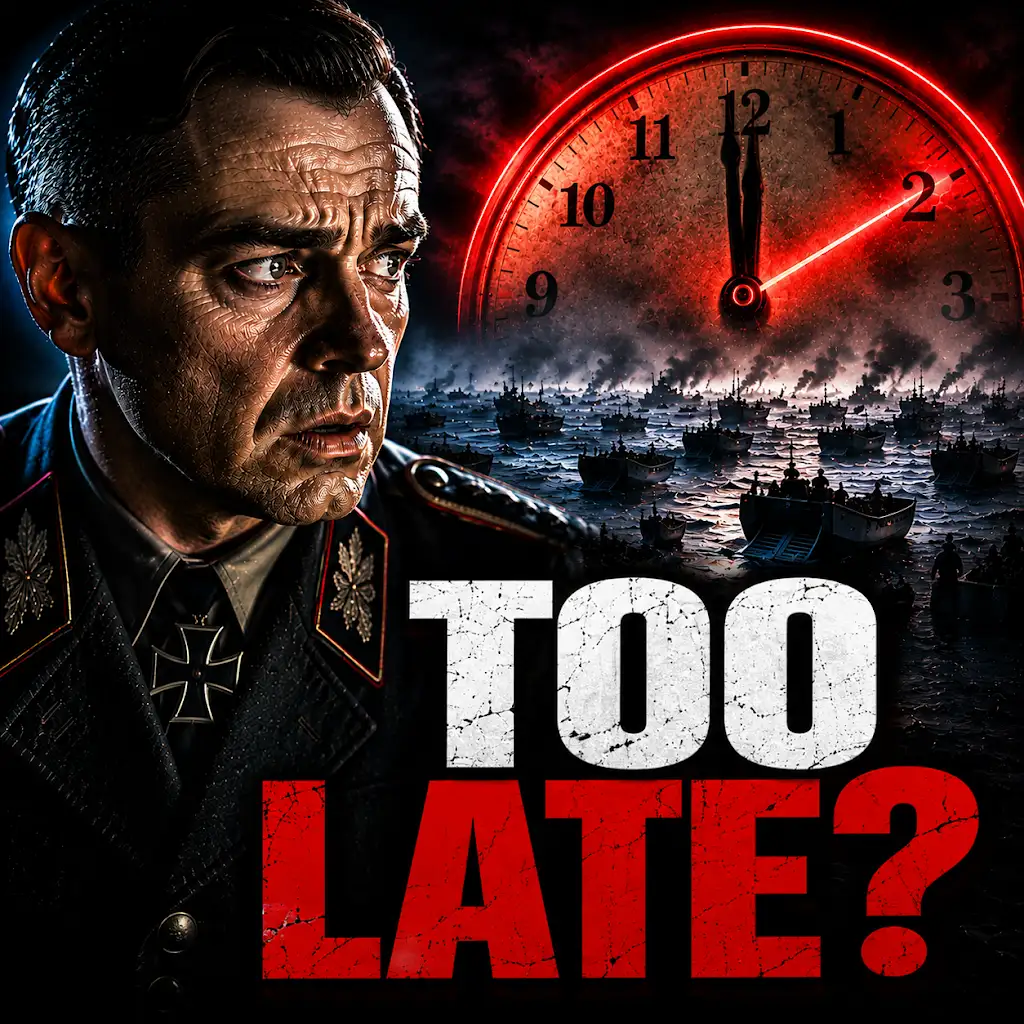
The sands of Normandy held their breath. Beneath the deceptively tranquil surface of the English Channel, Allied might was amassing, a storm about to break. Yet, across the fortified coastline, a whisper of anticipation, a prickle of unease, permeated the German ranks. While the world would forever mark June 6, 1944, as D-Day, the day the tide of war irrevocably turned, the period leading up to that momentous event was marked by a series of German warnings – some prescient, some tragically blind – that hinted at the impending doom, yet ultimately failed to avert it.
The Germans, despite their formidable military prowess, were not entirely unaware of the approaching inferno. The sheer scale of Allied activity across the Channel, the constant aerial reconnaissance, and the intelligence gleaned from various sources painted a grim picture of impending invasion. However, the precise timing and location remained a maddening enigma for the Nazi high command, a void they desperately tried to fill with analysis and, at times, wishful thinking.
Whispers from the West: Early Intelligence and Reconnaissance
Even before the final planning stages of Operation Overlord were locked in, German intelligence had been piecing together fragments of information. The incessant Allied bombing raids on French infrastructure were a clear indication of preparation, designed to cripple communication and transportation networks vital for a swift German response. Coastal batteries, while heavily fortified, were constantly being monitored and probed by Allied aircraft and naval patrols. The Germans, acutely aware of their vulnerability, had constructed the Atlantic Wall, a sprawling defensive network intended to be an impenetrable barrier. Yet, the very existence of such a colossal undertaking implied a deep-seated fear of a large-scale amphibious assault.
The Mirage of Pas-de-Calais: Deception and its Echoes
One of the most significant factors contributing to the German misjudgment was the masterful deception employed by the Allies. Operation Fortitude, a vast and intricate propaganda and disinformation campaign, successfully convinced the German high command that the primary invasion target would be the Pas-de-Calais, the narrowest point of the English Channel. This psychological warfare had a profound impact.
The Phantom Army of FUSAG
The creation of the First United States Army Group (FUSAG), a fictional army under the command of the charismatic General George S. Patton, was a masterstroke. Through elaborate radio traffic, dummy landing craft, and even inflated tanks strategically placed in sight of German reconnaissance, FUSAG appeared to be a massive force poised to strike at Calais. This created a powerful diversion, drawing German reserves and attention away from Normandy.
Double Agents and Fabricated Intel
The Allies also utilized double agents and meticulously crafted intelligence reports to feed the German war machine with false information. These agents, carefully vetted and controlled, consistently reinforced the narrative of an imminent Pas-de-Calais invasion, painting vivid pictures of troop movements and landing plans that were entirely fictitious. This sustained barrage of misleading data played a crucial role in shaping German strategic thinking.
The Growing Unease: German Appraisals and Strategic Concerns
Despite the success of Allied deception, the sheer magnitude of the anticipated assault still cast a long shadow of unease over the German leadership. Various commanders and intelligence officers, while not pinpointing Normandy as the sole target, recognized the overwhelming nature of the impending threat.
Rommel’s Grave Doubts: The Field Marshal’s Frustration
Field Marshal Erwin Rommel, tasked with overseeing the defenses of the Atlantic Wall in the crucial sector of northern France, was perhaps the most vocal and prescient of the German commanders. He understood the limitations of the static defenses and the need for mobile reserves to counter any breakthrough. His frustration with the perceived lack of urgency and the slow deployment of vital resources was palpable.
The “Best Defense is a Good Offense” Fallacy
Rommel famously believed that the best defense was a swift and decisive counterattack, launched as soon as the enemy landed. He advocated for placing the Panzer reserves closer to the coast, ready to engage the invaders on the beaches. However, his strategic vision clashed with the cautious approach of some of Hitler’s inner circle, who feared prematurely committing their precious armored divisions to a potentially doomed battle.
The Lack of Air Superiority
Rommel also acutely recognized the critical disadvantage of the Luftwaffe’s inability to contest Allied air superiority. The relentless bombing by Allied aircraft meant that German troop movements and defensive preparations were constantly exposed and vulnerable. This lack of air cover severely hampered any effective response.
Von Rundstedt’s Pragmatism: A More Cautious Outlook
Field Marshal Gerd von Rundstedt, the overall commander of German forces in the West, adopted a more pragmatic, albeit ultimately flawed, perspective. While he understood the gravity of the situation, his strategic thinking was also influenced by the deception regarding Pas-de-Calais. He believed that the main thrust would likely occur there, and thus, a significant portion of his reserves were positioned accordingly.
The Atlantic Wall: A Double-Edged Sword
Von Rundstedt, like many others, viewed the Atlantic Wall as a formidable deterrent. However, the sheer length of the coastline and the dispersed nature of the defenses meant that any successful landing, even in a secondary location, could exploit gaps and create a significant foothold. The defensive lines, while imposing, were not designed to withstand a sustained, multi-pronged assault across their entire length.
The Allied Air Offensive as a Precursor
The persistent Allied air offensive was also interpreted by Von Rundstedt and his staff as a clear sign of impending invasion. The systematic destruction of French infrastructure, the disruption of rail lines, and the targeting of key communication centers were all seen as calculated steps to isolate the battlefield and hinder German reinforcements. This understanding, however, did not translate into a definitive shift in their focus away from Pas-de-Calais.
The Crucial Hours: Last-Minute Warnings and Misinterpretations
As D-Day loomed, the volume of incoming intelligence and the urgency of the situation escalated. Yet, a confluence of factors – miscommunication, wishful thinking, and the enduring effectiveness of Allied deception – continued to obscure the truth.
The Weather Factor: A Gamble on the Elements
The unpredictable weather over the English Channel played a significant role in the final decision-making process for both sides. The Germans, observing the stormy conditions and the rough seas, harbored a degree of optimism that the Allies would postpone their invasion. This perceived respite, however, proved to be a critical miscalculation.
Rommel’s Departure: A Fatal Interruption
Rommel, believing the weather was too poor for an invasion, decided to return to Germany for a brief visit and a meeting with Hitler. This absence from the front lines in the crucial days leading up to D-Day was a tragic coincidence that deprived the German command of his experienced leadership and his unwavering sense of urgency.
Allied Calculated Risk
Conversely, the Allied meteorologists and commanders, under immense pressure, saw a brief window of opportunity in the weather forecast. They recognized the risk, but the potential for a surprise attack while the Germans were lulled into a false sense of security due to the weather was too great to ignore. This calculated gamble by the Allies further exacerbated the German unpreparedness.
The Parachutists: Unmistakable Signals in the Night
The night of June 5-6, 1944, was alive with activity that should have sent shockwaves through the German command. The airborne landings, a crucial element of the D-Day plan, began hours before the main seaborne assault.
Airborne Divisions: The First Wave
Thousands of American and British paratroopers dropped behind enemy lines, their mission to disrupt German communications, secure key bridges, and neutralize artillery positions. Their presence, while initially localized, was a clear and undeniable indicator of an imminent invasion.
The Misinterpretation of Airborne Landings
However, the German response to these airborne landings was fragmented and often ineffective. The dispersed nature of the drops, coupled with communication breakdowns and a lack of immediate, decisive action, allowed many of the airborne units to achieve their objectives. The Germans did not immediately grasp the full scope of this airborne operation as the prelude to a much larger amphibious assault.
The Unheeded Alarms: When the Truth Was Ignored
Even as the first shots were fired and the beaches began to fill with Allied troops, the German command struggled to reconcile the unfolding reality with their pre-conceived notions. The warnings had been there, subtle and overt, but they had been systematically discounted or misinterpreted.
The Luftwaffe’s Blind Spot: A Fading Power
The once-mighty Luftwaffe was a shadow of its former self by June 1944. Decimated by years of relentless combat and strategic bombing, its ability to effectively patrol the skies over the English Channel and provide crucial intelligence was severely limited.
Reconnaissance Gaps
The lack of aerial reconnaissance meant that the full scale of the Allied naval buildup and the precise landing zones remained largely unknown to the German high command. This intelligence vacuum was a critical vulnerability.
Inability to Intercept Allied Forces
Furthermore, the Luftwaffe was in no position to effectively challenge the massive Allied armada crossing the Channel. Their limited numbers and fuel shortages meant that their impact on D-Day was tragically minimal, a stark contrast to their former dominance.
Allied Intelligence Breakthroughs: The Unseen Hand
While German warnings were often misconstrued, Allied intelligence had achieved significant breakthroughs that provided crucial insights into German defenses and intentions.
Ultra and Enigma: Cracking the Code
The decryption of German Enigma codes by Allied cryptanalysts, codenamed “Ultra,” provided invaluable real-time intelligence. This allowed the Allies to understand German troop dispositions, communication intercepts, and even Hitler’s own directives. This gave them a significant advantage in anticipating German reactions and planning their operations accordingly.
Human Intelligence on the Ground
Beyond the technological marvel of Ultra, Allied intelligence networks on the ground in France also played a vital role. Resistance fighters and sympathetic civilians provided crucial information about coastal defenses, troop movements, and German morale. This ground-level intelligence complemented the broader strategic picture.
The Aftermath: A Legacy of Unheeded Warnings
The success of D-Day, while a testament to Allied planning and bravery, also serves as a somber reminder of the German warnings that were not heeded. The cumulative effect of deception, miscalculation, and a fading military capacity left Germany vulnerable and unprepared for the decisive blow.
The Shock of Normandy: A Strategic Catastrophe
The Allied landing in Normandy was a strategic catastrophe for Nazi Germany. It opened a vital second front, forcing Hitler to divide his forces and engage in a brutal war on two fronts. The loss of Normandy directly contributed to the eventual collapse of the Third Reich.
The Illusion Shattered
The meticulously constructed illusion of a Pas-de-Calais invasion was shattered by the reality of the landings in Normandy. The German high command was forced to confront the fact that they had been outmaneuvered and outfought.
The Long Road to Defeat
While the war would continue for several more months, the outcome was now irrevocably sealed. The warnings, however faint or misguided, had presaged the dawning of a new era, an era of liberation that began on the blood-soaked beaches of Normandy. The German warnings before D-Day, therefore, are not merely historical footnotes but crucial elements in understanding the complex tapestry of events that led to one of the most pivotal moments of the 20th century. They highlight the intricate dance of intelligence, deception, and strategic miscalculation that ultimately shaped the course of history.