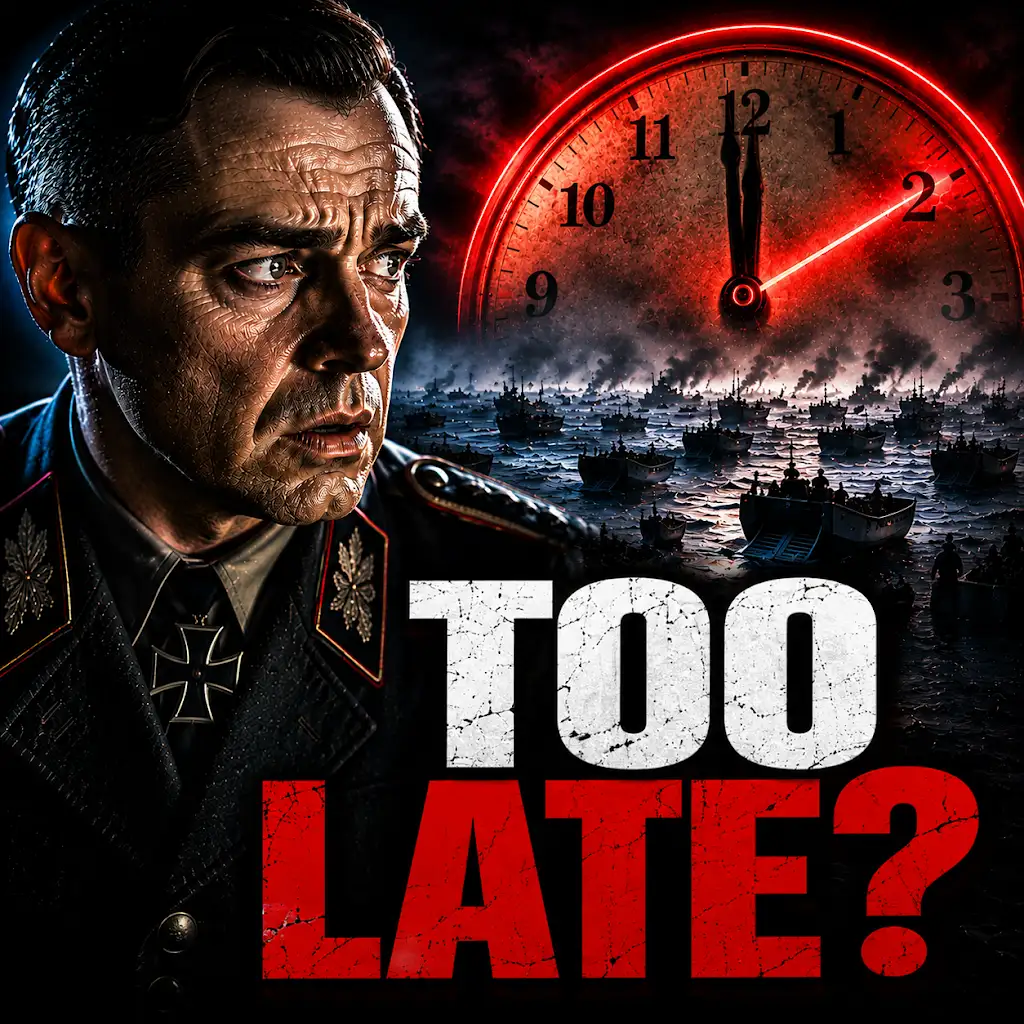
The German High Command, reeling from the shock of the Allied landings on June 6, 1944, scrambled to understand the scope and intent of Operation Overlord. Among the most prominent figures tasked with formulating a response was Field Marshal Gerd von Rundstedt, Oberbefehlshaber West (Commander-in-Chief West). His position placed him at the apex of German defenses along the Atlantic Wall, a formidable network of fortifications designed to repel any seaborne invasion. Yet, the sheer audacity and scale of the Allied offensive, coupled with pre-existing strategic vulnerabilities, would challenge even Rundstedt’s considerable military acumen. The Rundstedt response to D-Day was not a singular, decisive action, but rather a series of complex and often contradictory directives, influenced by a fractured command structure, a lack of accurate intelligence, and the ever-present pressure from Adolf Hitler and the OKW (Oberkommando der Wehrmacht).
The dawn of June 6, 1944, brought with it an unprecedented bombardment and a flurry of airborne assaults, immediately signaling that the long-feared Allied invasion had begun. For Rundstedt, stationed in Paris, the initial hours were marked by a desperate attempt to gather reliable information amidst the chaos. The German military, particularly in the West, was not a monolithic entity when it came to strategic decision-making. Instead, it was a complex web of competing authorities and conflicting interests.
Early Warning Signs Ignored
Prior to D-Day, there had been numerous indications of an impending invasion. Allied bombing raids intensified in the weeks leading up to the landings, targeting infrastructure and logistical hubs. The presence of vast numbers of Allied aircraft and the increased radio traffic from Allied stations were also significant indicators. However, a pervasive underestimation of Allied capabilities and a misplaced confidence in the effectiveness of the Atlantic Wall contributed to a certain complacency within the German High Command.
Intelligence Gaps and Misinterpretations
Crucially, German intelligence had been unable to definitively pinpoint the exact landing sites and timing of the invasion. Allied deception operations, particularly Operation Fortitude, had successfully convinced the Germans that the primary invasion would occur at the Pas-de-Calais, the narrowest point of the English Channel. This diversion of German strategic reserves and attention proved to be a critical flaw in their defensive planning. Rundstedt, like many others, was operating under the assumption that the Normandy landings were a feint, a precursor to the main assault elsewhere.
The Notification of Invasion
The first official reports of airborne landings in Normandy reached Rundstedt’s headquarters in the early morning hours. These initial dispatches were often fragmented, lacking precise details, and some even questioned their veracity. The fog of war was at its thickest, and the German command struggled to reconcile the incoming reports with their pre-conceived notions of the invasion.
Communication Breakdowns
The efficacy of communication was a constant challenge for the German military throughout the war. On D-Day, this was exacerbated by Allied air superiority, which hampered reconnaissance flights and made it difficult to ascertain the full extent of the landings. Radio communications were frequently jammed or disrupted, further isolating forward units and delaying the dissemination of vital intelligence to higher command.
The Dilemma of Reserves
One of the most significant challenges facing Rundstedt was the disposition of German armored reserves. The deployment of these crucial mobile forces was a highly contentious issue, with competing demands from both the Western Front and the Eastern Front, as well as direct intervention from Hitler himself.
Hitler’s Control Over Reserves
Adolf Hitler’s increasingly direct involvement in military operations had a profound impact on the German war effort. He harbored a deep distrust of his generals and often micromanaged troop movements, particularly those involving the coveted Panzer divisions. On D-Day, Hitler was inlaid in his Bavarian retreat at the Obersalzberg and was initially reluctant to authorize the immediate release of the Panzer reserves stationed in France, believing the Normandy landings to be a diversionary tactic.
The Role of Rommel and the Panzer Group West
Field Marshal Erwin Rommel, commander of Panzer Group West, had been advocating for a more forward deployment of armored units, arguing that they needed to be positioned close enough to the coast to engage the enemy before they could establish a firm foothold. However, his pleas were often met with resistance from those who favored a more traditional defensive strategy. The delay in releasing these vital reserves would prove to be a critical turning point in the Battle of Normandy.
Rundstedt’s Arguments and Frustration
Rundstedt, while not as vociferous as Rommel, understood the importance of a swift and decisive counterattack. He repeatedly argued for the deployment of available armored formations to contain and destroy the Allied beachheads. However, his authority was often undermined by the OKW and Hitler’s personal directives. The constant back-and-forth and the delays in obtaining authorization for troop movements led to considerable frustration within his command.
The “D-Day Illusion”
The prevalent belief within the OKW that the Normandy landings were a feint, or the “D-Day Illusion” as it became known, was a significant factor in the delayed response. This miscalculation led to a reluctance to commit valuable reserves to what was perceived as a secondary theater of operations.
The Battle for Control of the Beachheads
As the Allied forces solidified their positions on the beaches of Normandy, Rundstedt’s immediate objective became to prevent them from expanding inland and to launch counterattacks aimed at pushing them back into the sea. This was a daunting task given the Allied air and naval superiority, which severely hampered German logistical efforts and troop movements.
Initial Counterattack Attempts
In the initial hours and days following the landings, German units on the ground, often isolated and poorly supported, launched localized counterattacks. These were brave but largely uncoordinated efforts that were quickly overwhelmed by the sheer weight of Allied firepower and the continuous flow of reinforcements. Rundstedt attempted to coordinate these efforts, but the lack of overall strategic direction and the limited resources available made meaningful success elusive.
The 21st Panzer Division’s Role
The 21st Panzer Division, under the command of General Hans von Luck, was one of the few armored units that Rundstedt managed to commit relatively quickly to the battle. It launched a significant counterattack on June 6th, managing to briefly reach the coast and inflict some casualties on the British forces. However, it was ultimately unable to break through the Allied defenses and was forced to withdraw.
The Importance of Caen
The city of Caen, a strategic objective for the British and Canadian forces, became a focal point of intense fighting. Rundstedt understood the symbolic and military importance of holding Caen, as it was a major road and rail hub. However, the relentless Allied bombing and the stubborn resistance of German defenders, combined with the slow arrival of reinforcements, made it incredibly difficult to prevent its eventual capture.
The Allied Air Offensive’s Impact
The overwhelming Allied air superiority played a decisive role in shaping the battlefield. German troop movements, particularly those of armored formations, were constantly harassed and often decimated by Allied aircraft. This significantly hampered Rundstedt’s ability to concentrate his forces and launch effective counterattacks.
The Strategic Shift and Defensive Realignment
As it became increasingly clear that the Normandy landings were not a feint, Rundstedt and the German High Command were forced to reassess their strategy. The initial goal of pushing the Allies back into the sea gradually shifted towards a more defensive posture, aimed at slowing down the Allied advance and inflicting as many casualties as possible.
The Atlantic Wall Under Pressure
The Atlantic Wall, while a formidable defensive line in theory, proved to be less effective than anticipated in its western sector. The Allies had bypassed key fortifications and landed in areas not heavily fortified. The German defenders, often outgunned and outnumbered, struggled to contain the Allied breakout.
The Sectorization of Defense
Rundstedt’s command was structured with a degree of sectorization, with different army groups and corps responsible for specific areas. However, the fluid nature of the Allied advance and the need for rapid redeployment often blurred these lines and created confusion in command and control.
The Growing Threat of the Cobra Breakout
The Allied breakout from the Normandy beachhead, culminating in Operation Cobra in late July, marked a significant turning point. Rundstedt’s forces were stretched thin, and the well-executed Allied maneuver outflanked and encircled large numbers of German troops.
The Failure to Contain the Breakout
Despite attempts to plug the gaps and reinforce beleaguered sectors, the German defenses ultimately buckled under the pressure of the Allied offensive. Rundstedt’s attempts to manage the collapsing front were hampered by a severe lack of reserves and the relentless Allied air power.
Rundstedt’s Downfall and Legacy
The relentless Allied advance through France and the subsequent encirclement of German forces in the Falaise Pocket led to a reassessment of leadership within the German High Command. Rundstedt, despite his efforts, bore the brunt of the blame for the disastrous events of D-Day and its aftermath.
Removal from Command
In July 1944, following the critical failure to contain the Allied breakout, Rundstedt was relieved of his command as Oberbefehlshaber West. He was initially replaced by Field Marshal Günther von Kluge, who himself would later fall out of favor. The removal of Rundstedt signaled a shift in the German high command’s approach to the Western Front, though it did little to alter the unfavorable trajectory of the war for Germany.
Blame and Responsibility
The question of responsibility for the failures on D-Day and the subsequent defeat in Normandy remains a complex historical debate. While Rundstedt was ultimately the highest-ranking German commander in the West, his authority was often curtailed by Hitler and the OKW. The strategic blunders, intelligence failures, and the misallocation of resources were systemic issues that extended beyond any single individual.
Rundstedt’s Post-War Testimony
In the post-war years, Rundstedt provided testimony during the Nuremberg Trials and to historians. His accounts offered valuable insights into the German decision-making processes and the internal dynamics of the Wehrmacht. He consistently maintained that the failure to commit sufficient reserves early on was the critical mistake, and he often expressed his frustration with Hitler’s interference in military matters.
A Symbol of Defeat
Gerd von Rundstedt’s response to D-Day is often viewed through the lens of German defeat. While he was a decorated and experienced commander, the overwhelming power of the Allied offensive, coupled with internal German strategic weaknesses, ultimately proved insurmountable. His tenure as Oberbefehlshaber West during this critical period became inextricably linked with the unraveling of the German defenses in the West and the beginning of the end of the Third Reich. The story of Rundstedt’s response is a stark illustration of how even a seasoned military leader can be hampered by a fractured command, flawed intelligence, and the overbearing influence of a dictator in the face of a determined and well-prepared enemy.