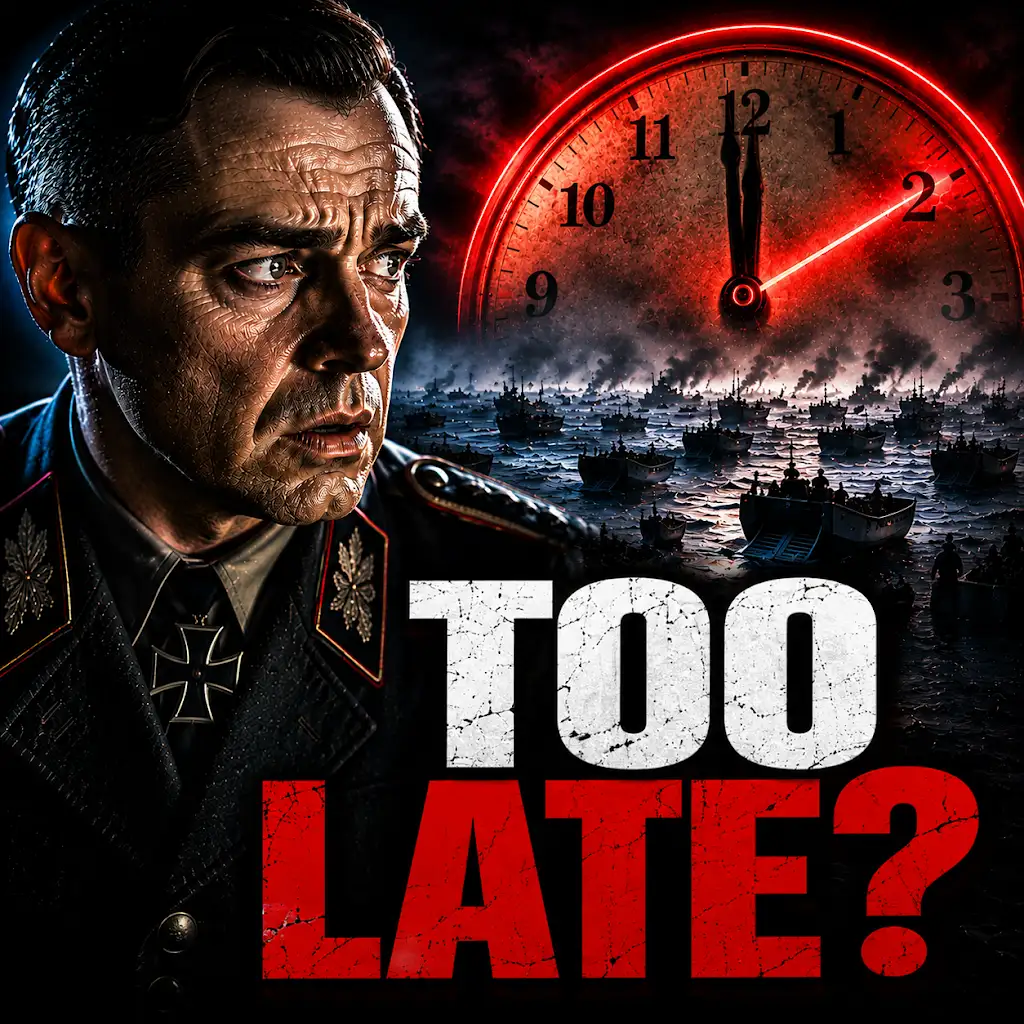
Field Marshal Gerd von Rundstedt, the supreme commander of German forces in the West, found himself in an unenviable position as the Allied invasion of Normandy loomed. His strategic acumen, honed over decades of military service, was now tested against an enemy whose industrial might and logistical capabilities were vastly superior. The fate of Western Europe, and indeed the outcome of the war, hinged precariously on his ability to deploy and effectively utilize his limited armored reserves. The narrative of Rundstedt’s Panzer reserves in Normandy is a complex tapestry woven with threads of strategic anticipation, operational constraints, political interference, and ultimately, the brutal realities of the battlefield.
The German High Command, despite its intelligence reports, struggled to accurately pinpoint the exact location and timing of the Allied invasion. This inherent uncertainty cast a long shadow over their defensive preparations, particularly concerning the crucial deployment of armored formations. Rundstedt, a seasoned veteran who had witnessed the devastating effectiveness of Blitzkrieg in Poland and France, understood the paramount importance of massed armor. He envisioned these powerful formations as the decisive counterstroke, capable of crushing the Allied beachheads before they could consolidate their gains.
The Dilemma of Deployment: Static Defenses vs. Mobile Reserves
The Atlantic Wall, a series of fortifications stretching along the French coast, represented the primary defensive strategy. However, Rundstedt and other experienced commanders recognized its limitations. While it could inflict casualties and slow an invasion, it lacked the mobile punch to decisively repel a determined enemy. The debate raged within German military circles: should the majority of Panzer divisions be committed to static defense along the coast, or held back as a mobile reserve to exploit any perceived weaknesses or to launch a counterattack?
The Arguments for Static Deployment
Proponents of static deployment argued that a strong coastal defense was essential to prevent the Allies from establishing a foothold. They believed that by inflicting heavy losses on the initial landing waves, the Allies might be deterred from continuing their assault. This approach, however, risked the dispersal of valuable armor, making it difficult to concentrate for a decisive counteroffensive.
The Case for Mobile Reserves
Rundstedt and his ilk championed the idea of holding substantial Panzer forces in reserve, ideally positioned to rapidly move towards the most threatened sector once the invasion commenced. This strategy aimed to capitalize on the German advantage in armored warfare, allowing for a concentrated and overwhelming counterattack. The success of this approach, however, was contingent on accurate intelligence and the ability to swiftly deploy these reserves without undue delay.
The Shadow of the Eastern Front
A significant factor influencing German strategic decisions was the ongoing, and increasingly perilous, war on the Eastern Front. The vast majority of Germany’s best Panzer divisions and their experienced crews were engaged in brutal combat against the Soviet Union. This meant that the forces available for the defense of Western Europe were significantly depleted, a fact that weighed heavily on Rundstedt’s mind. He was acutely aware that he was operating with a fraction of the armored strength he would have preferred.
The Impact of Losses on the Eastern Front
The grinding attrition of the Eastern Front had inflicted severe casualties on the Wehrmacht’s armored corps. Not only were entire divisions lost, but the operational capacity of those that remained was often compromised by a lack of experienced personnel, critical equipment shortages, and insufficient training time. This depleted pool of experienced armor was a stark reality that Rundstedt had to contend with.
The Inability to Reinforce from the East
The German military leadership, particularly Hitler, was hesitant to redeploy significant armored forces from the East to the West, fearing that such a move would imperil the Eastern Front. This rigid strategic directive severely hampered Rundstedt’s ability to build a truly formidable reserve. The Eastern Front became a voracious maw, consuming precious resources that could have bolstered the defenses of Normandy.
The Composition and Deployment of Rundstedt’s Panzer Reserves
Despite the limitations, Rundstedt did have a core of seasoned Panzer divisions at his disposal. Their deployment was a meticulously planned, yet ultimately compromised, undertaking. The goal was to position these units in areas that offered the best potential for rapid movement and effective counterattack.
The Elite Panzer Divisions Assigned to the West
Several of the Wehrmacht’s finest Panzer divisions were stationed in France and the Low Countries, preparing for the inevitable invasion. These units, such as the 12th SS Panzer Division “Hitlerjugend,” the 1st SS Panzer Division “Leibstandarte SS Adolf Hitler,” the 2nd SS Panzer Division “Das Reich,” and Panzer Lehr Division, were considered the sharp edge of the German offensive capability. They boasted experienced crews, well-maintained equipment, and a fierce fighting spirit.
The Strengths of these Formations
These elite divisions were characterized by their highly trained crews, many of whom had combat experience from earlier campaigns. Their tanks, while facing growing Allied technological superiority, were still formidable fighting machines. The SS Panzer divisions, in particular, were known for their aggressive tactics and unwavering loyalty to the Nazi regime, making them a potent, albeit fanatical, fighting force.
The Weaknesses and Limitations
However, even these elite formations were not immune to the systemic problems plaguing the German war effort. Ammunition shortages, a lack of spare parts, and the increasing obsolescence of some tank models were persistent issues. Furthermore, the relentless demands of the Eastern Front meant that these divisions often lacked opportunities for proper regrouping, refitting, and extensive training.
The Strategic Locations of the Panzer Reserves
The placement of these Panzer reserves was a delicate balancing act, dictated by the perceived threat and the availability of infrastructure. Rundstedt’s ideal scenario involved holding these divisions in depth, allowing them flexibility to react to the actual invasion point.
The Reserves in Northern France and Normandy
A significant portion of the Panzer reserves were concentrated in Normandy itself or in the immediate hinterland, such as the area around Caen. This proximity offered the quickest response time to an invasion in the region. However, it also meant that these units were vulnerable to pre-invasion aerial bombardment and could be effectively pinned down by overwhelming Allied air power.
The Role of the Panzer Reserves in Belgium and the Netherlands
Other Panzer divisions were stationed further north in Belgium and the Netherlands. These formations were intended to be deployed as strategic reserves, capable of reinforcing Normandy or launching counterattacks from a different axis of advance. Their effectiveness, however, relied heavily on the German ability to rapidly transport them to the threatened front, a challenge exacerbated by Allied air superiority.
The Impact of Political Interference and Hitler’s Command
The strategic decisions concerning Rundstedt’s Panzer reserves were not solely his to make. Adolf Hitler, the Führer, maintained a tight grip on military operations, often overriding the advice of his experienced generals. This political interference proved to be a significant impediment to effective command and control.
Hitler’s Hesitation to Release Panzer Divisions
One of the most critical issues was Hitler’s deep-seated reluctance to release Panzer divisions stationed in France to Rundstedt’s direct command. He harbored suspicions that the Western Allies might feint an invasion in Normandy while the true assault would land elsewhere, or worse, that the Panzer divisions might be used to counterattack in a way that would jeopardize future offensive operations.
The “Führer Reserve” and its Implications
Hitler preferred to keep a significant portion of the Panzer reserves under his personal control, creating what was often referred to as the “Führer Reserve.” This reserve was intended to be used for decisive breakthroughs, often on the Eastern Front, and was not readily available for defensive operations in the West. This left Rundstedt with a fragmented and less effective force.
The Influence of Rommel and the Coastal Defense Lobby
Field Marshal Erwin Rommel, another influential figure, advocated for a more aggressive coastal defense strategy. He believed that the Panzer divisions should be moved closer to the coast to engage the Allies directly on the beaches. This contrasted with Rundstedt’s preference for holding them in reserve. The internal disagreements between these two prominent commanders, coupled with Hitler’s indecisiveness, created a confused command environment.
The Inability to Respond Swiftly to the Invasion
The consequence of this political indecision and inter-command friction was a delayed and hesitant response to the D-Day landings. Instead of being able to launch an immediate and decisive counterattack, Rundstedt’s Panzer divisions were often held back, awaiting Hitler’s orders or caught in transit. This precious time allowed the Allies to establish a solid foothold and pour in reinforcements, negating the element of surprise and local superiority that the German armor desperately needed.
The “Wait and See” Approach
The initial hours and days after the D-Day landings were characterized by a frustrating “wait and see” approach from the German High Command. This stemmed from a lack of clarity regarding the scale and location of the invasion, and from Hitler’s reluctance to commit his precious reserves.
The Battle for Airfields and Strategic Locations
The Allied bombing campaign targeted German airfields and transportation hubs, further hindering the movement of Panzer divisions. This meant that even when orders were finally given to deploy, the divisions often faced significant delays in reaching the front lines.
The Battle for Normandy: Panzer Reserves in Action
Once the Allied invasion was undeniably established, Rundstedt’s Panzer reserves were thrown into the inferno of the Battle for Normandy. Their performance was a testament to the courage and skill of the German tankers, but also a stark illustration of the strategic and operational disadvantages they faced.
The Fierce Fighting Around Caen
The area around Caen became a focal point of the land battle, and it was here that some of the Panzer divisions saw their most intense action. The SS Panzer divisions, known for their ferocity, launched several counterattacks aimed at pushing the British and Canadian forces back into the sea.
The “Hitlerjugend” and “Leibstandarte” in Action
The 12th SS Panzer Division “Hitlerjugend,” composed largely of young, indoctrinated soldiers, fought with remarkable tenacity. They engaged in brutal close-quarters combat, inflicting heavy casualties on the Allied forces. Similarly, the 1st SS Panzer Division “Leibstandarte” proved to be a formidable opponent, demonstrating their combat prowess in the desperate defense of key terrain.
The “Das Reich” and Panzer Lehr Divisions
The 2nd SS Panzer Division “Das Reich” and the Panzer Lehr Division were also committed to the Normandy campaign. These divisions, while also experiencing heavy losses, contributed significantly to the prolonged and bloody struggle for control of the region.
The Impact of Allied Air Superiority
The overwhelming air superiority of the Allied forces was a decisive factor in the Battle of Normandy. German Panzer divisions, particularly when on the move, were extremely vulnerable to attack from the air. Allied fighter-bombers could locate and destroy tanks with relative impunity, turning the roads and open fields into deathtraps.
The Devastating Effect of Strafing Runs
The relentless strafing runs by Allied aircraft disrupted German formations, destroyed vital equipment, and demoralized the troops. The ability of the Allies to maintain a constant aerial presence meant that German armor could rarely operate freely or launch coordinated movements without incurring severe losses.
The Strategic Bombing Campaign Against Infrastructure
Beyond direct attacks on troop concentrations, the Allied strategic bombing campaign targeted rail lines, bridges, and supply depots. This hampered the flow of reinforcements, ammunition, and fuel to the German front lines, further weakening the ability of the Panzer reserves to sustain their fight.
The Long-Term Consequences and Legacy
The failure to effectively deploy and utilize Rundstedt’s Panzer reserves in Normandy had profound and lasting consequences, not only for the Battle of Normandy but for the entire course of the war. The opportunity to decisively repel the Allied invasion was lost, and the German army in the West was irrevocably weakened.
The Erosion of German Armored Strength
The Battle of Normandy proved to be a costly attritional battle for the German Panzer divisions. While they fought bravely, the relentless pressure from the Allies, coupled with their own logistical and operational limitations, led to the decimation of these elite formations. Many of the veteran crews and tanks that had survived years of combat were lost in the Normandy campaign.
The Irreplaceable Losses of Experienced Crews
The loss of experienced tank crews was particularly damaging. The time and resources required to train new crews meant that the German army struggled to replace these vital personnel, leading to a gradual decline in the overall combat effectiveness of its armored units.
The Depletion of Tank Strength
The sheer number of tanks destroyed during the campaign represented a significant blow to German armored strength. While Germany continued to produce new tanks, they struggled to replace the sheer volume of losses incurred in Normandy, and the quality of production was often hampered by resource shortages and Allied bombing.
The Path to Allied Victory
The failure of the German defenses in Normandy opened the door for the Allied advance across France and ultimately towards Germany. The strategic initiative passed irrevocably to the Allies, and the long process of liberating Western Europe began in earnest.
The Breakthrough at Saint-Lô and the Falaise Pocket
The Allied breakthrough at Saint-Lô and the subsequent encirclement of German forces in the Falaise Pocket marked the effective collapse of the German front in Normandy. The remnants of the Panzer divisions were caught in a devastating trap, further exacerbating their losses.
The Liberation of France and the Push into Germany
With the German army in the West shattered, the Allies were able to liberate France and then push towards the German homeland. The strategic opportunity that Rundstedt had envisioned for his Panzer reserves to deliver a decisive blow had been squandered, and the road to Allied victory was paved with the ashes of those reserves.
The Enduring Questions of Command and Strategy
The story of Rundstedt’s Panzer reserves in Normandy continues to be a subject of historical debate and analysis. It serves as a stark reminder of the complexities of warfare, the critical importance of effective command and control, and the devastating consequences of political interference in military strategy. The ghost of those formidable armored formations, once poised to strike, remains a poignant symbol of a lost opportunity and a turning point in the Second World War.