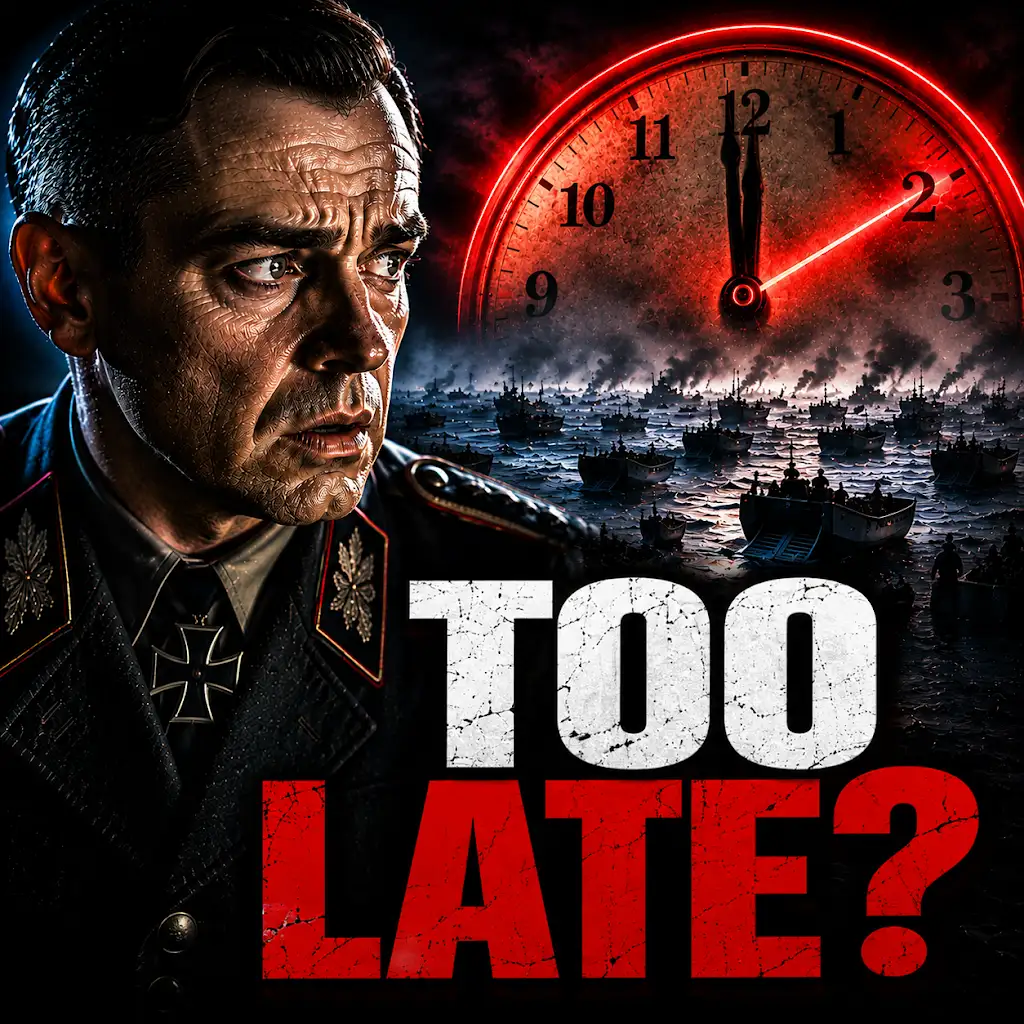
The summer of 1944 marked a pivotal moment in the Second World War. Following the D-Day landings on June 6th, the Allied forces, primarily American, British, and Canadian, began their arduous campaign to liberate Western Europe from Nazi Germany’s grasp. Central to the German defensive strategy in Normandy were their formidable Panzer divisions. These armored units, renowned for their speed, firepower, and tactical flexibility, were intended to be the sharp edge of the German counterattack, designed to throw the invading Allied armies back into the sea. However, the reality of their deployment and effectiveness in the Normandy campaign proved to be a far more complex and ultimately tragic affair for the Wehrmacht.
The Operational Context: Facing the Allied Tide
The initial German response to the Allied invasion was a desperate scramble to contain the beachhead. Adolf Hitler, influenced by his generals and his own strategic instincts, was convinced that the main Allied effort would come across the Pas-de-Calais, not Normandy. This miscalculation, coupled with the extensive Allied deception operations, meant that the Panzer divisions stationed in France were not optimally positioned to intervene decisively in the crucial early hours of the invasion.
Initial Deployment and Strategic Imperatives
The German order of battle in Normandy was a patchwork of infantry, Fallschirmjäger (paratrooper) divisions, and the coveted Panzer and Panzergrenadier divisions. The latter represented the backbone of the German armored force, intended for rapid maneuver and decisive counter-offensives. However, the disposition of these units was fragmented. Some were held in reserve, awaiting confirmation of the true invasion point, while others were already committed to garrisons or defensive positions further inland.
The Role of Panzer Divisions in German Doctrine
German military doctrine, forged in the crucible of early war successes, heavily emphasized the concentrated use of armor in swift, devastating thrusts. Panzer divisions were designed to break through enemy lines, bypass strongpoints, and disrupt rear areas, creating chaos and enabling infantry to exploit the gaps. The concept of “Blitzkrieg” or lightning war, relied on the synergy between tanks, motorized infantry, artillery, and air support. In theory, the Panzer divisions in Normandy were perfectly suited to execute such a strategy.
The Shadow of Allied Air Superiority
One of the most significant constraints on German armored operations in Normandy was the overwhelming Allied air superiority. The skies were dominated by Allied fighter-bombers, which relentlessly harried German movements, particularly during daylight hours. This made long-distance troop and equipment redeployments incredibly perilous and severely hampered any attempt at large-scale, coordinated armored offensives.
The Panzer Divisions in Action: From Counterattack to Attrition
The initial days of the Normandy campaign saw the Panzer divisions of the LXXXIV Corps and II SS-Panzerkorps being committed piecemeal to stem the Allied advance. These engagements were often characterized by desperate fighting, where the superior quality of some German tanks, like the Panther and Tiger, was evident, but their limited numbers and logistical challenges prevented them from achieving strategic objectives.
The Battle for Caen: A Grueling Test of Will
The city of Caen became a focal point of the battle for Normandy, and its defense was largelyShouldered by Panzer divisions. The British and Canadian forces launched repeated assaults to capture the strategically important city and its surrounding area, which would provide a springboard for further advances.
The Role of II SS-Panzerkorps
The II SS-Panzerkorps, comprising the 9. SS-Panzer-Division “Hohenstaufen” and the 10. SS-Panzer-Division “Frundsberg,” was arguably the most potent armored formation initially deployed against the British and Canadian sector. Their arrival, however, was delayed, and they were committed in a piecemeal fashion, first to support the defense of Caen and then to launch counterattacks.
The Fierce Resistance of the Panzergrenadiers
While tanks were the most visible element, the Panzergrenadier units within the Panzer divisions played a crucial role. These were motorized or mechanized infantry, trained to fight alongside tanks, provide close protection, and clear obstacles. Their determined resistance in the hedgerow country of Normandy significantly slowed the Allied advance and inflicted heavy casualties.
The American Sector: Facing the Panzer Lehr Division
In the American sector, the primary armored threat in the early weeks was the Panzer Lehr Division. This division was a unique formation, composed largely of experienced troops who had previously served as instructors in Panzer training schools, hence “Lehr” (teaching). They were equipped with a mix of Panzer IVs and Panthers, making them a formidable opponent for the M4 Sherman tanks of the US Army.
The Battle of the Hedgerows
The bocage country of Normandy, with its dense hedgerows, thick vegetation, and narrow lanes, proved to be a tactical nightmare for armored warfare. It negated the inherent advantages of tanks, limiting visibility and creating killing zones for concealed anti-tank guns and ambushes. The Panzer Lehr Division, despite its quality, struggled to overcome this challenging terrain.
The Impact of Allied Artillery and Air Power
Even when the Panzer divisions managed to concentrate their forces, they were subjected to relentless artillery barrages and devastating air attacks. Allied artillery observers, often embedded with forward infantry units, could quickly direct fire onto concentrations of German armor. Similarly, the ever-present threat of Allied aircraft forced German tanks to move under cover of darkness or smoke screens, further impeding their operational effectiveness.
The Challenges of Logistics and Reinforcement
The German war machine in Normandy was plagued by severe logistical deficiencies. The constant Allied bombing of railways, roads, and airfields made it incredibly difficult to supply fuel, ammunition, and replacement parts to the front lines. This was a particularly acute problem for the fuel-hungry Panzer divisions.
The Fuel Crisis
Fuel was the lifeblood of armored warfare. The German logistical network in Normandy was stretched to its breaking point from the outset. Allied interdiction efforts severely limited the flow of fuel from German ports and depots. This meant that even when Panzer divisions were relatively intact, they often lacked the fuel to move or engage in prolonged combat.
The Impact on Panzer Operational Readiness
The chronic fuel shortages directly impacted the operational readiness of the Panzer divisions. Tanks would be sidelined due to lack of fuel, and even units that managed to reach the front often had their operational range severely restricted. This transformed the once mobile and dynamic Panzer divisions into static, defensive strongpoints, a role for which they were not optimally designed.
Ammunition and Replacement Shortages
Beyond fuel, shortages of ammunition and spare parts for tanks also became critical. The high rate of fire of German tanks, while a strength in combat, rapidly depleted ammunition stocks. The complex mechanics of tanks like the Panther and Tiger meant that maintenance was a constant challenge, and the lack of spare parts meant that damaged vehicles often remained out of action for extended periods.
The Wear and Tear of Combat
The intense fighting in Normandy, often in difficult terrain and under constant pressure, led to significant wear and tear on the Panzer divisions’ equipment. Tracks broke, engines overheated, and turrets jammed. Without the ability to quickly replace worn parts, many vehicles were lost to mechanical failure as much as to enemy action.
The Strategic Setbacks: From Hope to Despair
Despite the individual bravery and tactical skill of their crews, the German Panzer divisions in Normandy ultimately failed to achieve their strategic objectives. The initial hope of throwing the Allies back into the sea quickly evaporated, replaced by a grim struggle for survival.
Operation “Märtyrer” (Martyr): The Failed Counteroffensive
One of the most significant attempts by the German armor to regain the initiative was Operation “Märtyrer,” launched on July 25th, 1944, against the American sector. This offensive aimed to recapture ground lost by the Germans and disrupt the American buildup.
The Role of I SS-Panzerkorps and II SS-Panzerkorps
The offensive involved elements of the I SS-Panzerkorps and II SS-Panzerkorps, bringing some of the most powerful Panzer units into play. However, the operation was hampered by poor intelligence, a lack of effective air support, and the well-prepared American defenses.
The Effectiveness of Allied Anti-Tank Defenses
The Americans, having learned from earlier encounters, had significantly improved their anti-tank defenses. They employed concentrated firepower, often using Shermans in hull-down positions and deploying towed anti-tank guns with effective fields of fire. The hedgerows also provided excellent cover for these defenses.
The Falaise Pocket: The Devastating Conclusion
The culminating disaster for the German Panzer divisions in Normandy was their encirclement and near-annihilation in the Falaise Pocket. As the Allies closed in from the north and south, the German Ninth Army and elements of the Fifth Panzer Army found themselves trapped.
The Struggle for Escape
The remaining Panzer divisions fought ferociously to break out of the pocket or at least delay the Allied advance, allowing as many troops and as much equipment as possible to escape. The battles within the pocket were brutal and desperate, characterized by close-quarters combat and immense destruction.
The Loss of Armored Strength
The Falaise Pocket represented a catastrophic loss of German armored strength. Hundreds of tanks, self-propelled guns, and other armored vehicles were destroyed or abandoned. The cream of the German Panzerwaffe was broken, a blow from which it would never fully recover during the war. The qualitative advantage of German tanks was ultimately overwhelmed by the sheer quantitative superiority of the Allies, coupled with superior air power and logistical capabilities. The Panzer divisions, once the symbol of German military might, were reduced to a shadow of their former selves, a tragic testament to the changing fortunes of war.