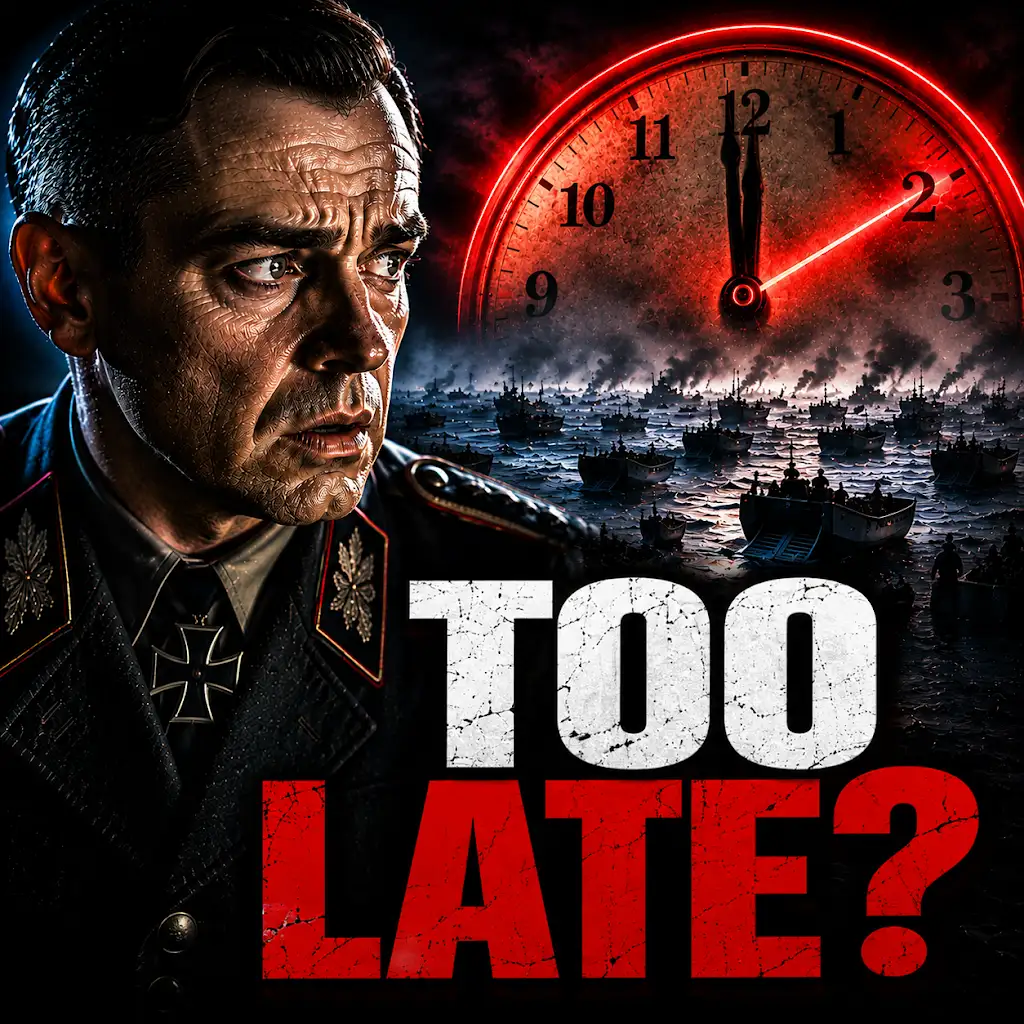
The meticulously orchestrated deception surrounding the Normandy invasion, codenamed Operation Fortitude, stands as one of history’s most audacious and successful strategic gambits. It was a masterclass in psychological warfare and logistical misdirection, designed to lull the German high command into a false sense of security and to convince them that the Allied landings would occur elsewhere, thereby weakening their defenses on the real invasion beaches. This elaborate charade, spanning months and involving thousands of personnel and a vast array of fabricated assets, played a pivotal role in the ultimate success of D-Day.
The sheer scale of the proposed Allied invasion of Fortress Europe demanded a commensurate level of operational security and strategic advantage. Adolf Hitler’s Atlantic Wall, a formidable network of coastal defenses stretching from Denmark to the Spanish border, represented a significant obstacle. The Allies understood that a frontal assault on the strongest points of this wall would result in catastrophic casualties. Therefore, creating doubt and division in the German military’s response was paramount.
Understanding the German Mindset
German intelligence, while not entirely incompetent, possessed certain biases and vulnerabilities that the Allies were keen to exploit. The Germans were heavily invested in the idea of a decisive battle and believed that the Allies would aim for the most direct and strategically advantageous crossing of the English Channel. Furthermore, Hitler himself was deeply concerned about the threat of Soviet advances on the Eastern Front, making him susceptible to believing that the Western Allies would also be compelled to launch their invasion at the most opportune moment for them, often interpreted as the shortest sea crossing.
The Need for a Diversionary Threat
A key objective of Allied deception was to convince the German command that the primary invasion would occur at the Pas-de-Calais, the narrowest point of the English Channel. This region was geographically closer to Britain and offered the most direct route for an invasion force. By focusing German attention and resources on this area, the Allies aimed to thin out their defenses in Normandy, the actual landing zone, making the assault more manageable and less costly in terms of Allied lives.
Operation Fortitude: The Master Plan Unveiled
Operation Fortitude was not a single, monolithic deception but a series of interconnected plans executed with remarkable coordination. It was divided into two main components: Fortitude North and Fortitude South, each designed to mislead the enemy about the location and timing of the invasion.
Fortitude North: The Scottish Specter
Fortitude North was intended to create the illusion of an imminent invasion of Norway. The rationale behind this was the strategic importance of Norway to the Germans, who feared it could be used as a base for Allied attacks on their vital shipping lanes and industries. While Norway was a less likely primary target for the Allies, threatening it served to tie down German reserves and prevent their redeployment to more critical fronts.
Fabricating an Army Group
To support Fortitude North, the Allies created the fictional Fifteenth Army Group, ostensibly commanded by the highly respected General Bernard Montgomery. This phantom army was projected to be amassing in northeastern Scotland, poised to invade Norway. The creation of this entirely fictitious army involved numerous elaborate measures, including the dissemination of fake troop movements, radio traffic, and even the construction of dummy infrastructure.
The Role of Radio Deception
Radio communications played a crucial role in conveying the illusion of a large, active army. Allied intelligence meticulously crafted radio messages that appeared to originate from Fifteenth Army Group, simulating troop deployments, logistical preparations, and operational planning. These messages were carefully coded and broadcasted to mimic genuine military chatter, aiming to be intercepted by German listening posts.
Fortitude South: The Pas-de-Calais Phantasm
Fortitude South was the most critical and extensive element of the deception plan. Its primary objective was to convince the Germans that the main invasion would take place in the Pas-de-Calais. This required a far more sophisticated and multi-faceted approach than Fortitude North, involving the creation of a massive, seemingly credible threat.
The First U.S. Army Group (FUSAG)
The linchpin of Fortitude South was the creation of the First U.S. Army Group (FUSAG), a fictitious formation supposedly under the command of the charismatic and well-known American General George S. Patton. Patton’s reputation as an aggressive and successful commander made him the ideal figurehead for a formidable invasion force. The Allies meticulously cultivated the impression that FUSAG was a powerful army of over a million men, concentrated in southeastern England, specifically targeting the Pas-de-Calais.
The Art of the Double Agent
The effective use of double agents, also known as “turned” agents, was fundamental to the success of Fortitude South. These were individuals who had previously worked for German intelligence but were now secretly working for the Allies. Their role was to feed carefully curated misinformation back to their German handlers, reinforcing the narrative of an impending invasion at the Pas-de-Calais.
“Garbo” and His Impact
Perhaps the most famous double agent involved was Juan Pujol García, codenamed “Garbo” by the British. Garbo was a Spanish national who, driven by a mixture of ideology and a desire for adventure, offered his services to the British. He proved to be an exceptionally valuable asset, meticulously crafting elaborate stories and fabricating evidence that convinced the Germans that a massive invasion force, under Patton’s command, was indeed preparing to land in the Pas-de-Calais. Garbo’s intelligence was so convincing that the Germans awarded him the Iron Cross.
The “Brutus” Network
Beyond individual agents, the Allies also established a network of entirely fictional units and intelligence streams. This involved creating numerous “sources” within the imaginary FUSAG, each feeding different pieces of information to the Germans, all coalescing around the Pas-de-Calais. This intricate web of disinformation made the deception appear more robust and less susceptible to scrutiny.
The Tools of Deception: Fabricating an Army
The creation of FUSAG and its perceived threat required a tangible, albeit illusory, presence. The Allies employed a wide array of ingenious methods to make this phantom army appear real to German reconnaissance.
Dummy Armies and Armaments
One of the most visually striking elements of Fortitude South involved the construction of vast quantities of dummy military equipment. Inflatable tanks, artillery pieces, and even aircraft were strategically placed in staging areas along the coast of southeastern England. These decoys were designed to be spotted by aerial reconnaissance and to create the impression of a massive build-up of forces.
Inflatable Tanks and Jeeps
The use of inflatable rubber replicas of tanks, artillery, and even landing craft was particularly effective. These could be quickly deployed and repositioned, creating the illusion of constant troop movement and expansion. When viewed from the air, these decoys, often painted and positioned to mimic real formations, were remarkably convincing.
Fake Airfields and Ports
The Allies also constructed dummy airfields and ports, complete with fake aircraft and shipping. These were designed to suggest the presence of a large air armada and a significant naval force, further bolstering the illusion of an impending invasion. The noises and activity associated with these fake installations, often amplified by sound systems, added another layer of realism.
Strategic Use of Troop Movements and Camouflage
Beyond static displays, the Allies employed elaborate troop movement exercises and sophisticated camouflage techniques. Small numbers of real troops were moved around in visible areas to create the impression of much larger formations. They were also instructed to engage in activities that suggested preparation for an invasion, such as digging trenches and practicing amphibious landings, all within areas deliberately exposed to German observation.
Convoy Illusions
The Allies staged numerous fake troop convoys, using dummy ships and vehicles to simulate the movement of large invasion fleets. These convoys would often sail into specific areas and then disappear, only to reappear elsewhere, further confusing German intelligence about the true direction and scale of operations.
Radio Silence and Feints
Periods of intense radio silence followed by bursts of seemingly urgent communication were used to mimic the final stages of invasion preparation. These feints were designed to provoke German responses and to draw their attention away from the real invasion plans.
The Psychological Impact: Manipulating German Command
The ultimate success of Operation Fortitude lay not just in its physical manifestations but in its profound psychological impact on the German high command. By convincing them that the invasion would occur elsewhere, the Allies sowed confusion and misdirected crucial military resources.
Hitler’s Own Beliefs
Crucially, Adolf Hitler himself became a strong proponent of the Pas-de-Calais invasion theory. His fixation on this location, coupled with the meticulously crafted deception, led him to keep significant reserves, including elite Panzer divisions, stationed in the vicinity of the Pas-de-Calais, away from Normandy.
The Strategic Delay
The presence of these reserves was a critical factor. Even after the D-Day landings in Normandy, Hitler’s initial reaction was to believe that this was merely a feint and that the real invasion was still coming at the Pas-de-Calais. This hesitation and delay in committing his strategic reserves to counter the Normandy landings proved to be a fatal error for the German war effort.
Weakening the Atlantic Wall
The misdirection of German forces directly translated into weakened defenses at the actual landing sites. By convincing the Germans that the Pas-de-Calais was the primary threat, the Allies effectively thinned out the German garrisons and fortifications in Normandy, making the amphibious assault significantly more achievable.
The Importance of Panzer Divisions
The Atlantic Wall was heavily reliant on the rapid deployment of mobile Panzer divisions to counter any Allied landings. The deception ensured that many of these vital units were positioned far from Normandy, delaying their arrival and severely hampering the German response to the D-Day landings.
The Aftermath: A Legacy of Deception
The success of Operation Fortitude was a testament to the power of strategic deception in warfare. It demonstrated that psychological warfare, when executed with precision and imagination, could be as potent a weapon as any physical armament.
D-Day’s Success Attributed to Deception
Many historians and military analysts believe that the success of the Normandy invasion, and the subsequent liberation of Western Europe, would have been far more costly, if not impossible, without the elaborate deception of Operation Fortitude. The element of surprise, achieved through masterful misdirection, was a critical factor in the Allied victory.
Enduring Lessons in Military Strategy
The principles of deception employed in Operation Fortitude continue to influence military thinking and strategic planning today. The operation serves as a enduring case study in how to manipulate an adversary’s perceptions, exploit their biases, and ultimately achieve strategic objectives through indirect means. The meticulous planning, unwavering execution, and the sheer audacity of Operation Fortitude cemented its place as one of the most significant and successful deception campaigns in military history. It was a war won not just on the beaches of Normandy, but in the minds of the enemy, long before the first shot was fired.