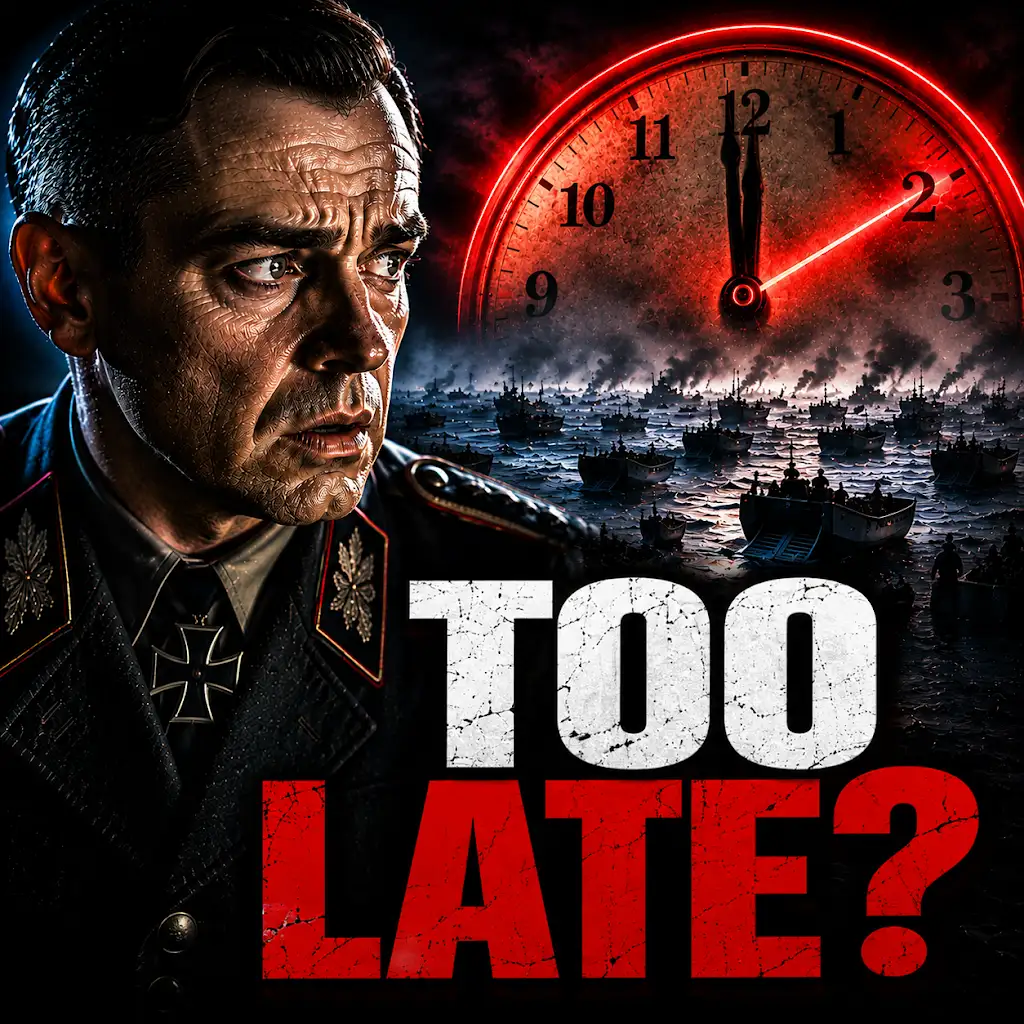
The salt spray stung the faces of the German defenders on the Atlantic Wall, a grim testament to the relentless churn of the English Channel. For weeks, whispers of an impending invasion had circulated through the ranks, a gnawing dread that settled deep in their bellies. They had fortified their positions, dug trenches, and laid mines, their senses honed to the slightest anomaly in the ceaseless roar of the sea and the mournful cry of the gulls. Yet, the sheer scale of the Allied offensive, when it finally descended, would eclipse their most dire imaginings. This is a glimpse into Operation Overlord, not from the Allied perspective of triumph and liberation, but through the bewildered, desperate, and ultimately defeated eyes of the German soldiers who stood in its path.
The days leading up to D-Day were characterized by a peculiar, almost suffocating tension. The weather, a fickle mistress, had been the subject of intense speculation among both sides. For the Germans, a prolonged period of poor weather offered a fragile hope of delaying the inevitable. They had been anticipating an invasion for months, meticulously analyzing Allied bomber activity, troop build-ups in England, and coastal reconnaissance. Yet, the exact timing and location remained a maddening enigma.
Intercepted Intelligence: A Double-Edged Sword
German intelligence, particularly the Abwehr, had been working diligently to decipher Allied intentions. They had intercepted communications, interrogated prisoners, and deployed spies. However, the Allies, under the masterful deception of Operation Fortitude, had skillfully woven a web of misinformation. They convinced the Germans that the main invasion would target the Pas-de-Calais, a region closer to Britain and thus a more logical landing zone. This elaborate deception, involving phantom armies, inflatable tanks, and radio traffic, drew crucial German reserves away from Normandy.
The Phantom Army of FUSAG
The success of Operation Fortitude cannot be overstated. The First United States Army Group (FUSAG), a fictional formation under the command of General George S. Patton, was meticulously crafted to appear real. Elaborate camp constructions, dummy landing craft, and fake radio broadcasts created a convincing illusion of a massive invasion force poised to strike at Calais. German reconnaissance aircraft and spies reported on these seemingly concrete preparations, diverting their attention and resources away from the actual invasion beaches.
Misinterpreting the Signs
Despite the intelligence gathered, the German command structure, particularly Field Marshal Erwin Rommel, who was tasked with strengthening the Atlantic Wall, harbored a growing unease. Rommel, a pragmatist and astute observer of Allied capabilities, recognized the inadequacy of the defenses in many sectors and pushed for more extensive fortifications, including submerged obstacles and increased troop deployments. However, his pleas for greater resources and a more flexible defensive strategy were not always fully heeded by the higher command in Berlin, who were still largely fixated on the Pas-de-Calais.
The Atlantic Wall: A Symbol of False Security
The Atlantic Wall, a vast network of fortifications stretching from the Arctic Circle to the Spanish border, was intended to be an impenetrable barrier. It comprised concrete bunkers, anti-tank ditches, minefields, and beach obstacles designed to repel any seaborne assault. However, by June 1944, the Wall was far from complete. Gaps existed, defenses were often thinly spread, and the quality of construction varied significantly. In many areas, the fortifications were more symbolic than truly effective.
Variations in Defensive Strength
The strength of the Atlantic Wall defenses varied considerably along the coastline. The Pas-de-Calais, being the perceived primary invasion target, boasted the most formidable defenses. Areas like Normandy, while still heavily fortified, were considered secondary by the German high command, leading to a less concentrated deployment of troops and heavy weaponry. This strategic miscalculation proved to be a critical flaw.
The Role of Rommel’s Inspections
Field Marshal Rommel, appointed commander of Army Group B in late 1943, recognized the deficiencies of the Atlantic Wall firsthand. He embarked on extensive inspections, traveling thousands of miles to assess the defenses and identify weaknesses. His reports painted a stark picture of the challenges faced, emphasizing the need for more manpower, better artillery, and especially the crucial element of decisive defensive action in the face of an attack. He advocated for a strategy of immediate counterattack, rather than waiting for reinforcements to arrive after the initial landings.
The Longest Night: The Eve of Invasion
The night of June 5th to June 6th, 1944, was a period of heightened anxiety and anticipation for the German forces. The weather, which had been a source of hope for a delay, began to shift. Allied deception efforts were in full swing, and the German defenders remained on high alert, their nerves frayed by the prolonged tension.
Whispers and Rumors in the Trenches
For the ordinary soldier, the air crackled with rumor and speculation. Patrols reported increased Allied aircraft activity, and the distant rumble of naval guns, though intermittent, was a constant reminder of the looming threat. Sleep was fitful, punctuated by the sounds of the sea and the occasional bark of a dog or the call of a sentry. The existential dread of facing an overwhelming enemy, supported by the vast resources of the Allied powers, weighed heavily on their minds.
The Paratrooper Threat
The dropping of Allied paratroopers behind the invasion beaches was a particularly unnerving development. These highly trained soldiers, operating in the darkness and chaos, posed a significant threat to communications, command centers, and artillery positions. The German response, though often brave and determined, was hampered by the disorganization caused by these airborne assaults.
Communication Breakdowns
The effectiveness of German communication networks, crucial for coordinating a swift response, was severely compromised. Allied sabotage operations, including the cutting of telephone lines and the jamming of radio frequencies, created significant delays and confusion. This isolation of units left them vulnerable and unable to effectively communicate their situation or call for assistance.
The Inadequacy of Reserves
Crucially, a significant portion of Germany’s mobile reserves, including the Panzer divisions, had been strategically positioned in the Pas-de-Calais, a consequence of the successful deception operations. This meant that when the invasion commenced in Normandy, the German response was significantly weakened, lacking the armored punch needed to effectively contain and push back the Allied beachheads. The speed at which these reserves could be redeployed to Normandy was a major concern for the German command.
The “Panzer Reserve Myth”
The belief that substantial Panzer reserves were readily available to counter the invasion in Normandy was, to a degree, a myth. While numerous Panzer divisions existed, many were understrength, had suffered heavy losses on the Eastern Front, and were in various states of refitting and training. The geographical distance and the logistical challenges of moving them quickly to the Normandy front were substantial hurdles.
Rommel’s Frustration
Field Marshal Rommel’s frustration with the perceived lack of urgency from the highest levels of command was palpable. He had repeatedly stressed the need for immediate and decisive action, and the deployment of his elite Panzer reserves. His advocacy for a more flexible defense, allowing for aggressive counterattacks on the beaches themselves, clashed with the more static defensive doctrines favored by some in the OKW (Oberkommando der Wehrmacht – High Command of the Armed Forces).
D-Day: The Deluge Begins
The dawn of June 6th, 1944, brought with it a terrifying reality. The Allied armada, a spectacle of unparalleled scale, appeared on the horizon. The bombardment that followed was unlike anything the German defenders had ever experienced, a deafening symphony of destruction that pulverized their carefully constructed defenses.
The Bombardment: A Symphony of Destruction
The pre-invasion naval and air bombardment was intended to soften up the German defenses. For the defenders, it was a hellish ordeal. Shells rained down relentlessly, obliterating bunkers, churning the beaches into a muddy wasteland, and sowing chaos. The sheer volume and accuracy of the Allied fire overwhelmed many of the defenders, leaving them dazed and demoralized even before the first enemy boots touched the sand.
The Psychological Impact of the Bombardment
Beyond the physical destruction, the psychological impact of the bombardment was immense. The constant thunder of artillery and the sight of their defenses disintegrating instilled a deep sense of helplessness and despair in many soldiers. It was a brutal testament to the overwhelming power the Allies could bring to bear.
Gaps in the Defensive Line
Despite the fierce resistance, the relentless bombardment did create significant breaches in the German defensive lines, particularly on the landing beaches. This allowed the Allied infantry to advance inland with less immediate opposition in certain sectors, though they still faced determined resistance in others.
The Landing: A Wave of Steel and Fire
As the landing craft, thousands of them, churned towards the shore, the German defenders, those who had survived the bombardment, braced themselves for the onslaught. Machine guns chattered, mortars barked, and artillery, where it still functioned, unleashed its fury. But the tide of humanity, supported by an unstoppable torrent of armor and firepower, was too great.
Omaha Beach: The Nightmare Unfolds
Omaha Beach became synonymous with German defiance and Allied sacrifice. The American forces landing here faced particularly brutal resistance from well-entrenched German units, including elements of the 352nd Infantry Division. The geography of Omaha, with its high bluffs overlooking the beach, provided ideal defensive positions for the Germans, turning the landing into a protracted and bloody struggle.
The 352nd Infantry Division’s Stand
The 352nd Infantry Division, initially believed to be a second-line unit, proved to be a formidable obstacle. Their commanders, recognizing the threat, had reinforced their positions and organized a tenacious defense. The American troops faced a hail of machine-gun fire, artillery, and mortar shells from the bluffs, suffering catastrophic casualties in the initial stages of the landing.
The Role of German Obstacles
The Germans had meticulously placed a variety of obstacles on Omaha Beach, including “hedgehogs” (steel obstacles), mines, and barbed wire. These defenses, combined with the natural terrain, created a killing zone that the Allied soldiers had to navigate under intense enemy fire.
Utah Beach: A Less Devastating Encounter
In contrast to Omaha, the landings on Utah Beach were met with less concentrated German resistance. This was partly due to the Allied deception operations that had convinced the Germans that the primary landing would be further east, and partly due to a navigational error by the landing craft which placed the American troops slightly off their intended course, into a less heavily defended sector.
The Influence of Deception on Utah Beach
The success of Operation Fortitude in diverting German attention to the Pas-de-Calais had a direct impact on the deployment of forces defending Utah Beach. The German units present were less experienced and their defenses were not as robust as those found on the more heavily contested beaches.
Accidental Landing Site and Its Advantages
The slight deviation in the landing for Utah Beach, while initially a concern for the Allied commanders, ultimately placed the American troops in a less formidable position. They were able to bypass some of the most heavily fortified German positions and establish a foothold with fewer immediate casualties.
Airborne Operations: Disrupting the Rear
The Allied airborne landings, carried out under the cover of darkness, were designed to seize key bridges, disrupt German communications, and sow confusion behind the invasion beaches. While facing stiff resistance and suffering significant casualties themselves, these airborne troops played a crucial role in preventing German reinforcements from reaching the coast quickly.
The Capture of Sainte-Mère-Église
The 82nd Airborne Division’s objective of capturing Sainte-Mère-Église was a critical early success. The ensuing fight for the town was fierce, with paratroopers battling German forces for control. The iconic image of the paratrooper hanging from the church steeple serves as a stark reminder of the brutal fighting that occurred.
The Bénouville Bridge (Pegasus Bridge)
The successful capture of the Bénouville Bridge, later famously known as Pegasus Bridge, by British glider-borne troops was a vital achievement. This operation secured a crucial crossing over the Caen Canal, preventing German forces from reinforcing their positions on the eastern flank of the invasion.
The Battle for the Bocage: A Grueling Struggle
Following the initial landings, the Allies found themselves embroiled in a grueling battle across the hedgerow country of Normandy, known as the bocage. This unique terrain, characterized by dense hedges, narrow lanes, and sunken roads, proved to be an ideal defensive environment for the tenacious German soldiers.
The Bocage: A Defensive Haven
The bocage provided excellent cover and concealment for German defenders. The thick, ancient hedges offered natural fortifications, allowing them to ambush Allied armor and infantry with devastating effect. The confined spaces limited the maneuverability of Allied tanks, turning them into vulnerable targets.
German Ambushes and Anti-Tank Tactics
German forces, particularly their skilled anti-tank crews, expertly utilized the bocage to their advantage. They would lie in wait in concealed positions, allowing Allied columns to advance into a killing zone before unleashing devastating fire. The “hedgerow fighters” of the German army became masters of this brutal form of warfare.
The Effectiveness of Panzerfaust and Panzerschreck
The widespread use of portable anti-tank weapons like the Panzerfaust and Panzerschreck by German infantry proved to be a significant threat to Allied armor. These weapons, though often single-shot, were highly effective at close range and could penetrate the armor of Allied tanks.
The Hidden German Gunner
The Germans excelled at camouflaging their anti-tank guns and concealed their crews within the dense hedgerows. This made them incredibly difficult for Allied reconnaissance to detect, and they would often wait until Allied tanks were within a few meters before opening fire.
The Grind of Attrition: A War of Inches
The battle for the bocage was a war of attrition. Progress was slow and costly, with both sides suffering heavy casualties for every inch of ground gained or lost. The Allies, accustomed to more open warfare, struggled to adapt to the close-quarters, brutal fighting that characterized this phase of the campaign.
Allied Tank Vulnerabilities
The design of many Allied tanks at the time, particularly the Sherman, made them vulnerable to German anti-tank fire. While numerous and versatile, their armor was not as thick as some German counterparts, and they could be easily knocked out by well-aimed shots from Panzerfausts or German anti-tank guns hidden within the bocage.
The Infamous “Tiger” and “Panther” Tanks
The presence of German Tiger and Panther tanks, while not as numerous as Allied tanks, instilled fear in Allied soldiers. These formidable machines possessed superior armor and firepower, and their appearance on the battlefield often resulted in significant losses for Allied armored units.
The “Breakout” and its Unforeseen Consequences
The Allied eventual breakout from the bocage, culminating in the Falaise Pocket, came at a tremendous cost. The German defense, though ultimately outmaneuvered and overwhelmed, fought with a desperate ferocity born of facing inevitable defeat.
The Falaise Pocket: A German Catastrophe
The Falaise Pocket was a monumental disaster for the German army in Normandy. Allied forces, converging from different directions, managed to encircle a large number of German troops, leading to their destruction or capture. This marked a turning point in the Battle of Normandy, effectively shattering the German defensive front.
The Destruction of the 7th Army
The Falaise Pocket saw the near-complete annihilation of the German 7th Army, a significant blow to their fighting capacity in the West. Thousands of German soldiers were killed, wounded, or captured, and vast amounts of equipment were lost.
The Escape of Key German Commanders
Despite the catastrophic losses, some key German commanders, including Field Marshal Rommel, managed to escape the Falaise Pocket, though they were severely wounded. Their survival, however, did little to alter the overall outcome of the battle.
The Retreat and the Shadow of Defeat
With the bocage finally breached and the Falaise Pocket a testament to their crushing defeat, the German forces in Normandy were in full retreat. The Allies, now enjoying a significant advantage in manpower and matériel, pressed their advantage, pushing deeper into France.
The Race Across France
The subsequent weeks saw a rapid Allied advance across France. German units, often disorganized and depleted, fought rearguard actions, attempting to slow the Allied momentum. However, the strategic initiative had irrevocably shifted.
The Long Lines of Communication
The rapid Allied advance placed immense strain on their supply lines. German forces, though defeated, attempted to disrupt these lines through small-scale attacks and sabotage, but the overall German capacity to do so was severely diminished.
The Vengeance of the Liberated
As Allied forces advanced, they were often met with jubilant crowds of liberated French civilians. This starkly contrasted with the grim reality for the retreating German soldiers, who were now viewed with hostility and resentment.
The Battle of the Hürtgen Forest: A Last Stand?
While the main German defensive line had collapsed in France, pockets of determined resistance continued. The Hürtgen Forest, a densely wooded area in Germany, became the scene of one of the most brutal and costly battles of the war, where German forces fought with a desperate tenacity.
The Terrain as a Weapon
The Hürtgen Forest was a natural fortress, its dense trees providing excellent cover and its difficult terrain making it a logistical nightmare for the advancing Allies. German defenders utilized the terrain masterfully, setting up elaborate defenses and ambushes.
The “No Man’s Land” of the Forest
The Hürtgen Forest became a veritable “no man’s land,” where the fighting was characterized by extreme brutality and horrific conditions. Soldiers on both sides endured constant artillery fire, snipers, and the psychological toll of fighting in such a bleak and unforgiving environment.
The Cost of the Offensive
The Battle of the Hürtgen Forest resulted in staggering casualties for both sides, with the Allies suffering particularly heavy losses in their attempt to break through German lines. The battle became a grim symbol of the brutal and attritional nature of warfare in the final years of the war.
The Long Shadow of Operation Overlord
Operation Overlord was a watershed moment in World War II. For the German soldier, it marked the beginning of the end, a relentless tide that could not be turned. The meticulously planned invasion, coupled with Allied deception and overwhelming matériel, shattered the German defenses and set the stage for the final defeat of the Third Reich.
The Psychological Scars of Defeat
The experience of Operation Overlord and its aftermath left deep psychological scars on the German soldiers who fought and survived. The overwhelming power of the Allied forces, the brutal nature of the fighting, and the ultimate defeat instilled a profound sense of disillusionment and despair.
The Loss of the Eastern Front
The immense resources and manpower committed to the Western Front after D-Day meant that Germany’s position on the Eastern Front, already precarious, became increasingly untenable. The two-front war, a long-feared scenario by German strategists, had become a devastating reality.
The Propaganda Machine’s Struggle
The German propaganda machine, which had long boasted of invincibility, struggled to explain the unfolding disaster. The narrative of a heroic defense against overwhelming odds began to fray as the reality of the invasion and its consequences became undeniable.
The Legacy of the Atlantic Wall
The Atlantic Wall, once a symbol of German resolve, became a testament to its ultimate failure. While some sections of the wall proved formidable, the overall strategy and execution were ultimately undone by Allied ingenuity, deception, and sheer industrial might.
The Unfulfilled Promise of Fortress Europe
The concept of “Fortress Europe,” intended to repel any Allied invasion, ultimately proved to be a hollow promise. The vastness of the coastline, the gaps in defenses, and the strategic miscalculations all contributed to its eventual downfall.
The Cost of Underestimating the Enemy
The German failure to anticipate the true scale and nature of the Allied invasion, largely due to successful deception, was a critical miscalculation. The underestimation of Allied capabilities and determination proved to be a fatal flaw.
The Dawn of a New Era
Operation Overlord heralded the liberation of Europe from Nazi tyranny and marked the beginning of a new era for the continent. For the German soldiers who faced the onslaught, it was the beginning of their defeat, a stark reminder of the devastating consequences of aggression and the indomitable spirit of those who fought for freedom. The echoes of those landings, the thunder of the guns, and the desperate struggles on the beaches and in the hedgerows of Normandy would forever be etched in the collective memory of the war.