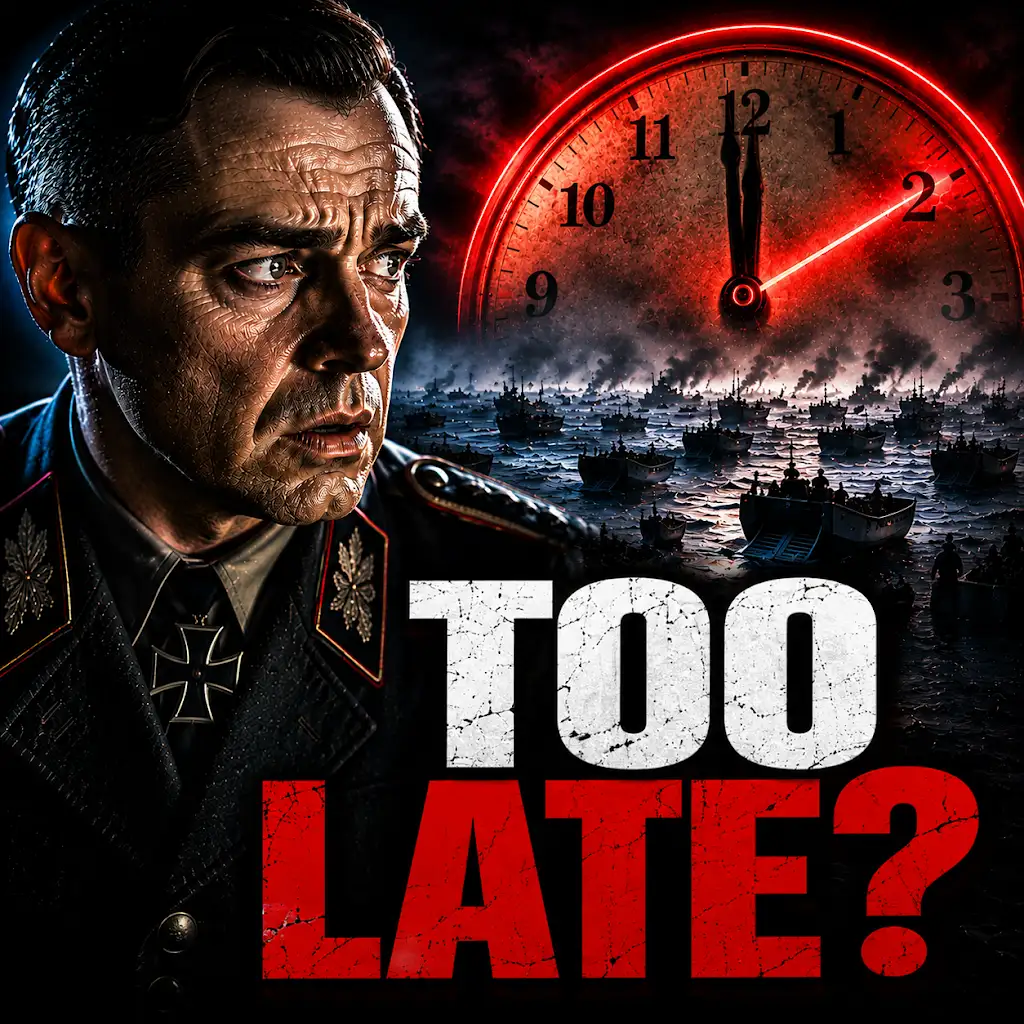
The salty spray of the English Channel mingled with the acrid scent of gunpowder and burning oil on the morning of June 6, 1944. This was not a storm of nature, but a tempest of human will, unleashed upon the heavily fortified shores of Normandy. Codenamed Operation Overlord, this ambitious amphibious assault represented the culmination of years of planning, sacrifice, and the desperate hope of a war-weary world. The Allies, under the supreme command of General Dwight D. Eisenhower, were poised to crack open the Nazi regime’s iron grip on Western Europe, a feat that would forever etch this date into the annals of history. The beaches of Normandy, once idyllic stretches of sand, were transformed into infernos, the crucible where the fate of millions would be decided.
The dawn of D-Day was preceded by a relentless barrage of Allied air and sea power, a calculated softening of German defenses that aimed to cripple their ability to resist the coming invasion. This initial phase was crucial, designed to sow confusion, disrupt communications, and neutralize key strategic targets along the French coast.
Airborne Assaults: Paratroopers Behind Enemy Lines
Long before the first boots touched sand, the skies over Normandy were filled with the droning engines of Allied aircraft. Thousands of paratroopers, primarily from the American 82nd and 101st Airborne Divisions and the British 6th Airborne Division, jumped into the darkness. Their mission was perilous: to seize vital bridges, disrupt enemy movements, and secure the flanks of the landing zones.
The American Drop: Objectives and Challenges
The American paratroopers faced immediate and severe challenges. Scattered by anti-aircraft fire and strong winds, many landed far from their intended drop zones. This disorganization, however, did not deter their resolve. They fought valiantly in small, isolated groups, improvising and adapting to secure objectives such as the Merderet River bridges and the town of Sainte-Mère-Église. The iconic image of Private John Steele dangling from the spire of the Sainte-Mère-Église church, a target for German soldiers below, became a stark symbol of their desperate struggle. Despite the heavy casualties and the initial chaos, these airborne forces played a critical role in preventing German reinforcements from reaching the beaches during the crucial early hours.
The British Airborne Mission: Pegasus Bridge and Beyond
The British 6th Airborne Division, tasked with securing the eastern flank of the invasion area, achieved remarkable success in its initial objectives. Their daring glider assault on Pegasus Bridge, capturing it intact with minimal casualties, was a triumph of precision and bravery. This allowed them to control a vital crossing over the Orne River and Caen Canal, preventing a significant German counter-attack. They also fought fiercely to hold key positions, including the Merville Battery, a heavily fortified gun emplacement, under relentless German assault.
Naval Bombardment: Softening the Atlantic Wall
As the airborne divisions battled in the darkness, a massive naval fleet unleashed a thunderous bombardment along the entire invasion coastline. Battleships, cruisers, and destroyers unleashed a torrent of shells, targeting German strongpoints, artillery positions, and trenches.
The Role of Allied Naval Supremacy
The sheer scale of the Allied naval presence was overwhelming. Over 5,000 ships, ranging from massive battleships like HMS Rodney and USS Arkansas to hundreds of landing craft, converged on the Normandy coast. This naval firepower was instrumental in suppressing enemy defenses, creating temporary gaps in the Atlantic Wall, and providing crucial fire support for the landing troops. The coordination between the naval commanders and the ground forces was a complex logistical feat, requiring precise timing and unwavering execution.
Specific Targets and Their Importance
The naval bombardment focused on known German defenses, including coastal artillery batteries, bunkers, and machine-gun nests. Targets like the Pointe du Hoc, a strategic cliff overlooking Omaha Beach, were subjected to intense shelling in an attempt to neutralize its formidable guns. While the effectiveness of the bombardment in completely destroying all defenses is debated by historians, it undoubtedly contributed to the initial disarray of the German defenders and provided a crucial window of opportunity for the invading forces.
The Landings: Storming the Beaches
The primary phase of Operation Overlord commenced with the dawn, as Allied landing craft churned through the choppy waters, carrying thousands of soldiers towards their designated sectors of the Normandy coast. Codenamed from west to east as Utah, Omaha, Gold, Juno, and Sword, each beach presented its own unique challenges and horrors.
Utah Beach: A Relatively Easier Landing
On the westernmost flank, Utah Beach was designated for the American 4th Infantry Division. Due to a fortunate drift of the landing craft, the assault landed further south than originally planned, landing in a less heavily defended area.
Advantages and German Dispositions
The fortuitous drift meant the American troops encountered fewer obstacles and less concentrated enemy fire upon landing. The German defenses on Utah, while present, were not as formidable as those found on other sectors. This allowed the 4th Infantry Division to establish a beachhead with significantly fewer casualties than anticipated.
Securing the Causeway and Inland Advance
The capture of the causeways, vital routes inland from the beach, was a primary objective. The American forces secured these effectively, enabling a swift advance into the Cotentin Peninsula, aiming to isolate the port of Cherbourg. The relative success on Utah provided a much-needed psychological boost for the Allied forces and demonstrated the effectiveness of coordinated air and naval support when met with less intense opposition.
Omaha Beach: The Bloodiest Day
Omaha Beach was to become the most infamous and bloodiest landing zone of D-Day. Designated for the American 1st and 29th Infantry Divisions, this stretch of sand was defended by veteran German troops of the 352nd Infantry Division, who were well-positioned on the bluffs overlooking the beach.
The “Overlord Gap” and Unforeseen Defenses
The Allied plan relied on aerial bombardment and naval shelling to neutralize the German defenses on Omaha. However, due to poor visibility and the effectiveness of German camouflage, many of these strongpoints remained operational. The landings commenced into a maelstrom of machine-gun fire, artillery, and mortar shells. The lack of adequate pre-invasion bombardment and the terrain itself, offering excellent defensive positions for the Germans, contributed to the catastrophic casualties.
Heroism and Sacrifice in the Face of Overwhelming Fire
Soldiers landing on Omaha Beach faced a seemingly insurmountable obstacle. Machine gun nests, strategically placed in the bluffs, raked the beaches with devastating fire. The tide also worked against the attackers, exposing them further as it receded. However, amidst the carnage, extraordinary acts of courage and leadership emerged. Officers and non-commissioned officers rallied their men, often leading charges against heavily fortified positions, frequently at the cost of their own lives. The bravery of men like Brigadier General Norman Cota, who famously exhorted his troops to “Die or go forward!” became legendary. The fight to gain a foothold on Omaha was a testament to the indomitable spirit of the common soldier, who pressed on despite overwhelming odds.
Gold, Juno, and Sword Beaches: Canadian and British Efforts
Further east, the British and Canadian forces faced their own grim challenges on Gold, Juno, and Sword beaches. These sectors were crucial for establishing a link-up between the different Allied landing forces and for beginning the advance towards the strategically important city of Caen.
Gold Beach: British Progress and Challenges
Gold Beach was assaulted by the British 50th (Northumbrian) Infantry Division. While they encountered significant resistance, particularly from fortified German positions, they managed to achieve their objectives and push inland. Their success was aided by the effective use of specialized armored vehicles, such as the “Hobart’s Funnies,” designed to overcome beach obstacles.
Juno Beach: Fierce Canadian Resistance
Juno Beach was the sector for the Canadian 3rd Infantry Division. The Canadians faced some of the most determined German resistance, with strongpoints and minefields posing significant threats. Despite suffering heavy casualties in the initial hours, the Canadians demonstrated remarkable resilience and fought their way off the beaches, capturing key villages and advancing inland. Their determination to push through the formidable defenses became a hallmark of their contribution to D-Day.
Sword Beach: The Easternmost Advance and Link-up
Sword Beach, the easternmost landing zone, was assigned to the British 3rd Infantry Division and the commandos. Their objective was to push towards Caen. While they faced stiff opposition, they managed to secure their beachhead and begin their advance. A crucial element of the Sword Beach operation was the link-up with the British airborne troops who had secured the eastern flank. This successful link-up solidified the Allied presence in Normandy.
The Atlantic Wall Breached: German Reactions and Failures
The success of the Allied landings was not solely a testament to Allied prowess; it was also a consequence of critical German miscalculations and a catastrophic lack of preparedness. The vaunted Atlantic Wall, while formidable in places, was not the impenetrable barrier it was designed to be.
Hitler’s Hesitation and the Absence of Reserves
A pivotal factor in the Allied success was the delay in Hitler’s authorization for key Panzer reserves to be deployed to the Normandy front. Misinformation and a belief that the main Allied thrust would occur elsewhere contributed to this fatal hesitation.
The “Wait and See” Policy
Field Marshal Erwin Rommel, commander of the German forces in Normandy, had repeatedly stressed the need for immediate deployment of reserves to repel the invasion. However, Hitler, influenced by his subordinates who believed the landings were a feint, delayed releasing these crucial forces. This “wait and see” policy allowed the Allied bridgeheads to be solidified and the influx of reinforcements to continue.
Misinformation and Strategic Misjudgments
German intelligence had been largely ineffective in predicting the timing and location of the D-Day landings. The extensive Allied deception operations, including Operation Fortitude, which created the illusion of an imminent invasion at Pas-de-Calais, played a significant role in diverting German attention and resources. This strategic misjudgment by the German High Command proved to be a devastating blow.
The Role of the Luftwaffe and Kriegsmarine
The German air force, the Luftwaffe, and the navy, the Kriegsmarine, were largely neutralized by the overwhelming Allied air superiority and naval might. This absence of effective German air and naval support meant that the defending ground troops lacked crucial reinforcements and crucial reconnaissance.
Allied Air Supremacy
The Allied air forces had achieved complete air superiority over Normandy by D-Day. This meant that German troop movements, resupply efforts, and counter-attacks were constantly under threat from Allied bombers and fighter aircraft. The Luftwaffe, weakened by years of war, was simply unable to contest the skies effectively.
Limited Naval Response
Similarly, the Kriegsmarine’s ability to challenge the massive Allied invasion fleet was severely limited. Mines, submarines, and the sheer overwhelming presence of Allied warships effectively neutralized any significant naval response that could have disrupted the landings.
The Aftermath and Significance of D-Day
The success of the Normandy landings on June 6, 1944, was not the end of the war, but it marked a decisive turning point. It opened the Western Front, forcing Germany to fight a war on two major fronts and ultimately sealing its fate. The bravery and sacrifice of the Allied soldiers who stormed the beaches that day would be remembered for generations.
Establishing the Beachheads and Securing the Front
The immediate aftermath of the landings saw a desperate struggle to expand and secure the beachheads. Allied forces fought to link up their sectors, push inland, and establish a cohesive front. The capture of key towns and cities, such as Caen, became crucial objectives in the initial weeks of the campaign.
The Race for Caen: A Pivotal Battle
The battle for Caen became a protracted and bloody affair. While the Allies achieved their D-Day objective of establishing a beachhead, the capture of this strategically important city proved far more difficult than anticipated, leading to intense fighting throughout June and July.
The Cotentin Peninsula and Cherbourg
On the western flank, the American forces pushed inland to secure the Cotentin Peninsula and the vital port of Cherbourg. The fall of Cherbourg provided the Allies with a much-needed deep-water port, essential for the logistical support of their expanding operations.
The Human Cost: Sacrifice and Remembrance
The cost of D-Day was immense. Thousands of Allied soldiers lost their lives, and many more were wounded or taken prisoner. The beaches of Normandy became a solemn testament to their sacrifice, and the subsequent establishment of Allied cemeteries across the region serves as a permanent reminder of their bravery.
The Scale of Casualties
The exact number of casualties on D-Day remains a subject of historical debate, but estimates suggest that between 10,000 and 12,000 Allied personnel were killed, wounded, or went missing. German casualties were also significant, though precise figures are difficult to ascertain.
Legacy of Remembrance and Memorials
The beaches of Normandy are now hallowed ground, dotted with memorials, museums, and cemeteries. Visitors from around the world come to pay their respects to the men who fought and died there, ensuring that the sacrifices of D-Day are never forgotten. The enduring legacy of D-Day is one of immense bravery, strategic brilliance, and the ultimate triumph of freedom over tyranny.
The beaches of Normandy, etched into history by the blood, sweat, and tears of a generation, stand as a permanent monument to the courage of those who dared to challenge tyranny. June 6, 1944, was not merely a date; it was a watershed moment, the day the tide of war began to irrevocably turn. The sheer audacity of Operation Overlord, the courage displayed on those blood-soaked sands, and the strategic brilliance behind the plan forever secured its place as one of the most pivotal events of the 20th century. The echoes of the guns on that fateful day continue to resonate, a powerful reminder of the price of freedom and the enduring human spirit.