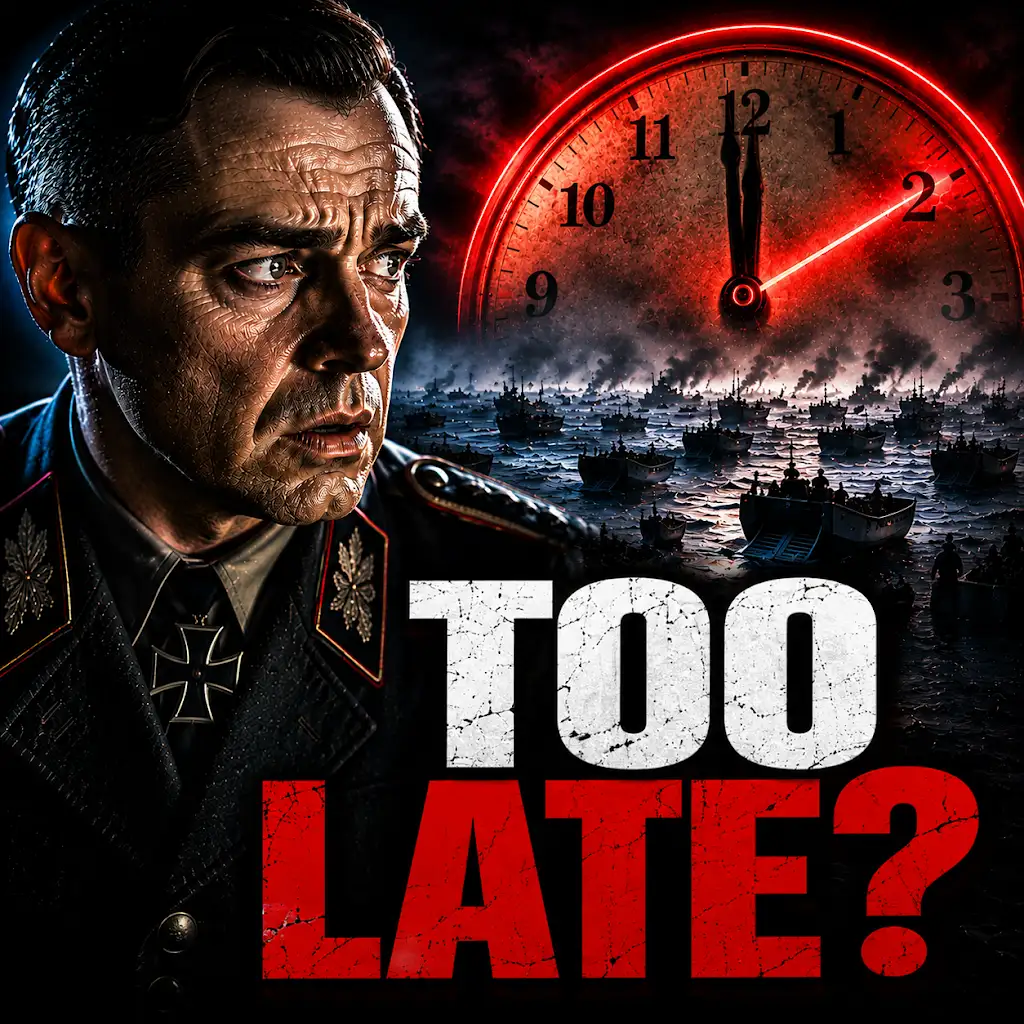
The vast expanse of the English Channel shimmered under a hesitant dawn, a prelude to the cataclysm that would soon engulf its waters and the Normandy coastline. For months, Allied planners had meticulously orchestrated Operation Overlord, the monumental undertaking designed to liberate Western Europe from the grip of Nazi Germany. Yet, beneath the veneer of Allied preparation lay a complex and often fractured German defense, a labyrinth of command structures, and the personalities of its most prominent military leaders: Adolf Hitler, Gerd von Rundstedt, and Erwin Rommel. Their perspectives, their decisions, and their ultimate failures would profoundly shape the course of D-Day and the ensuing Battle of Normandy.
Answering the Call of Duty
Field Marshal Gerd von Rundstedt, a seasoned veteran of World War I, represented the old guard of the German military. His reputation was built on a career of disciplined command and strategic acumen. By 1944, he held the unenviable position of Commander-in-Chief West (OB West), tasked with defending the entire Atlantic Wall, a formidable network of coastal fortifications stretching from Denmark to the Spanish border. Rundstedt was a man of considerable experience and authority, but he also operated within the suffocating constraints of Hitler’s dictatorial regime.
The Atlantic Wall: A Double-Edged Sword
The concept of the Atlantic Wall was born from a desire to deter any Allied invasion. Hitler envisioned it as an impenetrable barrier, a testament to German engineering and military might. Rundstedt, while acknowledging its importance, held a more pragmatic view. He understood the vastness of the coastline and the inherent limitations of static defenses. He repeatedly pleaded for more resources, particularly in terms of mobile reserves and air power, to counter the inevitable Allied assault.
The Reality of Fortifications
The Atlantic Wall, in reality, was a patchwork of fortifications. While some sectors boasted impressive concrete bunkers, minefields, and extensive gun emplacements, others were far less robust. Allied intelligence, aided by extensive reconnaissance and the efforts of the French Resistance, had a reasonably good understanding of the Wall’s strengths and weaknesses. The Germans, however, struggled with consistent implementation and lacked the manpower and materials to fully fortify every vulnerable point.
Rundstedt’s Strategic Concerns
Rundstedt’s primary concern was not simply to hold every inch of the coast but to preserve his mobile reserves, particularly the Panzer divisions, for a decisive counter-attack once the Allied landing sites were identified. He understood that a static defense could be overwhelmed by superior Allied firepower and manpower. He envisioned a scenario where the Allied forces would be drawn into the interior, where his mechanized forces could then engage and destroy them. This strategic vision, however, would clash directly with Hitler’s more rigid and often irrational directives.
The Shadow of the Führer
Despite his position, Rundstedt’s authority was constantly undermined by Adolf Hitler. The Führer, convinced of his own military genius, frequently interfered in operational matters, often making decisions that ran counter to the advice of his experienced commanders. This was particularly true regarding the deployment of the Panzer divisions. Hitler insisted on keeping a significant portion of these vital reserves under his direct control, away from the immediate reach of Rundstedt and other theater commanders.
The Desert Fox in Normandy: Erwin Rommel
A New Command, A Familiar Foe
The appointment of Field Marshal Erwin Rommel as commander of Army Group B in early 1944 marked a significant shift in the German defense of Normandy. Rommel, celebrated for his brilliant desert campaigns in North Africa, was a dynamic and aggressive commander. He was brought in to bolster the defenses of northern France, and his presence instilled a sense of urgency and renewed vigor in the German ranks.
Rommel’s Imperative: Pushing the Defenders Forward
Unlike Rundstedt, who favored a strategic reserve held back for a counter-offensive, Rommel believed that the best defense was to meet the enemy as close to the shore as possible. He understood the devastating power of Allied air superiority and naval bombardment. In his view, if the Allies established a firm beachhead, it would be nearly impossible to dislodge them. Therefore, his focus was on strengthening the coastal defenses and ensuring that his troops were positioned to engage the invaders on the beaches themselves.
The “No Man’s Land” of the Coastal Defense
Rommel’s philosophy led to a frantic effort to fortify the beaches of Normandy. He personally surveyed vast stretches of coastline, directing the placement of obstacles, mines, and artillery. His visits to the front lines, often in his distinctive staff car, earned him the admiration of his troops. However, his aggressive approach also meant a dispersal of German forces, leaving fewer mobile reserves available for a concentrated counter-attack.
The Air War and the Rail Networks
Rommel’s plans were severely hampered by the overwhelming Allied air superiority. The constant bombing raids crippled German transportation networks, making it incredibly difficult to move troops and supplies to the front lines. The vital rail lines, essential for deploying his precious Panzer divisions, were systematically targeted and destroyed by Allied aircraft. This effectively isolated many German units and rendered them immobile.
The Clash of Strategic Visions
The differing strategic outlooks of Rundstedt and Rommel created a persistent friction within the German high command. Rundstedt advocated for a concentrated reserve, while Rommel pushed for forward deployment. This internal discord meant that a unified and effective defense strategy was never fully realized. The critical question of where to commit the Panzer divisions became a constant source of contention, a debate that would have tragic consequences on D-Day.
Hitler’s Shadow: The Führer’s Final Say
The Führer Principle in Practice
Adolf Hitler’s grip on the Wehrmacht was absolute. The “Führer Principle,” central to Nazi ideology, dictated that his will was supreme and unquestionable. While this ensured loyalty, it also stifled initiative and led to catastrophic strategic blunders. In the context of the Western Front, Hitler’s personal obsessions and paranoia significantly influenced the defensive posture.
The Panzer Dilemma: A Strategic Fumble
The most critical and ultimately fatal decision for the Germans on D-Day revolved around the deployment of the Panzer divisions. Hitler was convinced that the main Allied invasion would occur at the Pas-de-Calais, where the English Channel was narrowest. Consequently, he kept a substantial portion of the Panzer reserves under his direct command, far from the Normandy coast. He only agreed to release these vital forces after the invasion had begun, and by then, it was too late.
Misjudging the Allied Intentions
The Germans, blinded by their own strategic assumptions and a lack of reliable intelligence, fundamentally misjudged the Allied intentions. They believed that the Normandy landings were a diversion, a feint to draw their attention away from the true invasion point. This miscalculation, fueled by Hitler’s conviction, proved to be a fatal error.
The Ineffectiveness of Late Commitments
By the time Hitler reluctantly authorized the release of some Panzer divisions towards Normandy, the Allies had already established a significant foothold. Allied air superiority made movement perilous, and the sheer volume of Allied forces on the ground made it impossible for the German armor to achieve a decisive breakthrough. The tanks, intended to push the invaders back into the sea, found themselves fighting a desperate defensive battle against overwhelming odds.
The Führer’s Obsession with the “Miracle Weapon”
Beyond strategic decisions, Hitler was often distracted by his obsession with developing and deploying new “wonder weapons.” This often diverted resources and attention from more pressing defensive needs. While the V-1 flying bomb and the V-2 rocket were deployed, they offered little in terms of immediate tactical advantage on the battlefield and did nothing to prevent the Allied invasion.
The Day of Infamy: D-Day’s Unfolding Tragedy
The Calm Before the Storm
The night before D-Day, a tense calm descended over the German defenses. Rommel, believing the invasion was imminent, had departed for a brief visit home to see his wife. This decision, though understandable in its personal context, would later be scrutinized. Rundstedt, however, remained at his headquarters, awaiting the inevitable. The German intelligence was flawed, and the sheer scale and audacity of the Allied plan had caught them largely by surprise.
The Elements Align Against the Defenders
The weather played a crucial role. The initial forecast was bleak, leading the Allies to postpone the invasion. However, a brief window of improved weather opened up, prompting General Dwight D. Eisenhower to give the go-ahead. For the Germans, this meant that the element of surprise was largely lost, but the timing was still significantly earlier than they had anticipated for a large-scale landing.
The Paratrooper Drop and Airborne Assault
The early hours of June 6th saw thousands of Allied paratroopers descend behind enemy lines. Their mission was to disrupt German communications, secure key bridges, and neutralize artillery positions. While some of these objectives were achieved, the dispersed nature of the drops and the fierce German resistance meant that their impact was not as decisive as planned.
The Naval Bombardment and Aerial Assault
As dawn broke, the Allied naval fleets unleashed a thunderous bombardment on the Normandy coast, softening up the German defenses. This was followed by waves of Allied aircraft, which continued to pound the German positions. The sheer firepower of the Allied assault was overwhelming, and the German defenders, often isolated and outgunned, struggled to hold their ground.
The Beach Landings: A Baptism of Fire
The amphibious landings on the five designated beaches – Utah, Omaha, Gold, Juno, and Sword – were a brutal ordeal. Allied soldiers faced a hail of machine-gun fire, artillery shells, and mortar blasts. The obstacles on the beaches, designed by Rommel and his engineers, proved to be deadly impediments.
Omaha Beach: The Bloodiest of Them All
Omaha Beach, in particular, became a scene of unimaginable carnage. The German defenses were particularly strong, and the Allied assault forces suffered horrific casualties. The lack of effective pre-invasion bombardment and the inability of Allied landing craft to clear the beach obstacles contributed to the devastating losses.
The Struggle for a Foothold
Despite the ferocity of the German resistance, the sheer determination and sacrifice of the Allied soldiers began to pay off. Gradually, painstakingly, they managed to breach the German defenses and establish precarious footholds on the beaches. The initial objective was to secure these beachheads and begin the process of expanding inland.
The Aftermath and the Long Road Ahead
The Failed Counter-Attacks
As the Allied forces consolidated their positions, the German high command scrambled to launch counter-attacks. Rundstedt and Rommel, despite their disagreements, recognized the critical need to push the Allies back into the sea. However, the disarray of the German command structure, the lack of timely reinforcements, and the continued Allied air superiority rendered these counter-attacks largely ineffective.
The Role of the Panzer Lehr Division
The Panzer Lehr Division, one of the Panzer units that was eventually released, fought with considerable ferocity. However, it was deployed piecemeal and suffered heavy losses in engagements with Allied armor and aircraft. Its attempts to push back the Allied beachhead were ultimately unsuccessful.
The Stalemate in Normandy
The initial days of the Battle of Normandy were characterized by brutal fighting and a gradual but undeniable Allied advance. The Germans, despite their bravery and fierce resistance, found themselves increasingly on the defensive. The strategic blunders of Hitler, the clash of wills between Rundstedt and Rommel, and the overwhelming might of the Allied war machine had sealed their fate.
The Strategic Consequences for Germany
D-Day was a turning point in World War II. The opening of the Western Front forced Germany to fight a two-front war on an unprecedented scale. The loss of Normandy meant the eventual liberation of France and the subsequent march of Allied forces towards Berlin. The strategic brilliance of the Allied planners, coupled with the critical failures of the German leadership, had paved the way for the eventual defeat of the Nazi regime.
The Legacy of Command and Miscalculation
The story of Hitler, Rundstedt, and Rommel on D-Day is a stark illustration of the consequences of authoritarian command, internal discord, and strategic miscalculation. While individual bravery was evident on both sides, the overarching narrative is one of missed opportunities, flawed decision-making, and the devastating impact of a regime out of touch with the realities of modern warfare. The events of June 6th, 1944, would forever be etched in history as a testament to the courage of those who fought for freedom and a somber reminder of the costs of unchecked power.