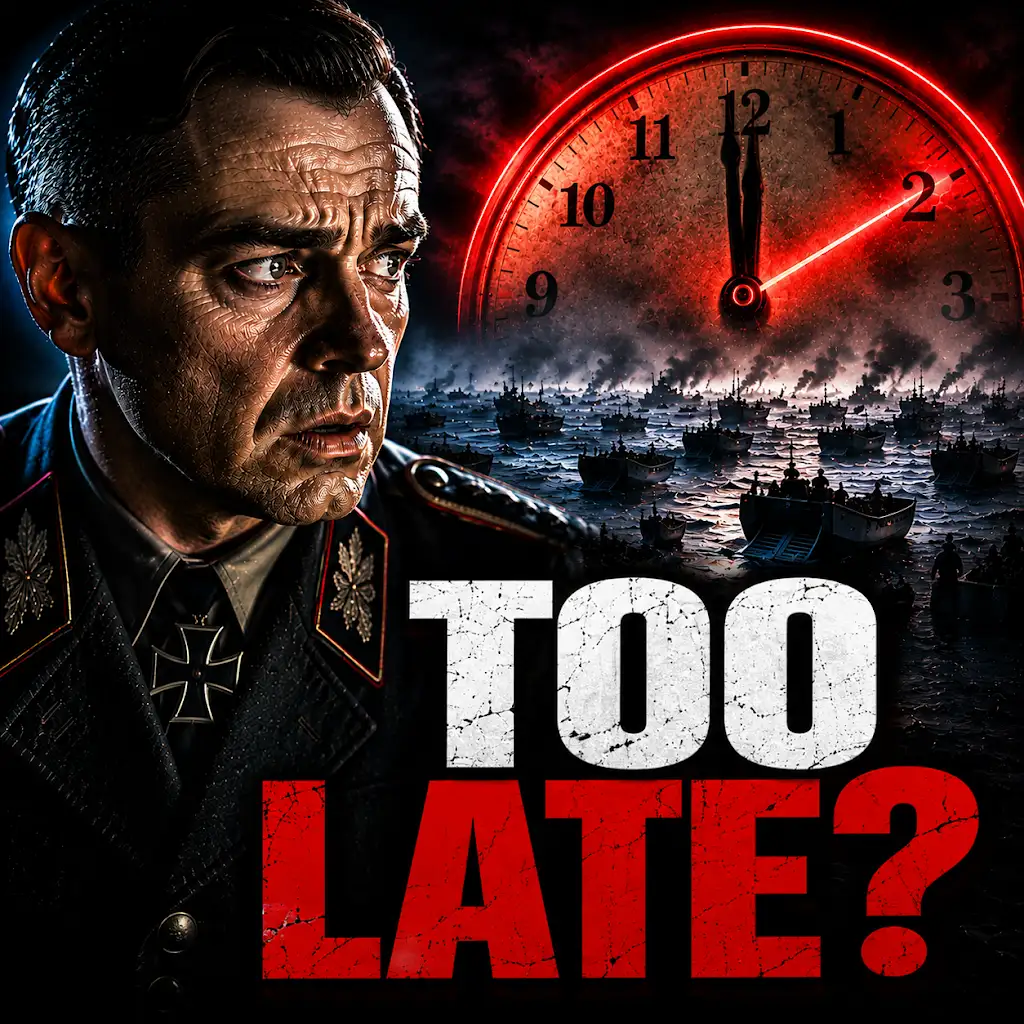
The vast, grey expanse of the English Channel churned with an unusual intensity on the morning of June 6, 1944. Beneath the turbulent surface, a meticulously crafted military strategy, honed through years of planning and sacrifice, was about to be unleashed upon the heavily fortified coast of Normandy. This was D-Day, the Allied invasion of German-occupied Western Europe, a pivotal moment in World War II that hinged on a complex interplay of deception, coordination, and overwhelming force. The success of Operation Overlord, as it was codenamed, was not a matter of chance but the result of a colossal strategic endeavor, a testament to the strategic minds that conceived and executed it.
The genesis of Operation Overlord lay in the desperate need to open a Western Front and relieve pressure on the Soviet Union, which had borne the brunt of the fighting against Nazi Germany on the Eastern Front for years. The strategic objective was clear: to liberate France and push the German war machine back across Europe. However, the execution of such a monumental undertaking was fraught with peril. The Germans had established the “Atlantic Wall,” a formidable line of coastal defenses designed to repel any seaborne invasion. The Allied planners, led by Supreme Allied Commander General Dwight D. Eisenhower, faced the daunting task of not only breaching this wall but also establishing a secure foothold from which to launch subsequent offensives.
The Need for a Western Front
The strategic imperative for a Western Front was undeniable. By 1943, the Soviet Union had suffered immense casualties and was demanding Allied action in Western Europe to divert German resources. The lingering presence of British and American troops in North Africa and Italy, while important, did not possess the scale required to truly threaten Hitler’s European heartland. A successful invasion of France offered the potential to encircle German forces, disrupt their supply lines, and ultimately hasten the end of the war.
The Atlantic Wall: A Formidable Obstacle
The German response to the potential for an Allied invasion was the construction of the Atlantic Wall. This sprawling defensive system stretched from the Danish border to the Spanish frontier, incorporating concrete bunkers, artillery emplacements, minefields, anti-tank ditches, and obstacles designed to impede landing craft. Generalfeldmarschall Erwin Rommel, tasked with inspecting and improving these defenses, imbued them with a zealous determination to make any Allied landing a bloodbath. He understood the terrain, the tides, and the psychological impact of strong defenses, and his improvements significantly raised the stakes for the invaders.
The Allied Goal: Establishing a Beachhead
The immediate strategic goal of D-Day was not to conquer all of France in a single stroke, but to establish and expand a secure beachhead. This initial lodgment would serve as a vital springboard for future operations, allowing for the steady flow of men, equipment, and supplies. The planners recognized that if the Allies could not hold their ground on the beaches, the entire invasion would fail, with catastrophic consequences for the war effort.
The Art of Deception: Operation Fortitude
One of the most ingenious aspects of the D-Day strategy was the elaborate deception employed to mislead the German high command about the true landing sites. Operation Fortitude, a multifaceted deception campaign, aimed to convince the Germans that the main invasion would occur at the Pas-de-Calais, the narrowest point of the English Channel, rather than Normandy. This was crucial for diverting German reinforcements away from the actual landing zones, thus reducing the initial opposition the Allied forces would face.
The Phantom Army: FUSAG
A cornerstone of Operation Fortitude was the creation of the First U.S. Army Group (FUSAG), a fictitious military formation ostensibly poised to invade at Pas-de-Calais. This “army” was commanded by the highly visible and respected General George S. Patton Jr., whose reputation alone was enough to capture German attention. FUSAG was a masterful illusion, complete with dummy tanks, aircraft, landing craft, and radio transmissions designed to broadcast the impression of a massive impending invasion. The Germans meticulously monitored Allied radio traffic and troop movements, and FUSAG provided them with a compelling narrative to follow.
Diversionary Tactics and False Intelligence
Beyond FUSAG, other elements of Fortitude played a vital role. Dummy landing craft were anchored in the Thames estuary, and radio broadcasts simulated troop movements and logistical preparations for an invasion at Pas-de-Calais. Agents of the British double-cross system, part of the double agent network, fed carefully crafted false intelligence to their German handlers, reinforcing the belief that Pas-de-Calais was the primary target. The effectiveness of this deception was such that even after the landings in Normandy, German commanders were hesitant to commit their strategic reserves, still fearing a second, larger assault in the north.
The Timing of the Deception
The timing of Operation Fortitude was also a critical strategic consideration. The deception had to be maintained for a sufficient period to influence German deployment decisions, but not so long that the Allies’ true intentions might be revealed. The successful execution of Fortitude ensured that by June 6, 1944, many of Germany’s most elite Panzer divisions were positioned far from the Normandy beaches, awaiting an invasion that would never materialize in that location.
The Airborne Assault: Seizing Key Objectives
As the invasion fleet approached the Normandy coast, the initial phase of the Allied strategy involved a massive airborne assault. Thousands of paratroopers from the U.S. 82nd and 101st Airborne Divisions, and the British 6th Airborne Division, were dropped behind enemy lines in the early hours of June 6. Their mission was to seize vital bridges, disrupt German communications, and prevent enemy reinforcements from reaching the beaches. This airborne offensive was a critical element in creating chaos and disarray within the German defenses before the seaborne landings even began.
Securing the Flanks
The airborne divisions were tasked with securing the flanks of the landing beaches. For the American landings at Utah and Omaha beaches, the 82nd and 101st Airborne were dropped inland to capture key crossings over the Merderet River and the Douve River. This was crucial to prevent German forces from flowing towards the beaches and trapping the American infantry.
Disrupting Communication and Transportation
Beyond securing strategic points, the paratroopers were also tasked with disrupting German command and control. They blew up bridges, cut telephone lines, and engaged in guerrilla warfare to sow confusion and prevent the rapid mobilization of German reserves. The psychological impact of an airborne assault behind their lines was also a significant factor, contributing to the overall disorganization of the German defense.
The “All American” and Pegasus Bridge
The 101st Airborne Division’s efforts to capture the bridge at La Fière and the 82nd Airborne’s fight for Sainte-Mère-Église became legendary. Similarly, the British 6th Airborne’s daring capture of the Orne River bridges, famously codenamed Pegasus Bridge, prevented the Germans from reinforcing their positions along the eastern flank of the invasion area. Despite heavy casualties and the dispersal of many paratroopers due to inaccurate drops, the airborne assault achieved its primary strategic objectives, creating the necessary conditions for the success of the seaborne landings.
The Seaborne Invasion: The Five Landing Beaches
The heart of Operation Overlord was the amphibious assault on five designated landing beaches along the Normandy coast. These beaches, codenamed Utah, Omaha, Gold, Juno, and Sword, were meticulously chosen based on factors such as terrain, German defenses, and accessibility for landing craft. Each beach presented unique challenges and required specific tactics and troop compositions.
Utah Beach: The “Soft” Landing
Utah Beach, assigned to the U.S. VII Corps, was considered the easiest of the American landing zones. The paratroopers had successfully secured the area inland, and the German defenses, while present, were less formidable than those at Omaha. The landing craft encountered fewer obstacles, and the American forces were able to establish a beachhead relatively quickly, suffering fewer casualties than anticipated. This success allowed for a more rapid build-up of troops and equipment.
Omaha Beach: The Bloodiest Day
Omaha Beach, also assigned to the U.S. V Corps, proved to be the most brutal and costly landing. German defenses were particularly strong, with machine gun nests, artillery batteries, and mines directly overlooking the beach. The initial landings were met with a devastating hail of fire, and many landing craft were destroyed before reaching the shore. The strategic objective of securing the beach and moving inland was severely hampered by the ferocity of the German resistance. It was here that the courage and tenacity of the American soldiers were tested to their absolute limits, and the strategic planning for overcoming such intense opposition was pushed to its breaking point.
Gold Beach: The British Advance
Gold Beach was assigned to the British XXX Corps. While facing significant German defenses, including strong points and minefields, the British forces managed to overcome these obstacles with a combination of artillery support, aerial bombardment, and determined infantry assaults. The strategic objective was to link up with the Canadian forces at Juno Beach and push inland to secure key objectives.
Juno Beach: The Canadian Effort
Juno Beach was the responsibility of the Canadian 3rd Infantry Division. They faced formidable German defenses, including concrete fortifications and heavy artillery. Despite the challenging conditions, the Canadians launched a fierce assault, battling their way off the beaches and into the French countryside. Their strategic success was crucial for creating a contiguous Allied front.
Sword Beach: The Eastern Flank
Sword Beach was assigned to the British 3rd Infantry Division and the commandos. Positioned on the eastern flank of the invasion area, their strategic mission was to push inland and link up with the airborne forces that had captured Pegasus Bridge. Despite facing strong opposition, the British forces were able to secure their objectives and begin expanding the beachhead.
The Crucial Role of Logistics and Air Superiority
Beyond the immediate combat operations, the strategic success of D-Day was inextricably linked to two vital factors: overwhelming air superiority and a robust logistical network. Without control of the skies, the invasion fleet would have been vulnerable to German air attacks, and without a continuous flow of supplies, the Allied forces would have been unable to sustain their offensive.
Air Supremacy: Ruling the Skies
The Allied air forces, primarily the Royal Air Force (RAF) and the United States Army Air Forces (USAAF), had spent months systematically degrading German air power and disrupting their transportation networks. On D-Day, they achieved near-total air superiority over the invasion area. This meant that Allied aircraft could operate with relative impunity, providing close air support to the ground troops, attacking German positions, and interdicting enemy reinforcements. The constant threat of Allied air attacks demoralized German defenders and significantly hampered their ability to respond effectively to the invasion.
The Lifeline of Supplies: Logistics in Motion
The sheer scale of Operation Overlord demanded an unprecedented logistical effort. Millions of men, thousands of tanks, artillery pieces, vehicles, and tons of ammunition and other supplies had to be transported across the English Channel and delivered to the front lines. The Allied planners had meticulously prepared for this, establishing prefabricated Mulberry harbors, developing artificial ports that could be towed across the Channel and assembled to facilitate the unloading of vast quantities of materiel. The ability to sustain the offensive through a consistent and reliable supply chain was a critical strategic advantage that the Germans, with their increasingly strained resources, could not match.
The Importance of Naval Power
The Allied navies played an indispensable role, not only in transporting the invasion forces but also in providing crucial naval gunfire support. The bombardment of German coastal defenses by battleships and cruisers before and during the landings softened up enemy positions, destroying fortifications and suppressing artillery fire, thus significantly reducing the casualties that the attacking infantry would have sustained. The naval blockade also prevented German naval forces from interfering with the invasion fleet.
In conclusion, D-Day 1944 was a triumph of strategic planning, military coordination, and sheer human courage. The intricate web of deception, the bold airborne assaults, the meticulously chosen landing zones, and the unwavering logistical support, all underpinned by air and naval superiority, combined to create an offensive that irrevocably shifted the tide of World War II. The strategic vision that conceived Operation Overlord, and the brave individuals who executed it, forever changed the course of history, paving the way for the liberation of Europe and the eventual defeat of Nazi Germany.