The battlefield, in its chaotic and ever-shifting nature, demands a form of leadership that can adapt, empower, and achieve objectives with decisive speed. For centuries, military thinkers have grappled with how to best equip commanders and their subordinates to navigate this complex environment. Amidst this ongoing quest, the contributions of Helmuth von Moltke the Elder, a Prussian General Field Marshal, stand as a monumental turning point. His innovative approach to command and control, now widely known as Mission Command, fundamentally reshaped military doctrine and continues to exert a profound influence on armed forces across the globe. Moltke’s genius lay not in dictating every move, but in cultivating an environment where initiative and decentralized decision-making flourished, leading to unprecedented battlefield success. This article delves into the core tenets of Moltke’s philosophy, examining its historical context, its key components, and its lasting relevance in the modern era.
The concept of mission command, as articulated by Helmuth von Moltke, emphasizes the importance of decentralized decision-making and the empowerment of subordinates in military operations. For a deeper understanding of this principle and its modern applications, you can explore the article on mission command strategies at In the War Room, which discusses how these ideas are being implemented in contemporary military contexts.
The Historical Crucible: Prussia’s Need for a New Command Paradigm
Moltke rose to prominence in the mid-19th century, a period of significant upheaval and innovation in European warfare. Prussia, a formidable but often outmaneuvered military power, found itself challenged by larger, more established empires. The lessons of past conflicts, particularly the Napoleonic Wars, highlighted the limitations of highly centralized command structures. Napoleon’s genius lay in his ability to personally direct vast armies, but this method was inherently brittle. If the commander was incapacitated, or if the situation outpaced his capacity to issue orders, the entire enterprise could crumble. Prussia, lacking a military leader of Napoleon’s singular brilliance and facing armies that could mobilize with greater speed, recognized a critical need for a more resilient and adaptable system.
The Shortcomings of Centralized Command
The prevailing military doctrine of the time often emphasized rigid adherence to pre-ordained plans. Commanders would meticulously plot out every maneuver, leaving little room for adaptation once battle commenced. This approach, while seemingly offering control, often proved counterproductive. Information traveled slowly, and by the time orders reached the front lines, the battlefield had often transformed. Junior officers were trained to execute orders, not to analyze situations and make independent judgments, fostering a dependency that hindered responsiveness.
The Rise of Prussia and the Demand for Efficiency
Prussia, under the visionary leadership of figures like Bismarck, was undergoing a period of rapid industrialization and national consolidation. This burgeoning strength demanded a military that could translate its growing power into decisive victories. The existing command structures, while functional, were seen as a bottleneck to achieving this objective. Moltke, with his keen intellect and deep understanding of military history and contemporary developments, was perfectly positioned to address this strategic deficit. He understood that true military effectiveness stemmed not just from superior firepower or troop numbers, but from the ability to consistently outthink and outmaneuver the enemy, a feat only achievable through a more empowered and responsive command framework.
The Genesis of Mission Command: Trust, Initiative, and Understanding
Moltke’s revolutionary contribution was the conceptualization and implementation of what would become known as Mission Command. This doctrine was built on a foundation of profound trust in subordinates, a deliberate cultivation of initiative, and a rigorous emphasis on ensuring that all levels of command understood the overarching mission. It was a paradigm shift from a “command and control” model to a “command and understand” model, fundamentally altering the relationship between commander and subordinate.
The Principle of Auftragstaktik (Mission Tactics)
At the heart of Moltke’s philosophy lay the German concept of Auftragstaktik. This was not merely a set of instructions, but a deeply ingrained mindset. Instead of providing detailed operational orders for every contingency, commanders would issue clear mission statements, outlining the what and the why of the objective, but leaving the how to the subordinate commander on the ground. This empowered junior leaders to assess the immediate situation, leverage their local knowledge, and devise the most effective means to achieve the given mission.
The Commander’s Role: Setting the Vision and Intent
The commander’s role under Auftragstaktik evolved significantly. He was no longer a distant orchestrator of every detail, but a strategic visionary and a conceptual architect. His primary responsibility was to clearly articulate the overall mission, the desired end-state, and the commander’s intent. This intent was crucial; it explained the purpose behind the mission and the commander’s broader goals, allowing subordinates to adapt their plans even if the original method of execution became impossible. This foresight ensured that even with unexpected developments, the subordinate commander could make decisions that aligned with the commander’s ultimate objectives, rather than becoming lost in tactical minutiae.
The Subordinate’s Role: Initiative and Adaptability
The onus then shifted to the subordinate. Armed with a clear understanding of the mission and the commander’s intent, they were expected to exercise initiative, adapt to changing circumstances, and exploit opportunities as they arose. This required a high degree of professional competence, sound judgment, and a willingness to take calculated risks. Moltke believed that those on the ground, possessing the most up-to-date information, were best placed to make timely and effective decisions. This decentralized approach fostered a proactive and agile fighting force, capable of exploiting weaknesses in enemy defenses and responding swiftly to emerging threats.
The Importance of Education and Training
Moltke understood that empowering subordinates was not a matter of simply issuing directives. It required a sustained and robust investment in education and training. Prussian officers were educated not just in technical skills but in strategic thinking, critical analysis, and the principles of leadership. The General Staff College, established under his influence, became a crucible for developing these capabilities. Trainees were exposed to historical case studies, war games, and simulations designed to hone their decision-making skills and their ability to operate within the framework of Auftragstaktik. This rigorous training ensured that when faced with responsibility, subordinates possessed the knowledge and confidence to act decisively and effectively.
The Art of the Staff Study
A cornerstone of this educational system was the staff study. These detailed analyses of historical battles and hypothetical scenarios forced aspiring officers to grapple with complex problems, identify potential solutions, and articulate their reasoning. This process instilled a deep understanding of military principles and fostered the critical thinking necessary to apply them in diverse situations. The emphasis was on understanding the underlying dynamics of warfare, not just memorizing tactical formations.
The Development of Junior Leadership
Crucially, Moltke fostered a culture that actively developed junior leadership. He recognized that the success of Auftragstaktik depended on a cadre of competent and confident junior officers. Promotions were based on merit and demonstrated leadership potential, and opportunities were provided for younger officers to take on increasing responsibility. This created a pipeline of experienced leaders ready to step into roles and make critical decisions under pressure.
The Pillars of Moltke’s Success: Enabling Factors for Mission Command
Moltke’s revolutionary approach to command was not born in a vacuum. Several key enabling factors, deeply embedded in Prussian military culture and infrastructure, allowed Mission Command to flourish and achieve remarkable success. These included a sophisticated system of intelligence gathering, a robust logistical framework, and a command climate built on mutual respect and professional competence.
The Role of Intelligence and Information Flow
Effective Mission Command is critically dependent on timely and accurate intelligence. Moltke understood that commanders and their subordinates needed a clear, albeit often incomplete, picture of the battlefield. He invested in developing robust intelligence gathering capabilities, including reconnaissance, espionage, and the systematic collection and analysis of information. This information was then disseminated efficiently throughout the chain of command, ensuring that even distant units had some understanding of the broader operational context.
The General Staff: The Nerve Center of Information
The Prussian General Staff, which Moltke significantly reformed and strengthened, played a pivotal role in this intelligence network. It acted as the central hub for collecting, processing, and disseminating information. Staff officers were tasked with analyzing enemy strengths and weaknesses, assessing terrain, and developing contingency plans. This ensured that commanders had access to the best available intelligence to inform their decisions. The General Staff also facilitated the flow of information upwards, providing commanders with the insights needed to shape their overall strategy.
The Decentralized Nature of Information Dissemination
While the General Staff was central to intelligence gathering, Moltke also recognized the need for decentralized information dissemination. Commanders on the ground were encouraged to share their observations and assessments with neighboring units and higher headquarters. This created a dynamic information network, where valuable ground-truth was constantly being fed back into the system, allowing for more informed and adaptable decision-making at all levels.
The Importance of Logistics and Infrastructure
A doctrine that empowers decentralized action also places a significant burden on logistics. Commanders need to be confident that their units can be sustained, supplied, and reinforced, even when operating independently. Moltke recognized this interdependence and worked to modernize and streamline Prussian logistical systems. This included advancements in transportation, supply chain management, and the establishment of robust depot networks.
The Mechanization of Logistics
The burgeoning industrial revolution provided Prussia with the means to mechanize its logistics. The development of railways, for instance, revolutionized the speed and capacity with which troops and supplies could be moved. Moltke shrewdly leveraged these advancements to support his operational plans, ensuring that his dispersed forces could be rapidly reinforced or resupplied as needed, a crucial factor in enabling sustained offensive operations.
The Flexible Deployment of Resources
Mission Command inherently implies a degree of unpredictability in where and when forces will be deployed. Moltke’s logistical planning aimed for flexibility, ensuring that resources could be rapidly redirected to meet emerging needs. This involved pre-positioning supplies, developing adaptable transportation plans, and fostering a logistical force that could operate effectively in a wide range of operational environments. This logistical resilience was a silent but essential partner to the tactical flexibility of Mission Command.
The Culture of Trust and Professionalism
Perhaps the most intangible but critical element of Moltke’s success was the cultivation of a culture of trust and professionalism within the Prussian military. He championed a system where merit and competence were paramount, fostering an environment where subordinates felt confident in their abilities and trusted that their commanders would support their initiative. This reciprocal trust was the bedrock upon which Auftragstaktik was built.
The Commander as a Coach, Not a Dictator
Moltke fostered a command climate that moved away from the autocratic styles of previous eras. Commanders were encouraged to act as coaches and mentors, guiding their subordinates and developing their capabilities. This approach created a more engaged and motivated fighting force, where officers felt valued and empowered. The emphasis was on achieving the mission together, rather than simply obeying orders.
The Emphasis on Continuous Learning and Self-Improvement
The Prussian military under Moltke’s influence was characterized by a deep commitment to continuous learning and self-improvement. Officers were encouraged to analyze their own performance, learn from their mistakes, and constantly refine their skills. This culture of reflection and adaptation ensured that the military remained agile and responsive to the evolving nature of warfare. This dedication to personal and professional growth was essential for maintaining the high standards required for Mission Command.
The concept of mission command, as articulated by Helmuth von Moltke, emphasizes the importance of decentralized decision-making and the empowerment of subordinates in military operations. This approach is further explored in a related article that discusses the practical applications of mission command in modern warfare. For those interested in understanding how these principles can be effectively implemented, you can read more about it in this insightful piece on mission command. This article provides valuable perspectives on leadership and adaptability in complex operational environments.
Moltke’s Battlefield Triumphs: The Validation of Mission Command
| Metrics | Data |
|---|---|
| Flexibility | Allows for quick adaptation to changing situations |
| Decentralization | Empowers subordinates to make decisions |
| Shared Understanding | Ensures everyone understands the commander’s intent |
| Trust | Builds trust between leaders and subordinates |
The practical application of Moltke’s philosophy was spectacularly demonstrated in the series of wars Prussia fought in the 1860s and 1870s. The victories against Denmark, Austria, and France were not merely the result of superior numbers or technology; they were a testament to the effectiveness of Mission Command in action. The Prussian army consistently outmaneuvered, outfought, and ultimately defeated its adversaries, often against seemingly insurmountable odds.
The Austro-Prussian War (1866): The Battle of Königgrätz
The Battle of Königgrätz, the decisive engagement of the Austro-Prussian War, serves as a prime example of Mission Command in practice. While Moltke masterminded the overall strategic plan, the execution relied heavily on the initiative of his subordinate commanders, particularly Crown Prince Frederick William in the Second Army and Prince Friedrich Karl in the First Army. Despite communication challenges and unexpected battlefield developments, these commanders were able to adapt their movements and converge on the Austrian forces with devastating effect. The ability of the Prussian armies to operate independently yet cohesively, driven by a shared understanding of the mission, proved decisive.
The Role of Initiative in the Advance
As the Prussian armies advanced towards the battlefield, individual corps commanders made critical decisions based on their immediate assessments of the situation. For instance, when Crown Prince Frederick William’s Second Army encountered unexpected Austrian resistance, his corps commanders, rather than halting and awaiting detailed orders, took the initiative to adjust their formations and engage the enemy, thereby fixing them in place and allowing the First Army to achieve its objectives. This proactive and independent action, guided by the overall mission, was a hallmark of Auftragstaktik.
The Commander’s Intent in Action
Even when faced with tactical setbacks or unforeseen opportunities, subordinate commanders consistently acted in accordance with Moltke’s overarching intent – to seek out and destroy the enemy. This shared understanding allowed them to make decisions that, while perhaps deviating from the initial plan, still served the commander’s ultimate strategic goals. The successful coordination of the converging Prussian forces at Königgrätz, despite the vastness of the battlefield and the limitations of communication, was a direct result of this decentralized initiative operating within a unified strategic framework.
The Franco-Prussian War (1870-1871): The Siege of Paris and Beyond
The Franco-Prussian War further cemented the reputation of the Prussian military and its command doctrine. The swift and decisive victories, culminating in the fall of Paris and the proclamation of the German Empire, were achieved through a combination of strategic brilliance and tactical adaptability. Moltke’s ability to orchestrate complex operations involving multiple armies, while empowering his subordinate commanders to execute their assigned missions with initiative, proved a formidable combination.
The Operational Art of the War
Moltke’s strategic planning for the Franco-Prussian War showcased a masterful understanding of operational art. He employed a strategy of envelopment, using his superior mobility and the decentralized initiative of his corps commanders to outflank and surround French armies. This allowed for the systematic destruction or capture of enemy forces, preventing them from coalesting into a cohesive defense. The effectiveness of this strategy was directly attributable to the commanders’ ability to independently execute their parts of the larger envelopment maneuver.
The Empowered Corps Commander
Throughout the war, corps commanders like Manteuffel and Steinmetz consistently demonstrated the capacity to adapt their plans in response to battlefield realities. When initial French resistance proved stronger than anticipated, or when unexpected opportunities for decisive engagement arose, these commanders did not hesitate to act. This decisive action, taken in pursuit of the overarching mission, allowed the Prussian forces to maintain their momentum and capitalize on enemy weaknesses, ultimately leading to a swift and decisive victory.
The Enduring Legacy: Mission Command in the 21st Century
Moltke’s legacy is not confined to the military history of the 19th century. His principles of Mission Command have transcended time and geography, continuing to shape military thinking and practice in the 21st century. In an era characterized by rapid technological change, asymmetric threats, and increasingly complex geopolitical landscapes, the adaptability, initiative, and empowerment inherent in Mission Command are more vital than ever.
The Modern Battlefield and the Challenges of Complexity
The modern battlefield is vastly different from Moltke’s era, yet many of the underlying challenges remain. Information flows at an unprecedented speed, but the sheer volume can be overwhelming. The nature of warfare has become more diffuse, with non-state actors and hybrid threats blurring the lines between combatants and civilians. In such an environment, rigid, top-down command structures are ill-equipped to respond effectively. Mission Command, with its emphasis on empowered subordinates and decentralized decision-making, provides a framework for navigating this complexity.
The Information Overload Problem
While technology has increased the speed of information, it has also created the problem of information overload. Commanders and their staffs can be swamped with data, making it difficult to discern what is truly relevant. Mission Command, by empowering subordinates to make decisions based on their immediate context, helps to filter this information and ensure that action is taken without waiting for perfect clarity from the top.
The Rise of Asymmetric Warfare
The rise of asymmetric warfare, where adversaries often employ unconventional tactics and operate outside of traditional military structures, presents a unique challenge. Mission Command’s emphasis on initiative and adaptability allows military forces to respond to these unpredictable threats more effectively. Subordinates on the ground, closer to the evolving threat, are better positioned to identify and counter these novel tactics.
The Adaptability of Mission Command to Diverse Militaries
The principles of Mission Command have proven to be remarkably adaptable to a wide range of military organizations and cultures. While the specific terminology and implementation may vary, the core tenets of empowering subordinates, fostering initiative, and ensuring a clear understanding of the mission resonate across different armed forces. From the United States’ “Mission Command” to the British Army’s “Mission Command” and the Australian Army’s emphasis on “command by wandering around,” the spirit of Moltke’s innovation is evident.
The United States Military and Mission Command
The United States military has explicitly adopted “Mission Command” as its doctrine for decentralized operations. This framework emphasizes empowering subordinate leaders, fostering initiative, and building cohesive teams. The US Army, in particular, has extensively studied and implemented Mission Command principles, recognizing its importance in maintaining effectiveness across a wide spectrum of operations.
International Adaptations and Common Threads
Beyond the US, numerous other nations have incorporated elements of Mission Command into their military doctrines. While the exact phrasing may differ, the underlying principles of empowering subordinates, fostering initiative, and ensuring clear commander’s intent are common threads. This global recognition underscores the universal applicability and enduring value of Moltke’s strategic thinking.
The Future of Command and Control: Embracing Moltke’s Vision
As military technology continues to evolve, and the nature of conflict remains dynamic, the principles of Mission Command offer a timeless blueprint for effective leadership. The ability to empower individuals, foster innovation, and achieve objectives through decentralized action will remain crucial for success on any future battlefield. Moltke’s legacy, therefore, is not merely a historical footnote but a living testament to the enduring power of trust, initiative, and a clear understanding of the mission in achieving victory. His foresight in recognizing the limitations of centralized control and his championing of a more agile and empowered form of leadership continue to guide military thinkers and practitioners towards a more effective and resilient future of warfare. The mastery of Mission Command, as pioneered by Moltke, remains a critical endeavor for any military seeking to excel in the complexities of the modern world.
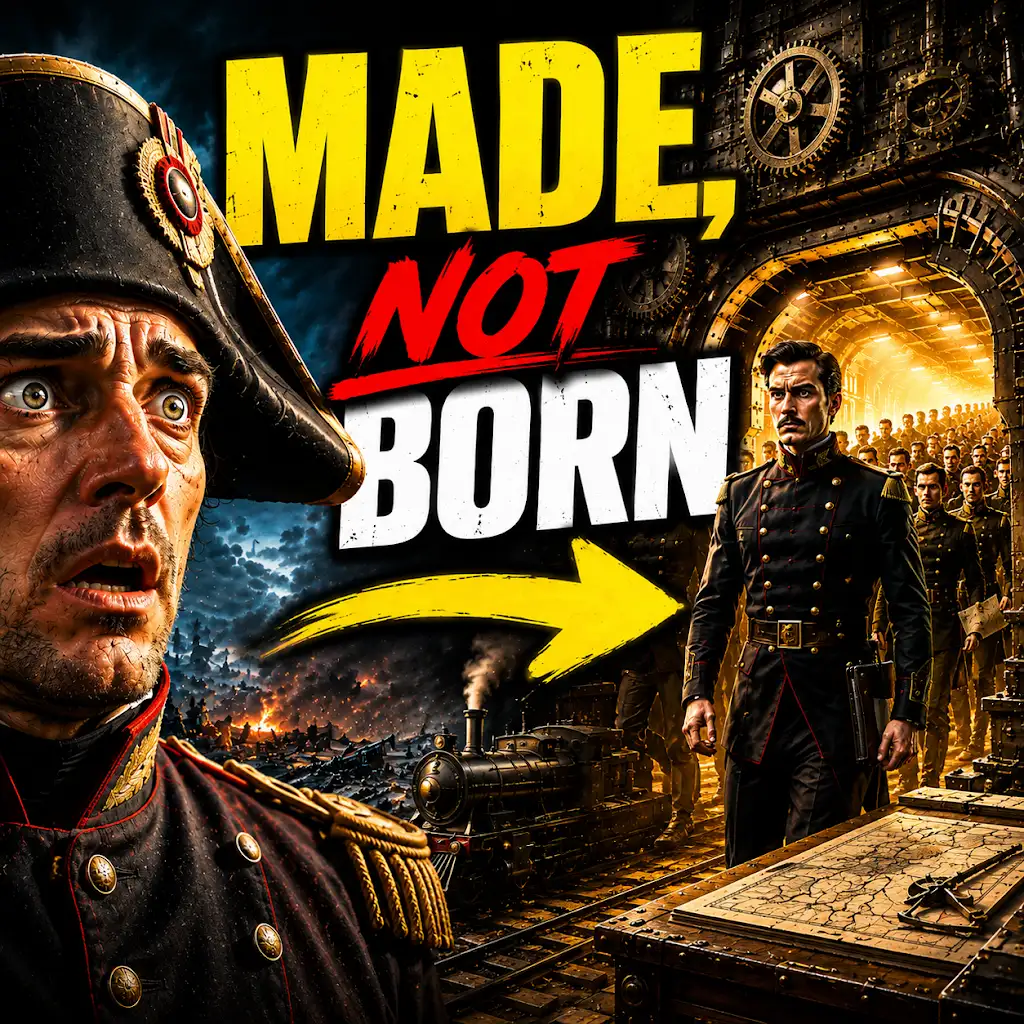
The Military Machine That Didn’t Need a Napoleon
FAQs
What is Moltke mission command?
Moltke mission command is a concept developed by Helmuth von Moltke the Elder, a Prussian military strategist. It emphasizes decentralized decision-making, allowing subordinate commanders to exercise initiative and adapt to changing circumstances on the battlefield.
What are the key principles of Moltke mission command?
The key principles of Moltke mission command include maintaining a clear and concise intent, empowering subordinate leaders to make decisions, fostering a climate of trust and mutual understanding, and ensuring effective communication and coordination among all levels of command.
How does Moltke mission command differ from traditional command and control systems?
Moltke mission command differs from traditional command and control systems by emphasizing decentralized decision-making and empowering subordinate leaders to take initiative based on the overall intent and objectives of the mission. It allows for greater flexibility and adaptability in dynamic and complex operational environments.
What are the benefits of implementing Moltke mission command in military operations?
The benefits of implementing Moltke mission command in military operations include increased agility and responsiveness, enhanced situational awareness and understanding, improved morale and initiative among subordinate leaders, and the ability to exploit opportunities and adapt to unforeseen challenges more effectively.
How is Moltke mission command relevant in modern military operations?
Moltke mission command remains relevant in modern military operations due to its ability to address the complexities and uncertainties of contemporary warfare. It enables military forces to operate more effectively in ambiguous and rapidly changing environments, where traditional command and control systems may be less effective.