Helmuth von Moltke the Elder stands as a towering figure in the annals of military history, his strategic brilliance revolutionizing warfare and shaping the geopolitical landscape of 19th-century Europe. His legacy is not merely one of battlefield victories, but of a profound understanding of the complexities of war, a mastery of organization, and a foresight that transcended the immediate tactical engagements. Moltke was a man of meticulous planning, but also of profound adaptability, a rare combination that allowed him to forge a Prussian military machine that dominated its adversaries. His genius lay in his ability to see the grand sweep of conflict, to anticipate the actions of his enemies, and to empower his subordinates to execute his will with initiative.
Moltke’s strategic philosophy was not born in a vacuum. It was the product of extensive study, practical experience, and a keen observation of the changing nature of warfare in the mid-19th century. He inherited a Prussian army in need of modernization, a force that had suffered humiliating defeats in the Napoleonic Wars. His intellectual journey, coupled with his unwavering belief in the power of intellectual preparation, laid the groundwork for his revolutionary approach.
The Shadow of Napoleon and the Need for Reform
The Napoleonic Wars, while a testament to military genius, also revealed the inherent weaknesses of static, centrally controlled armies. Napoleon’s ability to concentrate forces, his innovative use of artillery, and his rapid maneuvers had exposed the rigidities of older military doctrines. Moltke, having lived through the aftermath of Napoleon’s campaigns, understood the imperative for Prussia to not only match but to surpass these advancements. He recognized that future wars would demand greater flexibility, faster decision-making, and a more decentralized command structure that could still operate under a unified strategic vision.
The Importance of the General Staff
Perhaps Moltke’s most enduring contribution was the institutionalization of the Prussian General Staff. He transformed it from a loosely organized body of officers into a highly professional and intellectually rigorous institution. This was not merely an administrative body; it was the brain of the army, responsible for strategic planning, intelligence gathering, logistical preparation, and the education of future commanders. The General Staff became a crucible for developing strategic thinkers, fostering a culture of critical analysis, and ensuring a continuity of strategic thought that transcended individual leadership.
Cultivating Strategic Acumen through Education and Experience
Moltke believed that military leadership required more than just battlefield bravery; it demanded intellectual prowess. The General Staff provided a rigorous training ground, where officers were exposed to historical case studies, theoretical exercises, and practical simulations. They were encouraged to think critically, to challenge assumptions, and to develop a deep understanding of the political and economic factors that influenced military operations. This emphasis on education ensured that Prussia possessed a deep pool of highly competent officers capable of understanding and executing complex strategic plans.
The Role of Intelligence and Operational Planning
The General Staff’s meticulous work in intelligence gathering and operational planning was paramount. Moltke understood that wars were won not just on the battlefield, but in the hours and days leading up to it. The Staff meticulously analyzed enemy strengths and weaknesses, assessed potential courses of action, and developed detailed operational plans that accounted for logistical challenges, terrain, and political considerations. This proactive approach, rooted in thorough preparation, gave the Prussian army a significant advantage before the first shot was fired.
Helmuth von Moltke’s military strategy, characterized by its emphasis on flexibility and decentralized command, has been the subject of extensive analysis in military literature. For a deeper understanding of his strategic principles and their implications for modern warfare, you can refer to a related article that explores these concepts in detail. This insightful piece can be found at this link.
The Principles of Moltkean Warfare
Moltke’s strategic principles were not abstract theories; they were practical guidelines that governed the execution of war. He emphasized speed, surprise, and the decisive concentration of force, but always within the framework of a flexible and adaptable plan. His approach was designed to overwhelm the enemy not just militarily, but psychologically, shattering their will to resist.
“Auftragstaktik”: The Genius of Decentralized Command
One of Moltke’s most revolutionary concepts was “Auftragstaktik,” or mission-type tactics. This principle empowered subordinate commanders with a degree of autonomy in executing their missions. Instead of receiving highly detailed, step-by-step orders, commanders were given a clear objective and the freedom to determine the best means of achieving it, given the evolving battlefield situation. This fostered initiative, adaptability, and a rapid response to unexpected developments, a stark contrast to the rigid, centralized command structures that often hampered other armies.
Empowering Subordinate Initiative within Strategic Framework
The success of Auftragstaktik hinged on the rigorous training and intellectual development of subordinate commanders. Moltke trusted his officers to understand the overall strategic intent and to make sound decisions in the heat of battle. This trust, earned through a robust selection and training process, allowed for a much more fluid and responsive military operation. Commanders on the ground, closer to the action, could exploit opportunities and overcome unforeseen obstacles without waiting for orders from higher headquarters, which might be outdated by the time they arrived.
Fostering Adaptability and Responsiveness on the Battlefield
The battlefield is inherently chaotic, and the ability to adapt to unforeseen circumstances is crucial for success. Auftragstaktik allowed Prussian units to respond with remarkable speed and flexibility. If a flank was unexpectedly exposed, a subordinate commander could immediately reorient their forces to address the threat without needing to consult higher command. This decentralization of decision-making, while requiring a high level of trust and competence, proved to be an incredibly effective way to maintain momentum and exploit enemy weaknesses.
The Cultivation of Speed and Surprise
Moltke understood that in warfare, speed was often the decisive factor. He advocated for rapid marches, swift attacks, and the constant exploitation of an enemy’s disorientation. This emphasis on speed was not about recklessness; it was about overwhelming the enemy before they could react, before they could bring their full strength to bear, and before they could mount an effective defense. Surprise was the handmaiden of speed, achieved through deception, misdirection, and the ability to strike where and when the enemy least expected it.
The Importance of Mobility and Logistics
Achieving speed required a highly mobile army, supported by an efficient logistical network. Moltke paid meticulous attention to the organization of supply lines, the speed of troop movements, and the ability to sustain operations over extended periods. The Prussian army under his leadership was adept at using railways for rapid troop deployment and efficient resupply, a significant advantage over less technologically advanced adversaries. This logistical backbone enabled the speed and reach that defined Moltkean campaigns.
Exploiting Enemy Inertia and Indecision
Moltke’s strategy aimed to capitalize on the inherent inertia and indecision that often plague enemy commanders. By moving quickly and unpredictably, he could force his opponents into reactive positions, constantly on the defensive. This psychological pressure, combined with the tangible threat of overwhelming force, could quickly erode an enemy’s morale and capacity for effective resistance. The rapid and decisive victories achieved by the Prussian army under Moltke’s influence often left adversaries reeling, struggling to comprehend the speed and efficacy of the attacks.
Helmuth von Moltke’s military strategy, characterized by its emphasis on flexibility and the importance of communication, has been the subject of extensive analysis in military history. For those interested in exploring this topic further, a related article can be found at In the War Room, which delves into the implications of Moltke’s approaches on modern warfare. Understanding his strategies provides valuable insights into the evolution of military tactics and the significance of adaptability in the face of changing circumstances.
The Decisive Battle and the Concentration of Force
While embracing flexibility, Moltke never abandoned the fundamental military principle of seeking the decisive battle. His strategy was designed to achieve this objective through the careful application of overwhelming force at a chosen point. He believed in concentrating his main effort on the enemy’s weakest point, aiming for a swift and decisive victory that would shatter their army and cripple their will to continue the fight.
The Principle of “Schwerpunkt” (Center of Gravity)
Moltke’s understanding of the “Schwerpunkt,” or center of gravity, was crucial to his strategic success. He recognized that every enemy possessed a critical vulnerability, whether it be a key army, a vital supply line, or a strategic geographical location. His planning revolved around identifying and concentrating his forces to strike this center of gravity with maximum effect, thereby precipitating a collapse of the enemy’s entire war effort.
The Power of the Encirclement Maneuver
The encirclement maneuver became a hallmark of Moltke’s strategy, particularly in the Austro-Prussian War of 1866 and the Franco-Prussian War of 1870-1871. By rapidly maneuvering his forces to cut off enemy units, he could trap and destroy them without necessarily engaging in costly frontal assaults. These encirclements, achieved through skillful coordination and the application of superior speed and mobility, were often psychologically devastating for the defeated armies and militarily decisive for Prussia. The Battle of Königgrätz (Sadowa) in 1866 is a prime example, where the Prussian armies converged to encircle and decisively defeat the Austrian army.
Case Studies in Moltkean Genius: The Wars of Unification

Moltke’s strategic genius was not confined to theoretical treatises; it was forged in the crucible of actual conflict. The series of wars that led to the unification of Germany provided ample demonstration of his innovative and devastatingly effective military doctrines. These campaigns showcased his meticulous planning, his grasp of logistics, and his ability to adapt his strategies to differing opponents and circumstances.
The Second Schleswig War (1864): A Proving Ground
While not solely Moltke’s strategic masterpiece, the Second Schleswig War provided an early indication of the effectiveness of the reformed Prussian military and the emerging principles that would define Moltke’s later successes. The war, fought against Denmark, was relatively swift and achieved Prussian objectives with a coordinated effort between Prussia and Austria. It served as a valuable learning experience and demonstrated the growing professionalization of the Prussian officer corps, a direct precursor to the full flowering of Moltke’s strategic thinking.
The Austro-Prussian War (1866): The Triumph of Speed and Maneuver
The Austro-Prussian War of 1866 was a watershed moment for Moltke and Prussian military dominance. Facing a larger and theoretically more formidable Austrian army, Moltke orchestrated a brilliant campaign that relied on rapid mobilization, strategic railway use, and decisive maneuvering. The war was characterized by multiple Prussian armies advancing on different fronts, converging with remarkable speed and coordination to achieve a series of stunning victories, culminating in the decisive Battle of Königgrätz. This war effectively demonstrated the superiority of Moltke’s strategic planning and the effectiveness of Auftragstaktik against a more traditional, centralized command.
Rapid Mobilization and Deployment
Moltke understood the critical advantage of being able to mobilize and deploy his forces faster than his adversaries. The Prussian railway network was expertly utilized to move troops and supplies with unprecedented speed, allowing them to concentrate their forces at strategic points before the Austrians could effectively react. This rapid deployment was a key element in the successful execution of Moltke’s encirclement maneuvers.
The Battle of Königgrätz: A Masterclass in Encirclement
The Battle of Königgrätz, fought on July 3, 1866, is widely regarded as Moltke’s masterpiece. Through a series of brilliant maneuvers, Prussian armies, particularly the Crown Prince’s Second Army, converged on the Austrian flank and rear, achieving a complete encirclement. The battle resulted in a devastating defeat for Austria, effectively ending the war and solidifying Prussia’s dominance in German affairs. This battle exemplified the culmination of Moltke’s strategic principles: speed, surprise, concentration of force, and the decisive encirclement.
The Franco-Prussian War (1870-1871): The Crushing of a Great Power
The Franco-Prussian War was another testament to Moltke’s strategic brilliance, this time against a seemingly superior French military in terms of equipment and perceived military tradition. Moltke’s planning, however, proved to be far more sophisticated and effective. He once again utilized rapid mobilization, efficient logistics, and a series of decisive battles to defeat the French armies and ultimately besiege Paris, leading to the proclamation of the German Empire. This war further cemented Moltke’s reputation as one of history’s greatest military strategists.
The Siege of Paris and the Collapse of French Resistance
The swift and decisive victories at battles like Gravelotte and Sedan crippled the French military and paved the way for the siege of Paris. Moltke’s strategy focused on systematically dismantling the French field armies, thus isolating the capital and demonstrating the futility of continued resistance. The fall of Sedan, leading to the capture of Emperor Napoleon III, was a particularly significant blow that shattered French morale.
The Strategic Use of Railways and Communication
The Franco-Prussian War further highlighted the strategic importance of railways. Moltke’s forces leveraged the Prussian rail network to move troops and supplies with exceptional efficiency, allowing for rapid reinforcement and the concentration of forces to exploit French weaknesses. Furthermore, improvements in telegraphic communication allowed for more effective coordination between widely dispersed Prussian armies, a crucial element in the execution of complex maneuvers.
The Enduring Legacy of Helmuth von Moltke
Moltke’s impact on military thought and practice extends far beyond his lifetime. His principles of strategic planning, decentralized command, and the importance of professional military education continued to influence military leaders for generations. While the nature of warfare has evolved dramatically, the fundamental insights offered by Moltke remain relevant.
The Evolution of Military Doctrine
Moltke’s emphasis on a highly professional General Staff, meticulous planning, and the empowerment of subordinate commanders became the blueprint for military organizations worldwide. Many armies adopted similar structures and doctrines, recognizing the advantages of a well-trained and intellectually capable officer corps. His theories on the decisive battle and the importance of speed and maneuver continued to be studied and adapted by military thinkers, even as new technologies emerged.
The Modern General Staff System
The concept of a unified, intellectually focused General Staff, as pioneered by Moltke, is now a cornerstone of most modern militaries. These staffs are responsible for strategic planning, intelligence analysis, operational planning, and the overall professional development of the armed forces. The legacy of Moltke’s vision for the Prussian General Staff is evident in the organizational structures that guide military operations today.
The Continuous Study of Warfare
Moltke’s insistence on the study of history and the analysis of past campaigns fostered a culture of continuous learning within the military. This approach recognized that warfare is not a static discipline, and that adaptation and innovation are essential for maintaining a strategic edge. This emphasis on intellectual curiosity and critical analysis remains vital for any military seeking to remain effective in a changing world.
The Human Element in Warfare
Despite his focus on planning and logistics, Moltke never underestimated the importance of the human element in warfare. His understanding of Auftragstaktik was rooted in his trust in the initiative and courage of his soldiers and subordinate officers. He recognized that even the most brilliant plans could be derailed by the actions of individuals, and that fostering a spirit of discipline, professionalism, and initiative was crucial for success.
Trust and Responsibility in Command
Moltke’s willingness to delegate significant responsibility to his subordinate commanders, coupled with his rigorous selection and training process, fostered a culture of trust and accountability. This empowered officers at all levels to take ownership of their missions and to act decisively in the best interests of the overall strategic objective. This trust, when well-placed, proved to be an immense force multiplier.
The Psychological Dimension of Conflict
While his victories were often achieved through material superiority and brilliant maneuvers, Moltke also understood the psychological impact of war. His rapid and decisive campaigns aimed not only to defeat enemy armies but also to break their will to fight. The shock and awe of swift, overwhelming victories could be as potent a weapon as any artillery piece.
Moltke’s Enduring Relevance in the 21st Century
In an era of rapid technological advancement and complex geopolitical challenges, Helmuth von Moltke’s strategic insights remain remarkably relevant. While the tools of warfare have changed, the fundamental principles of sound strategy – understanding the enemy, meticulous planning, adaptability, effective leadership, and the intelligent application of force – remain constant. His legacy serves as a reminder that military success is not solely dependent on technology, but on the intellectual capacity and strategic vision of those who command. His genius lies in his ability to articulate and implement these timeless truths, leaving an indelible mark on the art and science of war.
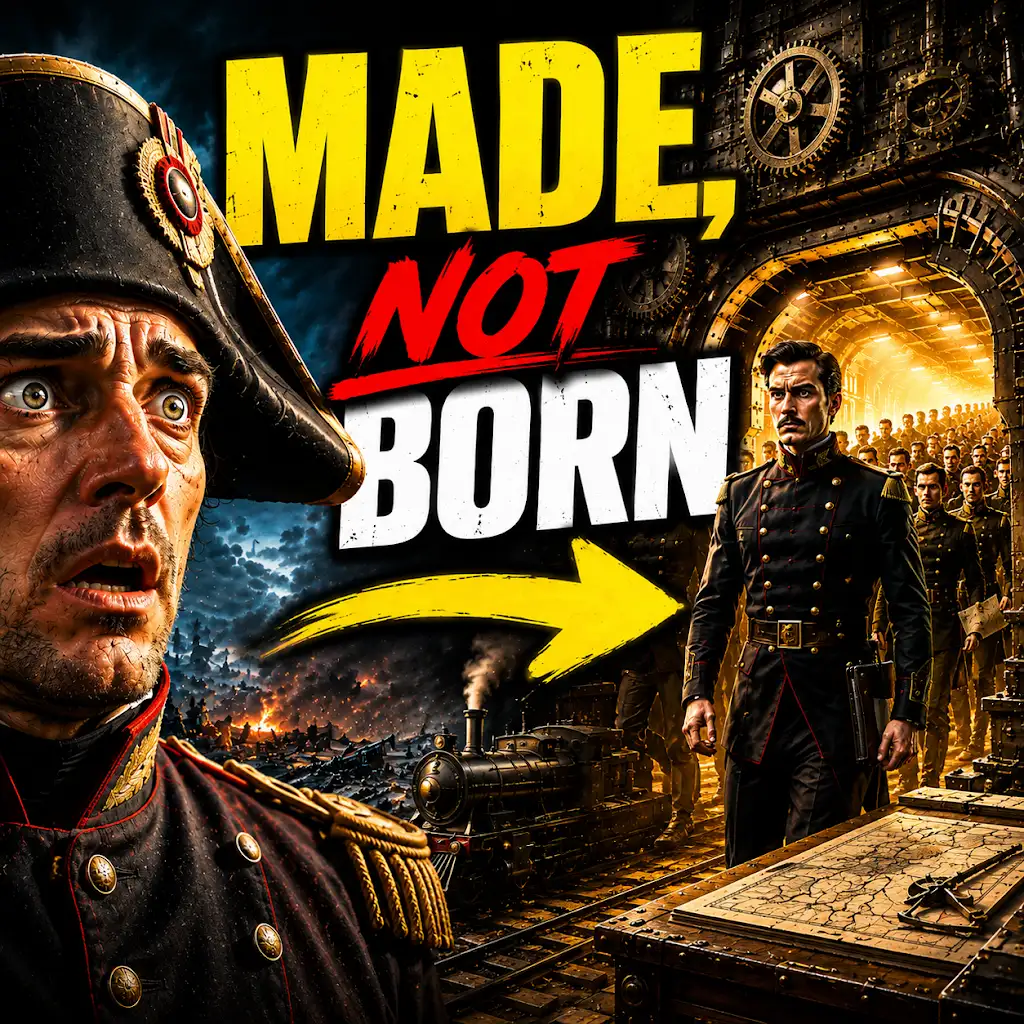
The Military Machine That Didn’t Need a Napoleon
FAQs
What is Helmuth von Moltke known for in military strategy?
Helmuth von Moltke is known for his contributions to military strategy, particularly his development of the concept of “military strategy” as a distinct field of study. He is also known for his leadership as the Chief of the Prussian General Staff, where he implemented significant reforms in the Prussian military.
What were some key principles of Helmuth von Moltke’s military strategy?
Some key principles of Helmuth von Moltke’s military strategy included the concept of “Auftragstaktik” or “mission-type tactics,” which emphasized the importance of giving subordinate commanders a clear mission and allowing them the freedom to adapt to changing circumstances on the battlefield. He also emphasized the importance of thorough planning and preparation, as well as the need for flexibility and adaptability in the face of uncertainty.
How did Helmuth von Moltke’s military strategy influence modern warfare?
Helmuth von Moltke’s military strategy had a significant influence on modern warfare by emphasizing the importance of decentralized command, flexibility, and adaptability. His concept of “mission-type tactics” has been influential in shaping modern military doctrine, particularly in the areas of leadership and decision-making on the battlefield.
What were some of Helmuth von Moltke’s major accomplishments in military strategy?
Some of Helmuth von Moltke’s major accomplishments in military strategy include his successful leadership during the Austro-Prussian War and the Franco-Prussian War, where he demonstrated the effectiveness of his strategic and operational concepts. He also played a key role in modernizing the Prussian military and laying the groundwork for the German Empire’s military successes in the late 19th and early 20th centuries.
What is the significance of Helmuth von Moltke’s military strategy in history?
Helmuth von Moltke’s military strategy is significant in history for its impact on the development of modern military doctrine and its influence on subsequent military leaders and strategists. His emphasis on decentralized command, flexibility, and adaptability has had a lasting impact on the conduct of warfare and continues to be studied and applied in military education and training.