The Prussian army of the 19th century was a force that reshaped the German landscape and cast a long shadow over European power dynamics. From its humble beginnings as a relatively minor military power, Prussia, through a combination of strategic reforms, exceptional leadership, and a relentless dedication to military excellence, forged an army that became the envy of the continent. This transformation was not a singular event but a continuous process, driven by the evolving geopolitical realities of the era and the unwavering vision of its leaders. The story of the 19th-century Prussian army is a testament to the power of discipline, innovation, and a national consciousness deeply intertwined with martial prowess.
The foundations of Prussia’s military strength were laid long before the 19th century, but it was during this period that these nascent elements were systematically honed and amplified. The legacy of Frederick the Great, with his emphasis on disciplined soldiery and tactical innovation, provided a crucial bedrock. However, the setbacks faced during the Napoleonic Wars, particularly the humiliating defeat at Jena-Auerstedt in 1806, served as a stark and necessary catalyst for profound reform. This period of occupation and subjugation, while deeply wounding to Prussian pride, also offered a unique opportunity to dismantle outdated structures and embrace new military philosophies.
The Shadow of Napoleon and the Spirit of Reform
The Napoleonic era was a watershed moment for Prussia. The French army, with its emphasis on speed, maneuver, and the citizen-soldier, demonstrated the limitations of Prussia’s more rigid, aristocratic military model. The defeat was a national trauma, forcing Prussian statesmen and military thinkers to confront their weaknesses head-on. This led to a wave of intellectual and organizational reforms that permeated every level of society, with the military at its forefront. The goal was not merely to rebuild, but to fundamentally transform the army into a modern, efficient fighting machine capable of challenging the dominant powers of Europe.
The Scharnhorst-Gneisenau Reforms
The most significant architects of this early 19th-century military renaissance were Gerhard von Scharnhorst and August Neidhardt von Gneisenau. Recognizing that the existing system was unsustainable, they spearheaded a series of comprehensive reforms aimed at modernizing the Prussian military. These reforms addressed not only tactical and strategic matters but also the very social fabric of the army.
Abolishing Privileges and Embracing Meritocracy
A key aspect of the Scharnhorst-Gneisenau reforms was the dismantling of the old aristocratic privileges that had long dominated the officer corps. While the officer corps remained largely aristocratic in nature, efforts were made to open it up to talented individuals from lower social strata, provided they possessed the necessary intelligence and commitment. This shift towards meritocracy, however gradual, was crucial in fostering a more dynamic and effective leadership.
The Introduction of Universal Conscription
Perhaps the most revolutionary of the reforms was the introduction of universal conscription, or “Einjährig-Freiwillige” (one-year volunteers). This system, building upon earlier attempts, sought to create a larger, more readily available pool of trained soldiers. While not entirely “universal” in the modern sense, it signified a fundamental shift away from reliance on mercenaries and a more direct engagement of the nation’s manpower in its defense. This fostered a sense of national duty and contributed to the powerful “Volksheer” (people’s army) ideal.
Reorganization of the General Staff
Crucial to the army’s operational effectiveness was the reorganization of the General Staff. Previously, planning and execution were often fragmented. Scharnhorst recognized the need for a centralized, professional body of officers dedicated to strategic planning, logistical support, and battlefield command. This laid the groundwork for the development of the renowned Prussian General Staff, which would become a model for military organizations worldwide.
The Prussian Army of the nineteenth century played a crucial role in shaping modern military strategies and tactics, particularly during the wars of German unification. For a deeper understanding of the organizational structure and innovations that characterized this formidable force, you can explore a related article on military history at In the War Room. This resource provides valuable insights into the evolution of the Prussian military and its impact on contemporary warfare.
The Development of Prussian Military Doctrine
The reforms initiated in the early 19th century were not static; they evolved throughout the century, driven by both theoretical advancements and practical experience. Prussian military thinkers continuously refined their understanding of warfare, emphasizing speed, decisiveness, and the exploitation of enemy weaknesses.
The Influence of Carl von Clausewitz
Carl von Clausewitz, a Prussian general and influential military theorist, profoundly shaped Prussian military thinking. His magnum opus, On War, though published posthumously in 1832, became a cornerstone of Prussian military education. Clausewitz’s concept of war as a “continuation of politics by other means” emphasized the subordination of military action to political objectives, a crucial element in understanding the calculated aggression that would characterize Prussian foreign policy.
The Trinity of War
Clausewitz’s famous “trinity” – representing the inherent violence and passion of the people, the play of chance and probability, and the policy or reason of the government – provided a framework for understanding the complex interplay of factors that determined the outcome of war. Prussian strategists absorbed these ideas, recognizing that military success was not merely about battlefield tactics but about the effective integration of military power with national will and political goals.
The Importance of Offensive Action
Prussian doctrine, influenced by Clausewitz and the experience of the Napoleonic Wars, heavily emphasized offensive action. The belief was that the initiative on the battlefield was paramount, allowing for the dictate of terms and the overwhelming of the enemy. This “Schwerpunkt” (center of gravity) strategy, focusing decisive force on a critical point, became a hallmark of Prussian tactical thinking.
Logistical and Technological Advancements
Beyond doctrine, the Prussian army also embraced technological and logistical advancements. The 19th century witnessed the dawn of the industrial revolution, and Prussia was quick to harness its potential for military purposes.
The Rise of the Railway
The development of railways proved to be a game-changer. The Prussian army was one of the first to systematically integrate railways into its mobilization and deployment strategies. This allowed for the rapid movement of large numbers of troops and supplies, a significant advantage over adversaries reliant on slower methods of transportation. The speed of mobilization became a critical factor in Prussia’s military successes.
Improvements in Artillery and Firepower
The latter half of the 19th century saw significant advancements in artillery technology. Prussia, under the leadership of figures like Alfred Krupp, invested heavily in modern, breech-loading artillery. These weapons offered greater range, accuracy, and rate of fire, significantly increasing the destructive power of the Prussian army on the battlefield. The development of the needle gun rifle also provided Prussian infantry with a tactical advantage in terms of rate of fire.
The Pillars of Prussian Military Success
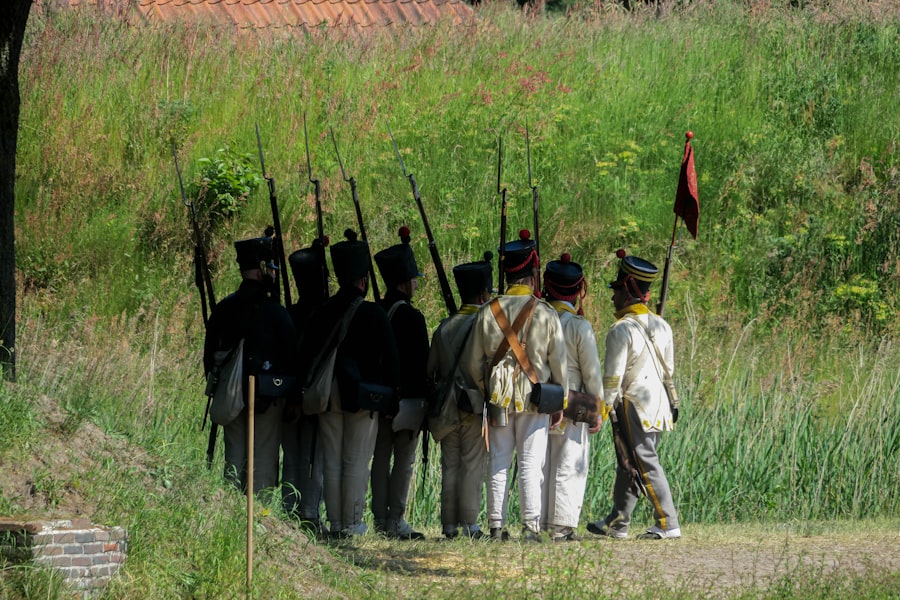
The Prussian army’s effectiveness was not solely due to its doctrines or technologies; it was built upon a robust organizational structure and a culture of rigorous training and discipline. These elements combined to create a formidable fighting force.
The Professionalization of the Officer Corps
While the reforms had begun to open up the officer corps, the 19th century saw its further professionalization. Military academies were established and expanded, providing a standardized and rigorous education for aspiring officers. The emphasis was on intellectual development, tactical acumen, and leadership skills, rather than solely on lineage.
War Colleges and the Study of Military History
The establishment of institutions like the Prussian Kriegsakademie (War College) was pivotal. These colleges fostered a deep understanding of military history, allowing officers to learn from past campaigns and adapt lessons to contemporary warfare. The systematic study of military theory and practice was ingrained in the culture of the officer corps, ensuring a continuous intellectual engagement with the art of war.
The Role of the General Staff
The General Staff, as envisioned by Scharnhorst, became the intellectual powerhouse of the Prussian army. Its officers were not only responsible for planning but also for advising commanders, assessing situations, and ensuring the seamless execution of operations. The principle of “Auftragstaktik” (mission-type tactics), where subordinate commanders were given a clear objective but considerable freedom in how to achieve it, emerged from the intellectual environment fostered by the General Staff, emphasizing initiative and adaptability at lower levels.
Rigorous Training and Discipline
The legendary discipline of the Prussian soldier was not an innate quality but the result of relentless and methodical training. From the basic recruit to the seasoned veteran, the emphasis was on precision, obedience, and unwavering adherence to orders.
The “Cadence” of the Drill Field
The iconic image of Prussian soldiers marching in perfect unison was a direct result of the intensive drill and parade ground training. This discipline was not merely for show; it instilled habits of obedience and coordination that were crucial in the chaotic environment of battle. The repetition and precision of drill translated into the ability of units to maneuver effectively under fire.
Emphasis on Fitness and Marksmanship
Beyond drill, training programs emphasized the physical fitness of soldiers and their proficiency with their weapons. Soldiers were expected to be robust and capable of enduring long marches and arduous campaigning. Marksmanship training was also a significant component, ensuring that each soldier could effectively contribute to the firepower of their unit.
The Strength of the Reserve System
The Prussian reserve system was a critical component of its military strength, allowing for rapid expansion of the army in times of conflict. The conscription system ensured that a large pool of trained men could be recalled to active duty, bolstering the ranks of the standing army.
Mobilization and Rapid Deployment
The efficiency of the Prussian mobilization system was demonstrated repeatedly. The ability to call up reserves and integrate them seamlessly with active units allowed the Prussian army to deploy large forces with remarkable speed, often catching adversaries unprepared. This strategic advantage was instrumental in Prussia’s swift victories in the wars of the 1860s and 1870s.
The Prussian Army in Action: A Series of Triumphs
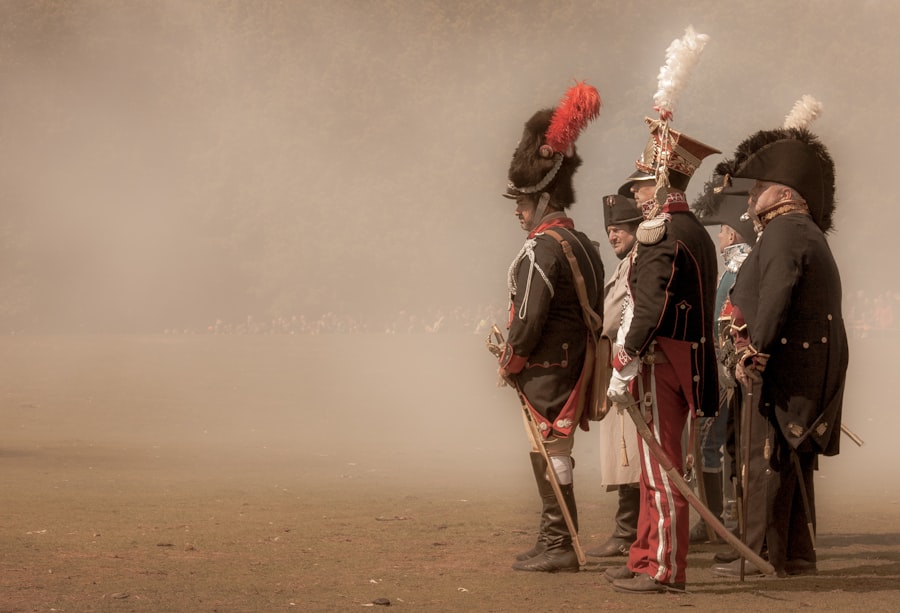
The 19th century was a period of significant military engagement for Prussia, culminating in a series of decisive victories that fundamentally altered the European balance of power. These conflicts served as proving grounds for the reforms and doctrines that had been developed over decades.
The Wars of German Unification
The most significant achievements of the 19th-century Prussian army were undoubtedly its victories in the Wars of German Unification. These conflicts, orchestrated by Otto von Bismarck and executed by the Prussian military, led to the creation of the German Empire.
The Second Schleswig War (1864)
While a joint effort with Austria, the Second Schleswig War provided an early demonstration of Prussian military effectiveness against Denmark. It was a relatively minor conflict but served as a valuable opportunity to test mobilization and operational plans.
The Austro-Prussian War (1866)
The Seven Weeks’ War against Austria was a watershed moment. Prussia, utilizing its superior railway network for rapid mobilization and its advanced artillery, achieved a decisive victory in just seven weeks. The Battle of Königgrätz was a masterclass in maneuver warfare and a resounding testament to the effectiveness of the Prussian General Staff. This victory solidified Prussian dominance within Germany and excluded Austria from further German affairs.
The Franco-Prussian War (1870-1871)
The final act in the drama of unification was the Franco-Prussian War. Despite facing a formidable French army, the Prussian military, with its superior organization, leadership, and technological advantages, achieved a swift and decisive victory. The Battle of Sedan, resulting in the capture of Emperor Napoleon III, effectively ended the war and led to the proclamation of the German Empire at Versailles. This war cemented the reputation of the Prussian army as the preeminent military force in Europe.
The Impact on European Power Dynamics
The victories of the Prussian army fundamentally reshaped the political map of Europe. The creation of a unified Germany under Prussian leadership shifted the balance of power away from France and Austria, creating a new, powerful entity at the heart of the continent. This, in turn, had profound implications for international relations, contributing to the complex web of alliances and rivalries that would eventually lead to the First World War.
The Prussian Army of the nineteenth century played a crucial role in shaping modern military tactics and organization, influencing armies around the world. For those interested in exploring this topic further, an insightful article can be found at this link, which delves into the strategic innovations and leadership that defined the Prussian military during this transformative period. Understanding these developments provides valuable context for the evolution of warfare in Europe and beyond.
The Legacy of the Prussian Military Model
| Year | Number of Soldiers | Number of Officers | Number of Battles |
|---|---|---|---|
| 1806 | 190,000 | 12,000 | 10 |
| 1813 | 320,000 | 20,000 | 15 |
| 1866 | 700,000 | 35,000 | 20 |
The 19th-century Prussian army left an indelible mark on military history. Its organizational principles, doctrines, and training methodologies were studied and emulated by military powers across the globe.
A Model for Modern Armies
The Prussian General Staff, with its emphasis on professional staff work, strategic planning, and continuous professional development, became the blueprint for general staffs in numerous countries. The concept of “Auftragstaktik” influenced leadership development and fostered greater initiative among junior officers.
The Cult of the Military
The success of the Prussian army fostered a deep-seated “militarismus” within German society. The military was elevated to a position of immense prestige, and military values were widely admired. This pervasive influence, while contributing to military effectiveness, also had its darker side, contributing to a culture that was perhaps too readily inclined towards conflict.
Enduring Principles
Despite the immense changes in warfare since the 19th century, many of the core principles championed by the Prussian army – such as the importance of rigorous training, clear objectives, effective logistics, and adaptable leadership – remain relevant today. The story of the 19th-century Prussian army serves as a compelling case study in the development and application of military power, a testament to the enduring impact of strategic foresight and unwavering commitment to excellence. Its shadow, cast across the battlefields of Europe and beyond, continues to inform the study of military history and the practice of warfare.
The Military Machine That Didn’t Need a Napoleon
FAQs
1. What was the Prussian Army in the nineteenth century?
The Prussian Army in the nineteenth century was the military force of the Kingdom of Prussia, a major German state during that time. It played a significant role in the unification of Germany and the subsequent formation of the German Empire in 1871.
2. What were the key characteristics of the Prussian Army in the nineteenth century?
The Prussian Army was known for its discipline, organization, and efficient military tactics. It was one of the first armies to adopt universal conscription, which allowed for a large and well-trained force. The army also emphasized the importance of military education and training.
3. What were some of the major military campaigns involving the Prussian Army in the nineteenth century?
The Prussian Army participated in several significant military campaigns during the nineteenth century, including the Napoleonic Wars, the Austro-Prussian War, and the Franco-Prussian War. These campaigns helped to solidify Prussia’s military reputation and influence in Europe.
4. What reforms were implemented in the Prussian Army during the nineteenth century?
The Prussian Army underwent significant reforms during the nineteenth century, including the reorganization of its command structure, the introduction of new weapons and tactics, and the modernization of its logistical and administrative systems. These reforms contributed to the army’s effectiveness in combat.
5. What was the legacy of the Prussian Army in the nineteenth century?
The Prussian Army’s legacy in the nineteenth century was profound, as it played a crucial role in the unification of Germany and the establishment of the German Empire. Its military successes and innovative tactics also influenced military thinking and strategy in Europe and beyond.