The Prussian railway system, a marvel of 19th-century engineering and logistical foresight, played an indispensable role in the nation’s military readiness. Its development, particularly in the decades leading up to major conflicts, was intrinsically linked to strategic objectives, transforming Prussia from a regional power into a formidable military force capable of rapid deployment and sustained campaigns. The efficient transportation offered by the burgeoning railway network was not merely a convenience; it was a fundamental component of Prussian military doctrine and a decisive factor in its battlefield successes.
The mid-19th century witnessed a profound shift in military thinking, with the speed and scale of troop and matériel movement becoming paramount. Prussia, in this context, recognized the transformative potential of railways. Unlike other nations that viewed them primarily as commercial ventures, the Prussian government actively promoted and, in many cases, directly funded railway construction with a clear military objective in mind: to be able to concentrate forces rapidly at any point along its extensive borders.
Early Visions and Governmental Support
The early proponents of railways in Prussia, often military engineers and strategists, saw beyond the immediate economic benefits. They envisioned a network that could act as a “strategic artery,” allowing for the swift transfer of troops from peacetime garrisons to potential fronts. This vision was championed by influential figures within the Prussian General Staff, who understood that the speed of mobilization could often be the deciding factor in the opening stages of a conflict.
The Role of the Prussian Ministry of War
The Ministry of War was a key architect of this strategic vision. It actively participated in the planning and routing of new railway lines, ensuring that they served military needs as much as, if not more than, civilian ones. This involved the construction of lines connecting major garrisons, strategic fortresses, and key logistical hubs. The government’s willingness to subsidize private railway companies or to directly build lines where strategic necessity dictated was a testament to its commitment to a militarily oriented railway network.
The Influence of German Unification
The ambition of German unification, a central tenet of Prussian foreign policy, further fueled the demand for a robust railway system. A united Germany would require efficient internal communication and the ability to quickly move troops to defend its expanded frontiers. The railway was seen as the indispensable tool for achieving this goal, connecting the disparate states and enabling a cohesive national defense.
Technological Advancements and their Military Application
The development of railway technology itself was closely watched and adapted for military purposes. Improvements in locomotive power, track construction, and rolling stock directly enhanced the potential for military mobilization.
Locomotive Power and Payload Capacity
As locomotives became more powerful, they could haul heavier loads, meaning more troops, artillery pieces, and supplies could be transported in a single train. This exponential increase in carrying capacity was a game-changer for large-scale troop movements.
Rolling Stock Design and Adaptability
The Prussians were particularly adept at designing specialized rolling stock. This included dedicated troop transports, artillery wagons, and wagons designed for the carriage of horses. The adaptability of the rolling stock allowed for the flexible transport of various military assets, from individual soldiers to heavy ordnance.
The Prussian railway mobilization during the 19th century played a crucial role in the rapid deployment of troops and resources, significantly impacting military strategies of the time. For a deeper understanding of the implications of this mobilization and its influence on modern warfare, you can read a related article that explores the evolution of military logistics and transportation systems. Check it out here: In the War Room.
The Prussian Railway Network: A Masterclass in Strategic Design
The Prussian railway network was not an accidental growth of lines; it was meticulously planned and constructed with military objectives at its core. The layout of the network, the types of lines built, and the location of key infrastructure all reflected a deep understanding of military logistics and strategy.
Network Layout and Connectivity
The network was designed to facilitate rapid movement in multiple directions, connecting major military centers and borders. This allowed for the swift concentration of forces for offensive operations or the rapid reinforcement of threatened frontiers.
Trunk Lines and Branch Lines
Major trunk lines served as the primary arteries, carrying the bulk of traffic. Branch lines then extended these arteries to connect smaller garrisons, depots, and important geographical points. This hierarchical structure ensured broad coverage and efficient distribution.
Strategic Junctions and Sidings
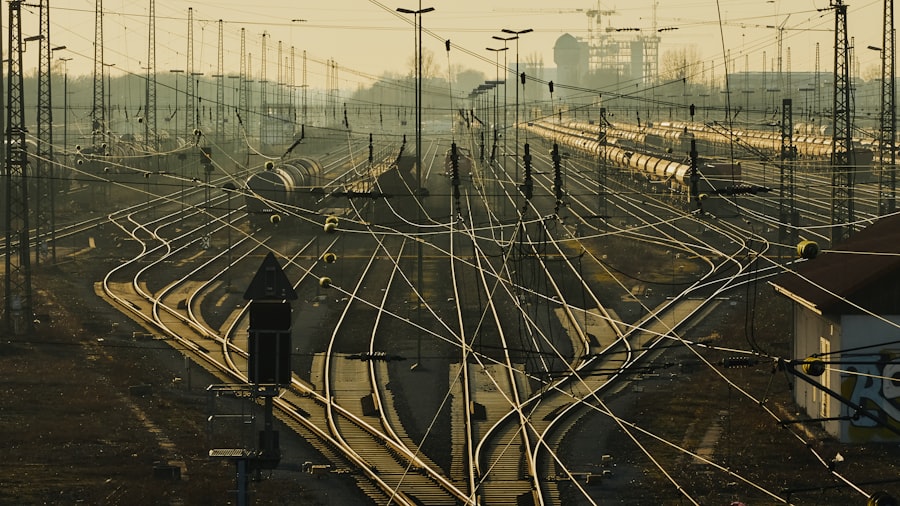
Key railway junctions were strategically important points, allowing for the redirection of trains and the assembly of large troop formations. Extensive sidings were constructed at depots and staging areas to facilitate the rapid loading and unloading of troops and matériel.
Infrastructure Development for Military Use
Beyond the tracks themselves, the Prussians invested heavily in infrastructure specifically designed to support military railway operations. This included the construction of robust bridges, tunnels, and dedicated military stations.
Military Stations and Embarkation Points
Dedicated military railway stations were built in close proximity to barracks and training grounds. These stations were designed for the efficient embarkation and disembarkation of large numbers of troops, often with multiple platforms and loading docks.
Fortified Rail Infrastructure
In areas of strategic importance, railway infrastructure such as bridges and tunnels were sometimes fortified. This was to protect these vital chokepoints from enemy attack and to ensure the uninterrupted flow of military traffic.
Standardization and Interoperability
A crucial element of the Prussian railway’s success was its commitment to standardization. This ensured that locomotives, rolling stock, and track gauges were largely uniform across the network, simplifying operations and allowing for seamless transfers of trains and matériel.
Uniform Track Gauges
The adoption of a uniform track gauge across the Prussian railway network was fundamental to its efficiency. This eliminated the need for tedious and time-consuming transshipment of goods and troops at points where different gauges might have met, a common problem in other railway systems.
Standardized Rolling Stock and Signaling
Standardized rolling stock meant that any locomotive could operate on any section of the main line and that wagons were interchangeable. Similarly, standardized signaling systems, often developed in consultation with military authorities, ensured clear communication and prevented accidents.
The Mechanics of Prussian Railway Mobilization: From Orders to Deployment

The process of railway mobilization in Prussia was a highly organized and meticulously planned affair. It involved a complex interplay between civilian railway authorities and military command, all coordinated to achieve the swift and efficient movement of forces.
The Role of the War Ministry and the General Staff
The War Ministry and the Prussian General Staff were the ultimate orchestrators of railway mobilization. They held the authority to requisition railway assets and to dictate troop movements.
Issuing Mobilization Orders
Upon the declaration of war or the order to mobilize, the War Ministry would issue detailed directives to the railway administration. These orders specified the troop units to be moved, their destinations, the timings, and the types of rolling stock required.
Strategic Planning of Troop Movements
The General Staff meticulously planned the railway routes, scheduling troop trains to avoid congestion and to ensure that units arrived at their designated assembly areas in the correct sequence. This involved sophisticated logistical calculations.
The Railway Administration’s Operational Execution
The civilian railway administration, while under military direction, was responsible for the day-to-day execution of the mobilization plan. This involved the allocation of locomotives, trains, and personnel.
Train Scheduling and Dispatch
Railway controllers worked around the clock to schedule and dispatch hundreds, and sometimes thousands, of trains. They had to balance military requirements with the continued, albeit reduced, civilian traffic.
Management of Personnel and Resources
The railway companies had to mobilize their own personnel – engineers, stokers, conductors, and station staff – to operate the increased number of trains. This often involved calling up reserves and extending working hours.
The Loading and Unloading Process
The speed and efficiency of loading and unloading troops and matériel at military stations were critical to the overall mobilization timeline.
Troop Embarkation and Disembarkation Procedures
Well-rehearsed procedures for troop embarkation and disembarkation ensured that soldiers could board or alight trains with minimal delay. This often involved military personnel assisting the railway staff.
Handling of Artillery and Equipment
The loading of heavy artillery, ammunition, and other equipment required specialized wagons and careful coordination. The Prussian system was designed to handle these complex operations effectively.
Case Studies: Railways in Action – Prussia’s Military Victories
The effectiveness of Prussian railway mobilization was not theoretical; it was dramatically demonstrated in its successful military campaigns. The ability to move troops and matériel rapidly often gave the Prussian army a decisive advantage over its adversaries.
The Franco-Prussian War (1870-1871)
The Franco-Prussian War is often cited as a prime example of Prussian railway superiority. The efficient mobilization and deployment of the Prussian army were key to its swift victories.
Rapid Concentration of Forces
The Prussian railway network allowed for the rapid concentration of a massive army along the French border within weeks of the war’s outbreak. This surprised the French, who were slower to mobilize.
Sustained Supply Lines
The railways also ensured a continuous flow of supplies, ammunition, and reinforcements to the front lines, enabling the Prussian army to sustain its offensive operations over long periods.
Tactical Deployment of Troops
The ability to rapidly redeploy troops via rail allowed the Prussians to react quickly to French movements and to exploit tactical opportunities.
The Austro-Prussian War (1866)
Even before the Franco-Prussian War, the Austro-Prussian War demonstrated the burgeoning power of railways in warfare.
The Battle of Königgrätz
The Prussian victory at the Battle of Königgrätz was partly attributed to their ability to quickly move reserve troops to the battlefield via rail, reinforcing their attacking columns at critical moments.
Logistical Superiority over Austria
Austria, while possessing a nascent railway system, lacked the strategic integration and extensive network of Prussia. This logistical inferiority hampered their ability to respond effectively to Prussian movements.
The Prussian railway mobilization played a crucial role in the efficiency of military logistics during the 19th century, significantly impacting the outcomes of various conflicts. For a deeper understanding of this topic, you can explore an insightful article that discusses the strategic advantages provided by rail transport in wartime scenarios. This article highlights how the integration of railways transformed military operations and facilitated rapid troop movements. To read more about this fascinating aspect of military history, visit this article.
The Legacy and Enduring Impact of Prussian Railway Mobilization
| Year | Number of mobilized troops | Length of railway lines used for mobilization (in miles) |
|---|---|---|
| 1866 | 285,000 | 2,500 |
| 1870 | 400,000 | 3,500 |
The Prussian approach to railway mobilization had a profound and lasting impact on military logistics and strategy worldwide. It set a precedent for how nations would integrate their railway systems into their defense planning.
A Paradigm Shift in Military Logistics
Prussia’s success demonstrated that railways were not just a means of transportation but a strategic weapon in themselves. This led to a fundamental re-evaluation of military logistics and the importance of rapid deployment.
Influence on Other Military Powers
Other major powers, observing Prussia’s success, began to invest heavily in their own railway networks and to develop similar mobilization plans. This contributed to the growing militarization of railway systems across Europe.
The Concept of “Iron Horse” Warfare
The concept of “iron horse” warfare, where armies could be rapidly projected and sustained by rail, became a defining characteristic of 19th-century warfare and continued to influence military thinking into the 20th century.
The Foundation for Modern Military Transportation
While technology has evolved significantly, the fundamental principles of strategic railway planning and utilization pioneered by Prussia laid the groundwork for modern military transportation. The understanding of how to leverage infrastructure for rapid and efficient movement remains a core tenet of military logistics.
Lessons Learned for Future Conflicts
The lessons learned from Prussian railway mobilization, particularly regarding the importance of standardization, strategic routing, and the seamless integration of civilian and military resources, continue to inform military planning and the development of logistics systems for modern warfare. The efficient movement of personnel and matériel, whether by rail, sea, air, or road, remains a critical determinant of military success.

The Military Machine That Didn’t Need a Napoleon
FAQs
What was the Prussian railway mobilization?
The Prussian railway mobilization refers to the rapid deployment of military forces using the extensive railway network in Prussia during the 19th century. This mobilization strategy allowed for quick and efficient movement of troops and supplies to respond to potential threats or conflicts.
When did the Prussian railway mobilization take place?
The Prussian railway mobilization was utilized during the 19th century, particularly during the Franco-Prussian War of 1870-1871. The efficient use of railways played a crucial role in Prussia’s military success during this conflict.
How did the Prussian railway mobilization impact military strategy?
The Prussian railway mobilization revolutionized military strategy by enabling rapid troop movements and logistical support. This allowed Prussia to quickly concentrate its forces and outmaneuver its opponents, giving it a significant advantage in warfare.
What was the significance of the Prussian railway mobilization?
The Prussian railway mobilization was significant as it demonstrated the strategic importance of railways in modern warfare. It showcased the potential for railways to transform military logistics and mobility, influencing military tactics and strategies in the years to come.
Did the Prussian railway mobilization have a lasting impact?
Yes, the Prussian railway mobilization had a lasting impact on military tactics and logistics. It served as a model for other nations and influenced the development of railway infrastructure and military transportation systems around the world.