The Franco-Prussian War, a swift and decisive conflict, stands as a pivotal moment in European history, fundamentally reshaping the political landscape and ushering in a new era of German dominance. This essay will explore the Prussian triumph, dissecting the multifaceted reasons behind their resounding victory, from strategic brilliance and industrial might to the underlying social and political currents that propelled Prussia to its ascendant position.
The mid-19th century was a period of intense nationalism across Europe, and nowhere was this more pronounced than in Germany and France. Prussia, under the astute leadership of Chancellor Otto von Bismarck, had embarked on a determined path towards German unification. Three successful wars – against Denmark, Austria, and finally France – were meticulously orchestrated to achieve this goal. France, under Emperor Napoleon III, viewed Prussian ascendance with growing alarm, fearing a powerful, unified Germany on its eastern border. The Ems Dispatch, a cleverly manipulated telegram, served as the immediate spark, inflaming French national pride and pushing them towards a declaration of war that they were ill-prepared to wage.
The Grand Design of Unification
Bismarck’s vision was audacious: to unite the disparate German states under Prussian hegemony. He recognized that military strength and a shared sense of national identity were crucial to this endeavor. The Zollverein, an economic union of German states, had already fostered a degree of unity. However, it was the military victories that truly cemented Prussian leadership and galvanized German sentiment. Each war was a calculated step, designed to isolate and defeat rivals while simultaneously fostering a sense of shared purpose among the German peoples.
The French Arrogance and Miscalculation
France, despite its outward appearance of military might and cultural prestige, harbored deep-seated internal divisions and a misplaced confidence in its military superiority. Napoleon III, seeking to bolster his sagging popularity and reassert French dominance on the continent, saw a war with Prussia as a potential avenue for glory. However, his government and military leadership were blinded by a romanticized view of warfare and failed to adequately assess the practical realities of Prussian military organization and technological advancements.
The Prussian victory in the Franco-Prussian War marked a significant turning point in European history, leading to the unification of Germany and altering the balance of power on the continent. For a deeper understanding of the strategic maneuvers and political implications of this conflict, you can explore a related article that delves into the military tactics employed by Prussian forces and their impact on modern warfare. To read more, visit this article.
Prussian Military Superiority: The Engine of Victory
The Prussian victory was not a matter of chance; it was the product of meticulous planning, superior organization, and the effective deployment of technologically advanced weaponry. The Prussian army, a highly professional and disciplined force, had been undergoing rigorous reforms for decades, setting it apart from its less prepared French counterpart.
The Koniggrätz Model: Learning from Experience
The Prussian victory over Austria in 1866 at the Battle of Königgrätz (Sadowa) was a crucial learning experience. This triumph demonstrated the effectiveness of Prussian military doctrine, particularly the strategic use of railways for rapid troop deployment and the devastating power of the Dreyse needle gun. The Prussian general staff meticulously analyzed the strengths and weaknesses of their Austrian adversaries, incorporating these lessons into their planning for a potential conflict with France.
The Centralized Command Structure
A key advantage of the Prussian military was its highly centralized and efficient command structure. Under the leadership of figures like Helmuth von Moltke the Elder, the Prussian general staff was a well-oiled machine. This allowed for rapid decision-making, flexible tactical adjustments, and the seamless coordination of vast armies across considerable distances. In contrast, the French command system was often plagued by infighting, indecision, and a lack of clear strategic direction.
The Power of the Needle Gun
The Dreyse needle gun, a breech-loading rifle, provided Prussian infantry with a significant tactical advantage. Its ability to be reloaded quickly and while in a prone position allowed Prussian soldiers to maintain a much higher rate of fire than their French counterparts, who were still equipped with muzzle-loading rifles. This translated into devastating firepower during infantry engagements, demoralizing and decimating French formations.
The Role of Logistics and Mobilization
Prussia’s success was not solely dependent on battlefield tactics. Their sophisticated logistical network, heavily reliant on railways, was instrumental in rapidly mobilizing and supplying their armies. This ability to quickly concentrate forces at strategic points along the border caught the French completely off guard.
Railway Dominance: The Unseen Ally
The extensive railway network in Prussia allowed for the swift and efficient deployment of hundreds of thousands of soldiers and vast quantities of supplies. This was a stark contrast to France, where the railway infrastructure was less developed and less effectively utilized for military purposes. Moltke famously stated, “The railway trains are the true strategists,” and his words proved prophetic.
Ammunition and Artillery Superiority
Beyond infantry weapons, Prussian artillery also played a crucial role. Krupp breech-loading steel cannons were far superior to the older muzzle-loading bronze cannons used by the French. These powerful guns could fire further, with greater accuracy, and at a higher rate, enabling Prussian artillery to dominate the battlefield and bombard French positions with devastating effect.
The Battlefields of Decisive Engagement: From Saarbrücken to Sedan
The Franco-Prussian War was characterized by a series of rapid and decisive Prussian victories, culminating in the collapse of the French Second Empire. The French offensive, intended to shock and awe, quickly faltered, leading to a relentless Prussian advance.
The Prussian victory in the Franco-Prussian War marked a significant turning point in European history, leading to the unification of Germany and altering the balance of power on the continent. For a deeper understanding of the strategies employed during this conflict, you can explore a related article that delves into the military tactics and political maneuvers that shaped the outcome of the war. This insightful piece can be found here, providing a comprehensive analysis of the events that led to Prussia’s triumph.
The Opening Salvos: False Dawn at Saarbrücken
The initial engagement at Saarbrücken on August 2, 1870, offered a fleeting glimmer of hope for the French. However, this minor victory was quickly overshadowed by subsequent Prussian successes. The French were soon pushed back, and the strategic initiative firmly shifted to Prussian hands.
The Disastrous Battles of Metz and Strasbourg
The sieges and battles surrounding Metz and Strasbourg proved to be catastrophic for the French. The encirclement of large French armies in these fortresses trapped vast numbers of soldiers and valuable resources, effectively neutralizing significant portions of Napoleon III’s fighting force.
The Trap of Metz: A Strategic Blunder
The French First Army, under Marshal Bazaine, found itself cornered in Metz. Despite having a considerable force, Bazaine’s indecisiveness and adherence to outdated doctrines led to his army being effectively neutralized without a major decisive engagement. The prolonged siege drained French resources and morale.
Strasbourg’s Fate: A Symbolic Loss
Strasbourg, a strategically important city, also fell to Prussian forces after a prolonged siege. The loss of these key fortresses had a profound impact on French morale and demonstrated the effectiveness of Prussian siege warfare.
The Climax at Sedan: The Emperor’s Downfall
The Battle of Sedan on September 1, 1870, marked the definitive turning point of the war. Trapped in a pocket with his army surrounded and outnumbered, Napoleon III was forced to surrender his entire force, including himself. This catastrophic defeat shattered the myth of French military invincibility and led directly to the collapse of the Second French Empire.
The Encirclement and Surrender
Moltke’s masterful encirclement of the French army at Sedan, combined with the devastating artillery bombardment and relentless infantry assaults, left the French with no viable options. The surrender of over 100,000 French soldiers, including the Emperor, was a humiliation of unprecedented proportions.
The ‘Battle of Sedan’ Song: A Morale Booster
The news of the victory at Sedan spread like wildfire across Germany, igniting widespread celebration and further galvanizing nationalistic fervor. It became a powerful symbol of Prussian military prowess and the culmination of their unification efforts.
The Aftermath and Legacy: A New European Order
The Prussian triumph in the Franco-Prussian War had profound and lasting consequences, not only for France and Prussia but for the entire continent of Europe. It dramatically altered the balance of power, leading to the rise of a unified German Empire and sowing the seeds for future conflicts.
The Proclamation of the German Empire
On January 18, 1871, in the Hall of Mirrors at the Palace of Versailles, the German Empire was proclaimed, with Prussian King Wilhelm I crowned as Emperor. This was a symbolic culmination of Bismarck’s efforts and a direct humiliation for France, as it occurred in a place deeply associated with French glory.
The Hall of Mirrors: A Symbol of Humiliation and Triumph
The choice of Versailles for the proclamation was a deliberate and calculated act by Bismarck. It was a stark reminder to France of their defeat and a powerful symbol of Prussian ascendance. This event cemented the new German reality and reshaped the geopolitical map of Europe.
Bismarck’s Masterful Diplomacy
While military might was crucial, Bismarck’s diplomatic skill in isolating France and securing the support of other German states was equally vital. He skillfully navigated complex alliances and ensured that Prussia’s victory was translated into a lasting political structure.
The Humiliation of France and the Treaty of Frankfurt
France was forced to accept harsh terms in the Treaty of Frankfurt, signed in May 1871. They ceded Alsace and Lorraine, two strategically and industrially important regions, to Germany and were compelled to pay a substantial war indemnity. This loss fueled deep resentment in France, contributing to a desire for revenge that would resonate for decades.
The Loss of Alsace-Lorraine: A Scar on French National Pride
The annexation of Alsace-Lorraine was a particularly bitter pill for France to swallow. These territories had a significant French-speaking population and were economically vital. The loss became a persistent grievance, a constant reminder of the defeat and a driving force behind French foreign policy in the following decades.
The War Indemnity: A Financial Burden and a Source of Resentment
The massive war indemnity imposed on France placed a significant strain on its economy and further deepened national humiliation. This financial burden, coupled with territorial losses, fueled a strong sense of injustice and a desire for retribution.
The Rise of German Hegemony and the Seeds of World War I
The Prussian triumph marked the definitive end of French dominance on the continent and the dawn of German hegemony. A unified, powerful, and industrially advanced Germany emerged as the dominant force in Central Europe. This shift in the balance of power created new tensions and rivalries, ultimately contributing to the complex web of alliances and animosities that would lead to the outbreak of World War I in 1914.
A Shift in the European Balance of Power
The creation of the German Empire fundamentally altered the European balance of power. Germany’s rapid industrialization and military growth, combined with its central geographic location, made it a formidable power. This new reality forced other European nations to re-evaluate their alliances and strategies.
The Dual Alliance and the Growing Tensions
In the aftermath of the war, Bismarck sought to maintain peace through a complex system of alliances, most notably the Dual Alliance with Austria-Hungary. However, these alliances, while initially intended to preserve stability, ultimately contributed to the polarization of Europe into two armed camps, setting the stage for future conflict. The legacy of Prussian triumph was thus a double-edged sword, ushering in a period of German dominance but also sowing the seeds of future, even more devastating, wars.
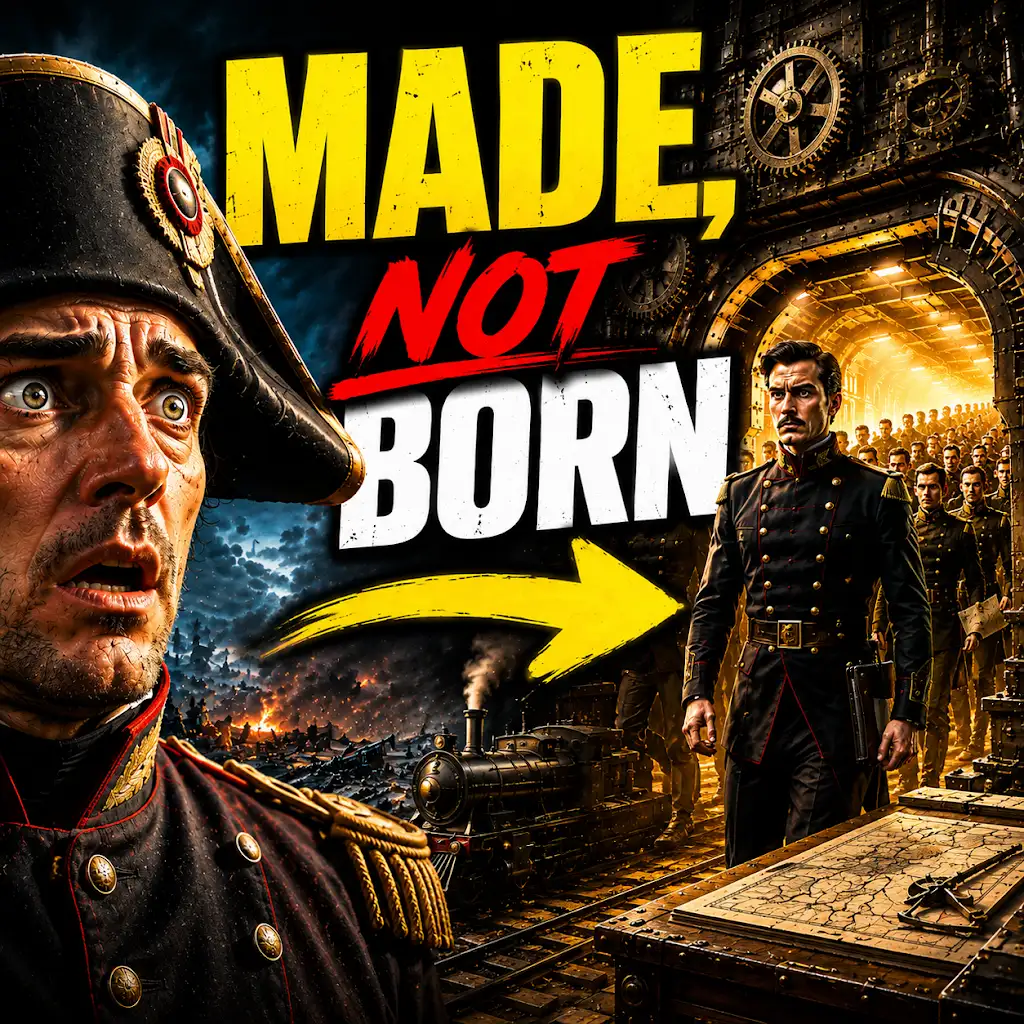
The Military Machine That Didn’t Need a Napoleon
FAQs
1. What was the Franco-Prussian War?
The Franco-Prussian War was a conflict between the Second French Empire and the Kingdom of Prussia, along with its allies from the North German Confederation, that took place from 1870 to 1871.
2. What led to the outbreak of the Franco-Prussian War?
The war was sparked by tensions between France and Prussia over the candidacy of a Prussian prince to the Spanish throne, which led to a diplomatic crisis and ultimately war.
3. What was the outcome of the Franco-Prussian War?
The war resulted in a decisive Prussian victory, leading to the collapse of the Second French Empire and the unification of Germany under Prussian leadership.
4. What were the key battles of the Franco-Prussian War?
Key battles of the war included the Battle of Sedan, where the French Emperor Napoleon III was captured, and the Siege of Paris, which led to the eventual surrender of the city.
5. What were the long-term consequences of the Franco-Prussian War?
The war led to the establishment of the German Empire, with King Wilhelm I of Prussia being proclaimed as Emperor. It also had significant implications for the balance of power in Europe and set the stage for future conflicts.