The Prussian General Staff: A Revolutionary Military System
The history of warfare is replete with innovations that have fundamentally altered the way nations fight. Among these, the development of the Prussian General Staff stands out as a singular achievement, a revolutionary military system that would come to define modernity in military organization and strategic thought. Emerging from the ashes of Prussian defeat and forged in the crucible of reform, this institution was not merely an administrative appendage but a dynamic engine of military professionalism, intellectual rigor, and ultimately, decisive victory. Its impact resonated far beyond the battlefields of Europe, influencing military structures and doctrines for generations and solidifying Prussia’s, and later Germany’s, reputation as a preeminent military power.
The late 18th and early 19th centuries marked a period of profound crisis for Prussia. The brilliant military successes of Frederick the Great, which had elevated Prussia to the status of a major European power, had faded into memory. The Napoleonic Wars exposed the obsolescence of Prussia’s once-vaunted army, revealing deep-seated flaws in its organization, training, and strategic leadership. The humiliating defeats at Jena and Auerstedt in 1806 served as a brutal awakening, a stark demonstration that inherited military glory was insufficient in the face of a modern, dynamic, and ideologically driven foe. This period of national humiliation, however, also proved to be the fertile ground for radical reform.
The Trauma of Jena-Auerstedt: A Call to Arms for Change
The twin battles of Jena and Auerstedt in 1806 were not just military defeats; they were national catastrophes. Napoleon’s Grande Armée, a force imbued with revolutionary fervor and operating under a unified and decisive command structure, utterly shattered the Prussian forces. The Prussian army, despite its proud lineage, was revealed to be rigid, poorly led, and tactically outmoded. The psychological impact of this annihilation was profound, shaking the very foundations of Prussian military pride and prompting a desperate search for the causes of such abject failure. It became evident that incremental adjustments would not suffice; a fundamental rethinking of the military apparatus was required.
The Stein-Hardenberg Reforms: A Holistic Approach to National Revitalization
In the wake of these disasters, a wave of intellectual and political reform swept across Prussia, spearheaded by figures like Baron vom Stein and Prince Hardenberg. These reforms, often referred to as the “Prussian Reforms,” extended beyond the military sphere, encompassing administrative, social, and educational changes. The realization was dawning that a nation’s military strength was intrinsically linked to its overall vitality. Therefore, military reform was not an isolated undertaking but an integral part of a broader national revitalization effort. The emphasis was on creating a more efficient, responsive, and meritocratic state, and the military was a critical arena for this transformation.
The Prussian General Staff military system has been a significant influence on modern military organization and strategy. For a deeper understanding of its historical context and impact, you can explore a related article that discusses the evolution of military command structures and their implications for contemporary warfare. To read more about this topic, visit this article.
The Birth of the General Staff: A Dedicated Organ for Strategic Thinking
The most significant and enduring outcome of this reformist zeal was the formal establishment and evolution of the Prussian General Staff. Prior to this, the concept of a dedicated, professional body for military planning and strategic direction was nascent at best. The reforms sought to create an institution that would elevate the art of war from the realm of individual brilliance to a systematized, intellectual discipline. This new General Staff was envisioned as the brain of the army, responsible for the intricate details of campaign planning, operational art, and the continuous study and adaptation of military doctrine.
From Ad Hoc Committees to a Permanent Institution: The Evolution of the Concept
The idea of a general staff was not entirely novel, with precursors existing in various armies. However, Prussia’s approach was to transform this nascent concept into a permanent, professional, and highly respected institution. Initially, efforts involved forming temporary committees to advise commanders. The experience of the Napoleonic Wars highlighted the inadequacy of such ad hoc arrangements. The need for continuous, systematic analysis and planning became paramount. This led to the gradual formalization of a body of officers dedicated to the intellectual and practical aspects of warfare, moving beyond mere battlefield command.
The Role of the Chief of the General Staff: A Position of Unprecedented Influence
A crucial element in the development of the Prussian General Staff was the elevation of the Chief of the General Staff to a position of significant influence. This was not simply a bureaucratic appointment but a role intended for an officer of exceptional intellect, strategic acumen, and proven ability. The Chief was to be the primary advisor to the monarch on military matters, responsible for overseeing the work of the staff, formulating strategic directives, and ensuring the army’s readiness. This concentration of intellectual power within a dedicated body was a radical departure from previous military traditions.
The Pillars of Excellence: Training, Education, and Professionalism
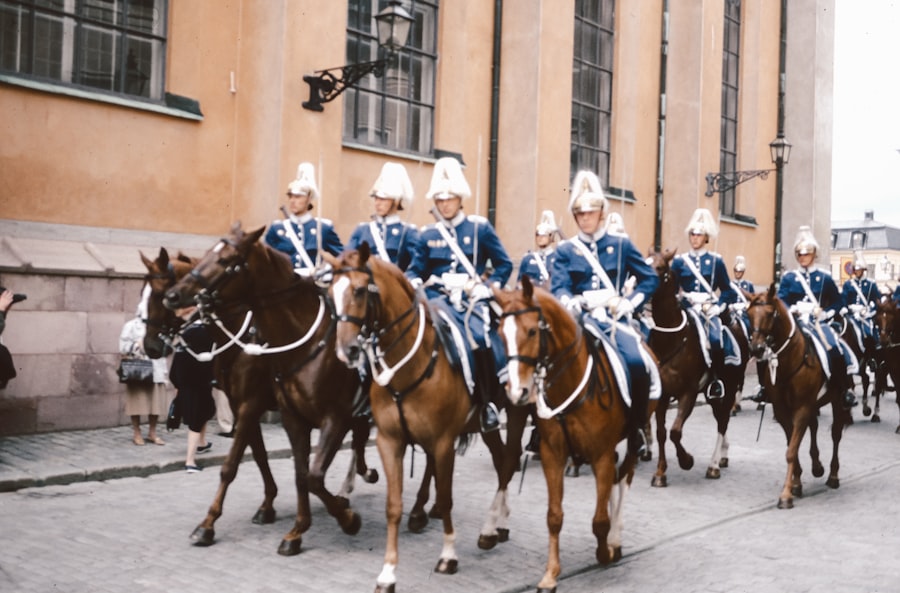
The revolutionary nature of the Prussian General Staff lay not only in its organizational structure but also in its unwavering commitment to training, education, and the cultivation of a highly professional officer corps. The staff was not simply a group of officers drawn from the ranks; it was a meticulously selected and rigorously trained cadre, dedicated to the continuous study and refinement of military science. This emphasis on intellectual development and professional excellence became the hallmark of the Prussian military system.
The War Academy (Kriegsakademie): The Crucible of Strategic Thought
Central to the development of the General Staff was the establishment and evolution of the Prussian War Academy (Kriegsakademie). This institution was designed to be the intellectual engine of the army, a place where officers could delve deeply into the science and art of war. Unlike many contemporary military academies focused on basic soldiering and discipline, the War Academy offered advanced instruction in strategy, tactics, logistics, history, and military geography. Admission was highly selective, and the curriculum was demanding, designed to weed out the mediocre and cultivate the truly gifted. Graduates of the War Academy formed the core of the General Staff.
The Process of Selection and Promotion: Meritocracy in Uniform
The Prussian General Staff was built on a foundation of meritocracy. Officers were not promoted based on seniority or social standing alone, but on demonstrated ability and intellectual aptitude. A rigorous selection process was implemented, identifying promising young officers and subjecting them to intense scrutiny and training. Those who excelled in the War Academy and demonstrated a capacity for strategic thinking were then selectively brought into the General Staff. This ensured that the most capable minds were being utilized for the most critical functions of military planning and direction.
Continuous Study and the Art of War: An Unending Pursuit of Knowledge
The General Staff operated under the principle that military knowledge was not static but a dynamic and evolving field. Officers were expected to engage in continuous study, analyzing past campaigns, examining contemporary military developments, and contemplating future conflicts. This commitment to intellectual engagement fostered a culture of critical thinking and adaptation. The “Art of War” was treated not as a set of immutable rules but as a complex interplay of factors that required constant understanding and refinement.
The Process of War Planning: From Grand Strategy to Operational Detail
The operational brilliance of the Prussian General Staff was most evident in its meticulous and highly sophisticated approach to war planning. This was a comprehensive process, encompassing everything from the highest levels of grand strategy down to the minutiae of battlefield execution. The staff was responsible for developing detailed operational plans, often anticipating multiple contingencies and ensuring a high degree of coordination across different branches of the army.
The “Great General Staff” and its Functions: More Than Just a Planning Bureau
The “Great General Staff,” as it came to be known, was far more than a mere planning bureau. It was a dynamic organization responsible for a multitude of critical functions. These included:
- Strategic Planning: Developing long-term strategic objectives and the overarching plans to achieve them, often in consultation with civilian leadership.
- Operational Planning: Devising detailed campaign plans, including the movement of armies, logistical support, and the sequencing of battles.
- Intelligence Gathering and Analysis: Establishing systems for collecting and analyzing information about the enemy, the terrain, and political conditions.
- Logistics and Supply: Ensuring the army had the necessary resources to conduct operations, a critical factor often overlooked in earlier eras.
- Training and Education Oversight: Setting standards for army training and ensuring that officers were educated in accordance with the latest military thinking.
- Historical Research: Studying past wars to draw lessons and inform contemporary strategy.
The Role of the Monarch: A Commander-in-Chief Guided by Expertise
The relationship between the General Staff and the monarch was crucial to the system’s success. While the monarch remained the ultimate commander-in-chief, the General Staff provided expert advice and meticulously prepared plans that guided their decisions. This created a powerful synergy, where strategic vision was informed by rigorous analysis and detailed planning, leading to more coherent and effective military operations. The monarch was not expected to be a military expert but to trust and leverage the expertise of the staff.
The Art of Maneuver and Concentration: Principles of Prussian Strategy
The General Staff’s planning was underpinned by key strategic and operational principles that became synonymous with Prussian military doctrine. The emphasis was on achieving decisive results through intelligent maneuver and the concentration of force.
- Schwerpunkt (Main Effort): Identifying and focusing overwhelming force on a decisive point in the enemy’s disposition.
- Vernichtungsstrategie (Strategy of Annihilation): Aiming not just to defeat the enemy but to destroy their fighting capacity through decisive battles.
- Maneuver Warfare: Utilizing rapid movement and strategic positioning to outmaneuver and envelop the enemy, rather than engaging in frontal assaults.
- Centralized Command and Decentralized Execution: Maintaining firm strategic and operational control from the top, while allowing subordinate commanders the latitude to execute plans within their assigned spheres.
The Prussian General Staff military system has long been regarded as a model for modern military organization and strategy. Its emphasis on meticulous planning and efficient communication has influenced numerous armies worldwide. For a deeper understanding of this system and its historical significance, you can explore a related article that delves into its evolution and impact on contemporary military practices. This insightful piece can be found at In the War Room, where you will discover how the principles of the Prussian General Staff continue to resonate in today’s military operations.
The Legacy and Influence: Shaping the Course of Modern Warfare
| Aspect | Details |
|---|---|
| Origin | Developed in the 19th century in Prussia |
| Purpose | To centralize and improve military planning and decision-making |
| Key Features | Emphasis on detailed planning, intelligence gathering, and staff collaboration |
| Influence | Had a significant impact on modern military staff systems |
| Legacy | Considered a precursor to modern military staff structures and operations |
The Prussian General Staff was not a fleeting phenomenon; its influence was profound and enduring. The principles and practices it developed became the template for military organizations worldwide. The victories Prussia achieved in the 19th century, particularly in the wars of German unification, were a testament to the effectiveness of this revolutionary military system, solidifying its reputation and radiating its influence.
The Wars of Unification: A Proving Ground for the Staff’s Prowess
The Danish War of 1864, the Austro-Prussian War of 1866, and the Franco-Prussian War of 1870-71 served as the ultimate proving grounds for the Prussian General Staff. In each conflict, Prussian forces, under the strategic direction of the General Staff and the command of highly competent officers trained by it, achieved remarkable victories against numerically superior or seemingly well-established adversaries. These wars demonstrated the superiority of Prussian strategy, operational art, and logistical prowess, largely orchestrated by the General Staff.
Dissemination of Ideas: A Model for Global Military Development
The success of the Prussian General Staff did not go unnoticed by other nations. Military observers from around the globe flocked to Prussia, eager to study its methods. The structure, training, and operational doctrines of the Prussian General Staff were emulated and adapted by armies across Europe and beyond, including in the United States, Russia, and Japan. It became the benchmark against which other military planning organizations were measured.
The Shadow of the Staff: Evolution and Critique in the 20th Century
While the Prussian General Staff’s influence was undeniable, its legacy also cast a long shadow. The rigid adherence to certain doctrines and the inherent militarism that developed within the German military, heavily influenced by the staff’s ethos, would eventually contribute to the cataclysms of the 20th century. The German General Staff, an evolution of its Prussian predecessor, played a significant role in the planning and execution of World War I and World War II. Critiques of its pervasive influence and its perceived inflexibility in the face of changing warfare would emerge, leading to debates about the balance between centralized planning and adaptability, and the ethical responsibilities of military institutions. Nevertheless, the fundamental innovations of the Prussian General Staff in professionalizing military planning and strategic thinking remained a cornerstone of modern military organization.

The Military Machine That Didn’t Need a Napoleon
FAQs
What is the Prussian General Staff military system?
The Prussian General Staff military system was a highly efficient and centralized command structure developed by the Prussian Army in the 19th century. It emphasized meticulous planning, rigorous training, and the use of detailed intelligence to achieve military success.
What were the key components of the Prussian General Staff military system?
The key components of the Prussian General Staff military system included a rigorous selection process for officers, a focus on strategic planning and logistics, the use of detailed maps and intelligence, and an emphasis on decentralized decision-making and initiative at the lower levels of command.
How did the Prussian General Staff military system influence modern military tactics and strategy?
The Prussian General Staff military system had a profound influence on modern military tactics and strategy. Its emphasis on detailed planning, intelligence gathering, and decentralized command has been adopted by many modern military organizations around the world.
What role did the Prussian General Staff military system play in the success of the Prussian Army?
The Prussian General Staff military system played a crucial role in the success of the Prussian Army, particularly in its victories during the wars of German unification in the 19th century. The system allowed the Prussian Army to outmaneuver and outthink its opponents, leading to decisive victories on the battlefield.
What impact did the Prussian General Staff military system have on military education and training?
The Prussian General Staff military system had a significant impact on military education and training, leading to the development of staff colleges and academies that emphasized the principles of the system. Many modern military education institutions continue to teach the principles of the Prussian General Staff military system.